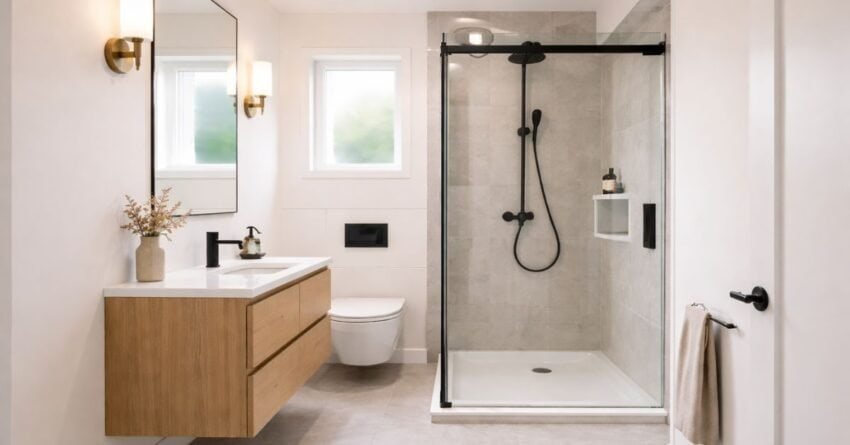
A small bathroom can feel tight before you even step fully inside. The door swings in, the vanity blocks your path, and suddenly everything feels closer than it should.
That is why small bathroom layout ideas matter more than most people realize. When the layout works, the same square footage feels open, calm, and easy to move through.
You might be dealing with a 5 x 7 room where the toilet feels squeezed beside the tub. Or a narrow space where the vanity sticks out just enough to interrupt traffic flow. In bathrooms under 40 to 50 square feet, even a few inches can change how the room feels.
The good news is this. You do not need to knock down walls to unlock hidden space. Many of the smartest small bathroom layout ideas focus on fixture placement, door swing direction, and keeping the center walkway clear.
In this post, we will walk through 8 layout plans that:
- Improve traffic flow
- Free up floor space
- Use walls and corners more wisely
- Avoid the most common small bathroom mistakes
Before choosing tile or paint, it helps to sketch a simple floor plan and think through clearances. A few small shifts can make a cramped room feel thoughtful instead of crowded.
Table of Contents
Why Small Bathroom Layout Ideas Matter More Than Decor
It is tempting to start with tile, mirrors, or new lighting. Those changes feel exciting. But in a tight bathroom, layout comes first.
If the toilet blocks the path or the vanity crowds the door swing, no amount of styling will fix that. The room may look better, but it will still feel awkward.
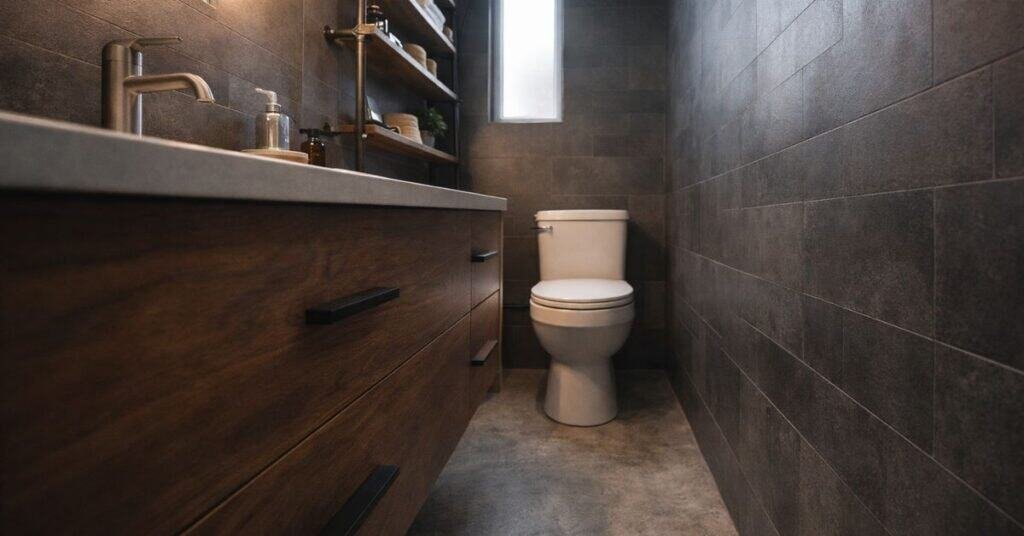
One of the most common mistakes in small bathrooms is choosing fixtures that are too large for the space. As noted in Gluckstein Home – Don’t Make These Small Bathroom Design Mistakes, oversized vanities can block pathways and make the room feel cramped. Even a few extra inches of depth can reduce usable floor space.
Layout affects three core things:
- Traffic flow — Can you move easily from door to sink to shower?
- Clearance space — Is there enough room in front of the toilet and shower?
- Visual space — Does the center of the room feel open?
When fixtures hug the walls and the center walkway stays clear, the room instantly feels larger. That is the idea behind many smart small bathroom layout ideas.
Another mistake is thinking smaller fixtures always solve the problem. Sometimes going too small creates new issues, like water splashing outside a tiny sink. The goal is balance, not just shrinking everything.
If you are planning a larger bathroom at the same time, you may also want to look at How to Decorate a Master Bathroom Without Overdoing It to see how layout and styling work together in bigger spaces.
In the next section, we will start with one of the most reliable small bathroom layout ideas: the simple one wall linear plan.
Layout Idea 1: The One Wall Linear Plan
One of the most reliable small bathroom layout ideas is the one wall linear plan. All major fixtures sit along a single wall. The opposite wall stays mostly open.
This layout works especially well in a 5 x 7 bathroom. You place the tub or shower at one end, the toilet next to it, and the vanity at the other end. The center of the room becomes a clear walkway.
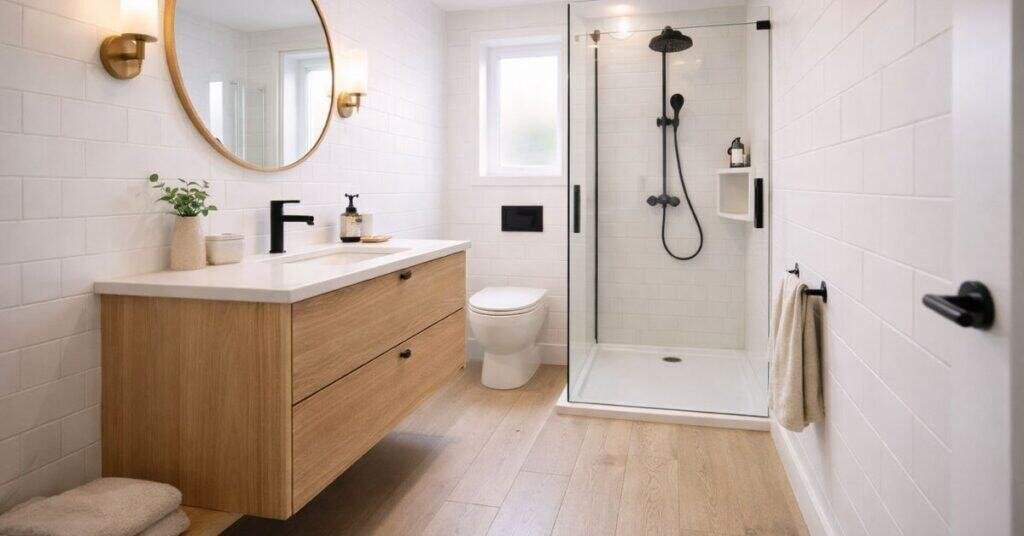
In Horow – Small Bathroom Layouts: 2026 Space Smart Plans, the most efficient small bathroom layout is described as a linear plan that keeps fixtures on one wall so the center stays open. That open center is what makes the room feel larger, even though the square footage has not changed.
This layout also keeps plumbing simple. In Foyr – 11 Small Bathroom Floor Plan Examples to Maximize Space , a classic layout is described where a standard 60 inch tub or shower, a single vanity, and a toilet sit along one wall. That setup fits comfortably in many small bathrooms and keeps costs manageable.
Why It Works
- Fixtures share the same plumbing wall
- The center walkway stays clear
- Door swing is easier to manage
- Storage can go vertical instead of outward
Small Space Variation
If the room feels extra tight, choose a floating vanity instead of a floor based cabinet. That 8 to 10 inches of visible floor underneath creates more visual space and improves traffic flow.
One Common Mistake to Avoid
Do not choose a vanity that is too deep. In a 5 x 7 bathroom, a vanity deeper than 21 inches can shrink your clearance space fast. Measure carefully before committing.
This layout is simple, practical, and easy to build around. Next, we will look at how to make the most of a standard 5 x 7 or 5 x 8 floor plan.
Layout Idea 2: 5×7 Small Bathroom Layout Ideas That Work
A 5 x 7 bathroom is one of the most common footprints in older homes. It is small, but it can work beautifully with the right plan.
Many successful small bathroom layout ideas for this size follow a similar structure. The tub or shower runs along the back wall. The toilet sits beside it. The vanity goes on the opposite wall or near the door, depending on swing direction.
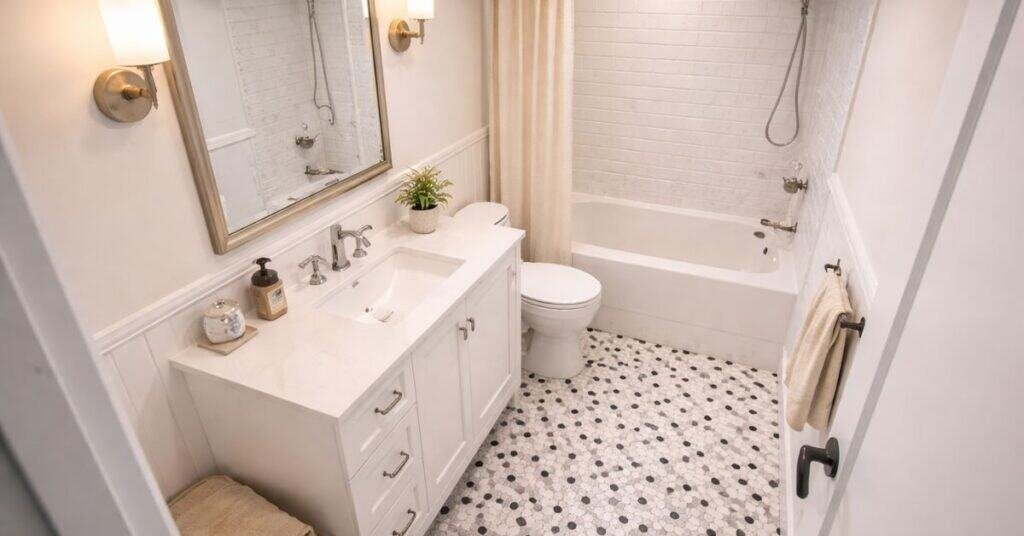
In Foyr – 11 Small Bathroom Floor Plan Examples to Maximize Space, the classic 5 x 7 layout is described as one that comfortably fits a 60 inch tub or shower, a single vanity, and a toilet along one wall. Keeping plumbing on one side reduces cost and simplifies installation.
Option A: Tub Across the Back Wall
- 60 inch tub spans the width
- Toilet next to tub
- 24 to 30 inch vanity near the door
This keeps the visual weight at the far end of the room and leaves a clean center path.
Option B: Shower Only for More Space
If you remove the tub and install a shower, you can gain 10 to 15 inches of usable space. That extra depth may allow for a slightly wider vanity or better clearance in front of the toilet.
Budget Friendly Approach
Stick with a standard 60 inch tub or shower base instead of custom sizing. Standard sizes are easier to source and install, which helps keep costs steady.
Small Space Detail
Watch your door swing. In tight rooms, a standard inward swing can steal valuable clearance space. A pocket door or outward swing can change how the entire room functions.
A 5 x 7 bathroom does not have to feel cramped. With thoughtful placement, it can feel orderly and calm.
Next, we will look at small bathroom layout ideas with shower only, and how that choice affects flow and comfort.
Layout Idea 3: Small Bathroom Layout Ideas With Shower Only
Removing the tub can completely change how a small bathroom feels. In tight footprints, a shower only layout often unlocks hidden space that was already there.
Many homeowners assume a tub is required. But in a small secondary bathroom or powder room, a shower only plan may make more sense. It can free up 10 to 15 inches of depth and improve clearance in front of the toilet and vanity.
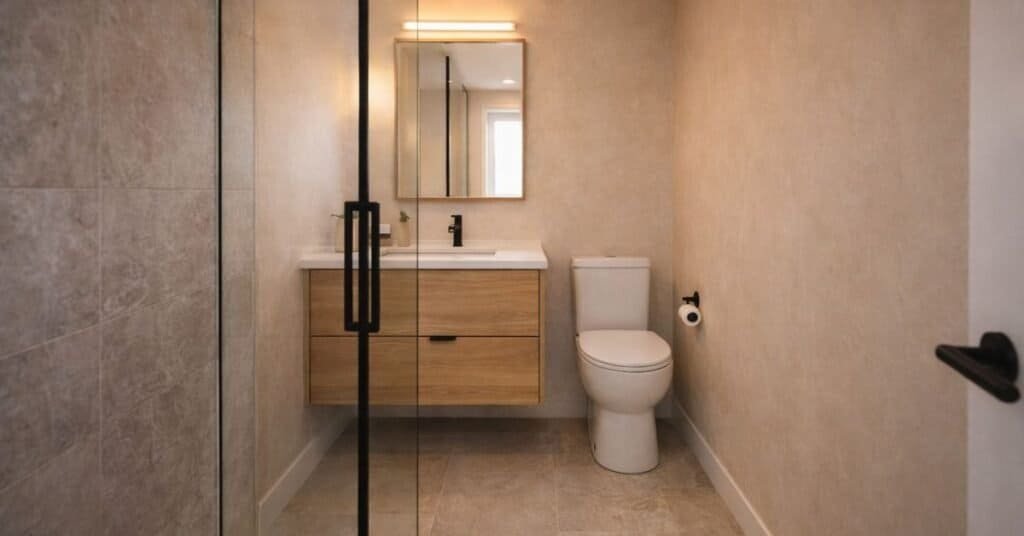
In Horow – Small Bathroom Layouts: 2026 Space Smart Plans, the planning process starts by confirming minimum clearance space, choosing shower size, deciding door strategy, and locking in the plumbing wall. That step by step order keeps layout decisions practical instead of emotional.
Why Shower Only Works in Small Rooms
- Frees up floor space
- Improves traffic flow
- Allows for a wider vanity
- Makes center walkway feel open
A standard 60 inch shower base works well in many 5 x 7 bathrooms. If the room is narrower, a 32 x 48 inch shower can still feel comfortable without overwhelming the layout.
Door Strategy Matters
A sliding shower door is often better than a hinged one. Hinged doors require clearance space that can block the toilet or vanity. A sliding system keeps movement contained within the shower footprint.
Small Space Variation
If you want extra storage, build a recessed niche into the shower wall. That avoids bulky corner shelves and keeps the layout clean.
One Common Mistake
Placing the shower directly beside the door without checking swing clearance. Always confirm that the door opens fully without hitting the vanity or toilet.
When planned carefully, a shower only layout can make a small bathroom feel balanced instead of crowded. Next, we will look at narrow small bathroom layout ideas and how to make long tight spaces work better.
Layout Idea 4: Narrow Small Bathroom Layout Ideas
Long and narrow bathrooms can feel like hallways with plumbing. The challenge is keeping the room from feeling tight while still fitting everything comfortably.
The key in narrow small bathroom layout ideas is to keep fixtures tight to one wall whenever possible. This creates a clean walking path down the center or along one side.
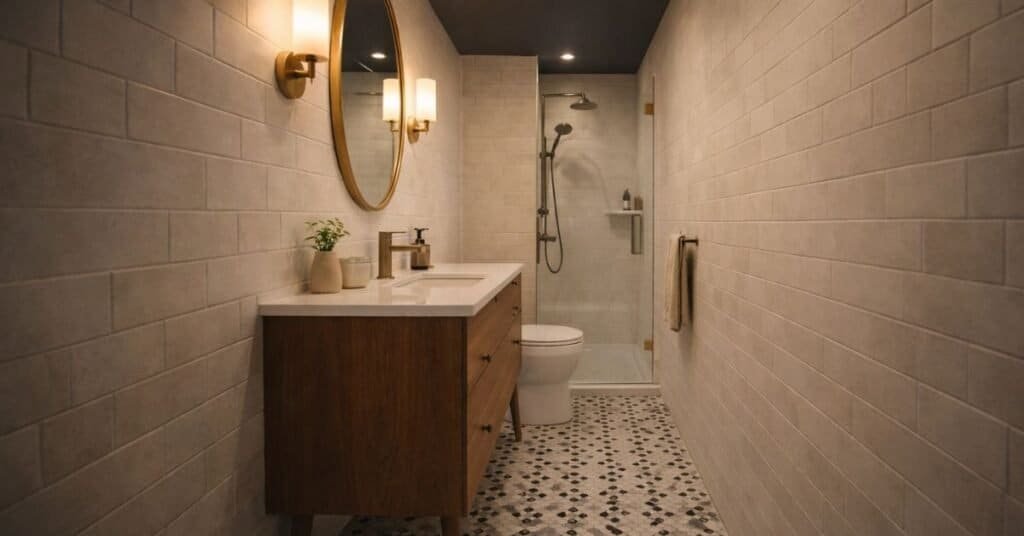
Keep Fixtures in a Straight Line
A linear arrangement works especially well in narrow rooms:
- Shower at the far end
- Toilet next to the shower
- Vanity closest to the door
This setup keeps plumbing simple and prevents awkward fixture overlap.
In RoomSketcher, wall mounted toilets and floating vanities are highlighted as smart space savers because they free up floor area and improve legroom. That visible floor space makes a narrow bathroom feel lighter.
Choose the Right Sink
In HGTV Canada, swapping a bulky vanity for a pedestal or vessel sink is noted as a way to free up the floor visually. In very tight layouts, a curved or corner sink can prevent sharp edges from interrupting traffic flow.
Watch the Clearance
Aim for at least 24 inches of clearance in front of the toilet and 21 inches in front of the sink. In narrow bathrooms, every inch matters.
Small Space Variation
If storage is limited, add vertical shelving above the toilet or along a blank wall. Going upward keeps the compact footprint intact without crowding the floor.
One Common Mistake
Choosing a vanity that is too deep. A 24 inch deep cabinet in a narrow bathroom can shrink the walkway dramatically. Consider 18 to 21 inches deep instead.
A narrow room does not have to feel restrictive. With smart placement and lighter fixtures, it can feel organized and calm.
Next, we will explore small bathroom layout ideas for square rooms, where balance and symmetry make a big difference.
Layout Idea 5: Small Bathroom Layout Ideas for Square Rooms
Square bathrooms can feel easier to plan, but they often hide layout challenges. When all sides are similar in length, poor placement can block circulation quickly.
The goal in square small bathroom layout ideas is balance. Keep visual weight even and maintain open floor space in the center.
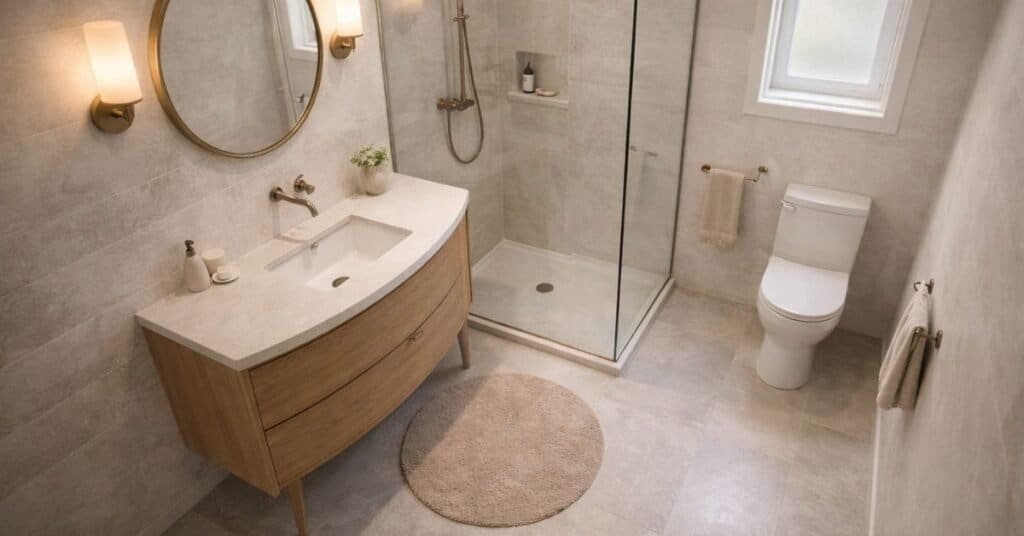
Center the Vanity for Better Flow
Placing the vanity centered on one wall often creates a clean starting point. The toilet and shower can then sit along adjacent walls, keeping the room from feeling crowded on one side.
This arrangement works especially well in rooms around 6 x 6 feet or slightly larger.
Use Corners Wisely
A corner sink can free up surprising space. It allows the center walkway to remain open while still providing a functional washing area.
Floating vanities also help here. Seeing more floor makes the room feel less boxed in.
Simple Comparison
| Problem | Why It Happens | Simple Fix |
|---|---|---|
| Room feels tight | Fixtures pushed too close together | Spread across two walls |
| Hard to move around | Door swing blocks vanity | Reverse swing or use pocket door |
| Looks heavy on one side | All fixtures on same wall | Balance layout across corners |
Small Space Detail
If your square bathroom includes a tub, place it along the back wall and keep the vanity on the side. This keeps the center visually open.
One Common Mistake
Placing oversized storage cabinets in corners. In square rooms, bulky furniture disrupts layout balance and blocks traffic flow.
When symmetry and spacing are handled carefully, square bathrooms can feel calm instead of cramped.
Next, we will look at small bathroom layout ideas with washer and dryer, where smart stacking and door placement become critical.
Layout Idea 6: Small Bathroom Layout Ideas With Washer and Dryer
Adding laundry to a small bathroom changes everything.
Now you are planning around machines, plumbing, and clearance space. The room must still feel usable.
In many US and Canadian homes, stacked units are the most practical option for small bathroom layout ideas with washer and dryer. They reduce the footprint and keep vertical storage possible.
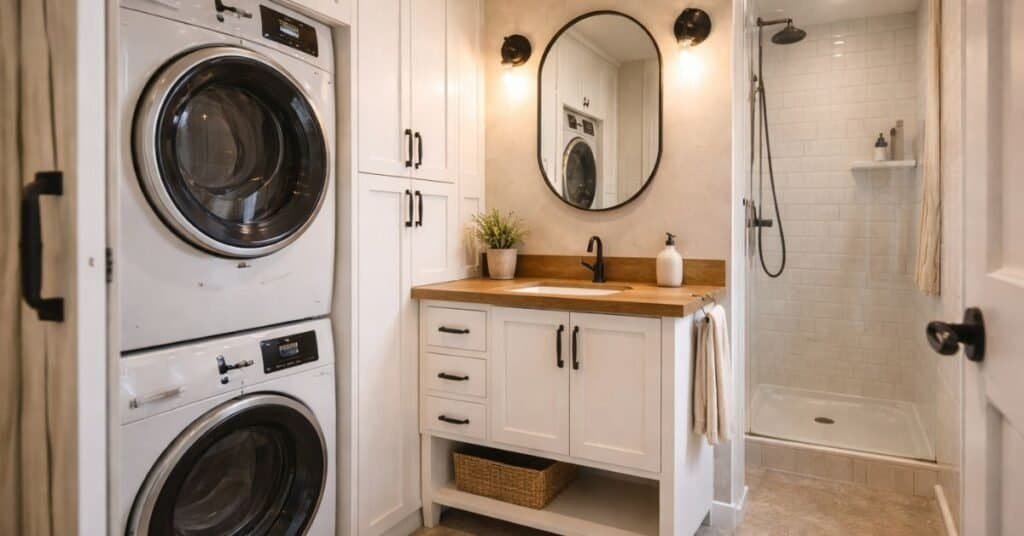
Keep Laundry on One Plumbing Wall
Place the washer and dryer on the same wall as the toilet or sink when possible. This keeps plumbing simple and avoids extra construction work.
In compact layouts, a stacked unit that is about 24 inches wide can fit beside a vanity or at the end of a shower wall.
Protect the Walkway
You still need at least 30 inches of clear walking space in front of fixtures. If machines block that, the room will feel tight immediately.
A sliding door or pocket door becomes very helpful in this setup. Swinging doors eat up valuable floor space.
Hide What You Can
Closed cabinetry around the laundry area keeps the room from feeling like a utility space. Use shallow upper cabinets for detergent and small baskets.
Keep open shelving minimal so the room still feels calm.
Small Space Variation
In very narrow bathrooms, consider placing stacked units behind a bifold door at the end of the room. The toilet and vanity stay along one wall, while laundry stays visually contained.
Budget Option
If cabinetry is not in the budget, use a simple curtain panel to hide machines. Choose a light fabric to avoid adding visual weight.
With careful spacing and vertical planning, a bathroom can handle both bathing and laundry without feeling cramped.
Next, we will look at space saving small bathroom layout ideas that help in almost any floor plan.
Layout Idea 7: Small Bathroom Layout Ideas for Square Rooms
Square bathrooms look simple on paper.
In real life, they can feel awkward.
Fixtures often end up floating in the middle or pushed randomly into corners. The key to small bathroom layout ideas for square room plans is balance.
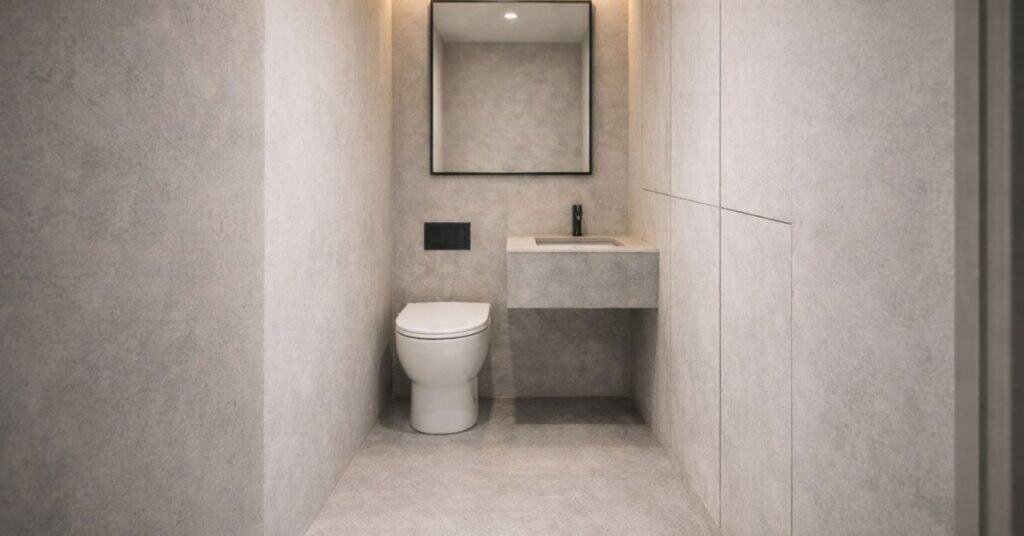
Use an L Shape Layout
Place the toilet and vanity on one wall. Position the tub or shower along the adjacent wall.
This keeps the center open and protects your traffic flow. It also makes the room feel grounded instead of scattered.
Many layout planners recommend keeping fixtures along one or two connected walls. That keeps the center clear and plumbing more efficient.
Anchor the Corners
A corner sink works well in tight square rooms. It frees up walking space and avoids blocking door swings.
HGTV Canada notes that freeing up floor space by using pedestal or compact sinks can make a small bathroom feel larger and more open. In square rooms, that open floor space is everything.
Watch Fixture Size
A common mistake in square layouts is oversizing the vanity.
As Gluckstein Home points out, oversized vanities can block pathways and overwhelm the room. In a square bathroom, that impact is even stronger because everything is visible at once.
If your room is 6 by 6 feet, consider a 24 inch or 30 inch vanity instead of 36 inches.
Keep the Center Open
Think of the middle of the room as breathing space.
Avoid placing storage towers or baskets there. Let the eye move across the floor without interruption.
That open visual space makes the room feel bigger than the measurements suggest.
Up next, we will look at space saving small bathroom layout ideas that work in almost any shape.
Layout Idea 8: Space Saving Small Bathroom Layout Ideas
Some layouts feel cramped before you even bring in towels.
That usually means the room is fighting itself. Doors swing into vanities. Showers block pathways. Storage sticks out too far.
The best space saving small bathroom layout ideas focus on three things: door strategy, wall space, and visual openness.
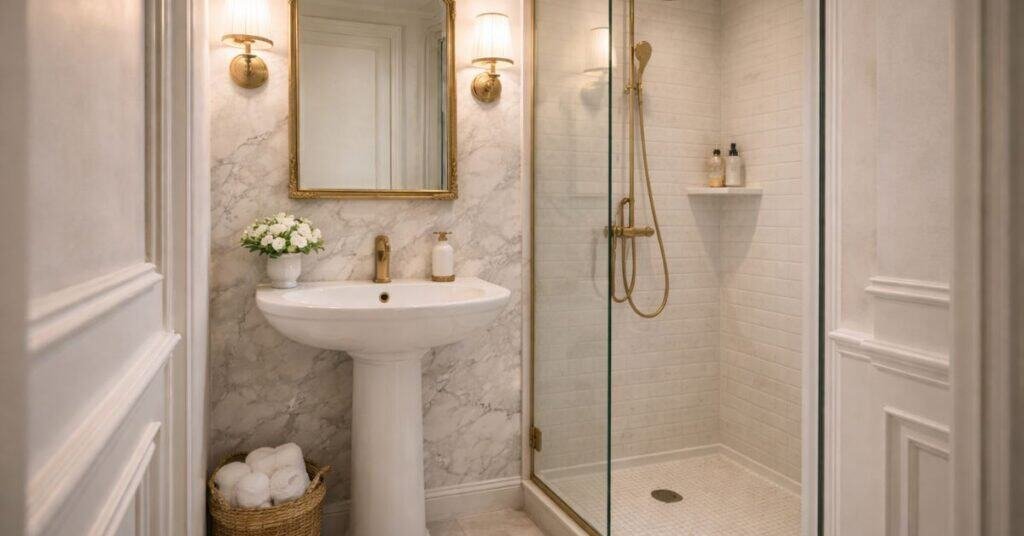
Rethink the Door
A standard swinging door can take up 9 to 12 square feet of usable space.
If possible, consider:
- A pocket door
- A sliding barn style door
- Reversing the swing so it opens outward
Even shifting the hinges can free up space for a larger vanity or better clearance.
Go Wall Mounted Where It Makes Sense
Wall mounted toilets and floating vanities free up floor area.
RoomSketcher highlights that wall mounted fixtures can save both legroom and visual bulk, making tight layouts feel more open. Seeing more floor instantly makes the room feel lighter.
A floating vanity with 8 to 10 inches of visible floor beneath it can change how the whole bathroom feels.
Keep Fixtures in a Line
Linear layouts often work best in small rooms.
Horow explains that keeping fixtures along one wall or two adjacent walls helps preserve a clear center walkway. That open center becomes your main movement zone.
If your bathroom is narrow, try placing:
- Vanity first
- Toilet next
- Shower at the far end
This keeps plumbing grouped and simplifies the layout.
Budget Friendly Upgrade
If a full rework is not possible, shift one element.
Replace a swinging shower door with a sliding shower door. Swap a bulky vanity for a slimmer 18 inch deep version. Even small footprint changes can improve traffic flow.
The goal is not to cram in more.
It is to remove what blocks movement.
Frequently Asked Questions
1. How do you plan the best layout for a 5 x 7 or 5 x 8 small bathroom?
Start with the toilet placement first. Ideal Home notes that planning begins with the toilet, then other fixtures are arranged around it. In many 5 by 7 layouts, placing the tub or shower, vanity, and toilet along one wall keeps plumbing simple and walking space clear.
2. Should I choose a shower or a tub in a small bathroom layout?
If daily use matters more than resale, a shower only layout frees up more space. A standard 60 inch tub fits well in 5 by 8 rooms, but a shower can feel lighter and open up visual space.
3. Where should the toilet go in a small bathroom layout?
Place the toilet where it allows at least 21 inches of clearance in front and about 15 inches from center to each side. Keeping it aligned with other fixtures often keeps the center of the room open.
4. How much clearance do you need in front of a toilet and shower?
Plan for at least 21 inches in front of the toilet and 24 inches in front of a shower or tub. More is better if space allows. Clearance space protects traffic flow.
5. Are wall mounted toilets and floating vanities worth it in a small bathroom?
They can be. Wall mounted fixtures free up floor space and make cleaning easier. Even seeing more tile below the vanity makes the room feel bigger.
6. What type of sink works best in a small bathroom layout?
Corner sinks, pedestal sinks, and compact floating vanities work well. HGTV Canada highlights that freeing the floor area helps small bathrooms feel more open.
7. How can I add storage without crowding a small bathroom layout?
Use vertical storage. Add recessed shelving in the shower or above the toilet. Keep baskets tucked under floating vanities.
Avoid tall cabinets that block sight lines.
8. What are the most common small bathroom layout mistakes to avoid?
Oversized vanities are a common issue. Gluckstein Home points out that large fixtures can block pathways and overwhelm small rooms. Another mistake is using too many materials, which can make the layout feel busy.
9. What tile size or pattern helps a small bathroom layout feel bigger?
Large format tiles with minimal grout lines often feel cleaner and more open. Keeping color changes subtle helps preserve visual space.
10. How do mirrors and lighting affect a small bathroom layout?
Mirrors reflect natural light and make rooms feel deeper. Ideal Home suggests placing a mirror opposite a window to bounce light across the room.
Layered lighting, such as wall sconces plus ceiling lights, prevents dark corners.
Conclusion
Small bathrooms are not limited by size. They are limited by layout.
When you focus on traffic flow, clearance space, and smart fixture placement, the room starts to breathe. Even a 5 by 7 space can feel calm and easy to use.
The goal is not to fit more in. It is to let the space work for you.
And once your layout feels right, decorating becomes much easier.
If you want to see how layout and decor work together, take a look at Bathroom Decor Ideas: The Before And After I Didn’t Expect and notice how small shifts can completely change the feel of a space.