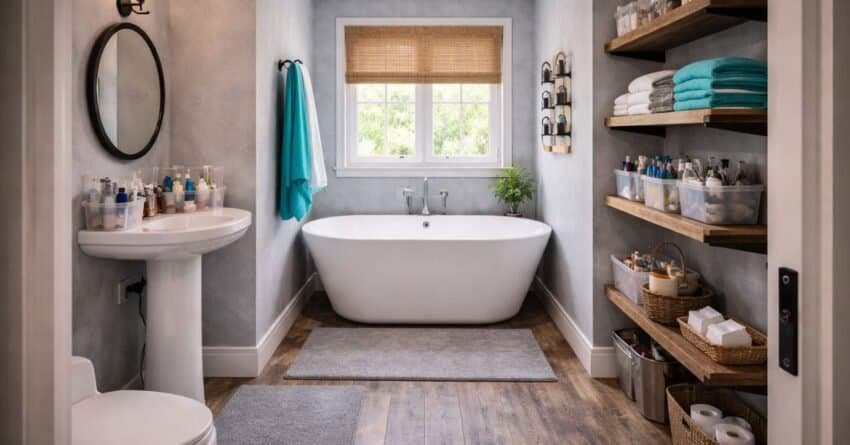
A bathroom can be spotless and still feel cheap.
That usually comes down to decor choices that make the room feel flat, cluttered, dated, or thrown together. The good news is that you do not need a full remodel to fix it. A few smarter styling choices can make the space feel calmer, warmer, and far more polished.
In many bathrooms, the biggest problem is not age. It is the mix of finishes, lighting, storage, and accessories. A bulky vanity, bright towels, plastic organizers, or cold gray walls can pull the whole room down fast.
If you are trying to create a more pulled-together look, it helps to know which details quietly cheapen the space and what to do instead.
You can also pair these ideas with on how to decorate an old bathroom fast (no reno!) if your bathroom needs a quick refresh without major work.
Table of Contents
What Makes a Bathroom Look Cheap Instead of Expensive?
A bathroom looks cheap when the room feels visually busy or emotionally cold.
That can happen when the color palette is too stark, the lighting is harsh, the finishes do not relate to each other, or the surfaces are packed with products. Even newer bathrooms can feel builder-grade when nothing looks settled.
A bathroom that feels more expensive usually has three things working together: restraint, warmth, and consistency. The palette feels soft instead of sterile. The storage feels tidy instead of overloaded. The details look chosen on purpose.
That is why small decor mistakes matter so much here. Bathrooms are compact, so every towel, mirror, tray, finish, and bulb has more visual weight than it would in a larger room.
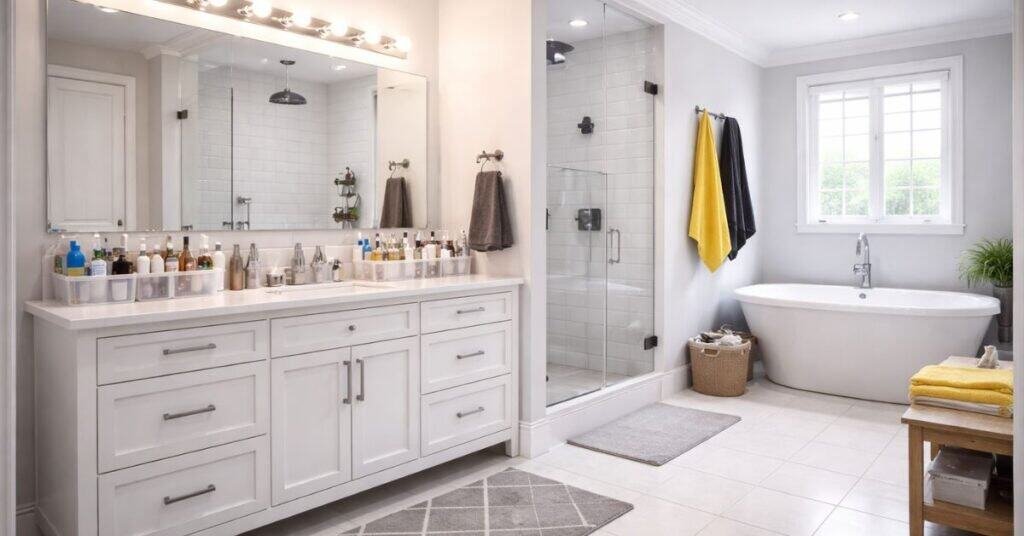
1. Following Every Bathroom Trend at Once
One of the fastest ways to make a bathroom feel cheap is trying to fit every trend into one small space.
A floating vanity, black fixtures, bold tile, open shelving, trendy sconces, and a statement mirror can all work. But when they all show up at once, the room starts to feel busy instead of balanced.
House Beautiful warns against following every bathroom trend, especially in a room where too many current looks can date the space quickly. That is often what makes a bathroom feel cheap. It stops feeling settled.
A better move is to pick one feature to carry the room. That might be a fluted vanity, a soft zellige-style tile, or a warm brass light fixture. Then let everything else stay simple.
A budget option is to keep your existing vanity and update only the mirror and light. In a small bathroom, that is often enough to shift the whole look.
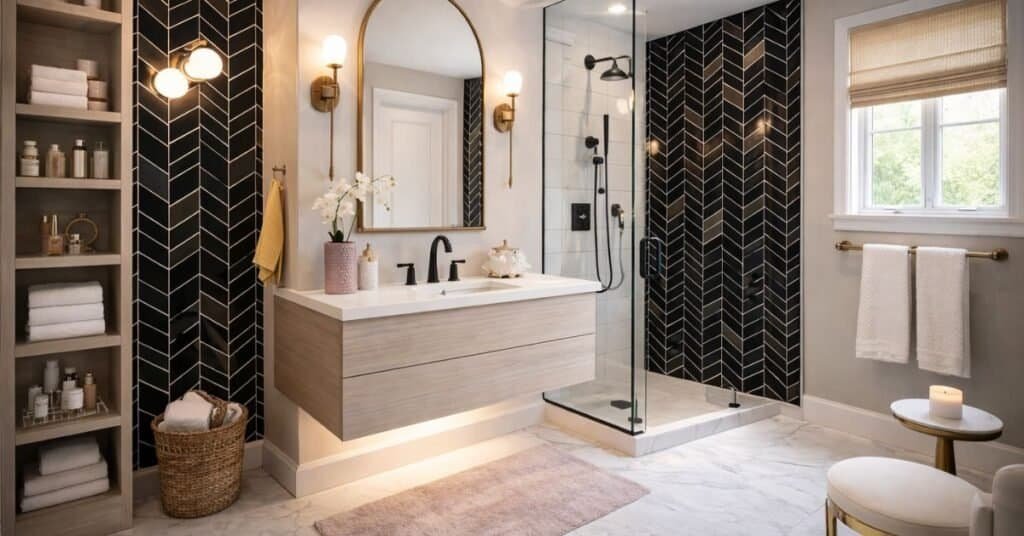
2. Choosing a Cold or Flat Color Palette
Color changes the mood of a bathroom faster than almost anything else.
When the room is all icy gray, bright white, or flat beige with no warmth, it can feel more sterile than stylish. House Beautiful specifically calls out a cool-toned gray and white bathroom schemes for making a space feel dated or impersonal when there is no contrast or texture.
White bathrooms are not the problem on their own. The problem is white with no softness. If the walls, tile, vanity, shower curtain, and towels all sit in the same cold tone, the room can feel flat in seconds.
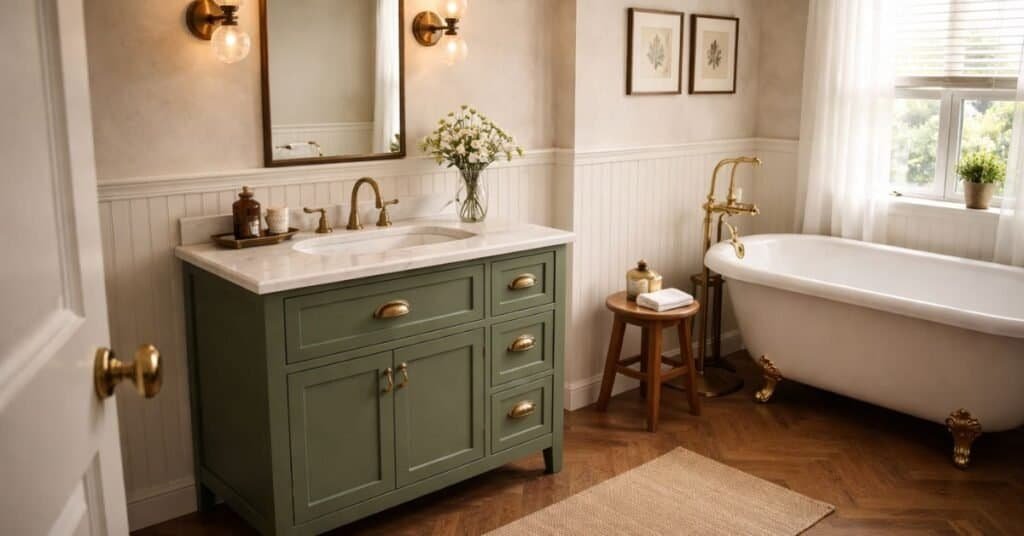
To fix it, bring in warmth through creamy whites, soft taupe, muted greige, clay, or natural wood tones. Even one wood stool, a woven basket, or off-white towels can soften the room.
In a small bathroom, try keeping the walls light but adding warmth through textiles and hardware. A warm neutral palette usually feels cleaner and more expensive than a cold one.
If you love a softer look, these warm neutral bathroom ideas can help you add warmth without making the space feel dark or heavy.
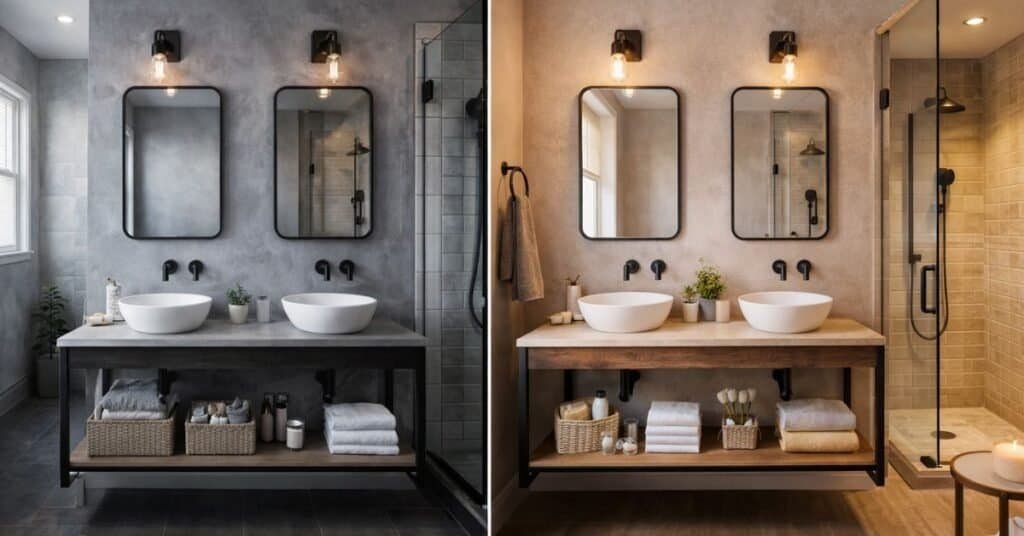
3. Using Harsh or Unflattering Lighting
Bad lighting can make every finish in the room look worse.
It can flatten paint color, make tile look colder, and throw hard shadows across the vanity. That is one reason even clean bathrooms can still feel cheap.
A single overhead bulb is often the problem. It lights the room just enough to function, but not enough to flatter it. If that bulb is very cool in tone, the bathroom starts to feel clinical.
Lighting plays a big role in whether a bathroom feels soft and polished or cold and basic.
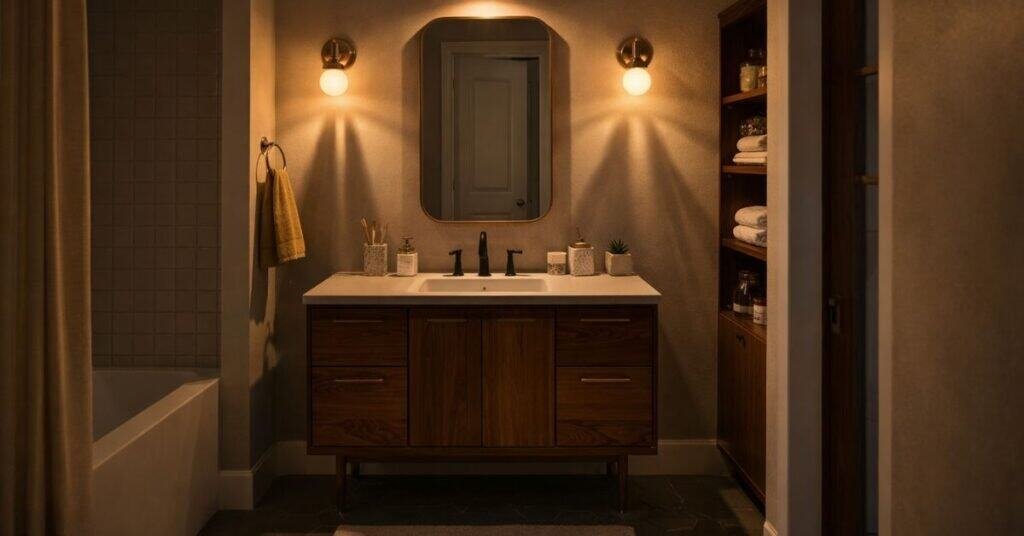
Try layering the light instead. A ceiling fixture plus vanity lights or sconces will spread light more evenly across the room. Warm bulbs also help. Aim for a soft white look rather than anything that reads blue.
A budget-friendly fix can be as simple as changing the bulb temperature and replacing a builder-grade light fixture. In a powder room, one good sconce and a mirror with a little character can make a big difference.
4. Letting Countertops and Open Shelves Get Visually Cluttered
Nothing makes a bathroom feel cheaper faster than cluttered surfaces.
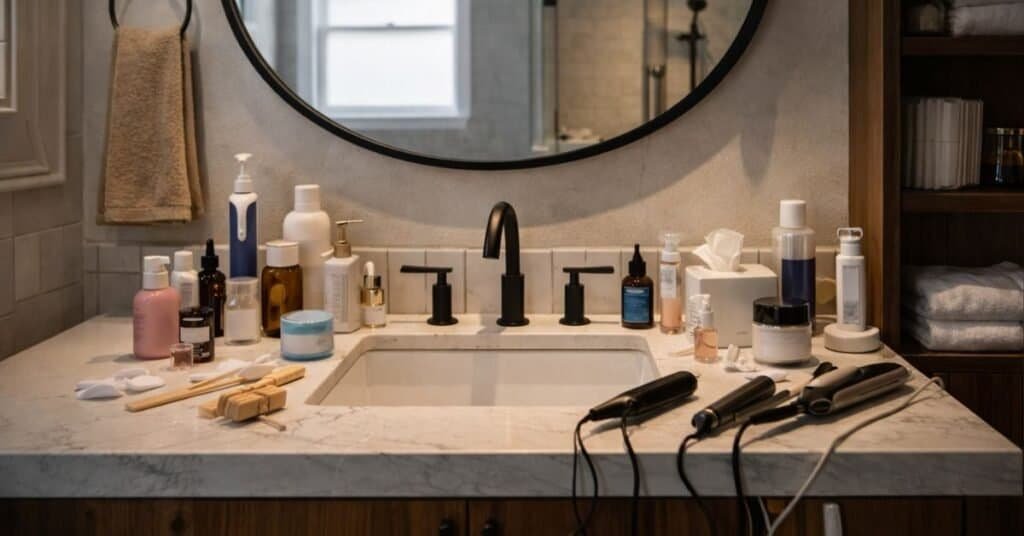
A counter covered in skincare bottles, toothbrush chargers, half-used products, cotton pads, and loose hair tools will make even a pretty bathroom feel unfinished. The same goes for open shelving that turns into overflow storage.
Livingetc notes that small design mistakes can quietly cheapen a bathroom, and clutter is one of the easiest ones to overlook because it builds up slowly. The eye starts bouncing from object to object instead of taking in the room.
Keep only the useful and attractive items out. A hand soap dispenser, a small tray, and maybe one candle or bud vase is enough for most counters. Everything else should be tucked away.
For open shelves, use a simple rule: one basket, one stack of towels, one decorative item. Do not fill every inch.
A small-space variation is to use a shallow tray no wider than about 10 to 12 inches so the counter still has breathing room.
5. Relying on Plastic Accessories and Low-End Finishes
Plastic accessories can drag down the whole bathroom.
A plastic soap dispenser, thin trash can, shiny acrylic organizer, or flimsy toilet brush holder can make the room feel temporary even when the rest of the space is clean. Martha Stewart points to plastic accessories and fixtures that make a bathroom look tacky along with other details that read as cheap at a glance.
This is one of the easiest fixes in the whole room.
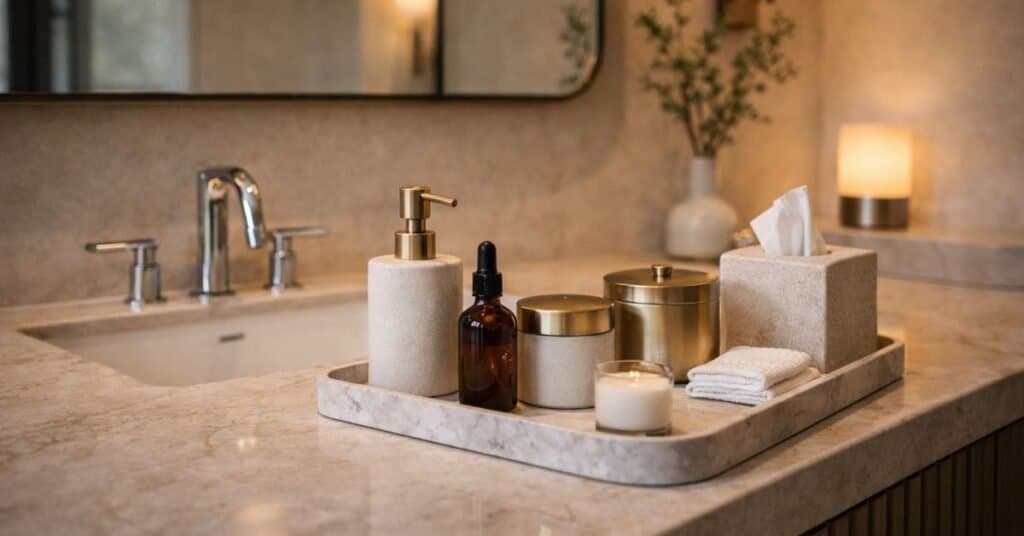
Swap plastic for ceramic, glass, metal, resin, or stone-look pieces. You do not need luxury materials. You just need accessories that look a little heavier and more intentional.
The same goes for hardware. A dated faucet, scratched towel ring, or lightweight cabinet pull can make a bathroom feel older than it is. Replacing a few small pieces often gives more payoff than buying new decor.
A budget option is to update the soap pump, tray, and hand towel first. Those are the pieces closest to eye level around the sink, so they carry a lot of visual weight.
6. Mixing Too Many Tile Styles, Finishes, or Patterns
Tile can either calm a bathroom down or make it feel chaotic.
The trouble starts when the floor tile, shower tile, accent tile, and wall color all fight for attention. Martha Stewart also flags glossy or mismatched tile choices as details that can make a bathroom look tacky rather than refined.
A small room cannot handle five strong surfaces at once.
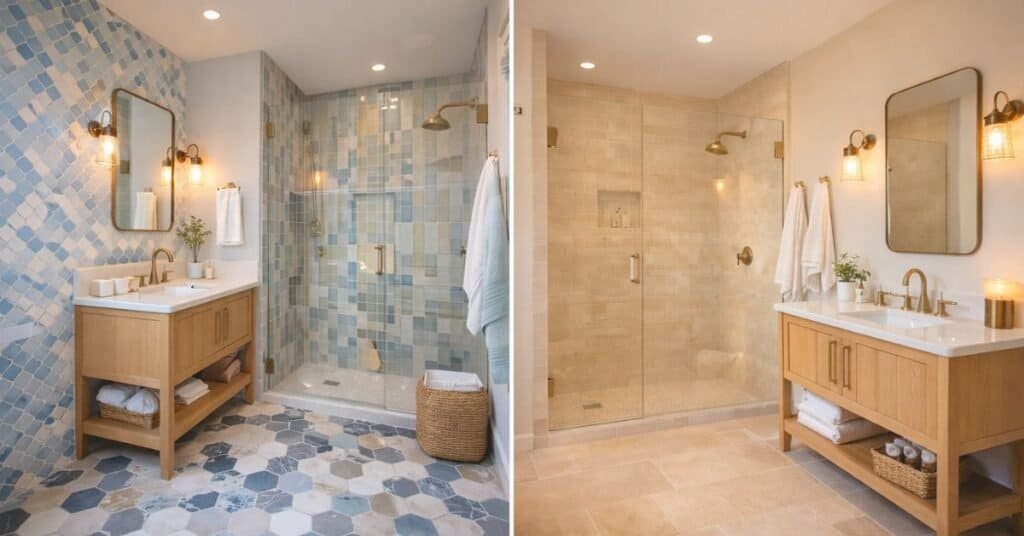
If your floor is patterned, keep the shower tile quieter. If your shower wall has movement or texture, choose a simpler floor. A bathroom usually looks better when one finish leads and the others support it.
Large glossy tile on every surface can also make the room feel cold. House Beautiful warns that too much porcelain across the room can read sterile instead of warm.
For a more polished look, stick to one main tile, one supporting finish, and one accent at most. That still gives the bathroom interest without making it feel crowded.
7. Choosing a Bulky Vanity or Awkward Layout
Scale matters more in a bathroom than people think.
A vanity that is too deep, too dark, or too visually heavy can make the room feel cramped right away. Martha Stewart specifically points to bulky vanities as one of the details that cheapen the room fast.
The same issue shows up in poor layouts. If the vanity blocks the natural path through the room, if the door swing feels awkward, or if storage gets shoved wherever it fits, the whole bathroom feels less comfortable.
Apartment Therapy highlights bathroom layout mistakes that can undermine the entire room even when the finishes are new. That is why layout problems often read as cheap. The room feels hard to use.
In a small bathroom, a vanity with open legs or a lighter finish can help. A 20- to 24-inch-deep vanity often feels better than a chunkier option that eats into floor space.
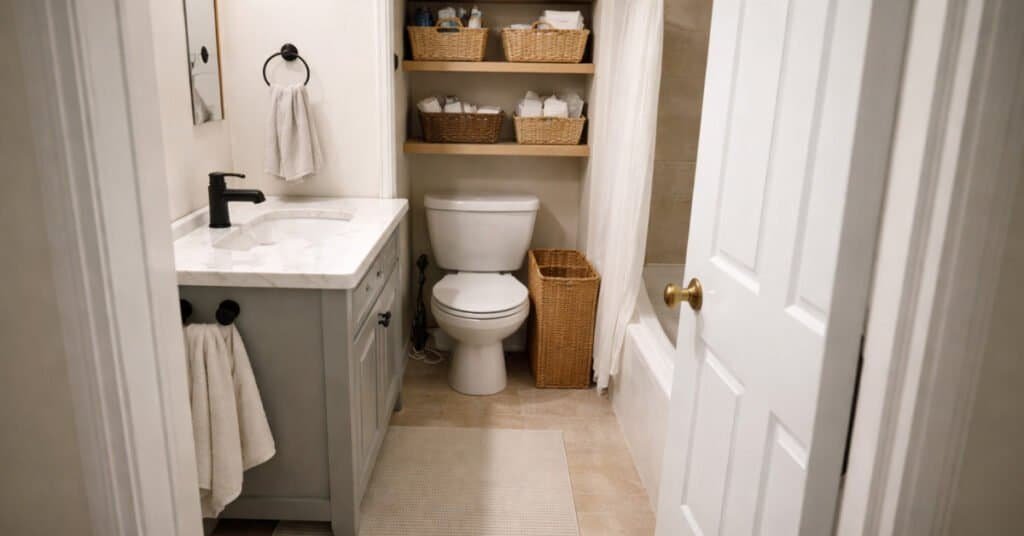
A budget fix is to remove a side cabinet or bulky over-toilet unit if it is making the room feel crowded. Less furniture can actually make the bathroom feel more finished.
8. Going Overboard with Matching Metals and Matchy-Matchy Decor
Too much matching can make a bathroom feel flat.
When every metal finish is identical and every decorative item looks bought in one set, the room starts to feel less personal. House Beautiful mentions matching every metal finish too closely as one of the choices that can cheapen the final look.
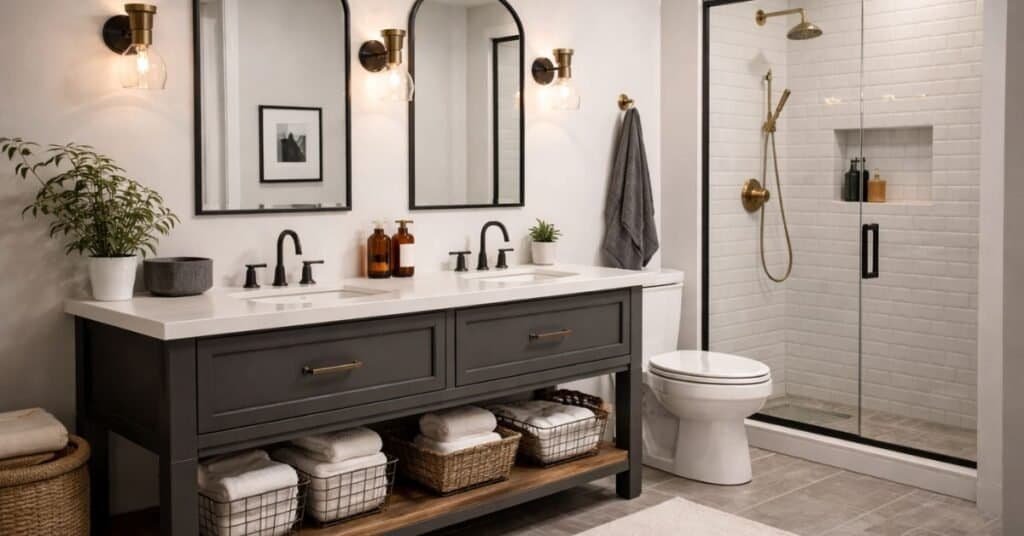
Bathrooms usually look better when there is one main finish and one supporting finish.
For example, you might use brushed nickel on the faucet and shower hardware, then bring in a small touch of black through the mirror frame or sconces. That little bit of contrast makes the room feel more layered.
The same idea applies to decor. Towels, bath mats, trays, jars, and art do not all need to match exactly. They just need to sit in the same family.
In a small powder room, even a single mixed-metal detail can help the room feel less builder-basic.
9. Using Bright, Busy, or Themed Accessories
Bathrooms are small, so accessories get loud very quickly.
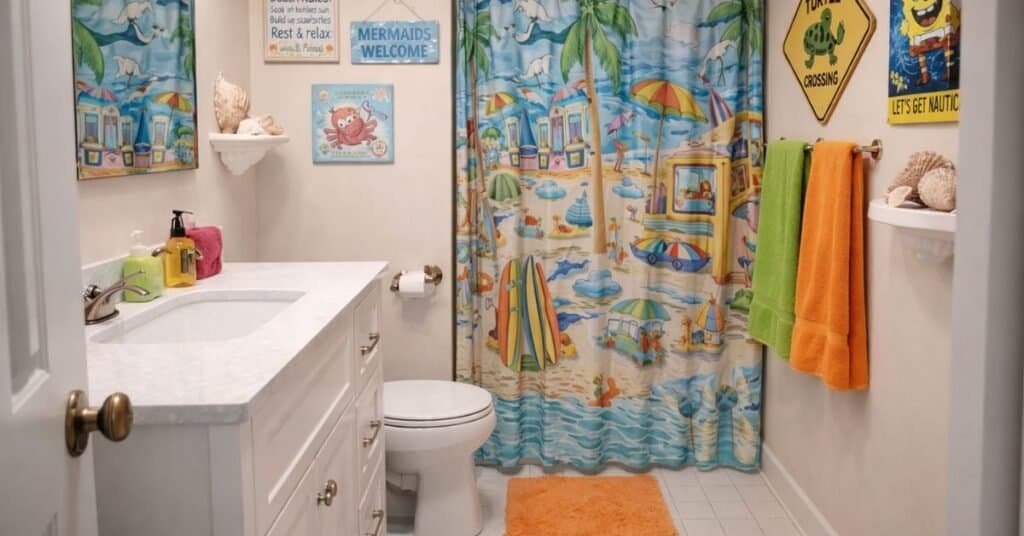
That is why bright neon towels, busy shower curtains, seashell decor, word art, novelty signs, and cartoonish details can make the room feel dated. HGTV’s decor mistakes that make your bathroom look cheap points to overly vibrant towels and accessories that overwhelm the space instead of making it feel calm.
The fix is not to make the room boring. It is to lower the noise.
Choose towels in white, sand, mushroom, clay, dusty blue, or olive. Pick a shower curtain with texture or a subtle pattern instead of a loud print. Use one piece of art instead of four.
A budget option is to replace only the textiles first. Fresh towels, a better bath mat, and a cleaner-looking shower curtain can change the room in one afternoon.
In a small bathroom, this matters even more because the textiles often take up a big percentage of what you see at eye level.
10. Ignoring Material Quality in a Moisture-Heavy Space
Bathrooms work hard. Cheap materials show it fast.
Paint can peel. Cabinets can swell. Grout can stain. Finishes can chip. Once that starts happening, the room feels worn out, even if the design looked nice at the start.
Better Homes & Gardens stresses that materials need to suit the bathroom environment and hold up to moisture if you want the room to stay looking good over time. That is one of the biggest differences between a bathroom that feels cheap and one that feels solid.
Spend a little more where wear shows most. That usually means paint, hardware, vanity finish, flooring, and grout.
This does not mean every surface has to be expensive. It means the visible, high-contact areas should not feel flimsy. A solid-looking faucet and durable vanity paint will usually do more for the room than extra decor ever will.
How to Make a Bathroom Look More Expensive Without Renovating
You can improve a bathroom fast without tearing anything out.
Start with the easiest visual fixes first:
- Clear the countertops
- Replace plastic accessories
- Upgrade towels and bath mat
- Swap in warmer bulbs
- Add one tray or basket for order
- Bring in one warm material, like wood or woven texture
- Remove extra decor that is only adding noise
The Spruce-style budget decorating approach in your brief also supports simple upgrades like better hardware, improved lighting, coordinated textiles, and less clutter as easy ways to make the room feel more polished.
A good rule is this: when the room feels calmer, it usually looks more expensive.
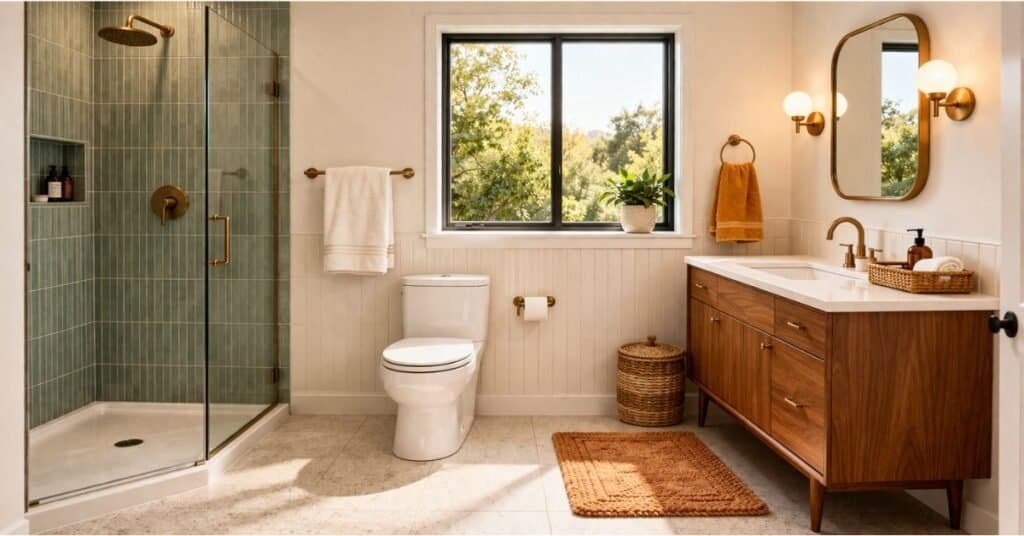
Small Bathroom Decor Mistakes to Avoid
Small bathrooms have less room to hide mistakes.
A bulky vanity feels bulkier. Loud towels feel louder. Too many products on the counter make the whole room feel messy in seconds. Poor layout choices also become more obvious.
Your brief also points to light colors, reflective surfaces, and cleaner visual flow as useful ways to make a small bathroom feel brighter and more expensive.
For a smaller bathroom, focus on these:
- keep the palette light but warm
- use fewer accessories
- choose a slim vanity if possible
- avoid busy tile combinations
- keep at least part of the countertop clear
- use a mirror that helps bounce light around the room
A narrow bath mat, one tray, and a single basket often works better than adding more storage furniture.
FAQs
What makes a bathroom look cheap instead of expensive?
A bathroom usually looks cheap when it feels cluttered, cold, too trendy, or poorly lit. It is often less about budget and more about whether the room feels clean, simple, and settled.
Which bathroom decor choices look tacky or dated right now?
Bulky vanities, plastic accessories, glossy mismatched tile, loud themed decor, and bright busy textiles can all make a bathroom feel dated. Those details stand out quickly in a small room.
Do all-white bathrooms still look timeless or can they feel cheap?
They can still look beautiful, but only when they have texture, warmth, and contrast. Without that, all-white bathrooms can feel flat or sterile, which is one of the concerns raised in your brief’s source notes.
Are gray bathrooms making a space feel flat or outdated?
Cool gray bathrooms can feel flat when there is no warmth mixed in. A softer greige, taupe, mushroom, or warm stone tone usually feels easier to live with.
How can I make a small bathroom look more expensive on a budget?
Clear the counters, replace plastic accessories, upgrade the towels, use warm lighting, and simplify the palette. Those are small changes, but they make a visible difference fast.
What colors make a bathroom look more high-end?
Creamy white, soft taupe, warm gray-beige, muted green, dusty blue, and natural wood tones usually feel more polished than icy gray or overly bright colors.
Does mixing metal finishes in a bathroom look stylish or messy?
It looks stylish when one finish leads and the second finish is only used in small amounts. Too many equal finishes can feel messy, but a controlled mix adds depth.
Which bathroom materials can make a room feel cheap?
Flimsy laminate, peeling paint, low-grade hardware, shiny plastic accessories, and moisture-sensitive finishes that wear out fast can all make the bathroom feel cheaper over time.
How much does lighting affect whether a bathroom looks expensive?
A lot. Lighting changes how the tile, mirror, walls, and vanity all look. Softer, warmer, better-placed lighting makes even a simple bathroom feel more finished.
What renovation mistakes can make a bathroom feel dated fast?
Overdoing trends, choosing cold colors, using too many tile styles, crowding the layout, and cutting corners on visible materials can date a bathroom faster than expected.
Final Thoughts
A bathroom does not need expensive finishes to look polished.
It needs fewer distracting details, better balance, and a little more warmth. When the lighting is softer, the storage is cleaner, the accessories feel sturdier, and the palette has some depth, the whole room starts to feel better.
The biggest shift is usually not adding more. It is removing what makes the room feel busy, cold, or dated.
For more inspiration, see Bathroom Decor Ideas: The Surprising Before and After I Didn’t Expect.