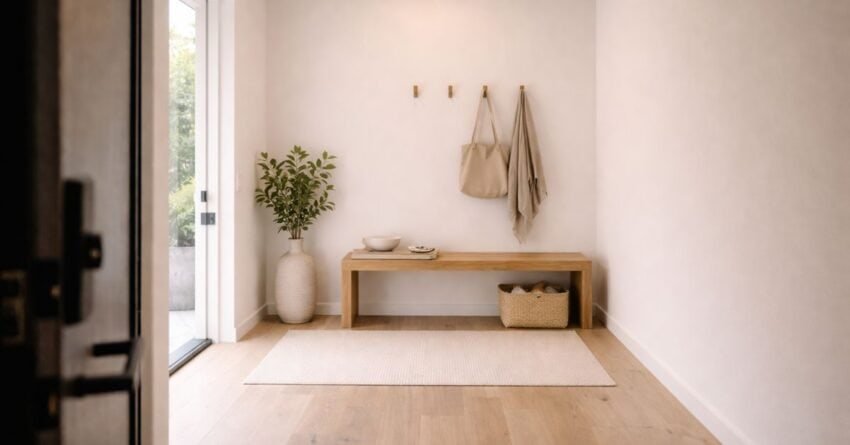
You open the front door and there it is. The tight little spot that makes you shuffle, twist, and try not to trip over shoes. Your bag needs a place to land. Your keys need a home. The door needs room to swing. And somehow the space still has to feel welcoming.
If you have been wondering how to decorate small entrance of home so it feels bigger, you are not alone. A lot of homes in the US and Canada have entry areas that are more like a tiny slice of hallway than a real foyer.
The good news is you do not need more stuff. Most small entrances feel smaller because the layout is doing too much in one spot. With a few simple layout moves, light choices, and calmer storage, the same doorway can feel open the moment you step in.
In the next sections, you will see small entryway ideas that keep the walkway clear, give shoes and bags a real place, and still look clean and calm.
Table of Contents
Why Small Entrances Often Feel Tight
Most small entrances are not actually too small. They just try to do too much in one spot. When every item competes for space near the door, the area starts to feel closed in the moment you walk inside.
Too Many Items by the Front Door
Shoes, bags, coats, mail, and loose items often pile up right where you step in. This creates visual noise and makes the floor feel crowded. Livingetc points out that over decorating and clutter are some of the most common reasons entryways feel cramped, even in larger homes.
When the eye has nowhere to rest, the space feels smaller than it is.
Furniture That Is Too Deep
A deep console table or a bulky bench can block movement in a narrow entry. Homes and Gardens notes that keeping circulation open is key in tight spaces. When furniture sticks out too far, it shrinks the walkway and forces you to squeeze past it.
Even one oversized piece can throw off the whole area.
Poor Lighting Near the Entry
Many small entrances rely on a single ceiling light. Martha Stewart highlights that flat lighting can make an entry feel dull and boxed in. Without layered light, shadows build up in corners and the space feels tighter.
Good lighting does more than help you see. It helps the space breathe.
Start With a Minimalistic Entry Layout
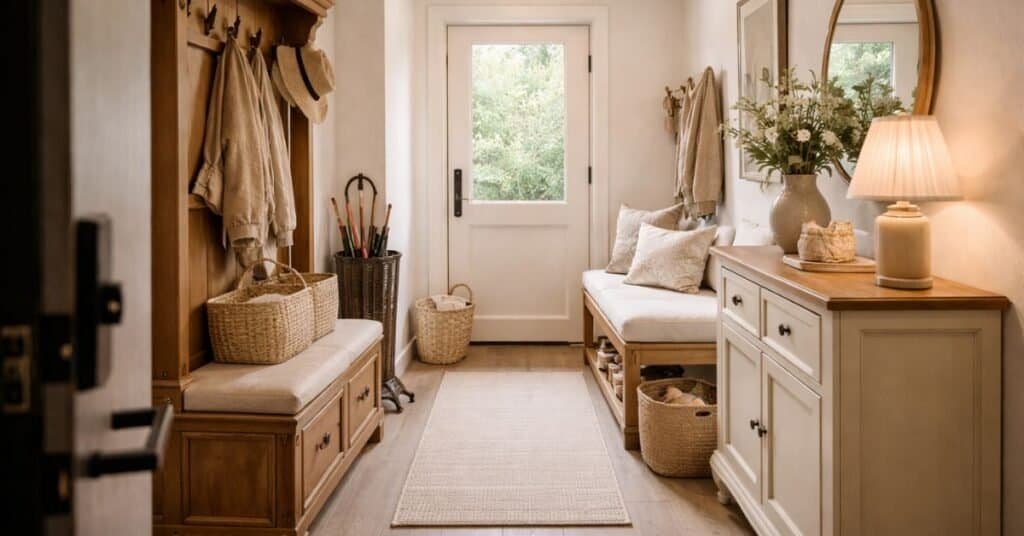
Before you pick decor, set up the layout. A minimalistic entry works best when each thing has a job and the floor stays as open as possible. Real Simple points out that small entryways still need to work as a drop zone for daily items like keys and bags, while keeping clutter under control with smart pieces like hooks, baskets, and a mirror.
One Function Per Wall
Think of your entrance like three simple zones. You do not need three walls to do this. You can do it with one wall plus a corner.
- Storage wall: hooks, shelf, shoe area
- Walkway space: clear path for the door and feet
- Visual spot: mirror or one calm art piece
This keeps the space from feeling like everything is fighting for attention at the front door.
Keep the Walkway Clear
If your entrance feels tight, start by removing anything that sits in the path.
Homes and Gardens shares that a tiny entryway feels better when circulation stays open and furniture is kept limited.
Try these simple layout rules:
- Leave a clear strip of floor from the door to the next room
- Keep the door swing area empty
- If something forces you to turn sideways, it does not belong there
Use Slim Profile Furniture Only
In small entryways, depth matters more than width. A narrow piece can work. A deep piece can block everything.
Real Simple also notes that scale matters in small entryways, and that pieces like a narrow console, a rug, or a mirror can add style without overcrowding.
Good slim picks:
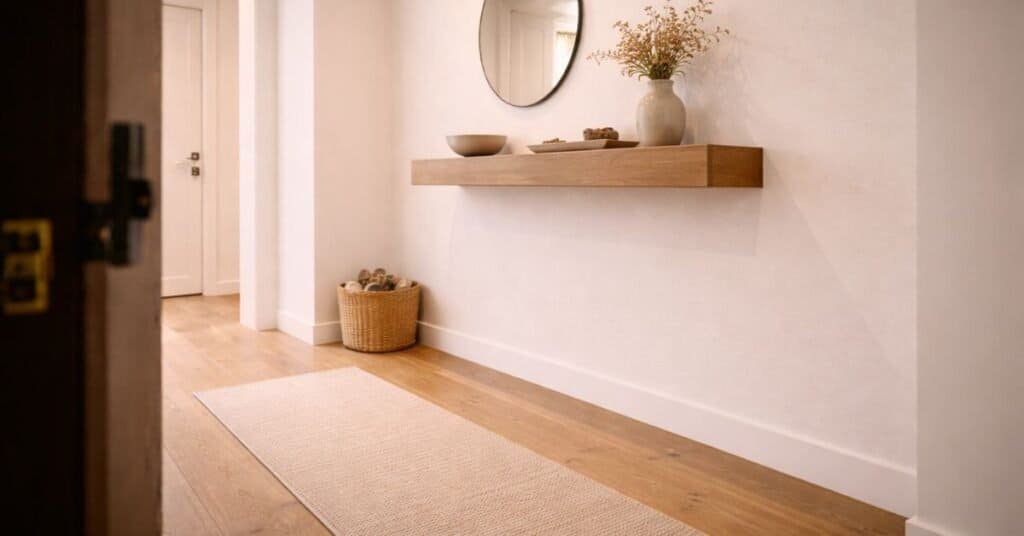
- Floating shelf as a landing spot
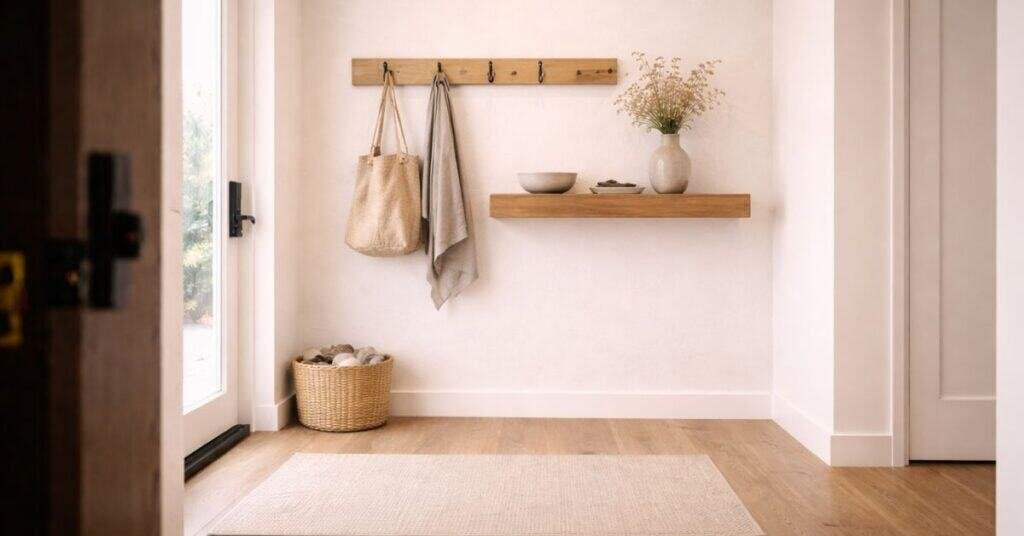
- Wall mounted hooks for bags and coats
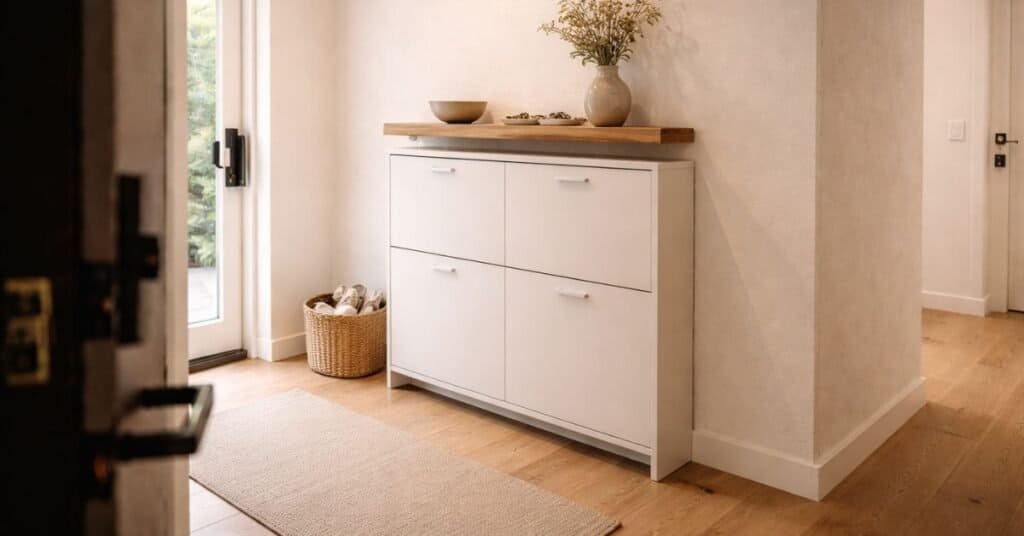
- Closed shoe storage that sits flush to the wall
- A small bench only if it does not pinch the walkway
How to Decorate Small Entrance of Home to Visually Expand the Space
Once the layout feels calmer, small visual changes can make the entrance feel wider and brighter. These small entryway ideas focus on light, flow, and surfaces that help the eye move instead of stopping short.
Add a Mirror to Reflect Light
A mirror is one of the easiest ways to make a small entrance feel bigger. It bounces light back into the space and gives the eye more depth.
Good mirror tips for tight entrances:
- Hang it on the wall that faces or angles toward the door
- Use a vertical mirror to pull the eye upward
- Keep the frame simple so it does not crowd the wall
Homes and Gardens often highlights mirrors as a smart choice in tiny entryways because they help the space feel less boxed in and more open.
Choose a Light and Warm Neutral Palette
Dark colors can make a small entrance feel heavy. Lighter tones help the walls step back visually.
Southern Yankee DIY points out that light wall colors reflect natural light and help small areas feel more open and airy. Soft whites, pale beige, and light greige work well in entrances that do not get much daylight.
Keep contrast gentle:
- Light walls
- Slightly darker floor
- One darker accent only if needed
This keeps the space calm the moment you walk in.
Match Flooring With Nearby Rooms
When the entry floor changes sharply from the next room, it creates a visual stop. Matching or closely blending the flooring helps the space feel longer.
Homes and Gardens shares that connecting flooring between rooms helps tiny entryways feel less separate and more spacious.
If replacing flooring is not an option:
- Use a runner that matches nearby tones
- Avoid small loose mats near the door
Small Entryway Storage Ideas Without Bulk
Storage is often the reason a small entrance feels crowded. Shoes, bags, and daily items need a place to go, but bulky pieces can quickly close the space in. These small entryway storage ideas keep things tidy while letting the area feel open.
Closed Storage Beats Open Storage
Open shelves and racks may look nice at first, but they show everything. In a small entrance, that can turn into visual noise fast.
Closed storage helps the eye relax. When shoes and bags disappear behind doors or panels, the space feels calmer and more open. Real Simple shares that small entryways work best when clutter stays out of sight and storage does the heavy lifting quietly.
If you have the choice, pick:
- Slim shoe cabinets that sit close to the wall
- Storage with flat fronts
- Light finishes that blend into the wall
Use a Shoe Tray Instead of a Rack
Shoe racks often stick out too far and crowd the walkway. A shoe tray keeps things grounded and easier to manage day to day.
Why trays work better:
- They keep shoes in one clear zone
- They are easy to clean
- They do not block door movement
Homes and Gardens also notes that loose mats and cluttered shoe areas can make an entry feel messy and smaller than it is.
Wall Mounted Organizers for Keys and Mail
Keys and mail tend to float around the entrance. A small wall mounted shelf or organizer keeps them off the floor and out of pockets.
Real Simple suggests pairing a shallow shelf with a tray or small bowl to create a simple drop zone without adding furniture.
Keep it light:
- One shallow shelf
- One small tray or bowl
- Nothing underneath it
Narrow Entryway Ideas That Keep Movement Easy
A narrow entrance feels tight when movement is blocked. The goal here is not to add more. It is to let the space breathe while still handling daily needs. These narrow entryway ideas focus on flow first, then light styling.
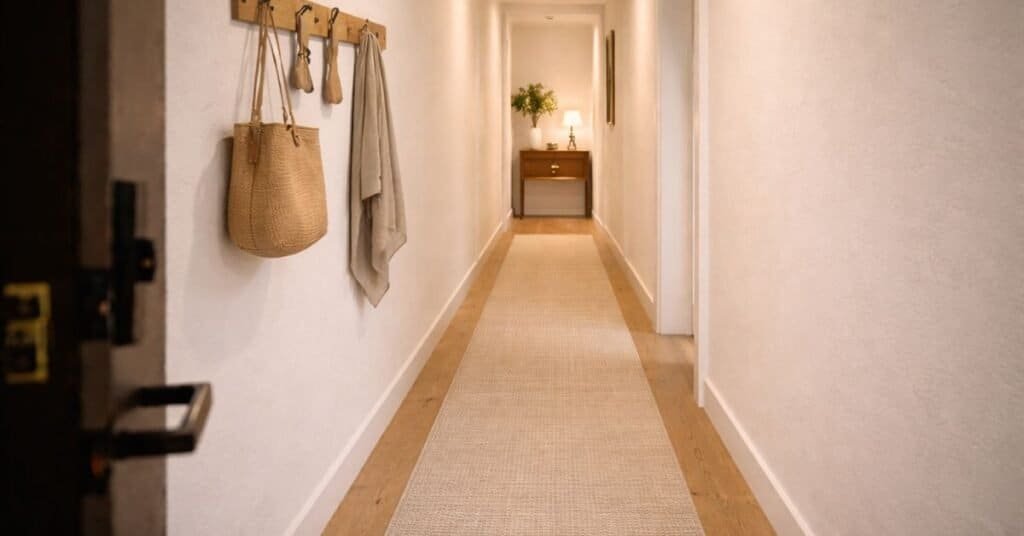
Use a Runner to Stretch the Space
A runner helps guide the eye forward instead of side to side. This makes a narrow entry feel longer.
For best results:
- Choose a runner that leaves a small border of floor on each side
- Keep the pattern simple or low contrast
- Avoid short mats that stop before the door swing
Homes and Gardens explains that longer floor pieces help connect small entryways to nearby rooms, which makes them feel less boxed in.
Choose Wall Hooks Instead of a Coat Rack
Freestanding coat racks often eat up precious floor space. Wall hooks do the same job without getting in the way.
Helpful hook spacing tips:
- Place hooks high enough to clear bags and coats
- Space them out so items do not overlap
- Use one hook per person when possible
This keeps coats off the floor and keeps the walkway clear.
Skip Side Tables in Tight Paths
In very narrow entrances, even a slim table can make the space feel crowded. If walking past furniture feels awkward, it is better to remove it.
A wall shelf plus hooks often works better than any table in tight spaces. You still get function without blocking movement.
Minimalist Entryway Furniture That Works Harder
Furniture in a small entrance should earn its place. If it blocks movement or adds visual weight, it makes the space feel smaller. These minimalist entryway furniture ideas focus on pieces that support daily life without taking over the room.
Floating Consoles and Shelves
Floating pieces keep the floor open, which helps the entrance feel lighter. When the eye can see more floor, the space feels larger.
A floating shelf or console works well when:
- You need a spot for keys or a bag
- The wall is strong enough to support it
- You want storage without legs on the floor
Keep styling simple. One tray and one small item is enough.
Entryway Bench With Hidden Storage
A bench can work in a small entrance, but only if space allows. It should never pinch the walkway or block the door.
HGTV shows that a small seat with storage can help with shoes while keeping the area tidy. Drawers or a lift top work better than open cubbies.
If the bench feels tight when you walk past it, it is better to skip it.
When to Skip Furniture Entirely
Some entrances do not need furniture at all. This is common in apartments where the door opens straight into the living space.
In these cases:
- Use wall hooks for bags and coats
- Add a mirror for depth
- Place a small tray on a nearby shelf or cabinet
An empty floor with clear walls often feels better than forcing in a piece that does not fit.
Lighting Choices That Make a Small Entrance Feel Open
Lighting changes how a small entrance feels more than most people expect. A dim or flat setup can make the space feel closed in, while the right light can lift the ceiling and soften corners.
Flush Mount Ceiling Lights Work Best
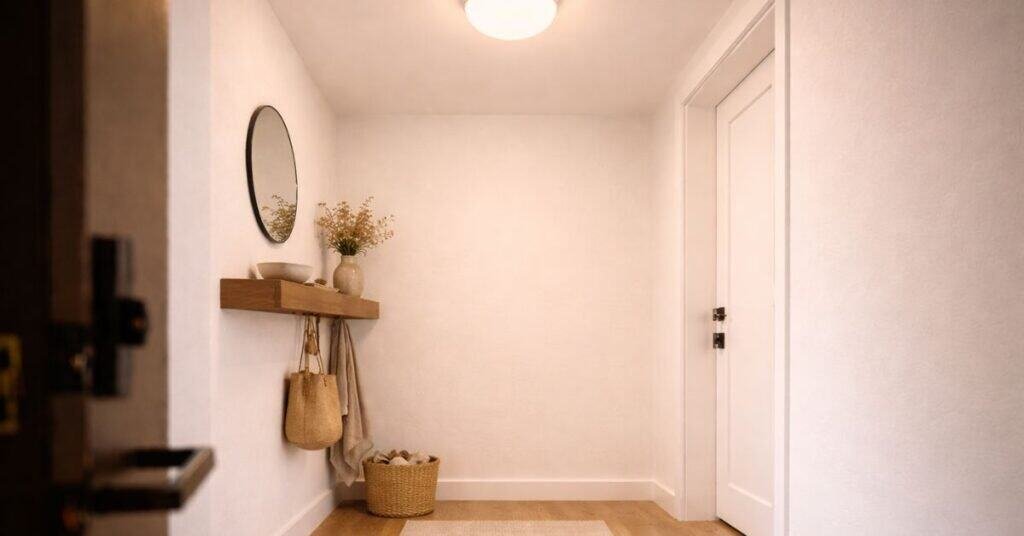
In small entrances with low ceilings, flush mount lights keep things open. Hanging fixtures can sit too low and pull the eye down.
Flush mount lights:
- Spread light evenly
- Keep the ceiling clear
- Work well near doors that open inward
Martha Stewart notes that relying on recessed lighting alone can make an entry feel flat. A simple ceiling fixture adds depth without crowding the space.
Use Wall Sconces Instead of Table Lamps
Table lamps take up surface space that small entrances often cannot spare. Wall sconces give light without adding clutter.
Wall mounted lighting:
- Frees up shelves and consoles
- Adds gentle light at eye level
- Keeps cords off the floor
This works especially well next to mirrors or along narrow walls.
Pick Warm Light for a Softer Feel
Very bright white light can feel harsh in a small entrance. Warm light creates a calmer mood and helps surfaces feel smoother.
A soft glow:
- Makes walls feel closer and more inviting
- Reduces sharp shadows
- Helps the entrance blend with nearby rooms
Small Entryway Decor That Stays Calm
Decor should support the space, not crowd it. In a small entrance, fewer pieces make a bigger difference. These small entryway decor ideas keep things light, useful, and easy to live with.
Limit Decor to Three Items
A simple rule helps prevent clutter. Keep decor to three things in one spot.
A calm setup could look like:
- One mirror or wall art
- One tray or bowl for keys
- One small plant or basket
More than that and the area starts to feel busy. Real Simple often points out that small entryways work best when decor stays focused and useful.
Use Woven Texture for Softness
Hard surfaces like walls, doors, and floors can make a small entrance feel sharp. Woven pieces soften the look without taking much room.
Good texture choices:
- A small woven basket under hooks
- A natural fiber runner
- A fabric lined tray
These pieces add warmth while keeping the space quiet.
Skip Small Loose Mats by the Door
Loose mats slide around and break up the floor visually. Homes and Gardens warns that small mats near the door can make an entry feel messy and unfinished.
If you use a mat:
- Choose a runner instead
- Keep it flat and secure
- Match it to nearby flooring tones
This helps the entrance feel longer and more settled.
Modern Minimalist Entryway Style Options
A modern minimalist entryway keeps shapes simple and colors calm so the space feels open the moment you step inside. These style ideas work well in small entrances where every detail shows.
Light Wood With Black Accents
Light wood brings warmth without darkening the space. Small touches of black add contrast without taking over.
Try this mix:
- Light wood shelf or bench
- Black hooks or a slim mirror frame
- Neutral walls to keep things balanced
This pairing feels clean and grounded without feeling heavy.
Simple Shapes and Clean Lines
Busy shapes can make a small entrance feel crowded. Straight lines help the eye move smoothly.
Good choices include:
- Rectangular mirrors
- Straight hooks
- Flat front storage
Avoid curved or bulky pieces that stick out too far.
Keep Walls Quiet
Walls in a small entrance do not need much. Too many items pull attention in every direction.
Options that work well:
- One mirror on a main wall
- One calm art piece if space allows
- No gallery walls
A quiet wall helps the whole area feel larger.
Common Small Entryway Mistakes to Avoid
Even with good intentions, a few common choices can make a small entrance feel tighter than it needs to be. Fixing these issues often creates more space than adding anything new.
Over Decorating the Door Area
Adding too many items near the door can crowd the space fast. Livingetc points out that over decorating is one of the top reasons entryways feel cramped.
Signs this is happening:
- Several small decor items on one surface
- Hooks covered edge to edge
- Shoes visible from every angle
Pulling a few things away often makes the biggest difference.
Relying on One Ceiling Light
Using only a ceiling light can leave shadows in corners and make walls feel flat. Martha Stewart notes that this often makes an entry feel dull and easy to forget.
Adding light at eye level helps:
- Wall sconces
- Light near a mirror
- Warm bulbs instead of harsh white
Light should fill the space, not sit only overhead.
Using Bulky or Tall Storage
Tall cabinets and deep furniture block sightlines. When the eye hits a large piece right away, the entrance feels closed in.
Better options include:
- Low or wall mounted storage
- Pieces that sit flush to the wall
- Storage that blends into the wall color
Quick Fix Table
| Mistake | Why it feels bad | Simple fix |
| Too many items | Visual clutter shrinks space | Remove half and keep only daily use items |
| Deep furniture | Blocks movement | Switch to wall mounted storage |
| Flat lighting | Creates shadows | Add warm wall lighting |
| Loose mats | Breaks floor flow | Use a long runner |
Frequently Asked Questions
How do you decorate a small entrance without clutter
Start by limiting what stays near the door. Keep only daily use items and move extras elsewhere. Closed storage and wall hooks help keep the floor clear and the space calm.
What is the best furniture for a small entryway
The best pieces are slim and simple. Wall shelves, floating consoles, and narrow benches work better than deep furniture. If walking past a piece feels tight, it is better to remove it.
How do you organize shoes in a small entrance
Shoes work best when they stay low and contained. A shoe tray or slim closed cabinet keeps them tidy without blocking movement. Avoid tall racks that draw attention and crowd the space.
How do you make a small entryway look bigger
Light colors, clear floors, and mirrors help the space feel open. Matching the entry floor with nearby rooms also helps the area feel longer. Keeping decor minimal lets the eye move freely.
Where do you put a coat rack in a small entryway
Wall hooks work better than freestanding racks. Place them on a side wall or behind the door so coats stay out of the walkway. Space hooks apart so items do not overlap.
What color is best for a small entryway
Light warm tones work well in small entrances. Soft white, pale beige, and light greige help reflect light and reduce shadows. Dark colors can make the space feel closed in.
How do you decorate an entryway with no space for a table
Use the wall instead of the floor. A shallow shelf with a tray and a mirror can handle keys and bags. This keeps the floor open and the space easy to move through.
How do you style an entryway console table in a minimalist way
Keep it simple and limited. Use one tray for small items, one taller piece like a mirror or lamp, and one soft element such as a small plant. Avoid filling every inch of the surface.
What size rug works in a narrow entryway
A runner works better than a small mat. It should leave a small border of floor on each side and run in the same direction as the walkway. This helps the space feel longer.
How do you create a drop zone by the front door
A drop zone only needs three things. One hook area for bags, one tray for keys, and one spot for shoes. Keeping each item in its own place prevents clutter from spreading.
Conclusion
A small entrance does not need more space to feel bigger. It needs calmer choices. Clear walkways, light colors, simple storage, and fewer items make a big difference the moment you step inside.
When each piece has a purpose and nothing blocks movement, even the smallest front door area can feel open and welcoming. Start with one change and let the space breathe.
If you want more ideas like this, take a look at Minimalist Home Ideas: I Tried Simplifying My Space… Here’s What Actually Happened for calm, simple changes you can use throughout your home.