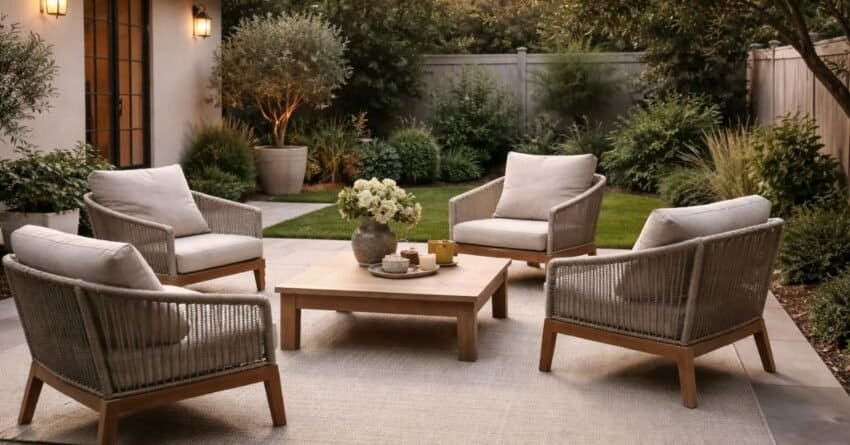
Outdoor seating sounds simple until it isn’t.
Chairs get pushed against walls. Tables sit too far away. Walkways feel tight.
The space looks fine, but no one wants to sit there for long.
If your patio or backyard has ever felt awkward, you are not alone. Most outdoor areas feel uncomfortable because the seating was placed without a clear plan. Pieces are added one by one, and suddenly nothing feels easy to use.
This is why outdoor seating arrangement ideas matter more than the furniture itself. The way seating is spaced, grouped, and placed changes how the space feels day to day.
The good news is that most outdoor seating problems come from a few common mistakes. Once you spot them, small layout changes can make your patio or yard feel calmer, more open, and easier to enjoy.
Table of Contents
Why Outdoor Seating Often Feels Awkward
Outdoor spaces usually feel off for the same reasons. The furniture is fine. The problem is how everything is placed.
Most patios and backyards are set up without thinking about how people sit, talk, and move once they are outside.
Treating Outdoor Seating Like Random Furniture
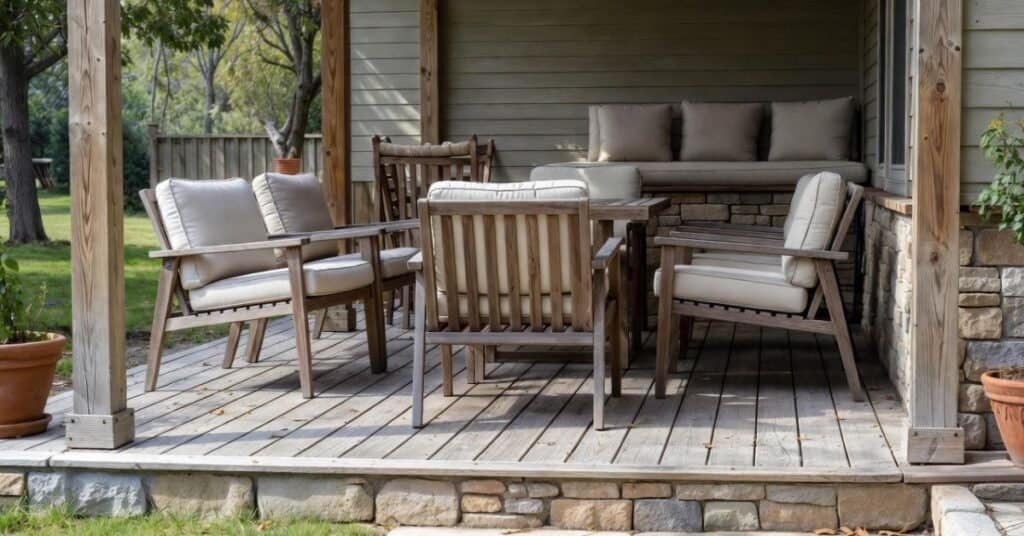
One of the biggest issues is placing chairs and tables wherever they fit. A chair goes near the wall. Another gets added later. A table ends up floating in the middle.
This creates a space that looks filled but feels uncomfortable.
Outdoor seating works better when it is planned in simple zones, similar to how living rooms are arranged indoors. A small area for sitting and talking. Another spot for eating. Sometimes a separate place just to relax. Many patio design guides suggest this approach because it keeps the space from feeling scattered and hard to use.
When seating has a clear purpose, people naturally know where to sit instead of shifting chairs around.
Forgetting How People Move Through the Space
Another common problem is blocked movement.
Chairs get placed right in walking paths. Tables are too close to doorways. Guests end up stepping around furniture instead of moving easily through the space.
Outdoor layouts work best when walking paths are planned first, then seating is arranged around them. Many patio layout guides suggest leaving open routes so people can move without cutting through seating areas.
Once movement feels natural, the entire space feels calmer and more comfortable.
Outdoor Seating Arrangement Ideas That Work Better
A comfortable outdoor setup usually comes from two simple moves.
Pick one main purpose first.
Then group seating around a focal point.
Start With One Clear Seating Purpose
Before moving a single chair, decide what you want this area to do most days.
- Talking with coffee in the morning
- Dinner outside a few times a week
- Lounging with a book after work
- Having friends over on weekends
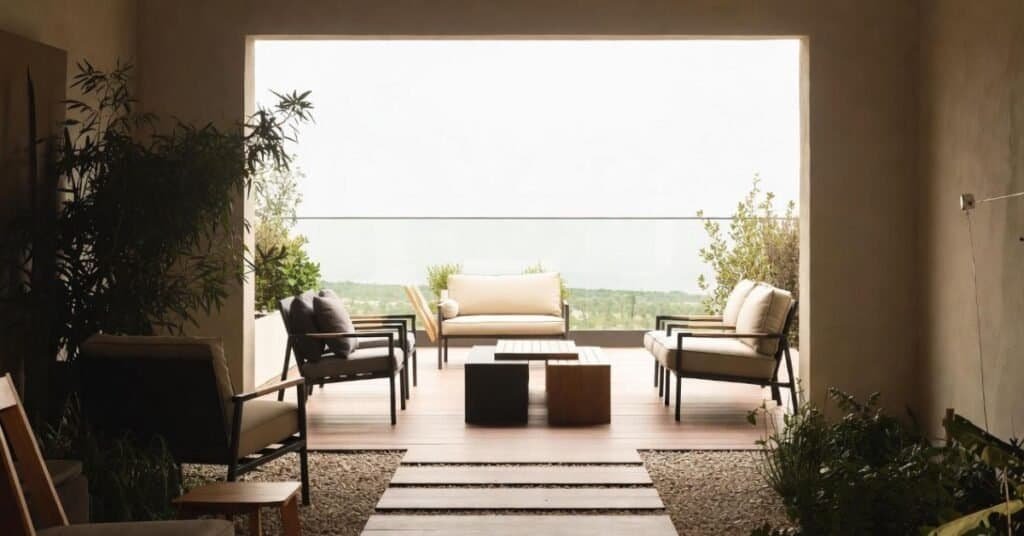
When the purpose is clear, the layout becomes easier to plan. Many patio design guides suggest thinking in zones so the seating supports how the space will actually be used, instead of filling the area with pieces that do not work together.
If the space needs to do more than one thing, keep it simple:
- One zone for conversation
- One zone for dining
- A clear path between them
That alone fixes a lot of awkward patios.
Build Seating Around a Focal Point
Outdoor seating feels most natural when it has a center.
The center can be:
- A fire pit
- A coffee table
- A view or garden corner
- A small open space where people face each other
Once you choose the focal point, group seating so it feels easy to talk without shouting across the patio.
Fire pit layouts are a good example because the seating is naturally grouped for conversation and longer hangouts.
A quick rule that helps:
If people need to lean forward to talk, the seating is too far apart. If knees bump and movement feels tight, it is too close.
Small Outdoor Seating Arrangement Ideas That Feel Comfortable
Small patios and balconies can feel cozy fast. They can also feel crowded fast.
The trick is not stuffing the space. It is making each piece earn its spot.
Why Small Spaces Feel Crowded Fast
Most small outdoor areas feel tight for three reasons:
- The furniture is too deep for the space
- Too many pieces are trying to fit at once
- The walking path gets squeezed, so people keep bumping into chairs
A small space does better with fewer seats that are placed with intention. When there is open floor space, the whole area feels calmer.

Use the Perimeter to Keep the Center Open
One easy layout fix is to keep the middle open and build seating around the edges.
Try this pattern:
- Put the longest seating piece along the longest wall or railing
- Place one or two chairs across from it
- Keep a clear path from the door to the seating area
Small patio layout tips often suggest using the perimeter so the center stays open for movement. Space saving patio layout ideas usually keep the center open.
If your space is narrow, think in a simple line:
- Seating on one side
- Small table in the middle
- A clear walkway on the other side
That keeps the space usable instead of cramped.
One Standout Seat Works Better Than Many
This is where a lot of people get stuck. They try to add seating for every possible guest.
In small spaces, it often works better to choose one standout seat, then add one extra flexible seat only if needed. Design editors often suggest focusing on one standout seat because it keeps the patio from feeling packed and small patios often benefit from fewer seating pieces.
A quick way to check your layout:
- Stand in the doorway
- If you cannot walk in without turning sideways, remove one piece
- If you cannot pull out a chair without scraping, shift the group back
Patio Seating Layout Ideas Most People Skip
Some seating problems are not obvious until you try to use the space.
Everything looks fine, but sitting down feels awkward.
These details are often skipped, yet they make a big difference.
Spacing Between Chairs and Tables Matters
When seating feels uncomfortable, spacing is usually the reason.
Common spacing issues include:
- Chairs placed too close to tables
- Coffee tables pushed too far away
- Walkways that feel tight once people sit down
Standard outdoor seating spacing recommendations suggest leaving enough room to sit, stand, and move without shuffling furniture every time someone gets up.
A simple rule that helps most patios:
- Leave clear walking paths around seating
- Keep tables close enough to reach without leaning
- Make sure chairs can slide back fully
If you have to squeeze sideways to pass through, the spacing needs adjustment.
Why Pushing Furniture Against the Wall Backfires
It feels logical to push everything to the edges. More space in the middle sounds better.
In reality, this often creates dead zones.
When furniture hugs the wall:
- Conversation feels stretched out
- Seating feels disconnected
- The center becomes empty but unused
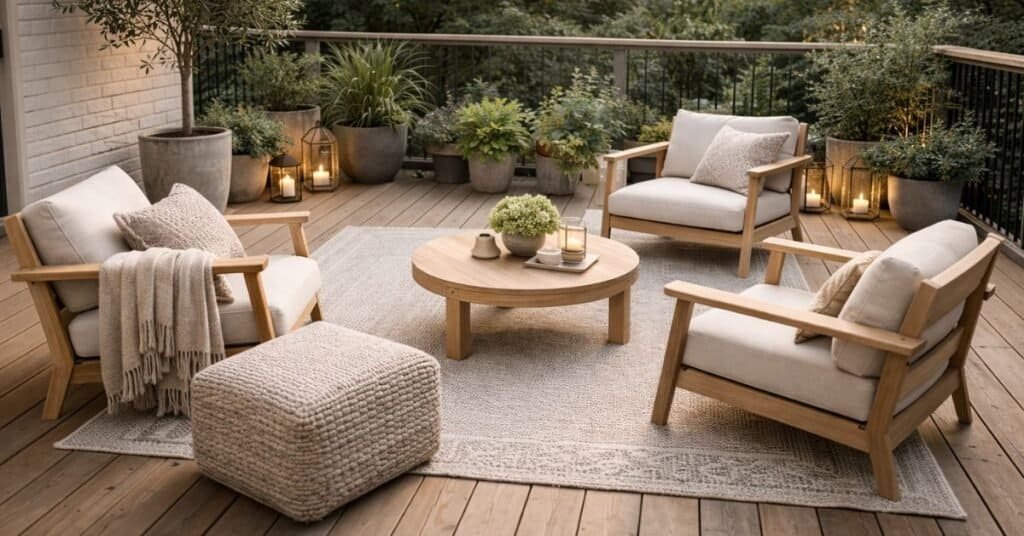
Outdoor seating works better when pieces face each other slightly, even if they stay near the edges. Many patio layout guides suggest planning traffic flow first, then pulling seating just far enough forward so people can sit comfortably and talk without raising their voices.
| Layout Issue | Why It Feels Wrong | Simple Fix |
| Chairs too close | Hard to move or stand | Slide seating back a few inches |
| Tables too far | Awkward reach | Move table closer to seating |
| Furniture on walls | Conversation feels distant | Angle seats inward slightly |
Backyard Seating Arrangement Ideas for Guests
Backyards usually have more room than patios, which sounds like a good thing.
But extra space can create a new problem. Seating gets spread out too far, and the area feels empty instead of inviting.
The goal for guests is simple. Make it easy to sit down, talk, and stay awhile.
Conversation Seating Works Better Than Straight Lines
A lot of backyard seating ends up in a straight line because it is easy to place.
It also makes conversation harder.
If people have to twist their bodies to talk, the layout will feel stiff. Conversation seating works better when chairs are grouped into a clear cluster.
Try one of these easy setups:
- One sofa with two chairs facing it
- Four chairs in a loose circle
- Two chairs plus a bench, all aimed toward the center
This helps guests settle in without dragging chairs around.
To keep it comfortable:
- Angle chairs slightly inward
- Keep the main group close enough to talk normally
- Leave a clear path around the seating zone

Outdoor Seating Arrangement With Fire Pit
Fire pits are one of the easiest ways to make guests linger.
They naturally create a center, so the seating has a reason to stay grouped. Fire pit seating is often arranged for conversation because everyone faces inward, which makes the space feel social and relaxed and fire pit seating is often arranged for conversation.
A simple fire pit layout that works well:
- Place seating in a loose circle
- Keep one side more open for walking through
- Use a mix of seating types if needed, like chairs plus a bench
If the backyard is large, it helps to create more than one zone:
- One main seating circle near the fire pit
- A smaller pair of chairs in a quiet corner
- A simple dining setup closer to the house
Cozy Outdoor Seating Ideas That Feel Easy
A space can be set up correctly and still feel stiff.
That usually happens when everything matches too closely or feels too planned.
Cozy outdoor seating comes from small, relaxed choices.
Mixing Seating Styles Instead of Matching Sets
Matching sets look neat in a store. Outside, they can feel flat.
A mix of seating usually feels more natural:
- Chairs paired with a simple bench
- A sofa with two different chairs
- Stools that can move around as needed
This gives people options. Some want to sit back. Others lean forward. Mixed seating styles let everyone settle in their own way.
If the space feels too formal, try removing one matching piece and replacing it with something lighter or simpler.
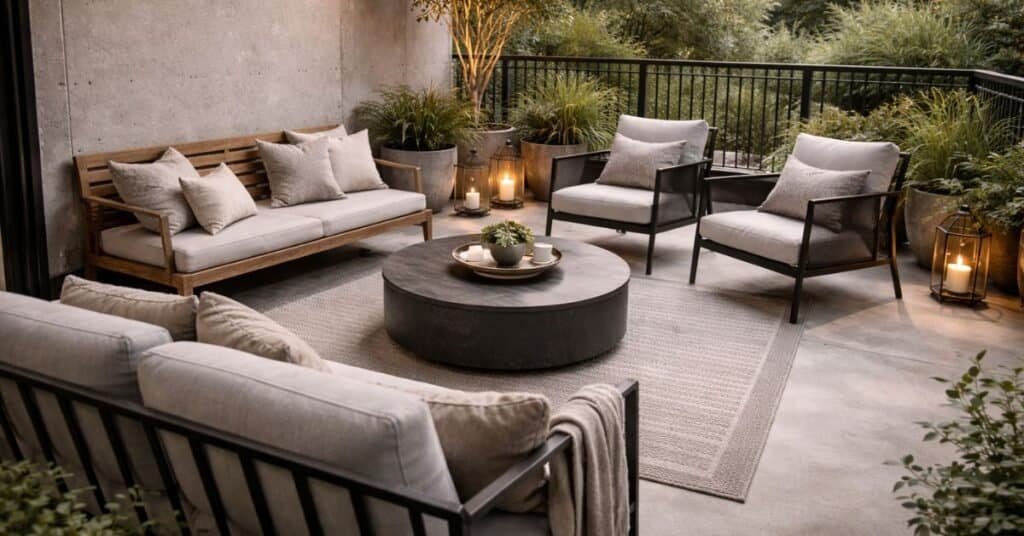
Light, Shade, and Soft Layers Matter More Than You Think
Even a good seating layout can feel uncomfortable without the right balance of light and shade.
Small changes help a lot:
- Place seating where there is natural shade part of the day
- Use umbrellas or overhead cover to soften harsh light
- Add cushions or throws for comfort during cooler evenings
These details make seating feel usable for longer stretches, not just quick sits.
Cozy outdoor seating is less about perfection and more about making the space feel welcoming at different times of day.
Outdoor Seating Mistakes to Avoid
This is the part most people wish they knew earlier.
Outdoor seating can look fine in a photo and still feel wrong in real life. These common mistakes are usually the reason.
Blocking Walkways Without Realizing It
A patio or deck needs at least one clear path that feels easy to use.
When chairs land in the walking line, people start stepping around furniture. That makes the whole space feel cramped.
A quick check:
- Walk from the door to the main seating spot
- If you have to turn sideways or shuffle, the path is blocked
- Move one piece a few inches and test again
Many layout mistakes happen when walkways are treated like leftover space instead of planned space and this is the most common outdoor seating mistakes.
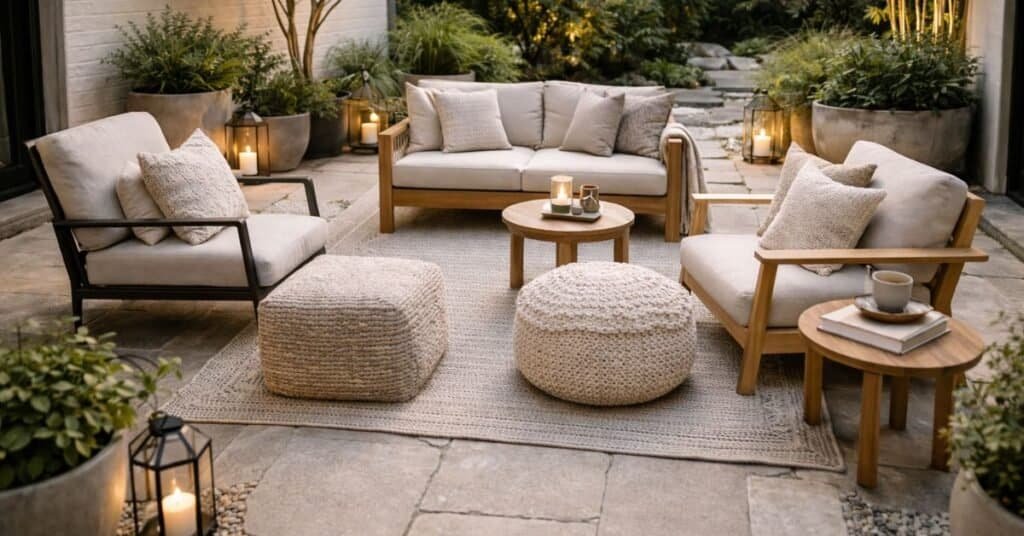
Spacing Seating Too Far Apart
This one happens in bigger patios and backyards.
People spread furniture out so it feels open. Then the seating stops working for conversation.
Signs it is too far:
- People have to raise their voice
- Everyone leans forward to talk
- The center feels empty, not useful
Pull chairs closer until talking feels normal.
Ignoring Storage and Comfort
Outdoor seating needs a little support to stay comfortable over time.
If cushions get damp or have nowhere to go, the seating gets used less. If chairs are uncomfortable, people stand and wander instead of sitting.
Simple fixes:
- Choose a spot for cushion storage, even if it is a small bin nearby
- Keep one flexible chair that can move into shade
- Add comfort in small ways so the seating gets used more often
Many outdoor seating issues come down to daily comfort, not style.
Frequently Asked Questions
How do you arrange outdoor seating so it feels comfortable and not crowded?
Start by deciding how the space will be used most often. Keep walkways clear and avoid adding extra chairs unless they are needed. Leaving some open space usually makes seating feel more relaxed.
How much space should be left between outdoor seating and walkways?
There should be enough room to walk without brushing against chairs or tables. If people have to turn sideways to pass, the spacing is too tight. Adjust pieces a few inches at a time until movement feels easy.
What is the best seating layout for a small patio or balcony?
Small spaces work best with fewer pieces placed around the edges. Keeping the center open helps the area feel larger. One main seat and one or two flexible chairs are often enough.
How do you arrange outdoor seating for conversation versus dining?
Conversation seating works best when chairs face each other and sit closer together. Dining setups need more room to pull chairs in and out. If possible, separate these into two simple zones.
How should seating be arranged around a fire pit?
Fire pit seating usually works well in a loose circle or curved shape. Leave one side more open for walking through. Keep chairs close enough for warmth and conversation.
What outdoor seating layouts work best for entertaining guests?
Group seating into clear clusters rather than spreading it out. This makes it easier for guests to join conversations. Extra chairs can stay nearby and be pulled in when needed.
How can outdoor seating feel like an extension of the indoor living room?
Use similar spacing and grouping as indoor seating. Create a main seating area with a clear center, then add comfort with cushions and soft lighting. Keeping the layout simple helps the space feel familiar.
What are the most common outdoor furniture layout mistakes to avoid?
Blocking walkways, pushing seating too far apart, and overcrowding small spaces are common issues. These make outdoor areas harder to use. Small layout changes usually fix them.
How many seats should an outdoor seating area have?
Plan for how many people use the space most days, not special occasions. It is better to have one extra movable chair than too many fixed seats.
What seating arrangement works best for narrow patios or decks?
Narrow spaces work well with seating along one side and a clear path on the other. Slim chairs or benches help keep movement open without sacrificing comfort.
Conclusion
Outdoor seating feels awkward most of the time because of layout, not furniture.
When seating has a clear purpose, enough space to move, and a simple focal point, the entire area becomes easier to use. Small changes like pulling chairs closer together or clearing a walkway can make a big difference.
If your patio or backyard has never felt quite right, start with one adjustment at a time. A calmer, more comfortable outdoor space is often just a few moves away.
If you enjoyed these outdoor seating arrangement ideas, there are plenty of simple ways to make the rest of your outdoor space feel easier to use. From small patio setups to relaxed backyard corners, exploring a few more layout ideas can help everything come together naturally.
Take a look around Purely Home Vibe for more outdoor décor ideas that focuses on comfort, spacing, and real-life use and not perfection.