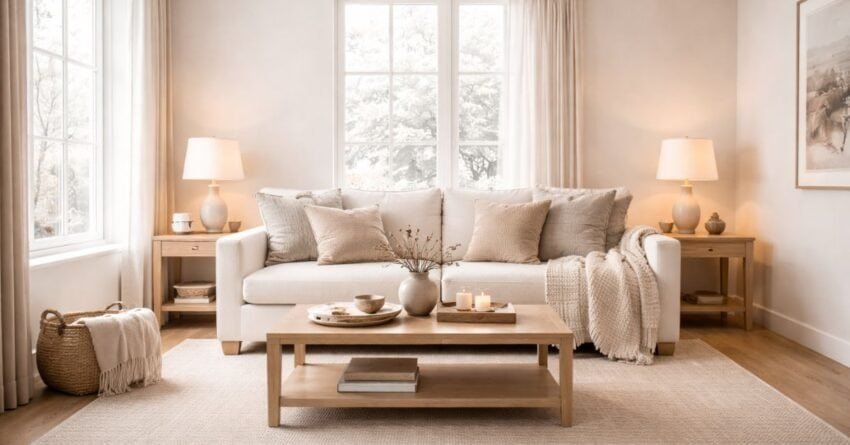
The holidays are over, the decorations are down, and suddenly the room feels a little… empty. The tree corner looks bare. The mantel feels plain. Even the lights that used to make everything feel warm are gone, and the space can feel colder than it really is.
If that sounds familiar, these winter themed decorating ideas are made for this exact moment. The goal is simple. Keep your home feeling cozy and seasonal through the winter months without leaning on Christmas colors or busy holiday items.
You do not need a full redecorate. You do not need a closet full of new stuff. A few smart changes can bring back that soft, calm feeling using texture, light, and a winter color palette that feels clean and easy.
Next, we will start with why winter decorating feels tricky after the holidays, and how to fix that “bare room” feeling fast.
Table of Contents
Why Winter Decorating Feels Tricky After Holidays
Once holiday décor comes down, many homes feel caught in between seasons. The sparkle is gone, but spring still feels far away. This gap can make rooms feel flat, cold, or unfinished.
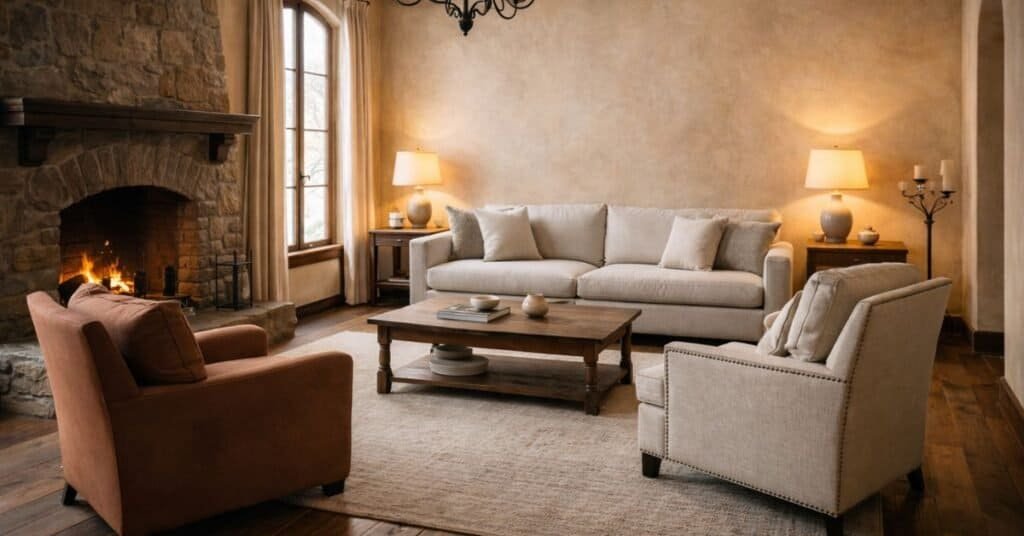
The gap between festive and bare
Holiday décor adds warmth through lights, layers, and color. When it disappears overnight, what is left behind can feel too simple or even empty. Bare surfaces stand out more. Corners that once felt styled now feel forgotten.
This is why winter décor works best when it fills the space gently instead of trying to replace holiday decorations outright. Soft layers and calm tones help bridge that gap.
Why winter decor needs a softer touch
Winter styling is quieter than holiday styling. It relies less on themes and more on comfort. Better Homes and Gardens shows that winter spaces feel better when they lean on whites, creams, soft lighting, and nature inspired details rather than bold seasonal colors.
Design guides from Havenly also point out that overdoing winter décor can make a space feel tight and uncomfortable. The goal is balance. Enough warmth to feel inviting, but not so much that the room feels busy.
Once you shift your focus from decorating for a holiday to decorating for comfort, winter becomes much easier to style.
Winter Themed Decorating Ideas That Feel Cozy Without Christmas
This is the sweet spot for winter. You want your home to feel warm and seasonal, but you do not want it to look like leftover holiday décor. The easiest way to get there is to use texture, calm color, and a few winter cues that still feel natural in February.
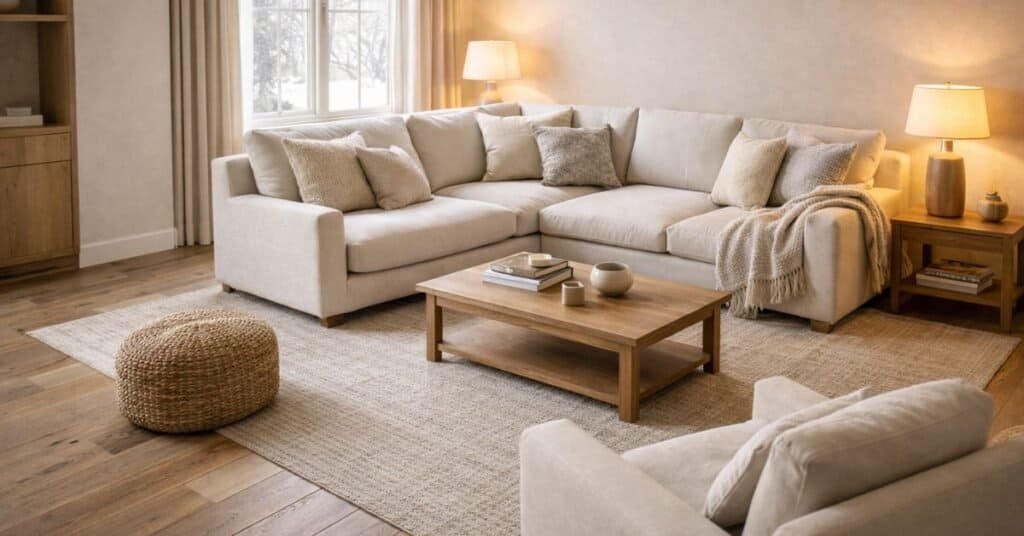
Focus on texture instead of theme
When winter décor looks good after the holidays, it usually has one thing in common. It feels soft.
Start by adding or swapping just a few texture pieces:
- Layered textiles on the sofa, chair, or bed
- Knit blankets folded over an armrest
- Faux fur throw in a reading corner
- Textured pillows that look cozy without loud patterns
If you already own neutral throws or cushions, use them. A Hundred Affections talks about using a neutral palette and letting texture do the work, so the room feels cozy but not cluttered. That idea works well because it keeps winter décor simple and repeatable year after year.
A quick trick: if your room feels cold, add one soft item where your eyes land first. Usually the sofa, the bed, or the entry bench.
Keep colors calm and winter friendly
After the holidays, color matters more than décor themes. Better Homes and Gardens notes that winter decorating can extend past Christmas when you focus on a snowy, cozy mood using light neutrals and soft glow.
Try a calm winter palette like:
- White and cream
- Warm neutral tones like beige and soft tan
- Soft gray with black accents
- Muted greens as a nod to nature
If you want a small pop, keep it gentle. Think warm wood accents, a little greenery, or a single deep tone like charcoal.
When the room is calm, even a few winter touches feel intentional. It stops looking like Christmas leftovers and starts looking like winter styling that belongs.
Winter Living Room Decor Ideas That Feel Warm and Relaxed
The living room usually gets the most use during winter. It is where people gather, relax, and spend long evenings indoors. Small changes here can make the biggest difference.
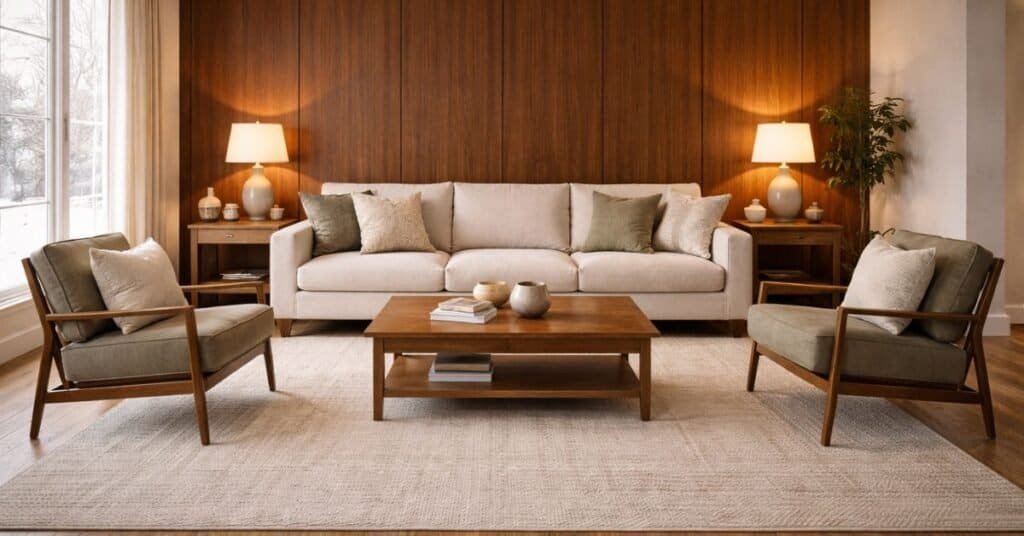
Layer seating areas
Winter comfort starts where you sit. Layering does not mean adding more furniture. It means making what you already have feel softer.
Start with these simple changes:
- Add one or two throws across sofas or chairs
- Mix smooth and textured pillows
- Place a soft rug under the seating area if the floor feels cold
Better Homes and Gardens points out that plush textures and calm spaces are a strong winter trend because they help rooms feel more inviting during darker months. The goal is comfort without crowding.
If the room feels tight, remove one extra pillow before adding another. Less works better in winter.
Use lighting to soften the room
Winter light can feel harsh or dim depending on the time of day. Relying on overhead lighting alone can make a room feel flat.
Try soft layers of light instead:
- Table lamps near seating
- Floor lamps in darker corners
- A few candles for a gentle glow
Better Homes and Gardens also highlight how warm, dim lighting helps winter spaces feel cozy even on gray days. Candlelight glow works well on coffee tables or shelves, especially in the evening.
A quick test: turn off the main light and use only lamps for one evening. If the room feels calmer, you are on the right track.
Winter Bedroom Decorating Ideas That Feel Calm at Night
Bedrooms should feel extra restful in winter. Cold air, darker mornings, and longer nights make comfort more important than decoration. Small shifts here can help the room feel warmer without adding clutter.

Switch bedding for winter weight
One of the easiest winter changes is bedding. Light summer layers often feel flat once temperatures drop.
Simple winter bedding updates include:
- Adding a quilt or coverlet on top
- Layering two lighter blankets instead of one heavy one
- Using soft cotton or knit textures that feel warmer to the touch
Minimalist winter décor guides show that layering bedding in light colors keeps the room feeling calm while still cozy. White and cream work well because they reflect light and feel clean even on darker days.
If storage is limited, fold the extra layer at the foot of the bed so it doubles as décor.
Keep decor light and restful
Winter bedrooms look best when they stay simple. Too many objects can make the space feel busy at a time when rest matters most.
Focus on:
- Clear nightstands with one or two items
- Soft lighting instead of bright bulbs
- Simple wall art in neutral tones
A Hundred Affections shows how winter bedrooms feel more comfortable when they rely on texture and calm color rather than seasonal items. This keeps the space usable long after winter ends.
If something feels distracting at night, it probably does not belong in the winter setup.
Winter Entryway Decor Ideas That Set the Tone
The entryway is often the first place that feels cold in winter. Wet shoes, heavy coats, and darker light can make it feel cluttered fast. A few winters focused touches can make this space feel welcoming without adding mess.
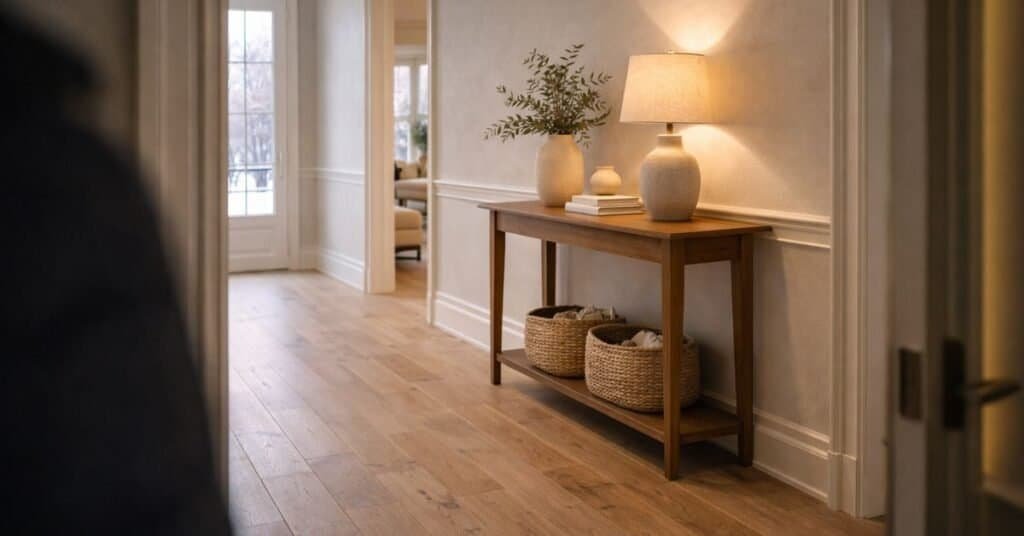
Simple winter touches for small entry spaces
You do not need much here. Even small changes help.
Try adding:
- A basket for scarves or gloves
- A bench with a soft cushion
- One winter texture like a knit pillow or throw
Tidbits and Twine highlights how rearranging what you already own can refresh a space for winter without spending money. In entryways, function matters more than decoration.
Keep surfaces clear so the space stays easy to use every day.
Using mirrors and lighting to brighten dark days
Winter days bring less natural light, especially in entryways without windows. Mirrors help bounce light and make the space feel larger.
Pair a mirror with:
- A small lamp on a console table
- Warm light bulbs instead of bright white ones
Soft lighting makes coming home feel calmer after dark. Even one lamp can change the mood completely.
If your entry feels tight, skip extra décor and let light do the work.
Winter Table Decor Ideas That Work All Season
Tables are one of the easiest places to add winter style because they are already meant to be styled. The key is to keep it low, simple, and useful so it does not get in the way of daily life.
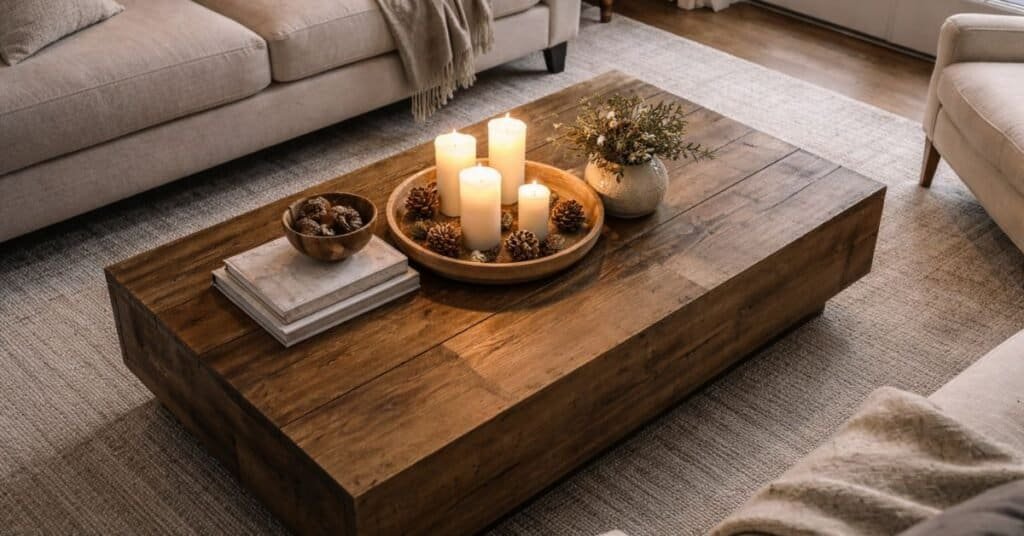
Coffee table styling for winter
A winter coffee table should feel warm but not crowded. Stick to a small group of items that look good together and can be moved easily.
A simple winter setup can look like this:
- One tray to hold everything
- Two or three candles for a soft glow
- A small bowl or vase with natural elements
Warm wood accents help a lot in winter. They add warmth without needing color. You can also use textured items like a woven tray or a ceramic bowl to bring in cozy texture.
If your coffee table gets used for snacks or games, keep the center clear and style one side instead.
Dining table winter touches
Dining tables can look bare after the holidays. Winter table décor fixes that with natural materials and calm color.
Better Homes and Gardens share many ways to use pinecones in winter centerpieces and table accents because they are simple, affordable, and easy to reuse. Veronneau also emphasizes budget friendly winter styling using evergreens, branches, pinecones, and berries since they transition well after the holidays.
Easy winter table ideas:
- A low centerpiece with pinecones and branches
- A simple runner in a warm neutral tone
- A small grouping of candles for evening dinners
A helpful rule: keep winter centerpieces low enough that people can talk across the table without leaning.
Neutral and Modern Winter Decor Ideas for Any Home
Neutral winter décor works well because it feels calm and flexible. It fits modern homes, older spaces, and everything in between. It also makes winter styling last longer since it does not rely on seasonal colors or themes.
Neutral winter color palettes that feel warm
A neutral winter palette does not mean cold or boring. It means soft colors that feel steady during darker months.
Common winter friendly neutrals include:
- Cream and off white
- Beige and warm tan
- Soft gray mixed with black accents
- Natural wood tones
Better Homes and Gardens notes that winter trends lean toward earth tones and serene spaces because they help homes feel like a place to slow down. These colors reflect light better and keep rooms from feeling heavy.
If your space already has neutral walls, you are halfway there. Small changes in pillows, throws, or table accents are often enough.
Modern winter decor without clutter
Modern winter styling looks best when it stays edited. Too many pieces can make a room feel busy, especially when natural light is limited.
Try these simple ideas:
- Group items in sets of two or three
- Leave empty space on shelves
- Use texture instead of extra objects
A Hundred Affections shows how winter décor can stay minimal by focusing on a few well chosen pieces and letting texture carry the look. This keeps the room comfortable and easy to live in.
If something does not add warmth or comfort, it probably does not need to stay out for winter.
Small Space Winter Decorating Ideas That Do Not Feel Crowded
Small spaces can feel packed in winter. Coats pile up. Blankets get tossed on chairs. Extra décor can make the room feel tighter. The goal is to add warmth without taking over the space.
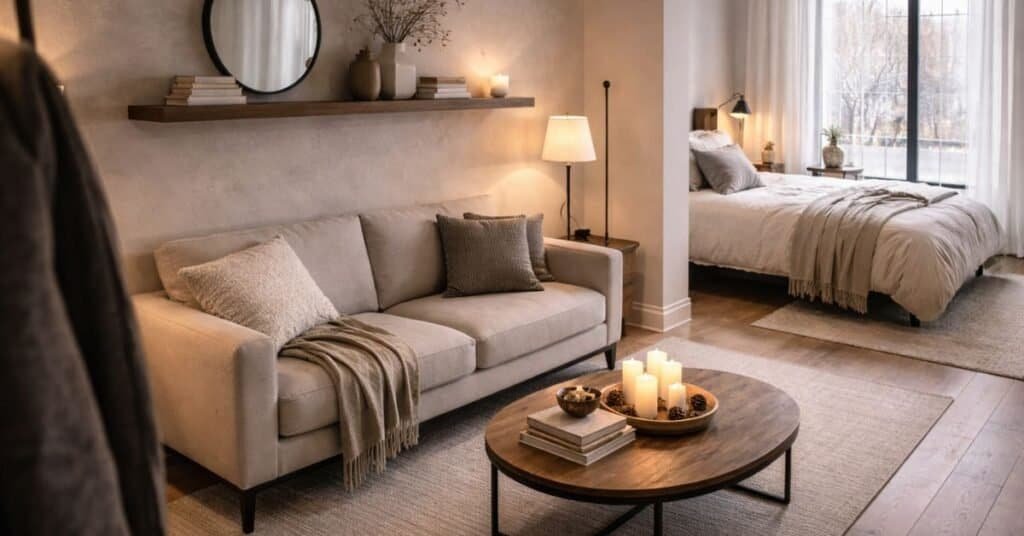
Winter styling for apartments and condos
In a small home, winter décor works best when it is light, soft, and easy to move.
Try these ideas:
- Use one statement throw instead of several small ones
- Add texture through pillow covers rather than new pillows
- Keep the winter color palette light to help bounce natural light
- Style vertical spots like wall hooks or a small shelf instead of filling surfaces
Light fabrics and warm neutral tones help rooms feel open. They keep the space from feeling heavy during darker months.
A simple trick: style the room where you spend the most time first. Usually the sofa area. Then stop. One strong winter corner can carry the whole space.
What to skip in small spaces
Some winter décor looks nice online but feels annoying in real life when space is tight. Havenly points out that going overboard can make a home feel uncomfortable, especially when you forget to edit and step back.
Skip or limit:
- Large centerpieces that block useful table space
- Too many small items scattered across surfaces
- Bulky floor décor that gets in the way of walking paths
- Extra pillows that end up on the floor every night
If your room feels crowded, remove three things before adding one.
Winter Decorating on a Budget Using What You Own
Winter decorating does not need a big budget. In many cases, the most comfortable spaces are created by rearranging what is already there and adding a few natural touches.
Rearranging instead of buying
Before adding anything new, look at how your room is set up now. Small shifts can change how the space feels.
Simple budget friendly changes include:
- Moving furniture closer together to create warmth
- Restyling shelves with fewer, larger items
- Swapping décor between rooms for a fresh look
- Bringing out neutral pieces that are stored away
Tidbits and Twine show how free changes like rearranging furniture and restyling surfaces can lift the mood of a space during winter. These changes cost nothing but can make a room feel new again.
Try adjusting one area at a time. The results are easier to see.
Natural winter elements that cost little
Nature offers some of the best winter décor, and it is often free or very low cost. Veronneau highlights how winter greenery, pinecones, branches, and berries work well beyond the holidays.
Easy ways to use natural elements:
- Fill a bowl with pinecones for a table or shelf
- Place bare branches in a tall vase
- Add small touches of greenery near windows or mirrors
These pieces feel seasonal without feeling tied to a holiday. They also work well with neutral and modern winter decor.
If you collect natural items, let them dry fully before bringing them inside.
Common Winter Decorating Mistakes to Avoid
Winter décor works best when it feels calm and easy. Some mistakes make spaces feel heavy or uncomfortable, especially after the holidays when homes are already tired of clutter.
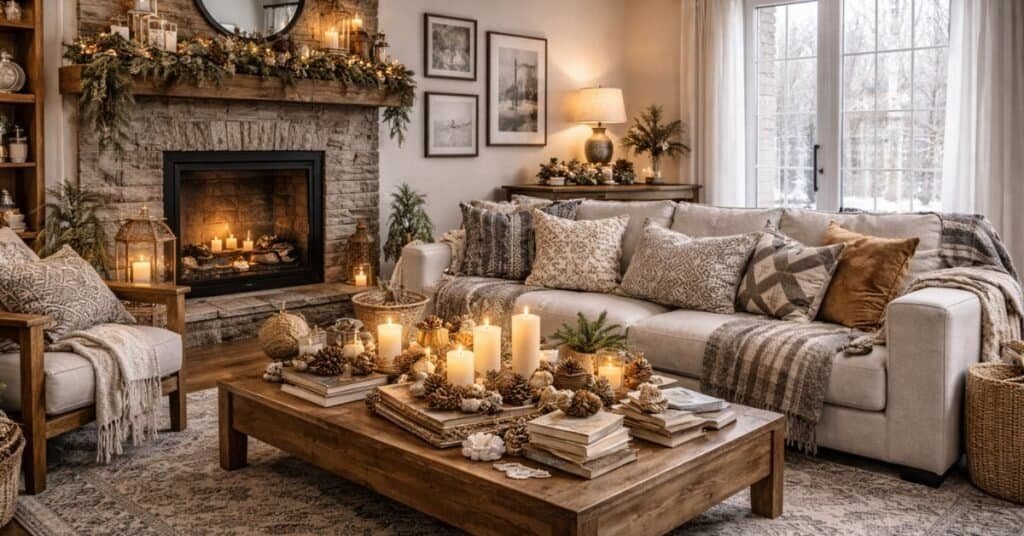
Over decorating winter spaces
One of the most common issues is adding too much at once. Winter décor does not need to fill every surface. When too many items compete for attention, rooms can feel smaller and less relaxing.
Design guidance from Havenly and QC Design School both point out that piling on décor, lights, or seasonal items can make a space feel tight and overwhelming. Winter comfort comes from editing, not adding.
A simple rule helps here. If a surface looks busy, remove one item and pause. Often that is enough.
Mixing too many styles at once
Winter décor can go wrong when rustic, modern, holiday, and everyday styles all show up together. The room loses its sense of calm.
Try to stick with one main look:
- Neutral and soft
- Natural and simple
- Clean and modern
If something feels out of place, it usually is. Winter styling feels better when the room looks settled rather than layered with unrelated pieces.
| Mistake | Why it happens | Simple fix |
| Too many winter items | Trying to replace holiday décor | Use fewer pieces with texture |
| Dark heavy colors | Less daylight in winter | Add lighter fabrics and lamps |
| Random styling | Mixing styles at once | Keep one clear look |
Frequently Asked Questions
How can I decorate for winter without it looking like Christmas?
Focus on texture and light instead of themed items. Neutral colors, soft throws, candles, and natural elements help a space feel seasonal without holiday cues.
What are some cheap winter decorating ideas?
Use what you already own. Rearranging furniture, restyling shelves, and bringing in pinecones or branches can refresh a room without spending money.
How do I make my living room feel cozy in winter?
Layer pillows and blankets, add warm lighting, and bring seating closer together. Small changes in texture and light can shift the mood fast.
What colors work best for winter home décor?
Light neutrals like cream, beige, and soft gray work well. Warm wood tones and muted greens also add warmth during darker months.
Can winter decor be minimalist?
Yes. Minimal winter décor relies on fewer pieces with more texture. This keeps spaces calm and easy to live in after the holidays.
How do I decorate for winter in a small apartment?
Stick to light colors, style one main area, and avoid oversized décor. Vertical storage and soft fabrics help keep the space open.
What winter decor works after Christmas?
Items like knit throws, neutral pillows, candles, and natural accents work well all winter. These pieces do not feel tied to a single holiday.
How do I keep winter decor from feeling cluttered?
Edit often. Leave empty space on surfaces and group items instead of spreading them out. Fewer pieces usually look better.
How can I use pinecones and branches in winter décor?
Place pinecones in bowls, trays, or centerpieces. Branches work well in tall vases or entry corners and add a natural winter feel.
When should I switch to winter décor?
Many people switch right after holiday décor comes down. Winter styling can stay up until early spring since it does not feel date specific.
Conclusion
Winter decorating does not need to stop when the holidays end. With the right textures, calm colors, and soft light, your home can feel warm and comfortable through the coldest months.
These winter themed decorating ideas are meant to feel easy and flexible. Small changes can bring back that cozy feeling without adding clutter or stress. When your space feels calm and lived in, winter feels a little easier too.
Want ideas that work beyond winter too? Take a look at Seasonal Home Decor Ideas. Inspiring Year Round Styling Tips for easy ideas you can use all year.