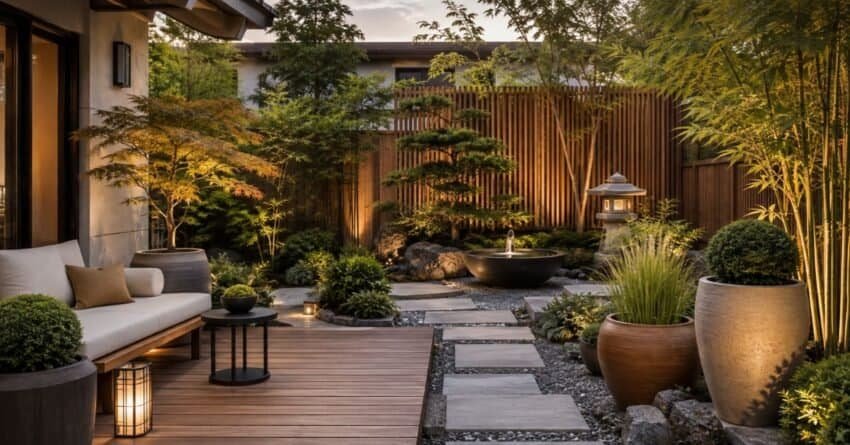
A yard can have grass, a fence, and a patio, but still feel plain.
Maybe one corner feels empty. Maybe the fence looks bare. Maybe the seating area has chairs, but no warmth, color, or clear reason to sit there.
That is where garden accessories and decor can make a big difference without a full yard makeover. Before buying several new pieces, start with one strong focal point, repeat a few colors, and give empty areas a clear purpose. You can find more practical styling ideas in our guide to garden and outdoor decor secrets.
The best part is that small changes can work fast. A tall planter can fix a flat corner. A warm outdoor light can make a patio feel cozy at night. A simple bench, bird bath, outdoor rug, or trellis can make the yard feel more cared for.
The mistake many people make is buying too many little pieces at once. A tiny statue here, a random pot there, and a bright garden sign near the fence can make the space feel busier, not better.
Start with the areas you notice most from the house, the patio door, or the main walkway. Once those spots feel finished, the whole yard starts to look more welcoming.
Here are 9 garden accessories and decor ideas that can help fix dull yards with simple, warm, and realistic changes.
Table of Contents
1. Garden Accessories and Decor That Start With a Focal Point
A dull yard usually feels unfinished because the eye has nowhere to land.
Before adding ten small items, choose one strong feature first. This could be a bird bath, a garden bench, a tall planter, a trellis, a small fountain, or one sculptural piece near a garden path.
The goal is simple. Give the yard one main place to look at first, then let smaller pieces support it.
The Spruce garden decor ideas notes that decor can be “the icing on the cake for your garden.” A focal point works in the same way. It finishes the space without making the whole yard feel busy.
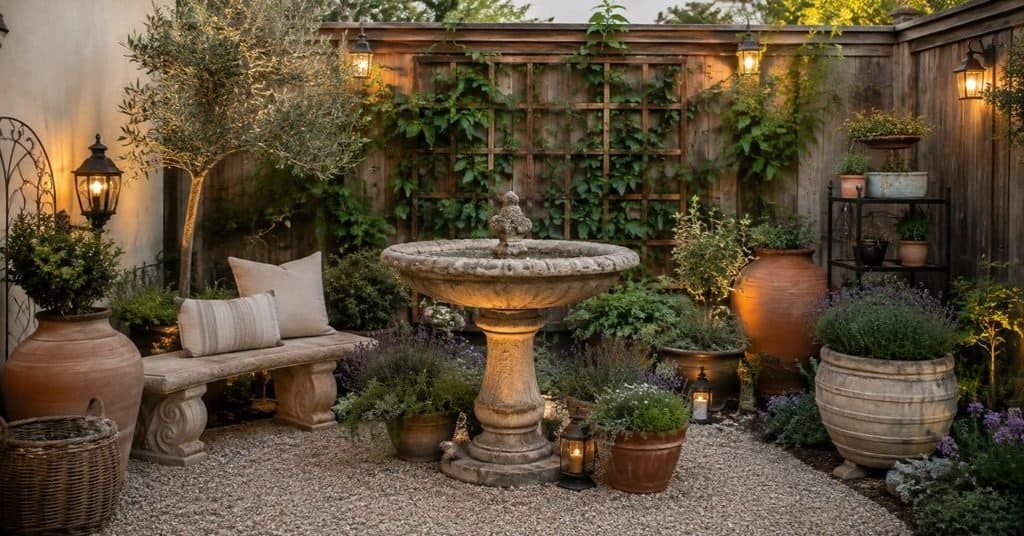
Use One Strong Yard Feature First
Pick the spot you see most from the patio door, kitchen window, or main walkway.
If that view looks empty, place your main feature there. A stone bird bath under a small tree can soften a bare lawn. A black metal trellis can fix a plain fence. A wooden bench can turn an awkward garden corner into a cozy sitting spot.
For a modern garden, try one matte black planter with tall ornamental grass. For a rustic or farmhouse yard, use a weathered wood bench with clay pots. For a French country look, pair a bird bath with lavender, gravel, and soft cream flowers.
Keep the Size Right for the Yard
Scale matters more than people think.
A tiny garden ornament can disappear in a large backyard. A huge statue can make a small patio feel crowded. The best garden accessories and decor should feel related to the size of the yard, not too shy and not too heavy.
A good rule is to use one taller item in a flat area. Try a planter that sits around 24 to 36 inches high beside a low seating area, or a trellis that rises above the fence line with climbing plants.
Common mistake: buying several tiny pieces because they cost less. Many small items can make the yard feel scattered.
Budget option: use one thrifted garden stool, one large clay pot, or one simple bird bath as the main feature.
Small space variation: use a wall trellis, railing planter, or slim vertical plant stand instead of a large bench or fountain.
| Yard Problem | Best Focal Point | Why It Works |
|---|---|---|
| Empty corner | Tall planter | Adds height without taking much floor space |
| Plain lawn | Bird bath | Gives the eye a calm place to rest |
| Bare fence | Trellis | Adds shape, greenery, and height |
| Cold seating area | Garden bench | Makes the yard feel usable |
| Flat patio edge | Large ceramic pot | Adds color and texture fast |
Once the focal point is in place, the rest of the yard becomes easier to style. You can repeat the same materials around it, such as clay, stone, black metal, warm wood, or woven texture.
2. Decorative Planters That Add Height and Color
Planters are one of the easiest ways to wake up a flat yard.
They bring height, color, and texture without digging up the whole space. A bare patio edge can feel warmer with three pots in different sizes. A plain fence can look softer with tall greenery in front of it. A dull corner can feel finished with one large planter and two smaller pots nearby.
Real Simple’s backyard ideas include containers as a simple way to add interest without a full yard redo. For a home garden, that can look like terracotta pots beside a path, cream ceramic planters near a patio chair, or a tall black planter beside a fence.
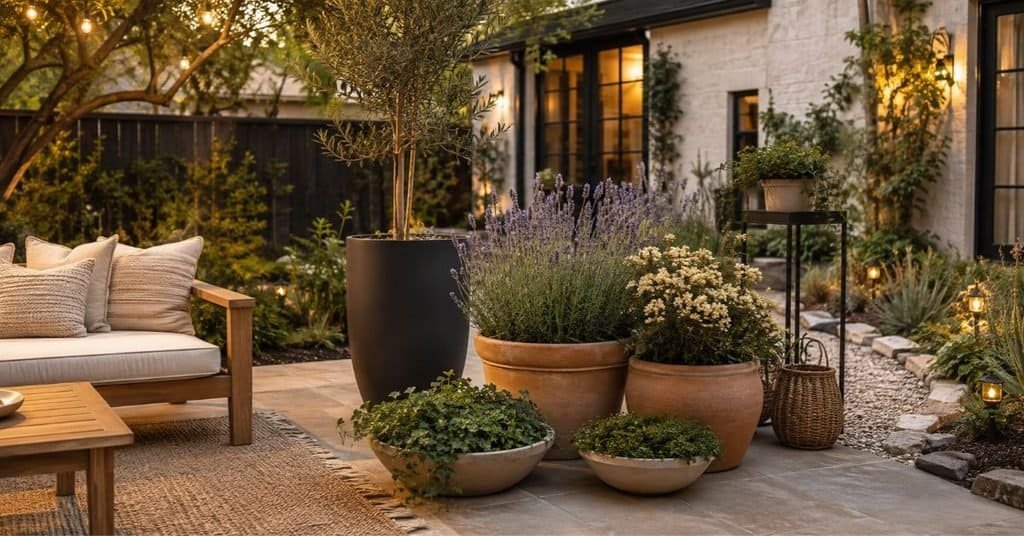
Mix Planter Heights Instead of Lining Everything Up
A row of matching pots can look stiff if every planter is the same height.
Try a simple three level mix:
- One tall planter in the back
- One medium pot beside it
- One low bowl or trailing plant in front
This works near a patio, deck step, garden gate, or fence corner. Keep the tallest planter near the back so the area feels layered, not blocked.
For a modern look, use matte black planters with olive trees or ornamental grass. For a rustic or farmhouse yard, use clay pots, aged wood, and soft green herbs. For a French country feel, mix lavender, gravel, terracotta, and cream flowers.
Use Color Through Flowers, Leaves, and Pots
You do not need to repaint a fence or buy new furniture to add color.
Let the planters do the work. Try clay, cream, muted green, soft gray, or black pots. Then add color through flowers, leaves, and texture.
A calm garden palette could use:
- Terracotta pots
- Olive green leaves
- Cream flowers
- Lavender stems
- Warm wood accents
- Black metal lantern style lights
This keeps the yard from looking too random.
Common mistake: placing one small pot in a large empty corner. It can look lonely and unfinished.
Budget option: group three thrifted pots in the same color family. They do not have to match, but they should feel related.
Small space variation: use railing planters, a slim plant stand, or vertical pots on a balcony or narrow patio. Keep the floor clear so the area still feels easy to walk through.
Planters work best when they repeat near other areas of the yard. Add one group near the seating area, another near the gate, and a smaller one beside the walkway. This helps the whole outdoor space feel connected.
3. Outdoor Rugs That Make Seating Areas Feel Finished
A patio can have chairs and still feel unfinished.
The missing piece is often the ground layer. An outdoor rug helps pull the seating together so the chairs, table, planters, and lights feel like one clear zone instead of loose pieces sitting on concrete or deck boards.
Architectural Digest outdoor decor ideas points out that outdoor rugs can help define seating areas. That is a simple fix for a dull yard because the rug gives the space a border.
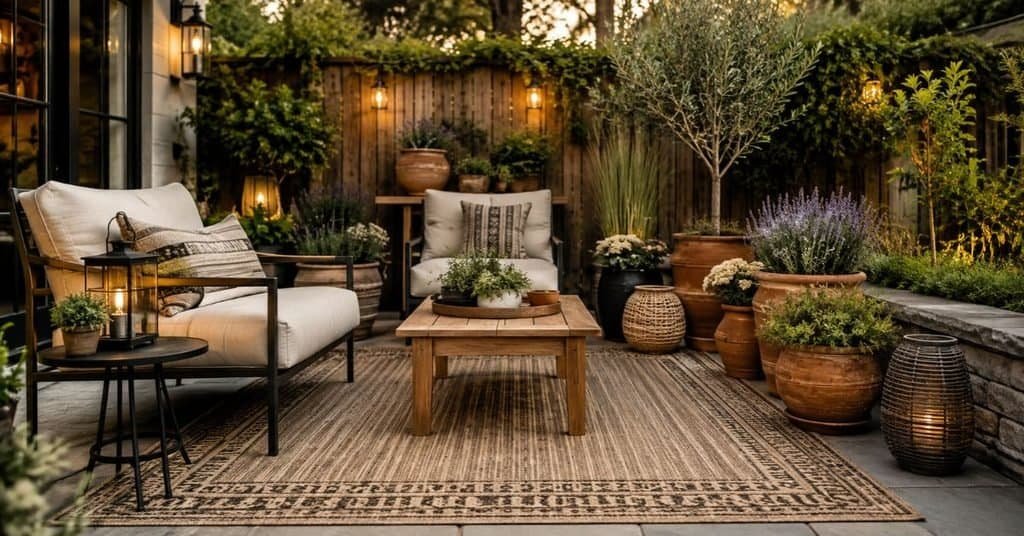
Use a Rug to Ground the Seating Area
Place the rug under the main seating group, not floating far away from it.
For a small patio, try to place at least the front legs of the chairs or loveseat on the rug. For a larger deck or backyard seating zone, choose a rug large enough to sit under the coffee table and touch the main furniture pieces.
A simple layout could look like this:
- Cream outdoor chairs facing each other
- Warm wood coffee table in the middle
- Neutral rug under the front chair legs
- Tall planter behind one chair
- Low clay pots near the rug edge
- Soft lighting above or beside the seating
This makes the area feel planned without adding more furniture.
For more patio rug styling, you can use these outdoor rug patio ideas for cozy seating before choosing a pattern or color.
Pick Calm Patterns for Small Patios
A rug can fix a dull yard, but the wrong pattern can make the area feel busy.
Small patios, balconies, and narrow garden corners usually look better with soft patterns, simple borders, or natural woven textures. Cream, taupe, olive, clay, charcoal, and warm beige work well with many outdoor furniture colors.
If you like bolder style, use the rug as the only strong pattern. Keep the pillows, pots, and furniture calmer so the whole area does not compete.
Common mistake: choosing a loud rug, bright cushions, patterned pots, and busy wall decor all in the same corner.
Budget option: use a smaller rug under just the coffee table and front chair legs instead of covering the full patio.
Small space variation: choose a runner style outdoor rug for a balcony or narrow side patio. It can guide the eye through the space while keeping the walking path open.
An outdoor rug is not just decoration. It tells the eye, “This is the place to sit.” Once that area feels clear, the yard starts to feel warmer and more useful.
4. Garden Lighting Ideas That Warm Up Dull Corners
Lighting can change a dull yard faster than almost anything else.
During the day, a plain corner might only need plants or seating. At night, that same corner needs glow, depth, and a clear path for the eye to follow.
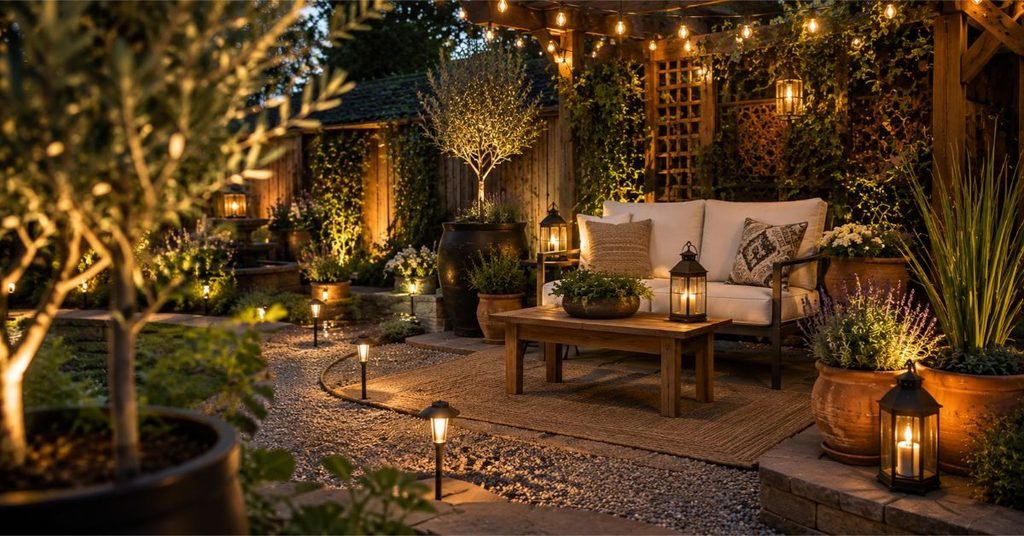
Warm light works best near the places people sit, walk, or gather. Think string lights over a table, solar path lights along gravel, or a small lantern style light beside a planter.
Architectural Digest outdoor lighting ideas suggest planning lighting with seating, shade, and how people move through the yard. That makes sense for a real patio because a light only looks good if it helps the space feel usable.
Use Warm Light Near Seating and Paths
Look for warm white lighting near 2700K when possible. It gives the yard a soft glow instead of a cold glare.
A simple lighting layout could include:
- String lights above the main seating area
- Pathway lights along a garden edge
- One lantern style light beside a planter
- Soft uplighting near a tree or trellis
- Small solar lights near steps or a gate
Keep the brightest glow near the seating area. Then use softer lights along paths and garden borders.
This helps the yard feel layered instead of flat.
If you are using string lights, lanterns, or pathway lights, avoid outdoor lighting mistakes that ruin the mood so the space does not feel harsh or patchy.
Avoid Harsh Lighting That Flattens the Yard
Bright white lights can make a garden feel cold.
They can also wash out plants, cast hard shadows, and make a cozy seating area feel more like a driveway. For patios and garden corners, soft warm light usually feels better than one strong overhead light.
Use several small light sources instead of one glaring bulb.
For example, place two solar path lights along the walkway, one lantern style light beside a clay pot, and string lights above the chairs. The yard will feel warmer because the glow comes from more than one place.
Common mistake: placing one bright security light above the patio and calling the lighting done.
Budget option: start with one pack of solar path lights and one strand of warm white string lights. Use them near the seating area first.
Small space variation: on a balcony or tiny patio, clip string lights along the railing and place one small lantern style light near a planter. Keep the floor open so the space still feels calm.
Lighting should make the yard easier to enjoy, not harder to relax in. A few warm lights can turn a flat corner into the spot everyone wants to sit after dinner.
5. Garden Wall Decor That Fixes a Bare Fence
A plain fence can make the whole yard feel unfinished.
You may have nice plants and seating, but a long blank fence can still feel flat. Garden wall decor gives that empty surface shape, texture, and purpose.
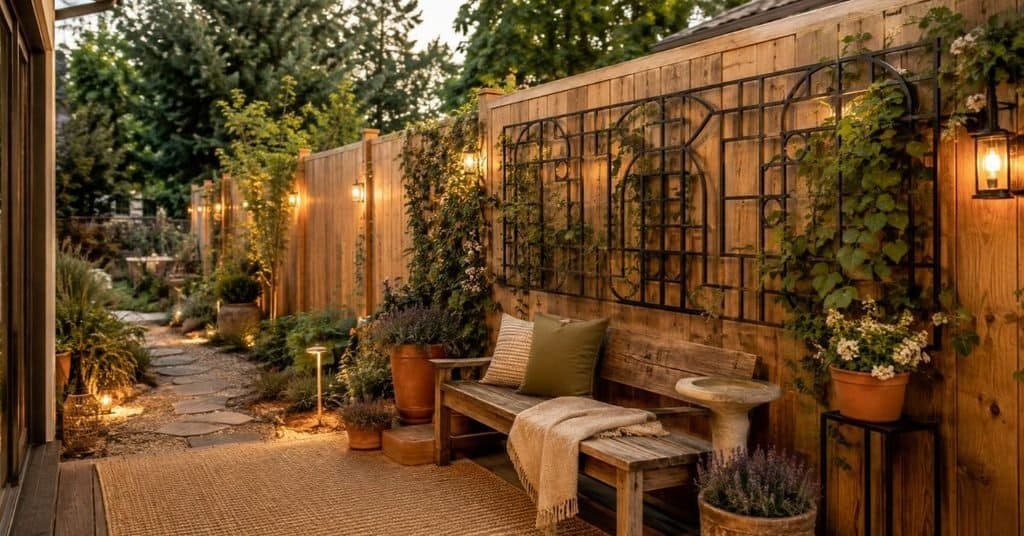
Start with one strong wall feature. A trellis, lattice panel, hanging planter, metal garden art, or outdoor mirror can break up a bare fence without filling every inch.
Better Homes & Gardens garden decor ideas shows how small outdoor pieces like bird baths, garden labels, ladders, and sculptures can add personality. For a fence, the same idea works best when you choose fewer pieces and give them room to breathe.
Add One Main Wall Accent Instead of Many Small Pieces
A bare fence does not need ten hanging items.
One large trellis with climbing plants can look cleaner than several tiny plaques. A black metal wall accent can feel stronger than a mix of signs, baskets, and random hooks.
Try one of these ideas:
- A black metal trellis with jasmine or clematis
- A rustic wood ladder with two small pots
- A lattice panel behind a garden bench
- A weather safe mirror on a shaded patio wall
- A row of hanging baskets spaced evenly
Leave open fence space around the decor. The empty space helps the wall feature look calm instead of crowded.
Repeat Materials From the Yard
Fence decor can look random when it does not match anything nearby.
Repeat materials already used in the yard. If your patio has black metal chairs, use a black metal trellis. If your garden has terracotta pots, place a few clay planters below the wall feature. If your yard leans rustic, use aged wood, stone, and soft greenery.
This helps the fence feel connected to the rest of the outdoor space.
Common mistake: filling a bare fence with too many small signs, bright decorations, or mismatched hanging pots.
Budget option: use a secondhand wood ladder as a plant display. Lean it safely against the fence and add two or three light pots.
Small space variation: use one slim wall planter or vertical trellis on a balcony wall. Keep the lower floor area open for walking and seating.
| Bare Wall Type | Decor Idea | Best Style |
|---|---|---|
| Wood fence | Trellis and vines | Rustic or French country |
| Brick wall | Black metal garden art | Industrial or modern |
| Patio wall | Hanging planters | Farmhouse or biophilic |
| Balcony wall | Slim vertical planter | Zen or small space |
| Side yard fence | Ladder plant display | Vintage or shabby chic |
A bare fence is one of the easiest dull yard problems to fix. Once the wall has one clear feature, the yard feels more layered, finished, and inviting.
6. Cozy Garden Seating That Makes the Yard Usable
A yard looks better when it gives you a reason to stay outside.
Pretty planters and lights help, but seating turns the yard into a place you can use. Even one small sitting area can make a dull corner feel warmer and more cared for.
Martha Stewart backyard decorating ideas include seating, shade, lighting, gravel, and water features as ways to make a backyard more useful. For a smaller home garden, start with seating first, then build decor around it.
Create a Small Sitting Spot for Two
You do not need a full patio set.
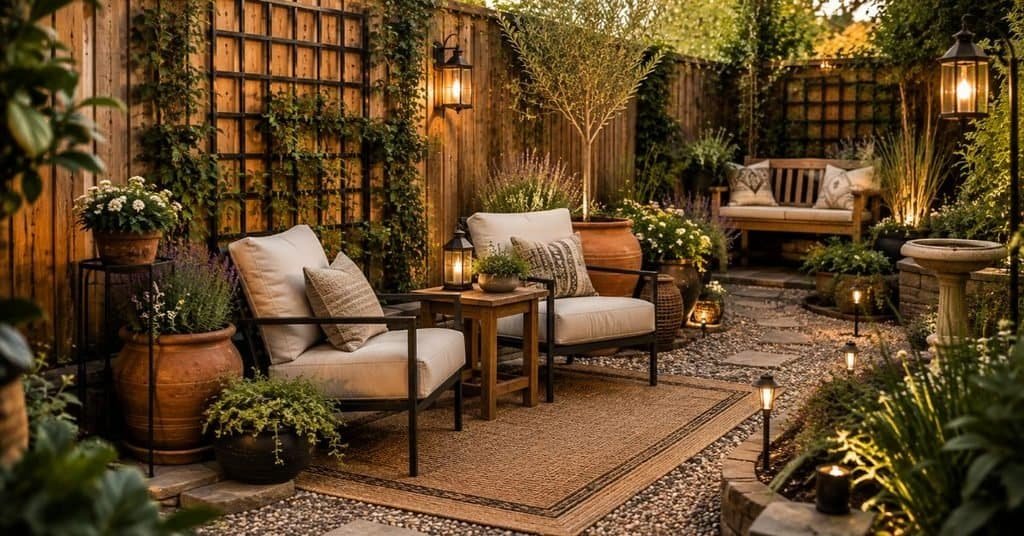
Two chairs and one small table can be enough. Place the chairs so they face each other slightly, with the table between them. This creates a cozy garden seating area for coffee, reading, or a quiet evening outside.
A simple setup could use:
- Two cream outdoor chairs
- One warm wood side table
- One large planter behind the chairs
- One low pot near the front
- One outdoor rug or gravel base
- One warm light source nearby
Keep the chairs close enough to feel connected. Around 18 inches between the chair and table usually feels easy to reach.
For a farmhouse or rustic look, use woven chairs, clay pots, and soft cushions. For a modern yard, use black metal chairs, a clean side table, and one tall planter. For a French country mood, add lavender, gravel, cream fabric, and weathered stone.
Add One Side Table for Function
A seating area without a table can feel unfinished.
The table gives people a place to set a drink, book, small tray, or planter. It also helps the seating feel planned instead of random.
Choose a table that fits the scale of the chairs. A tiny table can look lost between two wide lounge chairs. A heavy table can crowd a narrow patio. For most small garden corners, a table around 16 to 22 inches wide works well.
Common mistake: placing chairs in the yard with no table, rug, planter, or light nearby. The space can look like extra furniture was dropped outside.
Budget option: use a thrifted stool, sealed wood crate, or small garden stand as a side table.
Small space variation: use one slim bench against a fence with a narrow side table and a tall planter. This gives the yard a sitting spot without blocking the walking path.
Cozy seating works best when it feels tucked in. Place it near a fence, garden bed, tree, or trellis so it has a soft backdrop. Then add one or two plants near the edges to make the space feel settled.
7. Budget Garden Accessories and Decor That Still Look Beautiful
You can fix a dull yard without buying everything new.
Start with what you already have, then add one or two pieces that make the biggest difference. A plain patio corner can look warmer with a thrifted stool, three clay pots, one outdoor cushion, and a small solar light near the path.
The Spruce budget backyard ideas share that an affordable way to beautify a backyard is to work with what you already have. That is a smart place to start because outdoor decor can get expensive fast if you buy every piece at once.
Start With What You Already Own
Walk through your home, garage, or shed before shopping.
You may already have items that can work outside with small changes:
- An old wood stool for a plant stand
- A spare basket for garden tools
- Extra clay pots from past seasons
- A small side table for a patio corner
- A simple tray for an outdoor coffee table
- A sturdy bench that can be cleaned and sealed
The goal is not to make the yard look random. Choose pieces that share a color, texture, or material.
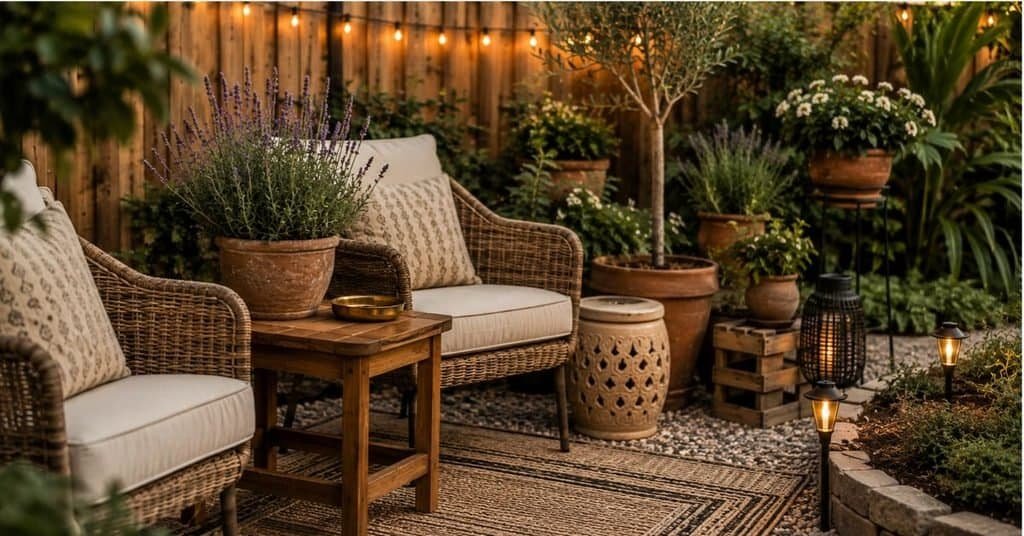
For example, a thrifted wood stool, terracotta pot, woven basket, and cream cushion can work together because they all feel warm and natural.
Choose One Color Family
Low cost decor looks better when the colors feel calm together.
Try one of these easy outdoor palettes:
- Clay, cream, olive, and warm wood
- Black metal, taupe, stone, and greenery
- Soft beige, muted green, terracotta, and charcoal
- Cream flowers, weathered wood, gravel, and lavender
This makes budget garden accessories and decor feel planned, even when the pieces come from different places.
You can also repeat one material three times. Use terracotta near the seating area, beside the path, and at the fence. Or repeat black metal through a plant stand, lantern style light, and small side table.
Common mistake: buying several sale items only because they are cheap. If the colors and materials do not fit your yard, the space can feel more cluttered.
Budget option: spend on one larger item first, such as a good planter, rug, or bench. Then use low cost accents around it.
Small space variation: use one stool, one tall planter, and one warm light on a balcony or tiny patio. Keep the setup narrow so the walking path stays clear.
A budget yard can still feel polished. The trick is to repeat fewer colors, use natural texture, and leave open space around each piece.
8. Small Garden Decor Ideas for Tight Yards and Patios
Small yards can look full very quickly.
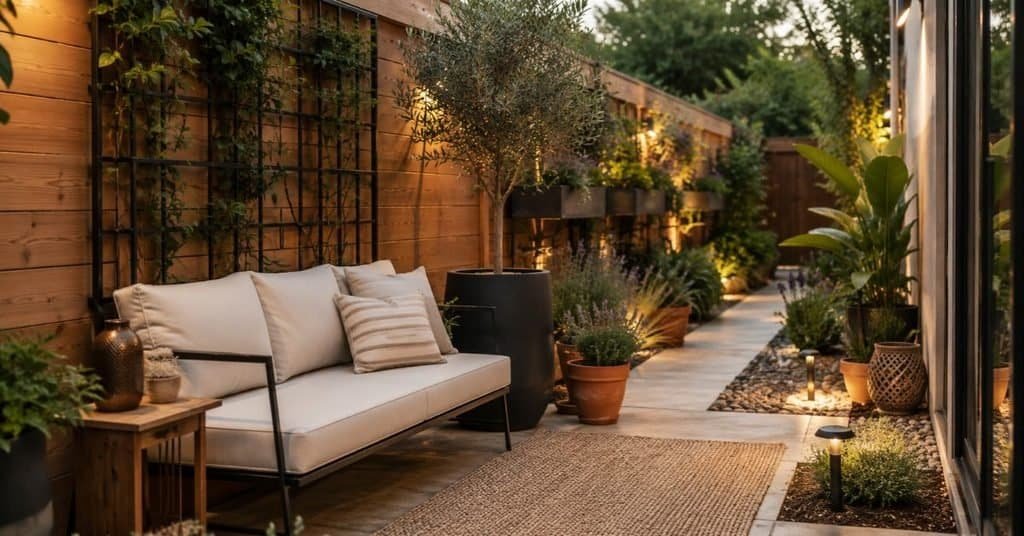
The best fix is to decorate upward before spreading pieces across the floor. A vertical planter, slim trellis, wall basket, or railing pot can add greenery without taking over the patio.
For compact yards, you can also use small outdoor space ideas for compact yards to plan seating, planters, and walking space before adding more pieces.
Use Vertical Decor to Save Floor Space
A tight yard needs height more than extra furniture.
Try a black metal trellis behind a small bench, a wall planter beside the patio door, or a ladder style plant stand along the fence. These pieces pull the eye upward and leave more room for chairs, a table, or a walking path.
Good vertical pieces include:
- Trellis panels
- Railing planters
- Hanging pots
- Slim plant stands
- Wall baskets
- Tall planters with narrow bases
Keep the lower area simple. One chair, one side table, and one tall planter can feel better than five small items on the ground.
Keep the Walking Path Clear
A small patio should still be easy to move through.
Try to leave about 30 to 36 inches for the main walking path when possible. If that feels too wide for your space, keep at least one clear line from the door to the chair, gate, or garden edge.
Place larger pieces along the sides instead of in the middle. A slim bench can sit against a fence. A tall planter can go in a back corner. A narrow side table can tuck beside a chair.
Common mistake: using too many floor planters in a tiny yard. They may look pretty, but they can block movement fast.
Budget option: use one vertical plant stand and fill it with small clay pots you already own.
Small space variation: for a balcony, clip planters to the railing and use one narrow outdoor runner rug. This adds color and texture while keeping the floor open.
Small garden decor works best when every piece has a job. Let one item add height, one item add comfort, one item add color, and one light source add evening glow.
9. Garden Accessories and Decor Mistakes That Make Yards Look Cluttered
The fastest way to make a yard feel messy is to add too many little things.
Tiny pots, bright signs, random statues, mixed lanterns, and several patterns can make the garden feel crowded. The yard may have more decor, but it can still look less finished.
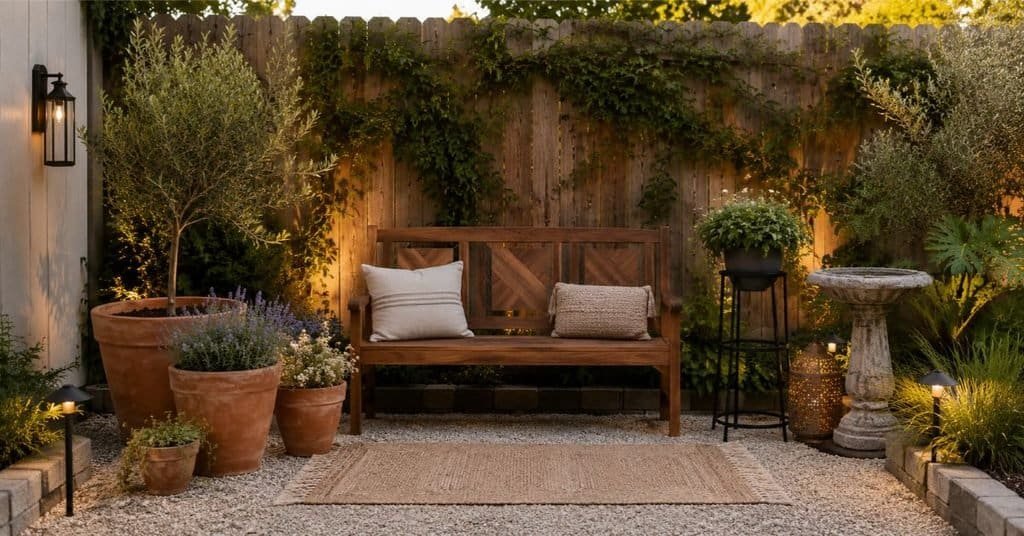
Good garden accessories and decor need breathing room. A bench, three planters, one light source, and one wall feature can look better than fifteen small pieces spread across the fence, patio, and garden bed.
Buying Too Many Small Pieces
Small accessories are not bad. The problem starts when every empty spot gets filled.
A dull yard needs direction first, not more stuff. Choose one main area to fix, then group pieces together instead of scattering them around the yard.
Try this simple grouping rule:
- One tall item
- One medium item
- One low item
- One nearby light source
- One repeated material
For example, place a tall black planter behind a medium terracotta pot, then add a low clay bowl in front. Add one warm pathway light beside the group. This looks planned, but still easy.
Matching Everything Too Perfectly
A yard can also feel flat when everything matches too much.
A full set of identical pots, matching chairs, matching pillows, and matching lights can look stiff. A better mix feels warm and collected without turning messy.
Use 2 or 3 repeated materials, such as:
- Terracotta
- Black metal
- Weathered stone
- Warm wood
- Woven fiber
- Cream outdoor fabric
The mix gives the yard depth, while the repeated materials keep it calm.
Common mistake: buying every accessory from one matching set. The yard may look neat, but it can feel plain and showroom like.
Budget option: keep your existing pieces and edit them down. Remove the loudest colors first, then group the best pieces near the seating area or garden path.
Small space variation: choose one focal point, one planter group, and one light source. A tiny patio does not need wall decor, floor pots, signs, statues, and a rug all at once.
| Mistake | Why It Looks Off | Better Fix |
|---|---|---|
| Too many tiny pots | Feels scattered | Group 3 planters together |
| Bright cold lights | Feels harsh | Use warm light near seating |
| No focal point | Feels unfinished | Add one main feature |
| Too many colors | Feels busy | Repeat 2 or 3 calm colors |
| Every piece matches | Feels stiff | Mix clay, wood, metal, and stone |
A cleaner yard is not empty. It just gives each piece a clear job. Once your decor has space around it, the garden starts to feel calmer, warmer, and easier to enjoy.
Frequently Asked Questions
How can I make a dull yard look better without major landscaping?
Start with one focal point, then add planters, warm lighting, and a small seating area around it. A bird bath, bench, trellis, or tall planter can make the yard feel more finished without digging up the lawn.
Keep the colors calm so the space does not feel busy.
What are the cheapest garden accessories to add first?
The cheapest pieces to start with are clay pots, solar pathway lights, outdoor cushions, thrifted stools, and simple plant stands. These pieces can add color, height, and comfort without a large yard project.
A good budget move is to group three planters near the area you see most from the house.
How do I choose a focal point for my yard?
Stand at the patio door, kitchen window, or main walkway and look at the first area your eye notices. That spot is usually the best place for a focal point.
Choose one piece that fits the size of the yard, such as a bird bath, bench, trellis, fountain, or large planter.
Which garden decor ideas work best in a small yard?
Vertical planters, slim benches, railing pots, wall trellises, and warm string lights work well in small yards. These pieces add style without using too much floor space.
For more layout help, these small outdoor space ideas for compact yards can help you keep the area open and useful.
How can I add color without repainting my fence or furniture?
Use flowers, ceramic pots, outdoor cushions, rugs, and garden art to bring in color. Terracotta, cream, olive, lavender, and warm wood can make a yard feel soft and cozy.
Try repeating one color in three places, such as planters, pillows, and flowers.
Are outdoor rugs practical for patios and garden seating areas?
Outdoor rugs can work well if they are made for outdoor use and have room to dry after rain. They help define seating areas and make chairs feel more connected.
Choose a calm pattern for small patios so the space does not feel crowded.
What type of outdoor lighting creates a warm atmosphere?
Warm white lighting near 2700K usually feels best for patios, paths, and garden seating areas. Use string lights, solar path lights, and lantern style lights with no candles for a soft evening glow.
Avoid bright white lights near seating because they can make the yard feel cold.
How can planters add height and visual interest?
Use one tall planter, one medium pot, and one low planter together. This gives the yard height, color, and texture without needing a new garden bed.
Tall planters also work well near fences, patio corners, and bare walkways.
How do I keep garden accessories from making the yard look cluttered?
Use fewer pieces and group them together instead of spreading them everywhere. Repeat 2 or 3 materials, such as clay, black metal, warm wood, or stone.
Leave open space around each group so the yard feels calm.
Which garden accessories require the least maintenance?
Stone accents, metal garden art, durable planters, benches, gravel borders, and solar path lights are usually easy to keep up. They add structure and texture without needing much care.
For plants, choose hardy greenery that fits your local weather in the US or Canada.
Conclusion
A dull yard does not always need new landscaping, new fencing, or expensive outdoor furniture.
Start with one area that feels flat, then give it a clear job. Add a focal point, repeat a few calm colors, bring in warm lighting, and use planters to add height. Once those pieces work together, the yard starts to feel more welcoming.
The best garden accessories and decor are not the loudest pieces. They are the ones that make your yard easier to enjoy, prettier to look at, and more comfortable for everyday use.
A bird bath can soften a bare lawn. A trellis can fix a plain fence. A rug can pull chairs together. A few solar lights can make a dark corner feel cozy after sunset.
Small changes can do a lot when each piece has a purpose.
For more outdoor styling help, visit Outdoor Decor Ideas: Smart Tricks to Transform Your Space.