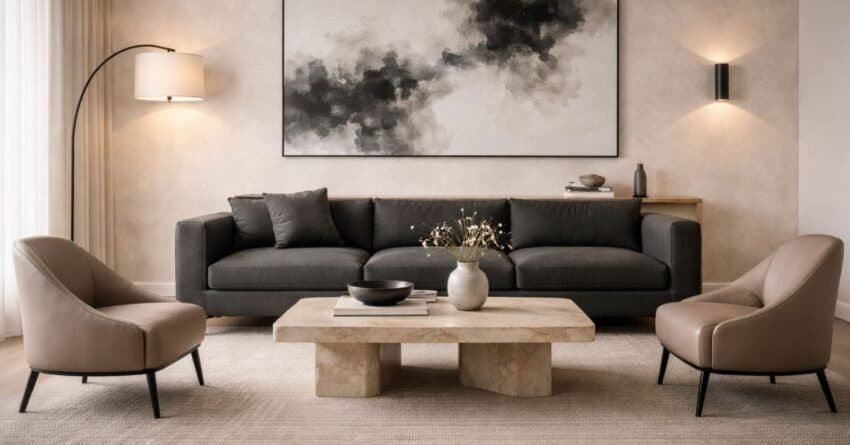
You know that feeling when your living room is clean, the pillows are fluffed, and you still step back and think… why does this look a little unfinished?
It is one of the most common decor headaches. The room is fine, but it does not feel pulled together. It can feel a bit cold. Or the layout feels awkward, like the furniture is not sure where it belongs.
That is where modern contemporary living room decor gets tricky. The style looks simple in photos, yet small choices decide if it feels calm and lived in, or flat and stiff. Most people keep buying more pieces, then wonder why it still does not look right.
This post is about modern contemporary living room decor secrets designers hide in plain sight. Not pricey upgrades. Not a total redo. Just the quiet rules that make a room feel finished.
You will learn how to pick one focal point, set up seating that feels easy, and use a tight color palette that still has warmth. We will also cover lighting layers, texture tricks, art size, and how to mix modern pieces with one older item without the room feeling random. Near the end, you will see the biggest mistakes that make modern rooms look cheap, plus a quick checklist you can use today.
Table of Contents
What Modern and Contemporary Mean in Real Homes
Modern vs contemporary in one simple explanation
People mix these two words all the time, and that is why a room can feel off.
Modern usually points to a clear look from modern design: clean shapes, simple lines, and practical layouts. It often leans on natural materials like wood and leather so the room still feels warm and livable.
Contemporary is more about what feels current right now. It can borrow from modern, mid century, minimal, or even a little classic, as long as the room feels fresh and uncluttered.
If you like a space that feels calm, bright, and easy to live in, you are already close.
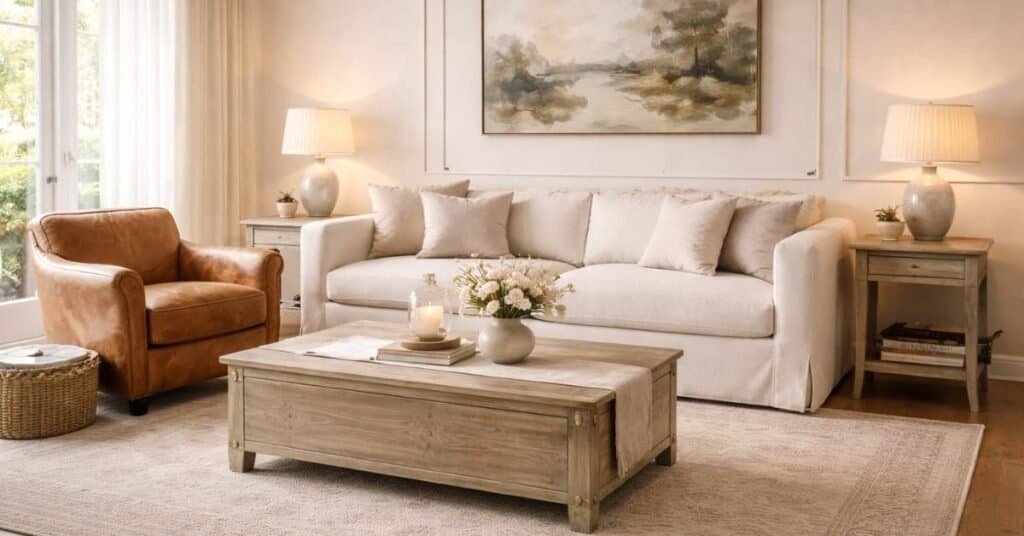
The easy way to blend both without the room feeling mixed up
A modern contemporary living room usually works when three things stay steady:
- Simple shapes as the base (sofa, rug, coffee table)
- A tight palette (a few colors that work together)
- Warmth from texture and materials (wood, woven fabrics, soft lighting)
This is also why mixing a clean modern piece with one older item can look so good. The contrast adds personality, as long as the rest of the room stays simple.
If your room feels flat, the fix is rarely more decor. It is usually clearer choices.
Secret 1 Pick One Focal Point and Let It Lead
A lot of living rooms feel messy for one reason: the room is trying to highlight everything at once. The TV, the fireplace, the big window, the gallery wall, the bookshelf. Your eyes do not know where to land.
Designers usually pick one main focal point first, then build the layout around it. HGTV also points out that choosing the focal point early helps every seat feel purposeful, and rugs can help define zones when needed.
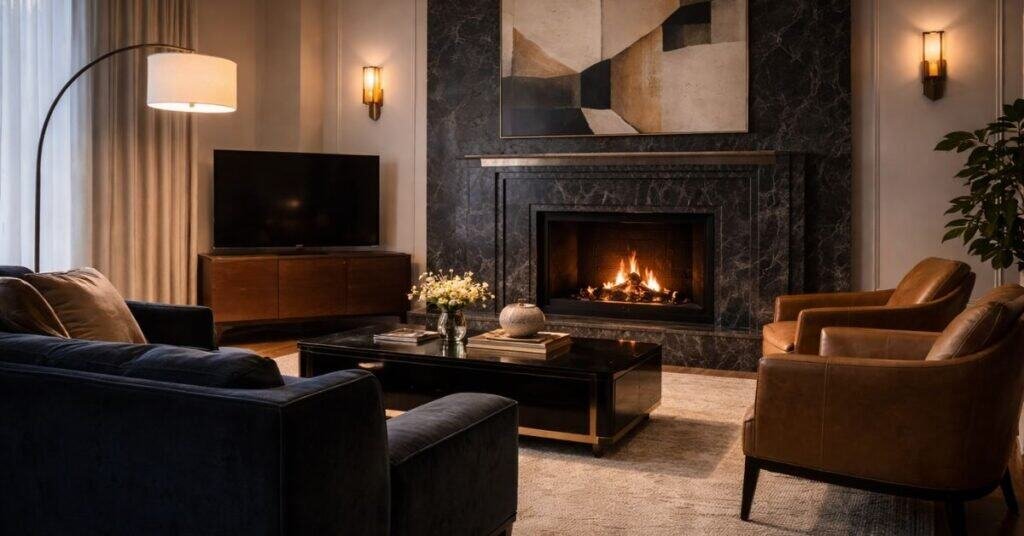
TV focal point that still looks calm
If the TV is the main thing you use, you do not need to hide it. You just need to keep the area around it quiet.
Try this:
- Keep the media console simple, with open space on top
- Use one larger piece next to the TV, like a tall plant or a floor lamp
- Avoid lots of small decor around the screen, it starts to feel busy fast
A simple move that helps: place a lamp or a plant on the side opposite the TV so the wall feels balanced.
Fireplace focal point that does not fight the TV
If you have both a fireplace and a TV, the mistake is treating them like two leaders.
Pick one to lead:
- If you watch TV daily, let the TV lead and keep the mantel simple
- If the fireplace is the heart of the room, place seating toward it and keep the TV off to the side
In many homes, the best compromise is making the fireplace wall the main visual wall, while the TV sits lower and quieter on a nearby wall.
Window focal point that makes the room feel open
Big windows are a gift. They can also cause layout confusion because people avoid placing furniture near them.
Instead:
- Float the sofa so it faces the view, even if it is not against a wall
- Use light window treatments so the window stays the star
- Add two chairs angled toward the window to make a natural conversation spot
This works well in open spaces too. The window becomes the anchor that keeps the room from feeling like a hallway.
Quick table: choosing your focal point
| Focal point | Works best when | Simple styling cue |
|---|---|---|
| TV | TV time is the main use | Keep decor around it minimal |
| Fireplace | You host or relax there often | One simple mantel moment |
| Windows | You want the room to feel open | Light curtains, seating angled |
Secret 2 Layout Comes First Even in Small Rooms
If a living room feels awkward, most of the time it is not the decor. It is the spacing.
One common mistake is pushing every piece against the walls. It can leave the middle of the room empty and the seating feels far apart. Another common issue is scale, like a tiny rug under big furniture or a coffee table that is too small for the sofa.
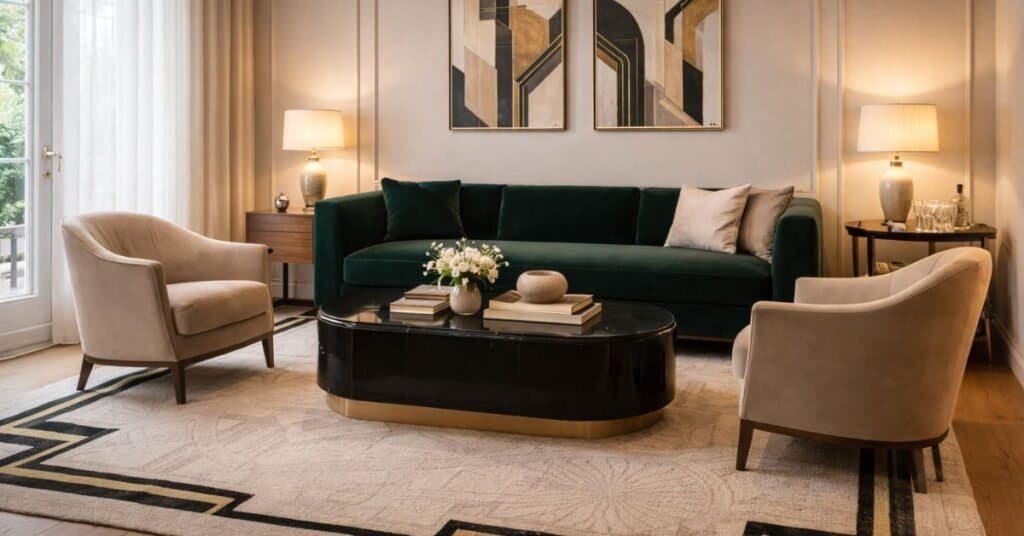
The seating distance rule that makes talking easy
A modern contemporary room looks calm when it is also easy to use.
Try this simple check:
- Sit on the sofa and look at the chairs
- If you feel like you need to raise your voice to talk, the seats are too far apart
- Pull the chairs closer until the group feels like one conversation circle
A good goal is for the main seats to feel connected, not scattered.
Rug size and placement that makes the room feel bigger
Small rugs make a room feel chopped up. A better look is a rug that supports the whole seating group.
Quick rules that help:
- Front legs of the sofa and chairs should sit on the rug
- If the rug is too small, size up so the furniture looks grounded
- Keep the rug centered under the seating, not under the coffee table only
This one change can make a small room feel more settled.
Stop pushing furniture to the walls
It feels safer to line everything up against the edges. It rarely looks good.
Try this instead:
- Pull the sofa forward a few inches
- If you have chairs, angle them slightly toward the sofa
- Leave a clear walking path, then stop moving things back again
Keltur notes that wall hugging layouts can make the center feel empty and less welcoming. Pulling pieces in even a little helps the room feel like a real gathering spot.
Quick table: small room layout fixes
| Issue | Why it happens | Simple fix |
|---|---|---|
| Room feels empty in the middle | Furniture is against the walls | Pull seating in a few inches |
| Rug looks tiny | Rug is sized for the table only | Get a larger rug for front legs |
| Seating feels awkward | Chairs are too far apart | Build a tighter conversation circle |
Secret 3 Open Concept Rooms Need Zones
Open concept living rooms can feel airy, then oddly unsettled. Like the sofa is floating and the room never feels done.
A big reason is that the space is doing too many jobs at once. Living, dining, walking path, maybe a desk corner too. Modern rooms look calm when each area has a clear job.
AND Academy points out that open floor plans are a core part of modern design because they create flow and make spaces feel larger. The key is planning the space so it still feels social and easy to use.
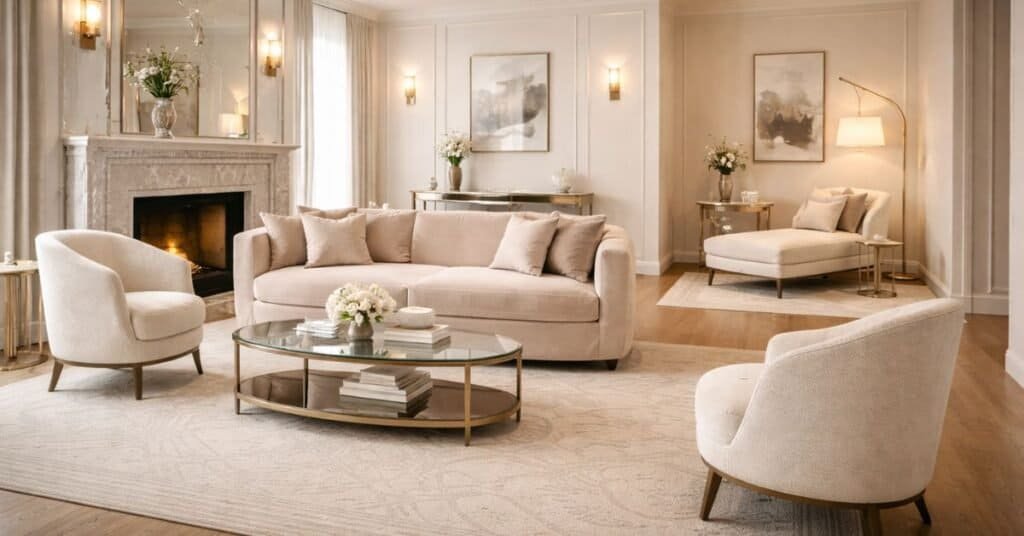
Zone with rugs, lighting, and furniture direction
You do not need walls to make a room feel organized. You need clear borders.
Try these quick moves:
- Use a rug to mark the living zone
- Aim the sofa and chairs toward the same focal point
- Add a floor lamp or table lamp inside the zone so it feels like its own area
Keep walkways clear without losing seating
Open concept spaces often turn into a traffic lane.
A simple check:
- Walk from the main entry to the kitchen
- Keep that path open
- Place seating so people do not have to squeeze behind chairs
If the room feels tight, try swapping a bulky chair for a slimmer one, or shift one chair to a diagonal angle.
Make the living area feel like its own room
This is a designer habit people rarely notice. The seating group is treated like a room inside the room.
Ways to do it:
- Anchor the seating group with a larger rug
- Add a console table behind the sofa if it floats in the room
- Keep the coffee table centered so the layout feels grounded
Table: open concept problems and quick fixes
| Open concept issue | Why it happens | Simple fix |
|---|---|---|
| Living room feels like it floats | No clear borders | Use a rug to anchor seating |
| Room feels like a hallway | Traffic cuts through seating | Clear one main walkway |
| Seating feels scattered | Pieces face different directions | Aim seats toward one focal point |
Secret 4 A Tight Color Palette Looks More Costly
A lot of living rooms feel busy because the colors keep changing from one corner to the next. You might not notice it at first. Then the room feels restless, even when it is clean.
Modern contemporary living room decor often looks “done” because the color plan is calm and repeatable. Real Simple also shows how sticking to a small set of close colors can make the room feel easier on the eyes, and one large art piece can add drama without adding clutter.

The 60 30 10 rule in plain language
You do not need to measure anything. This is just a simple way to keep the room from feeling noisy.
- 60 percent is your main color (walls, big rug, big sofa)
- 30 percent is your second color (chairs, curtains, a second rug tone)
- 10 percent is your accent (art, one throw, a vase, one pillow color)
If your room already has a strong sofa color, start there and build around it.
Warm neutrals that still feel modern
Neutral does not mean cold. It just means the base is calm.
Warm modern bases often look like:
- soft white or warm off white
- greige and warm taupe
- sand, oat, or light beige
- warm woods with black accents
Martha Stewart highlights that modern spaces often use clean shapes and natural materials, which is why wood tones and earthy hues keep the look relaxed and livable.
Budget friendly color ideas that do not look dull
If you want a budget friendly update, paint and textiles do a lot.
Try one of these simple pairings:
- warm white + oak wood + black accents
- greige + cream + brass
- sand + soft gray + olive green
- taupe + ivory + muted blue
House Beautiful also shares ideas like going all in on one color range for a modern room, which can calm the space when you feel stuck picking accents.
Quick table: color problems and simple fixes
| Issue | Why it happens | Simple fix |
|---|---|---|
| Room feels busy | too many unrelated colors | pick 3 main colors and repeat them |
| Room feels cold | base is too gray or stark | add warm whites, wood tones, soft textures |
| Room feels bland | no contrast or focus | add one darker accent or one large art piece |
Secret 5 Lighting Is Layered Not Just One Ceiling Light
If a modern contemporary living room decor setup feels cold, lighting is often the reason. Many rooms rely on one bright overhead light. It washes everything out and makes the space feel flat at night.
Martha Stewart highlights that modern rooms lean on clean shapes and natural materials. Lighting helps those textures show up in a warm way, instead of looking dull.

The three light types and where they go
A finished feeling usually comes from three kinds of light working together.
- Ambient light: the overall glow
Think ceiling fixture, floor lamp glow, or soft light spread across the room - Task light: light for doing things
A reading spot near a chair or sofa corner - Accent light: light that adds depth
A lamp aimed near a wall, a soft glow near shelves, or a light that highlights art
When you have at least two sources on at once, the room starts to feel calmer.
Warm bulbs and shade materials that feel cozy
A small change that makes a big difference is the type of light.
Try this checklist:
- Choose warm light, not bright white
- Use shades that soften the glow, like fabric shades
- Spread lamps around the room so light comes from more than one side
What to do if the room has no overhead light
Many homes do not have a great ceiling light in the living room. That is still workable.
Try this:
- Place one floor lamp near the sofa
- Add a table lamp on the opposite side of the room
- Turn on both in the evening so the room has an even glow
Secret 6 Texture Does the Cozy Work Modern Rooms Need
A modern room can look sharp in daylight, then feel a little stiff at night. Texture fixes that. It adds warmth without adding clutter.
Martha Stewart notes that modern style often uses natural materials like wood and leather, plus organic shapes and earthy hues. That mix is a big reason modern spaces can feel relaxed, not sterile.
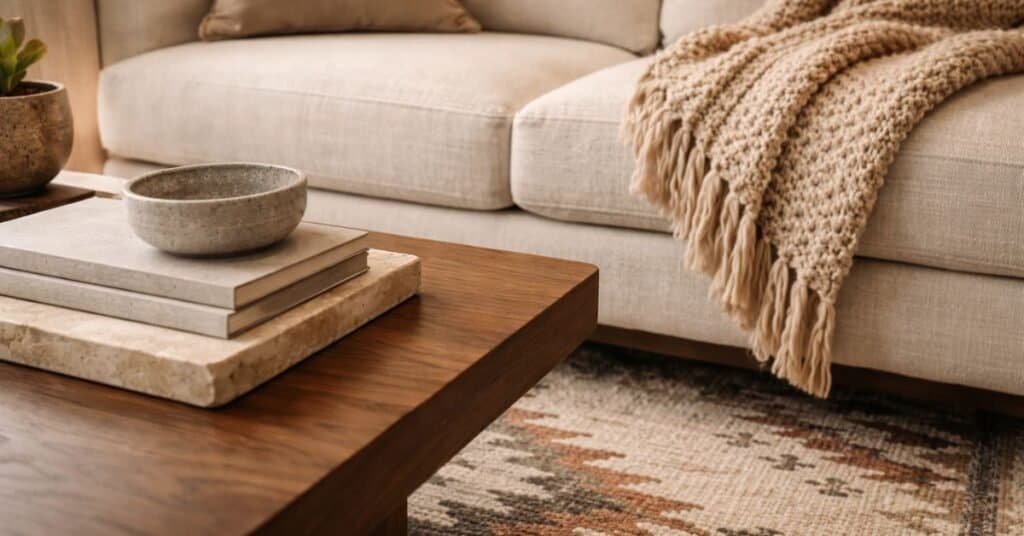
The texture checklist: rug, curtains, pillows, throws
If your room feels cold, check these four first. You do not need a lot. You just need the right mix.
- Rug: a thicker or more textured rug makes the room feel grounded
- Curtains: soft fabric adds warmth and makes windows look taller
- Pillows: pick a few in different textures, not different colors
- Throw: one soft throw makes the sofa look inviting
If you want the room to look calmer, keep the colors similar and let the textures do the work.
Mix matte and soft materials so the room feels warm
Modern contemporary living room decor often looks best when the finishes are not all shiny.
Easy mix ideas:
- matte or soft fabric sofa
- wood coffee table or side table
- woven basket or textured ceramic
- one metal finish for contrast (black, brass, or chrome)
This keeps the room from feeling like a showroom.
Wood tones and darker accents for depth
Many rooms fall into the all gray trap. It looks fine, but it can feel flat.
A simple fix is adding depth with:
- warm woods
- black accents
- one deeper tone like charcoal, olive, or deep navy
Apartment Therapy also shows how moving away from an all gray look and adding warmer tones and pieces with character can make a room feel more alive while still looking put together.
Secret 7 Art Scale Is the Fastest Way to Fix Flat Walls
You can have a nice sofa, a good rug, and still feel like the room is missing something. Very often it is the wall art. Not the style. The size.
Rooms feel unfinished when the art is too small or floating too high. Real Simple also points out that one large piece of art can add instant drama without needing lots of extra decor.

How big art should be over a sofa
A simple rule that works in most rooms:
- Art over a sofa should be about two thirds the width of the sofa
- Hang it so the bottom edge sits closer to the sofa, not near the ceiling
- If you are using two pieces, keep them close enough to read as one set
If your sofa is long, one larger piece often looks calmer than several small ones.
Gallery walls that still feel calm
Gallery walls can work in modern contemporary living room decor. They just need order.
Try these tips:
- Keep frames in one finish or two at most
- Use a tight color plan so the wall does not turn into noise
- Leave even spacing between frames
If the room already has patterns in the rug or pillows, a simple gallery wall works better than a very busy one.
Simple frames and spacing that look neat
If you want the modern look:
- thin black frames
- light wood frames
- simple white mats
Pick one direction and repeat it. That repetition makes the room feel planned.
Table: quick art size fixes
| Wall spot | Common mistake | Better size rule |
|---|---|---|
| Over sofa | art is too small | about two thirds sofa width |
| Above console | art is hung too high | keep it closer to the surface |
| Large blank wall | many tiny frames | one large piece or a tight set |
Secret 8 Mixing Modern with Vintage Without Clashing
This is one of the easiest ways to make a modern contemporary living room decor setup feel personal. It also scares people, because they worry it will look random.
House Beautiful notes that placing antique pieces next to modern ones can create a nice contrast. The key is making it feel like a choice, not an accident.
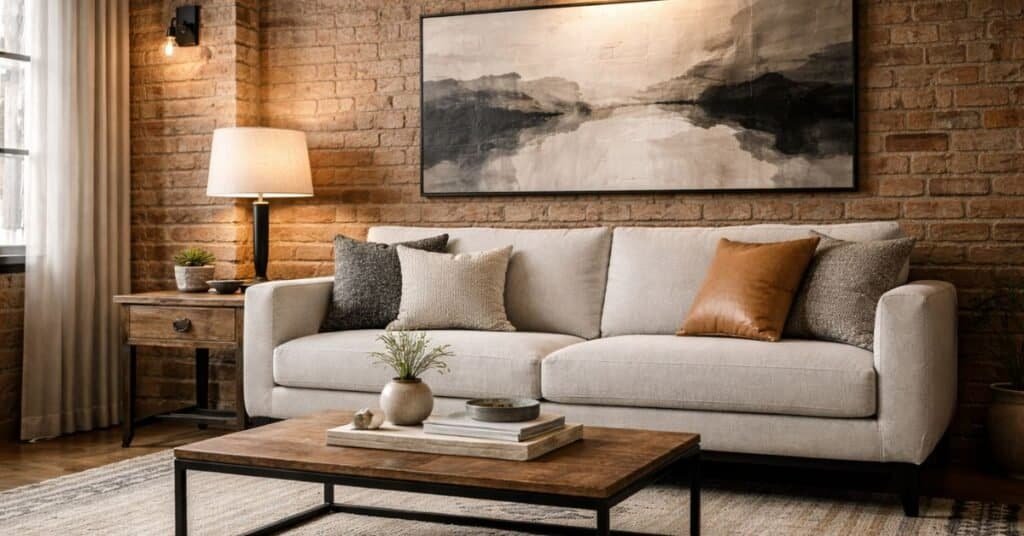
Repeat one finish so it looks planned
Mixing styles works best when something repeats.
Pick one thing to repeat:
- one wood tone (light oak or walnut)
- one metal finish (black, brass, or chrome)
- one color family (warm neutrals or soft cool neutrals)
Then let the vintage piece be the interesting note, not the whole song.
Keep shapes clean when the vintage piece is ornate
If your vintage piece has a lot of detail, like carved wood or curved lines, keep the surrounding pieces simpler.
Good pairings look like:
- modern sofa + vintage side table
- clean lined chair + antique cabinet
- simple coffee table + older framed art
This keeps the room from feeling like two styles fighting.
Use one old piece as the room anchor
One older item is often enough. It gives the room character, then the modern pieces keep everything calm.
Apartment Therapy shows how stepping away from a matchy gray look and bringing in warmer tones with eclectic pieces can feel fresh and lively, while still looking pulled together.
A good rule: if you add one vintage piece, remove one small decor item. That keeps the room from getting crowded.
Secret 9 The Styling Rule That Stops Clutter
This is where many modern contemporary living room decor plans fall apart. The room starts simple, then little items pile up.
A candle here, a bowl there, a stack of random things on every surface.
Designers often do the opposite of what most people do. They use fewer items, and they give each item more space.
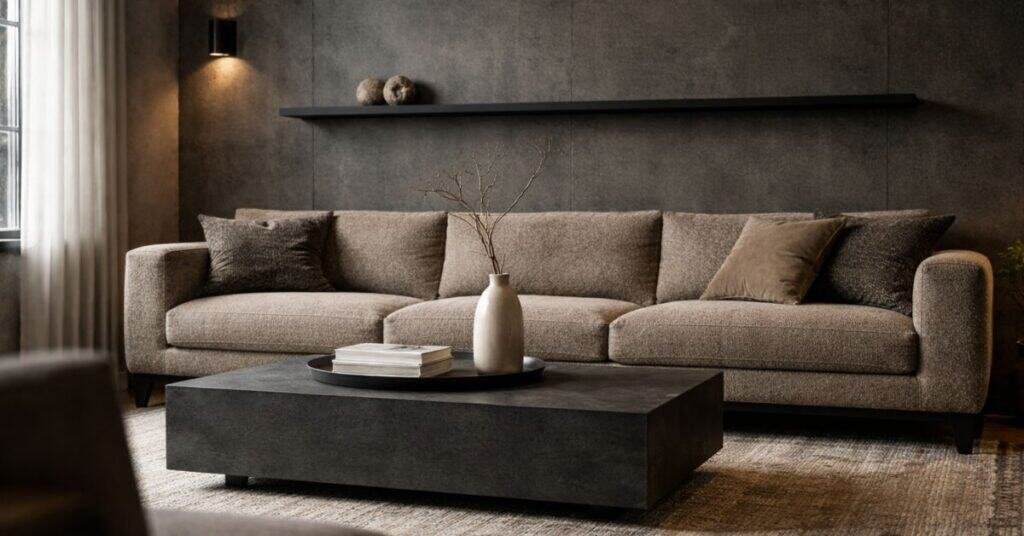
Fewer items, larger items, clearer surfaces
If you want the room to feel calm, try this rule:
- Keep one surface mostly clear in every zone
Coffee table, side table, console, shelves
Then style the rest with purpose:
- choose a few larger pieces instead of many tiny ones
- group items in sets of two or three
- leave empty space so the room can breathe
Modern rooms look neat because there is space around things, not because everything matches.
Coffee table styling that feels calm
A simple coffee table setup often looks best. Try one of these:
- a tray + one small stack of books + one vase
- one bowl + one candle
- one plant + one sculptural object
Pick one idea and stop. The table should still be usable.
Shelf styling that leaves breathing room
Shelves can turn into a clutter magnet.
Quick shelf rules:
- leave some open areas, do not fill every inch
- use a mix of tall and short items
- keep colors close so it reads as one story
If the shelf starts to feel busy, remove the smallest pieces first. Small items create visual noise fast.
Mistakes That Make Modern Living Rooms Look Cheap
Modern contemporary living room decor is supposed to feel calm and easy. A few common habits can make it feel dated or messy instead, even if the furniture is nice.
Martha Stewart calls out several issues that can make a living room look tacky, like buying a matching furniture set, going too heavy on glossy black or neon colors, and filling every surface with small decor.
Keltur also points out layout problems that show up a lot, like pushing furniture against the walls and trying to create too many focal points at once.

Matching furniture sets
A full matching set can feel safe, but it often feels flat. It leaves little room for personality.
Try this instead:
- keep the big pieces simple
- mix in one different chair or side table
- repeat one finish so it still feels planned
Too much gloss, neon color, or too many small items
High shine finishes and loud colors can take over a room fast.
Watch for:
- glossy black everywhere
- bright neon accents that feel harsh
- lots of tiny decor pieces spread around the room
A calmer fix:
- choose one metal finish and repeat it
- use softer accent colors
- swap many small items for one larger piece
Too many pillows and busy walls
Pillows are great. Too many can make the sofa look stuffed. Busy walls can make the room feel noisy.
Try these quick resets:
- keep pillows to a number that still lets people sit easily
- pick a small set of pillow colors, then vary texture instead
- on the walls, go larger and simpler rather than lots of small pieces
Quick Checklist to Apply the Designer Secrets Today
If you want the room to feel better fast, you do not need to do everything at once. Start with the moves that change the feel right away: focal point, layout, lighting, and clutter.
This checklist is meant to be used like a quick scan. Walk into the room and check each item like you are seeing it for the first time.

Five minute scan: focal point, lighting, clutter
- Can you name the one focal point right away
- Do you have at least two light sources you can turn on at night
- Is the coffee table mostly clear and usable
- Are there too many small items on one surface
If you fix only one thing in five minutes, clear one surface. It instantly calms the room.
One hour reset: rug, pillows, lamp placement
- Pull the seating in slightly so it feels like a group
- Check the rug: do the front legs of main seats sit on it
- Reduce pillows, keep a small set, vary texture instead of color
- Add one lamp on the side of the room that feels darkest
Lighting and rug placement often change the room more than buying new decor.
Weekend refresh: paint, art scale, layout tweak
- Tighten the color palette to three main colors
- Swap small wall art for one larger piece or a tighter set
- Set one zone in open concept spaces with a rug and lighting
- Add warmth with texture: curtains, rug, and one soft throw
House Beautiful notes ideas like color drenching and layering rugs in modern rooms, which can help the space feel more pulled together when done with restraint.
Table: what to do based on time
| Time you have | What to change | What it improves |
|---|---|---|
| 5 minutes | clear one surface, set focal point | room feels calmer |
| 1 hour | pull seating in, fix rug, add lamp | room feels finished |
| Weekend | tighten colors, scale up art, add texture | room feels warm and modern |
Frequently Asked Questions
1) What is the difference between modern and contemporary living room decor?
Modern decor often leans on clean lines, practical layouts, and natural materials like wood and leather. Contemporary decor leans more on what feels current right now, and it can borrow from several styles. Many rooms blend both, which is why a calm palette and simple shapes help the look stay clear.
2) How can I make my small living room look modern without a full remodel?
Start with layout and scale. Pull furniture in slightly so it feels like a seating group, and use a rug that is large enough for the front legs of the main pieces. Avoid pushing everything to the walls, since that can make the center feel empty and awkward.
3) What colors work best for a modern contemporary living room on a budget?
Warm whites, greige, taupe, sand, and soft beige are great bases that still feel modern. Add one deeper accent like black, olive, or charcoal for contrast. Keeping the palette tight can make the room feel more pulled together without spending much.
4) How do I arrange living room furniture in an open concept space?
Create zones using a rug, lighting, and furniture direction. Aim the main seating toward one focal point so the room feels organized. Keep one main walkway clear so the space does not feel like a traffic lane.
5) What should be the focal point in a modern living room: TV, fireplace, or windows?
Pick the focal point based on how you use the room most. If TV time is the main use, let the TV lead and keep the wall around it quiet. If the fireplace or windows are the best feature, aim seating toward them and let the rest support that choice.
6) How can I mix modern pieces with antiques without the room looking mismatched?
Use one antique or vintage piece as the character piece, then keep the rest of the room simple. Repeat one finish or one color family so it looks planned. House Beautiful notes that placing antiques next to modern pieces can look great when the contrast is controlled.
7) What are the most common living room decorating mistakes to avoid?
A few big ones are buying matching furniture sets, using too many glossy or loud colors, and over filling surfaces with small items. Layout mistakes also matter, like pushing all furniture to the walls or trying to highlight too many focal points at once.
8) How do I make a modern living room feel cozy and not cold?
Add layers of light and layers of texture. Use warm lighting from more than one lamp, and bring in soft materials like a textured rug, curtains, and a throw. Natural materials like wood also help modern rooms feel relaxed and livable.
9) How many colors should I use in a modern living room palette?
A simple range often works best, like three main colors that are close to each other. Then add one small accent if you want a little contrast. Real Simple shows that keeping the palette tight helps the room feel calm and easy to style.
10) What affordable updates instantly make a living room look more modern?
Focus on changes that affect the whole room at once, like fixing the layout, sizing up the rug, and adding layered lighting. Swapping small wall art for one larger piece can also make the room feel finished fast. Even small layout and zone changes can make the space feel more social and open.
Conclusion
Modern contemporary living room decor looks simple, but it rarely happens by accident. The rooms that feel calm and finished usually follow a few quiet rules: one clear focal point, a layout that brings people together, a tight color palette, and lighting that feels soft at night.
If your space feels flat, start small. Pick one thing to fix today, like rug size, lamp placement, or wall art scale. Those moves often change the whole mood of the room without adding more stuff.
Want more ideas you can copy right away? Visit the full guide here: Epic Modern Living Room Guide: What No Decorator Will Show You