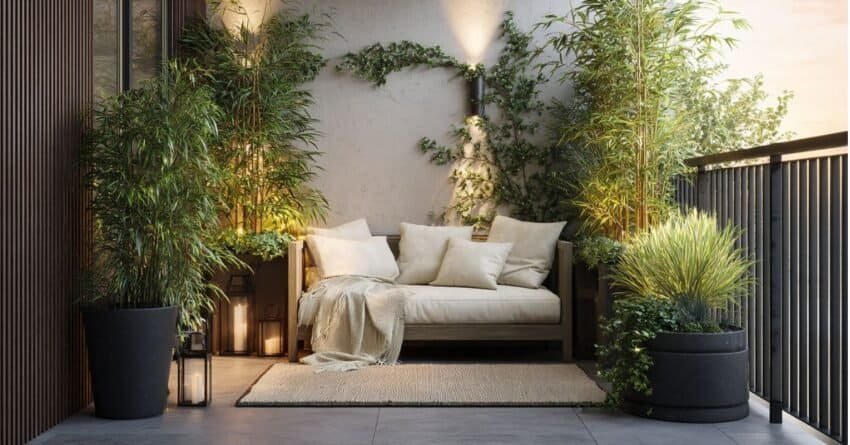
There is something frustrating about stepping onto your balcony ready to relax, only to realize you are staring directly into another apartment window. Even a beautiful outdoor chair setup can feel exposed when there is no privacy, no greenery, and no soft barrier between you and the outside view.
The best balcony privacy plants can completely change how a balcony feels. The right plants soften harsh railings, block unwanted views, reduce that boxed in feeling, and turn a plain balcony into a calmer outdoor retreat.
For small balconies in the US and Canada, privacy matters even more because outdoor space is often limited. A narrow balcony may only have room for two chairs and a planter, so every inch has to work carefully. Tall grasses, potted bamboo, climbing vines, and compact evergreen shrubs can all help create privacy without making the balcony feel heavy or overcrowded.
Before choosing plants, it helps to think about sunlight, wind, balcony size, and building rules. As Architectural Digest explains about balcony garden planning, “sunlight exposure and wind patterns” should shape your plant choices from the start. A windy 20th floor balcony needs very different plants than a shaded ground floor patio.
If your balcony also needs better organization, these Best Balcony Storage Ideas for Renters With No Drill Fixes can help free up space before adding larger planters.
Some balconies work best with one tall leafy screen near the railing. Others feel better with layered greenery in corners, slim planter rows, or a vertical garden wall beside seating. The goal is not to fully close off the space. It is to make the balcony feel softer, calmer, and more comfortable to spend time in.
Table of Contents
How to Choose the Best Balcony Privacy Plants
Choosing the best balcony privacy plants is not just about picking the tallest greenery at the garden center. A plant that works beautifully on a shaded city balcony may struggle on a hot west facing patio with strong afternoon sun.
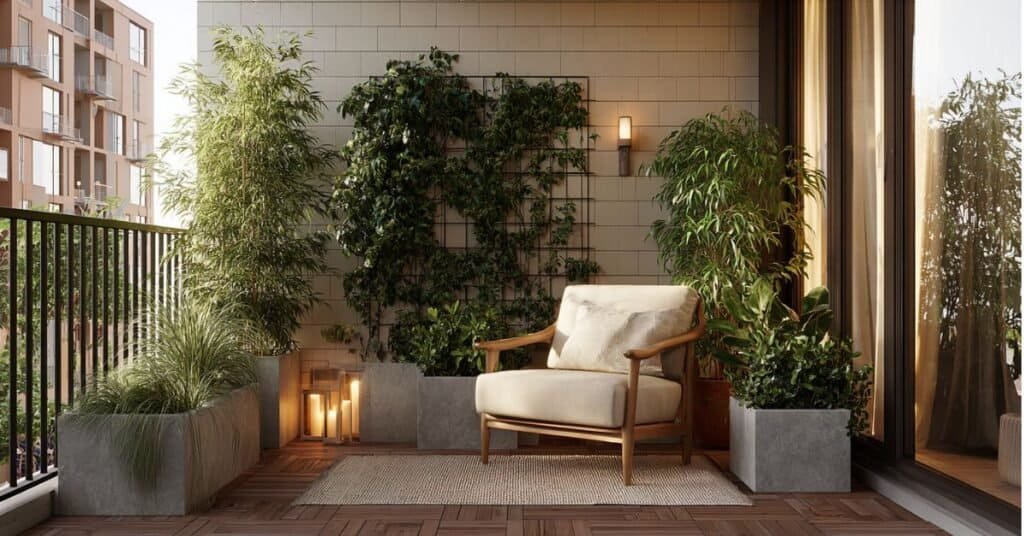
The most comfortable balconies usually balance four things:
• sunlight
• wind
• plant height
• container size
A little planning at the start can save you from overcrowded corners, dried out plants, or tall pots that constantly tip over.
Check Sun, Shade, and Wind First
Before buying plants, stand on your balcony for a full day if possible and notice how the light changes.
Ask yourself:
• Does the balcony get strong afternoon sun?
• Is it shaded most of the day?
• Does wind hit the railing hard?
• Is the space exposed during storms?
According to Architectural Digest’s balcony garden planning guide, “sunlight exposure and wind patterns” should guide your plant choices from the beginning.
That matters more than many people realize.
Tall leafy plants on a windy upper floor balcony may dry out quickly or lean heavily after storms. On the other side, dense shade loving plants can burn fast on a south facing balcony with direct afternoon heat.
Practical example:
• Sunny balconies often work well with ornamental grasses, lavender, rosemary, and bamboo.
• Shaded balconies usually feel softer with ferns, ivy, or boxwood.
Small space variation:
If the balcony is under 5 feet wide, use taller narrow planters instead of wide pots that block walking space.
Know Your Building Rules Before Adding Trellises
Many renters get excited about balcony privacy plants, then realize their building has restrictions on screens, hanging structures, or railing attachments.
Architectural Digest also notes that checking building regulations before adding trellises or balcony changes is important for safety and approval.
This is common in:
• apartment balconies
• condo towers
• shared outdoor buildings
Instead of drilling permanent panels into walls or railings, use:
• freestanding trellis planters
• weighted privacy screens
• portable plant stands
• tall grouped planters
These options still create privacy while keeping the setup renter friendly.
Budget option:
One freestanding trellis planter beside a chair often creates more visual privacy than filling the whole balcony with small pots.
Match Plant Height to Your Privacy Needs
Not every balcony needs a full green wall.
Some outdoor spaces only need softer screening near eye level. Others need taller coverage to block nearby apartment windows.
A helpful guideline:
• 2 to 3 foot plants help soften railings
• 4 to 5 foot plants help screen neighboring balconies
• climbing vines help create vertical privacy without taking up floor space
Tall plants work best when grouped in odd numbers instead of lined up too perfectly. A trio of layered planters usually feels more natural than six identical pots placed shoulder to shoulder.
One common mistake is choosing plants that are too dense for a tiny balcony. Thick greenery across every edge can make the space feel darker and smaller.
Instead, leave small open gaps where light can still pass through.
Best Balcony Privacy Plants for Full Sun
Sunny balconies can feel bright and cheerful during the day, but they can also feel exposed fast when there is little shade or greenery. The best balcony privacy plants for full sun can soften that harsh open feeling while still handling long hours of heat and direct light.
The key is choosing plants that stay healthy in containers without constantly drooping or drying out.
Bamboo in Large Containers
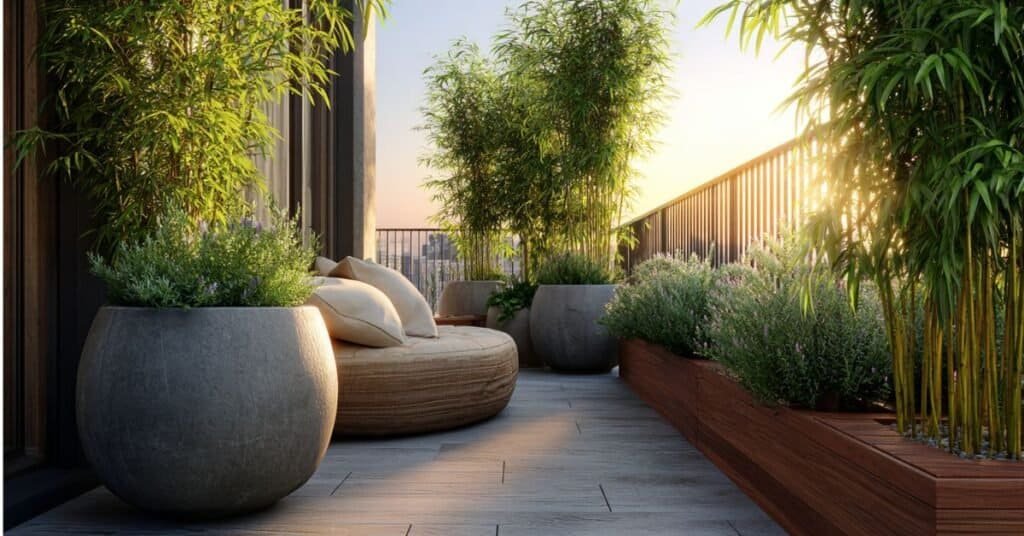
Bamboo is one of the fastest ways to create privacy on a balcony.
According to Better Homes and Gardens’ balcony plant roundup, golden bamboo is one of the strongest balcony privacy picks because of its height and dense green growth.
A row of potted bamboo can quickly create a leafy screen between you and nearby balconies. The narrow upright growth also works surprisingly well for tight spaces because it adds height more than width.
For balconies, clumping bamboo varieties are usually easier to manage than spreading types.
Practical tips:
• Use containers at least 18 to 24 inches wide
• Choose heavy pots so the plants stay stable in wind
• Keep the soil evenly moist during summer heat
One common mistake is placing bamboo in tiny lightweight planters. Tall stems combined with shallow pots can easily tip during strong wind.
Small space variation:
Instead of placing bamboo across the whole railing, group two tall planters beside your seating area to create a softer privacy corner.
Ornamental Grasses for Soft Movement
Ornamental grasses create privacy in a lighter, airier way than dense shrubs.
Feather reed grass, fountain grass, and switchgrass all add height while still allowing movement and sunlight through the leaves. That softer texture keeps small balconies from feeling boxed in.
These grasses look good on:
• modern balconies
• Scandinavian outdoor spaces
• Zen inspired patios
• organic modern terraces
The gentle movement also helps balconies feel calmer during windy evenings.
A practical layout idea:
Place taller grasses behind seating and lower planters near the front edge of the balcony. This layered effect keeps the space open while still adding screening.
Budget option:
One large ornamental grass in a tall matte planter often creates more visual impact than several small pots scattered around the floor.
Lavender or Rosemary for Sunny Narrow Balconies
Not every privacy plant has to grow 6 feet tall.
Lavender and rosemary work well for balconies that need softer screening near railings or seating areas. They also add scent, texture, and a relaxed Mediterranean feel without overwhelming compact layouts.
These plants work especially well in:
• narrow balcony planters
• railing boxes
• slim terracotta containers
• sunny apartment balconies
Lavender adds a softer gray green tone while rosemary gives more structure and upright growth.
One thing to watch carefully is drainage. Mediterranean style plants dislike sitting in soggy soil, especially after heavy rain.
If your balcony gets intense afternoon heat, lighter colored planters usually stay cooler than dark black containers.
Best Balcony Privacy Plants for Shade
Shaded balconies can still feel lush and private. You just need plants that enjoy softer light instead of fighting against it.
The best balcony privacy plants for shade often have rich green leaves, gentle texture, and a calmer look. They are great for north facing balconies, covered patios, and city balconies blocked by nearby buildings.
Boxwood for Tidy Green Cover
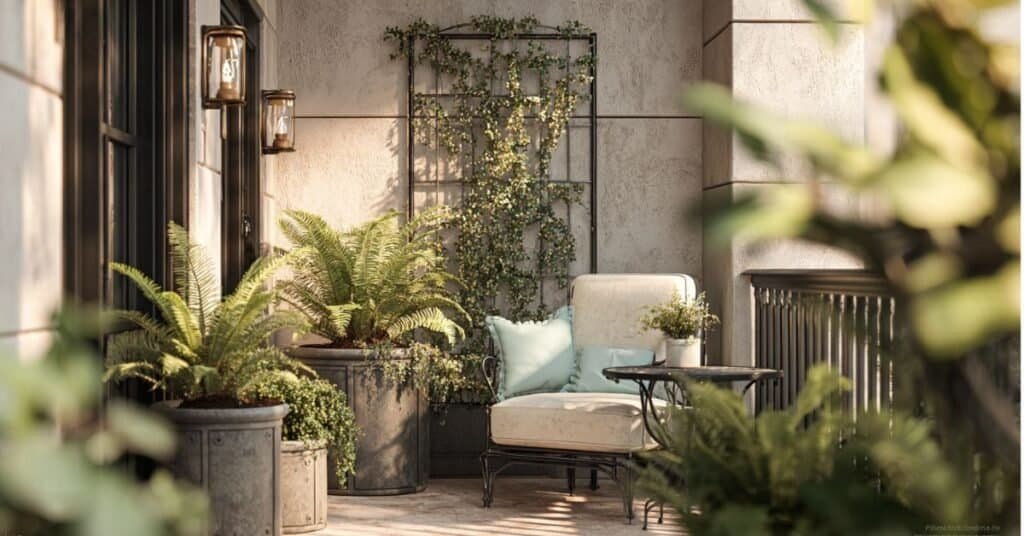
Boxwood is a strong choice if you want privacy that feels neat and classic.
Better Homes and Gardens lists boxwood among easy care shrubs for outdoor privacy, along with other compact shrubs that work well for green screening.
For a balcony, choose smaller boxwood varieties and place them in deep planters. They can frame a seating area, soften railings, and give the balcony a more finished look without taking over the space.
Practical tips:
• Use a planter at least 16 to 20 inches deep
• Place boxwood where it gets bright indirect light
• Trim lightly to keep the shape tidy
Small space variation:
Use two matching boxwood planters on either side of a chair instead of lining the full railing.
Ferns for a Soft Shaded Screen
Ferns bring softness to shaded balconies. Their leaves fill corners nicely without feeling too heavy.
They work well in:
• hanging baskets
• tall pedestal planters
• shaded balcony corners
• plant stands near seating
A fern beside a chair can make a balcony feel tucked away, especially when paired with a small outdoor rug and simple side table.
The main thing to watch is moisture. Ferns usually prefer soil that stays lightly damp, so they may need extra attention during hot summer weeks.
Budget option:
Start with one large fern in a raised planter stand instead of buying many small plants. It gives more height and makes the balcony feel fuller faster.
Climbing Hydrangea or Ivy Style Greenery for Trellises
Climbing greenery can create privacy without using much floor space.
A freestanding trellis planter works well if you cannot drill into the wall. Place it beside the seating area or along one exposed side of the balcony.
Climbing hydrangea, ivy style greenery, or other balcony safe vines can help soften hard edges and create a leafy green screen over time.
Common mistake:
Do not place climbing plants where they block the balcony door or make the walkway feel tight. Leave at least 30 inches of clear path if possible.
Tall Plants for Balcony Privacy in Pots
Tall plants are often the fastest way to make a balcony feel secluded. They help block nearby windows, soften railings, and create a calmer outdoor atmosphere without adding permanent walls or screens.
The trick is choosing plants that stay stable in containers while still fitting the balcony layout.
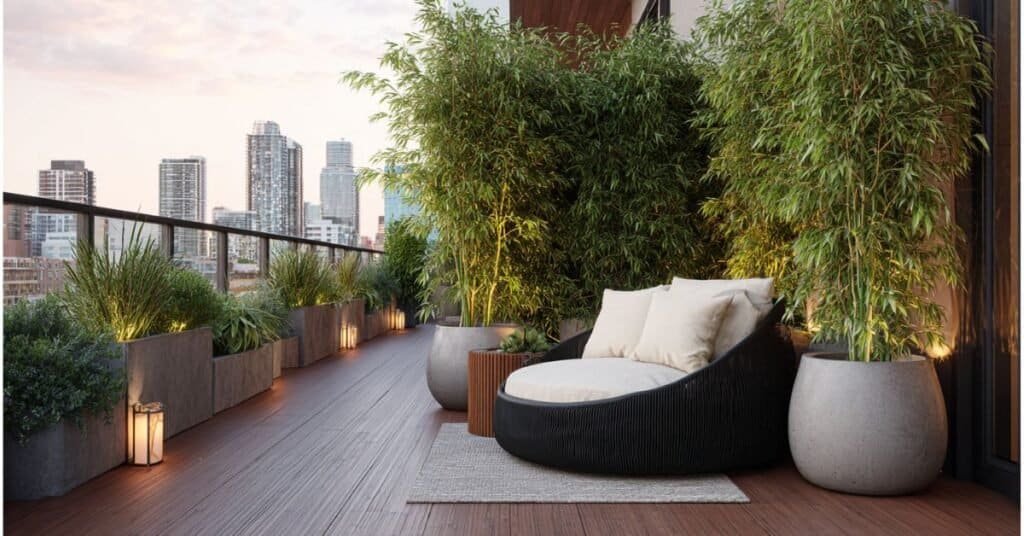
Compact Evergreens for Year Round Cover
Compact evergreen shrubs work well because they stay green through multiple seasons and create steady privacy even during colder months.
Good options include:
• dwarf arborvitae
• compact cypress
• small boxwood varieties
These plants fit especially well on:
• traditional balconies
• modern patios
• Zen inspired outdoor spaces
• narrow apartment terraces
Evergreens also help balconies feel fuller during winter when many other plants lose leaves.
A practical setup:
Place two taller evergreen planters behind a bench or seating corner instead of lining every edge of the balcony. This keeps the layout lighter and easier to move through.
One common mistake is placing tall shrubs in lightweight plastic containers. Wind can easily push them over on exposed balconies.
Potted Bamboo for Fast Screening
If privacy is the top goal, bamboo is still one of the quickest balcony screening options.
Tall bamboo creates:
• vertical greenery
• movement
• shade
• softer views from neighboring buildings
It also works surprisingly well in modern and tropical style balconies because the upright shape keeps the space visually clean.
Bamboo usually needs:
• large heavy pots
• regular watering
• strong drainage
• occasional trimming
For windy balconies, place bamboo slightly inward instead of directly against the railing. This helps reduce stress on the stalks during storms.
Budget option:
Use one oversized bamboo planter as the main privacy anchor, then layer smaller plants around it instead of buying several tall containers.
Tall Grasses for Renters
Tall ornamental grasses are one of the easiest renter friendly privacy options because they are portable and lightweight compared to large shrubs.
They also feel softer visually than dense screening panels.
Good grasses for balcony privacy include:
• feather reed grass
• fountain grass
• switchgrass
These grasses pair well with:
• modern outdoor furniture
• Scandinavian balconies
• biophilic outdoor spaces
• minimalist patios
A softer grass screen can make a balcony feel private without fully closing it off from natural light.
Small space variation:
Place one tall grass planter in the corner nearest neighboring views instead of blocking the whole railing.
| Plant Type | Best Light | Privacy Height | Care Level |
|---|---|---|---|
| Bamboo | Full sun to part sun | 5 to 8 feet | Medium |
| Boxwood | Part shade | 3 to 5 feet | Low |
| Arborvitae | Full sun | 4 to 6 feet | Low |
| Ornamental Grass | Full sun | 3 to 5 feet | Low |
| Ferns | Shade | 2 to 4 feet | Medium |
| Climbing Vines | Sun or shade depending on type | Varies | Medium |
Climbing Plants and Trellis Ideas for Balcony Privacy
Not every balcony has enough floor space for large shrubs or rows of planters. Climbing greenery solves that problem by adding privacy vertically instead of horizontally.
A simple trellis with climbing plants can soften railings, block direct views, and make a balcony feel calmer without sacrificing walking space.
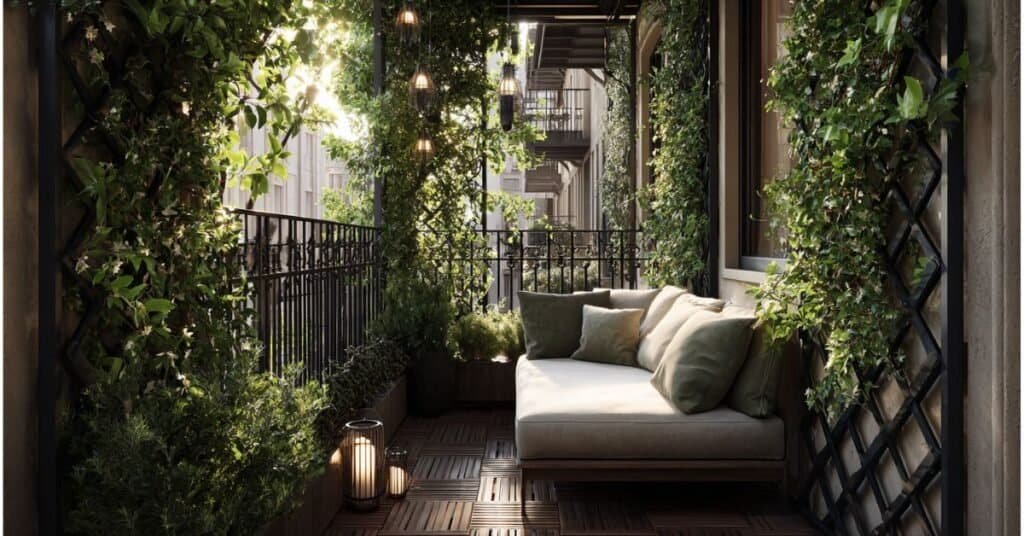
Use Trellis Planters Instead of Wall Mounted Trellises
Freestanding trellis planters are one of the easiest ways to add balcony privacy without permanent installation.
They work especially well for:
• renters
• apartment balconies
• narrow layouts
• balconies with strict building rules
Instead of drilling into walls, the trellis is attached directly to the planter itself. That means the setup can move when needed and usually feels less heavy visually.
A practical layout idea:
Place one trellis planter beside a lounge chair instead of directly in front of the railing. That slight angle creates privacy where you sit most without blocking the entire balcony.
One common mistake is using trellises that are too wide for the balcony depth. Large panels can quickly make narrow balconies feel boxed in.
Try Climbing Vines for Vertical Privacy
Climbing greenery creates a softer privacy effect than solid walls or screens.
According to Homes and Gardens’ balcony privacy planting ideas, grasses, shrubs, and climbers all help create a more secluded urban balcony.
Climbing plants work especially well when paired with:
• black metal trellises
• warm wood lattice panels
• slim vertical frames
• corner planter systems
Some balconies look best with loose trailing greenery while others feel cleaner with tighter climbing coverage.
Good balcony friendly climbers include:
• star jasmine
• clematis
• ivy style vines
• climbing hydrangea
• mandevilla in warm climates
Small space variation:
Use one narrow vertical trellis instead of multiple wide panels. This keeps more open sky visible and prevents the balcony from feeling closed in.
Place Vines Where They Will Not Block the Door
It is easy to underestimate how much climbing greenery spreads once it starts growing.
Keep climbing plants away from:
• balcony doors
• walking paths
• outdoor dining chairs
• air vents
Leave enough open space so the balcony still feels comfortable to move through.
A good rule:
If the vines extend more than 12 to 16 inches into the walkway, trim them back before the space starts feeling crowded.
Budget option:
A simple black metal plant grid attached to a heavy planter often works just as well as expensive custom screens.
Renter Friendly Balcony Privacy Plants
Renters often need privacy that looks good but does not damage walls, railings, or building finishes. That is where balcony privacy plants can be more flexible than fixed screens.
Instead of drilling panels into place, use planters, stands, and moveable greenery to build a soft natural barrier around the seating area.
Apartment Therapy shows a rental balcony makeover that used greenery, soft outdoor pieces, and privacy layers to help a plain balcony feel more secluded.
The same idea works on small balconies: create layers you can move, remove, or adjust by season.
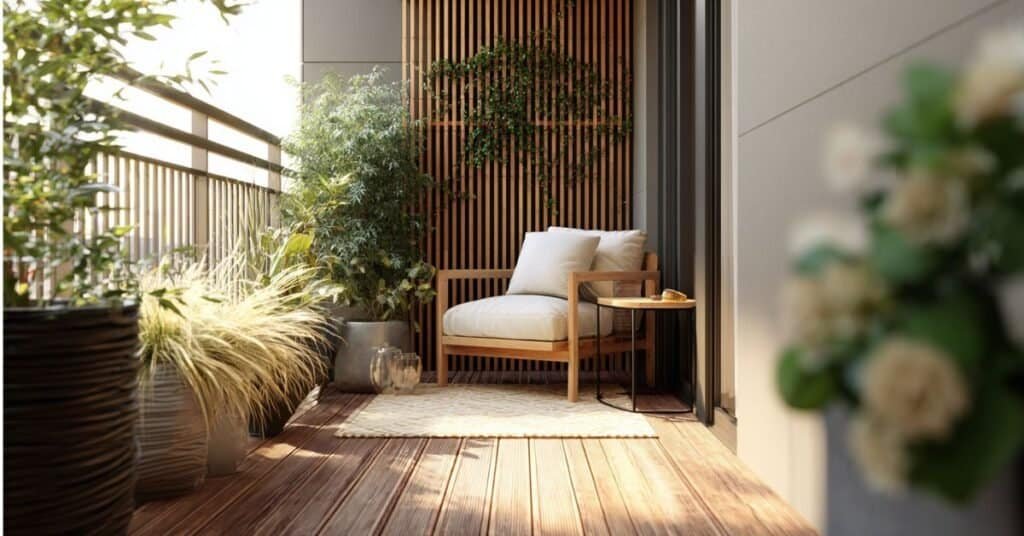
Use Portable Planters Instead of Permanent Screens
Portable planters are one of the easiest renter friendly privacy tools.
Use them to:
• block one exposed side
• frame a chair
• create a green corner
• soften a railing view
Look for planters that are deep enough to hold roots and heavy enough to stay steady in wind. Long rectangular planters work well along railings, while tall round planters fit better in corners.
A common mistake is filling a tiny balcony with too many small pots. It often creates clutter without enough height for privacy.
A better setup is one tall planter, one medium planter, and one railing planter. That gives you height, depth, and softness without crowding the floor.
Layer Plants With Curtains or Screens
Plants do not have to do all the privacy work alone.
For a softer balcony setup, pair greenery with:
• outdoor curtains
• a folding screen
• a bamboo roll screen
• a freestanding trellis
The plants soften the look, while the screen blocks stronger sightlines.
This works well if your balcony faces another unit, a parking lot, or a busy street. Place the tallest plants where privacy matters most, then use softer pieces closer to the seating area.
Small space variation:
Use one narrow privacy screen behind a chair and add a tall grass planter beside it. This gives coverage without closing off the whole balcony.
Keep Weight and Overhead Installs in Mind
Balconies have weight limits, and some buildings do not allow heavy hanging pieces.
Apartment Therapy mentioned a project where an overhead idea had to change because it was too heavy. That is a good reminder to keep balcony setups practical and safe.
Before hanging planters or adding large pieces, check:
• building rules
• railing limits
• wind exposure
• planter weight after watering
If you want a cozy look without electrical work, pair plants with soft lighting from How to Light a Balcony Without Hardwiring or Major DIY. Warm lights and layered greenery can make even a small rental balcony feel calmer at night.
Best Balcony Privacy Plants for Small Spaces
Small balconies need privacy that feels light, not crowded. The goal is to soften the view without turning the balcony into a wall of leaves.
The best balcony privacy plants for small spaces usually grow up instead of out. They add height, texture, and greenery while leaving the floor open for seating.
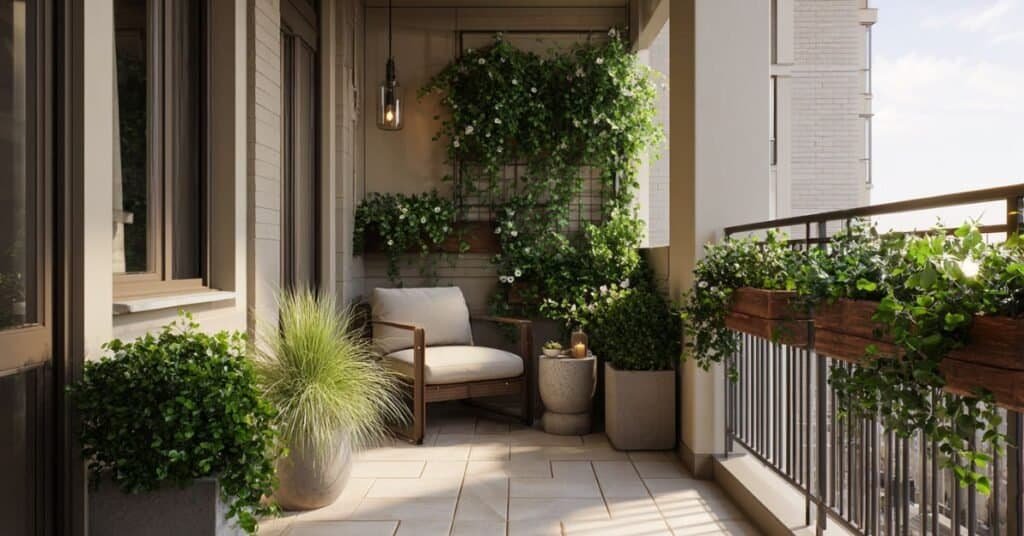
Use Narrow Tall Planters
Narrow tall planters are perfect for tight balconies because they give privacy without taking over the walkway.
Use them beside:
• a lounge chair
• the exposed side of a railing
• the corner closest to a neighbor
• a small bistro setup
A planter that is 10 to 14 inches wide can still hold tall grasses, compact shrubs, or climbing greenery. Just make sure the base is heavy enough to stay stable.
A smart small space setup is one tall planter in the corner, one railing planter for softness, and one slim plant stand near the chair. That gives layered greenery without filling the floor.
Add Railing Planters for Soft Side Cover
Railing planters are helpful because they use space you already have.
They work well for:
• trailing vines
• herbs
• small flowers
• compact leafy plants
They will not block a full view by themselves, but they soften railings and make the balcony feel less bare.
Real Simple notes that small outdoor areas like balconies or patios can still hold a lush mix of vines, herbs, compact trees, and smaller plants when the choices fit the space.
This is helpful for tiny balconies where one large plant might feel too bulky.
Create a Plant Filled Corner Instead of Covering Every Side
One of the easiest ways to make a small balcony feel private is to focus on the most exposed corner.
You do not need to block every railing line.
Instead, choose the area where you sit most often and add:
• one tall plant
• one medium plant
• one trailing plant
• one small side table or stool
This creates a cozy balcony retreat without making the space feel dark.
Common mistake:
Trying to cover every side can make a small balcony feel boxed in. Leave one side lighter so air and daylight still move through the space.
Balcony Planter Ideas for Privacy
The right planter can make balcony privacy plants look fuller, safer, and more settled. A tall plant in the wrong pot may lean, dry out fast, or feel awkward beside your seating.
Think of planters as part of the design, not just containers. Their size, weight, and placement shape how private the balcony feels.
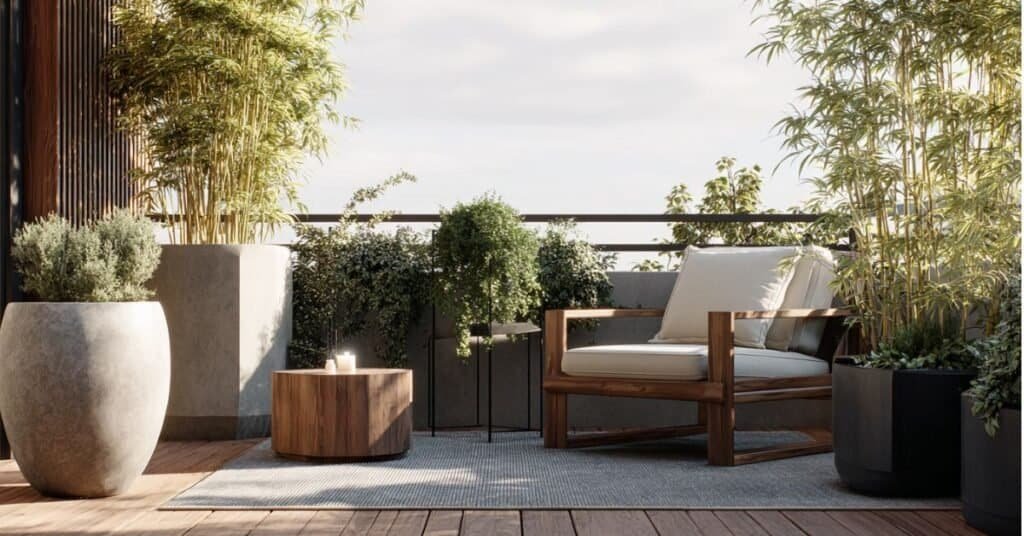
Choose Heavy Pots for Tall Plants
Tall balcony plants need stable containers, especially on windy balconies.
Use heavier pots for:
• bamboo
• tall grasses
• compact evergreens
• trellis planters
A lightweight pot may be easy to move, but it can tip during strong wind or after the soil dries out. For upper floor balconies, heavier containers with wide bases are usually safer.
A good rule is to match plant height with pot depth. A 5 foot privacy plant needs a deeper, steadier container than a small herb plant.
Use Tiered Stands to Add Height
If your balcony is small, plant stands can give you privacy without filling the floor.
Architectural Digest suggests using tiered plant stands to create varying heights in a balcony garden. That idea works well for privacy because different plant levels create a fuller screen.
Try this simple setup:
• tall planter in the back
• medium plant on a stand
• trailing plant near the railing
This layered look feels lush without needing ten separate pots.
Group Plants in Odd Numbers
Odd number groupings usually look more natural.
Try:
• 3 planters beside a chair
• 5 mixed plants near the railing
• 1 tall planter plus 2 smaller pots in front
The mix helps create depth, especially when you combine different leaf shapes and heights.
Small space variation:
Use one tall planter, one medium planter, and one railing planter. That gives privacy at three levels while keeping the floor open.
Common Balcony Privacy Plant Mistakes to Avoid
Even the best balcony privacy plants can struggle if the setup does not match the space. Most problems come from wind, weight, pot size, and too much coverage.
A balcony should feel private, but it should still feel open enough to enjoy.
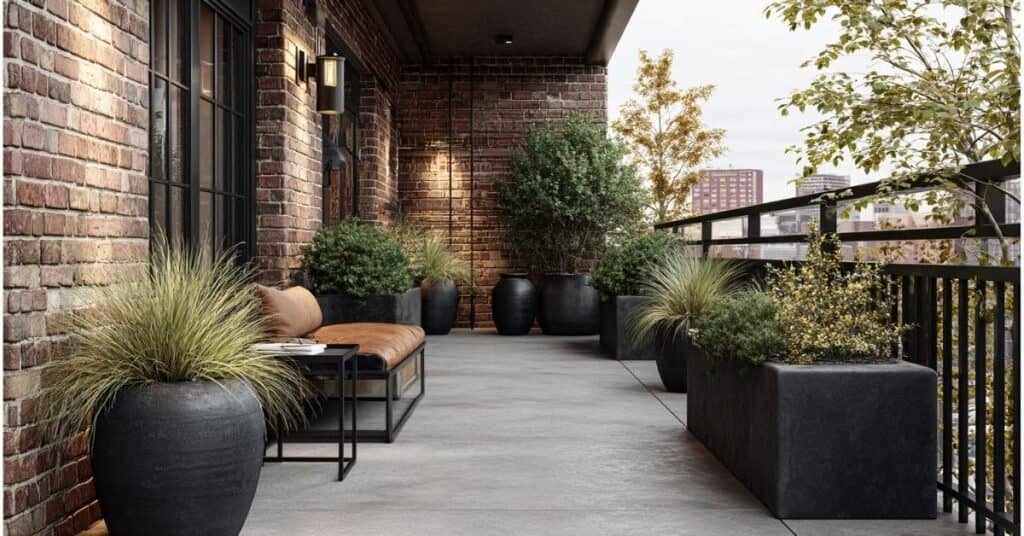
Picking Plants Without Checking Wind
Wind is one of the biggest problems for balcony plants, especially on upper floors.
Tall plants can dry out faster, lean sideways, or tip over if the container is too light. Before choosing potted bamboo, tall grasses, or compact evergreens, watch how the wind moves across your balcony for a few days.
If leaves are constantly bending hard in one direction, use heavier planters and place tall plants closer to a wall instead of directly at the railing.
Using Pots That Are Too Small
Small pots dry out quickly and do not hold tall plants securely.
A tall privacy plant needs room for roots and enough weight at the base. If the pot is too shallow, the plant may look top heavy and awkward.
For most tall privacy plants, choose containers at least 18 to 24 inches deep when possible. Add drainage holes and use saucers if your balcony rules require them.
Blocking Too Much Light
Privacy is helpful, but too much dense greenery can make a small balcony feel dark.
Avoid filling every railing line with tall plants. Leave small breaks so daylight and air can still move through the space.
A better plan is to place the tallest balcony privacy plants where you need screening most, then use lower plants in the other areas.
Forgetting Water Drainage
Balcony plants need drainage, but water should not run onto neighbors or damage flooring.
Use planters with drainage trays, lift pots slightly on risers, and avoid overwatering during rainy weeks. This is especially helpful in colder parts of Canada where wet soil can stay heavy and cold longer.
A tidy drainage setup keeps the balcony cleaner and helps plants stay healthier.
Frequently Asked Questions
What are the best balcony privacy plants for full sun?
The best balcony privacy plants for full sun include bamboo, ornamental grasses, rosemary, lavender, and compact evergreens that can handle bright light. Use deep containers with good drainage so roots do not sit in wet soil after rain.
What are the best balcony privacy plants for shade?
For shaded balconies, try boxwood, ferns, ivy style vines, and climbing hydrangea on a freestanding trellis. These plants can soften a shaded corner without needing strong direct sun.
Which plants grow tall enough to block neighbors on a balcony?
Potted bamboo, tall ornamental grasses, compact arborvitae, and climbing vines can grow tall enough to screen nearby views. For most balconies, plants in the 4 to 6 foot range give privacy without making the space feel closed in.
What are the best low maintenance privacy plants for containers?
Boxwood, dwarf cypress, compact arborvitae, and some ornamental grasses are good low care options in containers. Choose plants that match your light level first, then choose a pot that is deep and heavy enough for stable growth.
Can bamboo work on a balcony?
Yes, bamboo can work on a balcony if it is planted in a large, heavy container with drainage. Choose clumping bamboo when possible, water it regularly, and keep it stable in windy conditions.
What plants are best for renters who cannot drill or install permanent screens?
Renters can use potted bamboo, tall grasses, boxwood, ferns, and vines in freestanding trellis planters. Pairing plants with moveable screens can also help create privacy without permanent changes.
How do you make a balcony feel private without a fence?
Use layered greenery, tall planters, railing planters, and freestanding trellises to soften exposed views. If your balcony is small, place the tallest plants near the seating area instead of covering every side.
What size pots do balcony privacy plants need?
Most tall balcony privacy plants need pots at least 18 to 24 inches deep. Smaller herbs and railing plants can use shallower containers, but tall bamboo, shrubs, and grasses need more weight and root space.
Which climbing plants work best on balcony trellises?
Star jasmine, clematis, ivy style vines, mandevilla, and climbing hydrangea can work well on balcony trellises. Choose the plant based on sun exposure, wind, and how much growth you can maintain.
How do you keep balcony privacy plants from getting blown over?
Use heavy pots with wide bases, place tall plants closer to walls, and avoid lightweight containers for large plants. In windy balconies, group containers together and trim top heavy growth before storms.
Conclusion
The best balcony privacy plants are the ones that fit your light, wind, space, and care level. A sunny balcony may need bamboo, lavender, or ornamental grasses, while a shaded space may feel better with ferns, boxwood, or climbing greenery.
Start small with two or three planters before filling the whole balcony. One tall plant near the seating area, one medium plant beside the railing, and one trailing plant can already make the space feel softer and more private.
A secluded balcony does not need to feel closed in. With the right plant height, pot size, and layout, it can feel calm, green, and easy to enjoy.
For more outdoor styling ideas, visit Outdoor Decor Ideas: Smart Tricks to Transform Your Space.