
There is a specific kind of messy that shows up even after you clean.
The counters are wiped. The floors are clear. Yet the room still feels loud, like your eyes have nowhere to rest.
That is usually the moment people start searching: What Is Minimalist Decorating Style and why does it make homes feel so calm?
Minimalist decorating style is not about owning nothing or living in a blank white box. It is about keeping what matters, and letting everything else stop competing for attention. The payoff is real. Rooms feel easier to use, easier to clean, and a lot easier to breathe in.
This post breaks it down in plain language. You will learn what minimalist decorating style means, what it looks like in real homes, how it differs from modern or contemporary decor, and how to try it without replacing your furniture.
If your space feels “fine” but still a little stressful, this is usually the missing piece.
Table of Contents
What Is Minimalist Decorating Style
Minimalist decorating style is a way of styling a home where the room feels open, clear, and intentional.
It is not about empty rooms. It is about fewer items competing for attention.
Apartment Therapy explains that minimalist interior design is not a lack of things. It is a lack of excessive ornamentation, with a focus on what is necessary and important so the space feels calm and purposefully pared back.
The easiest way to spot it
Walk into the room and notice what your eyes land on first.
In minimalist decorating style, there are usually only one or two clear focal points, like:
- A well scaled sofa with one art piece above it
- A clean dining table with one simple centerpiece
- A bed with calm bedding and one lamp on each side
Everything else supports those choices.
What minimalist style is not
A lot of people skip minimalist style because they think it means:
- No color
- No personality
- No decor at all
That is not the goal. The goal is fewer, better choices, and more breathing room around them.
Why it feels so good in real homes
Minimalist rooms often feel lighter because there is less visual noise.
When surfaces stay more open, and furniture has space around it, the whole room reads as calmer even if nothing “fancy” is happening.
If your home keeps feeling cluttered even after you tidy, minimalist decorating style usually fixes the root problem: too many items trying to live on the same surfaces.
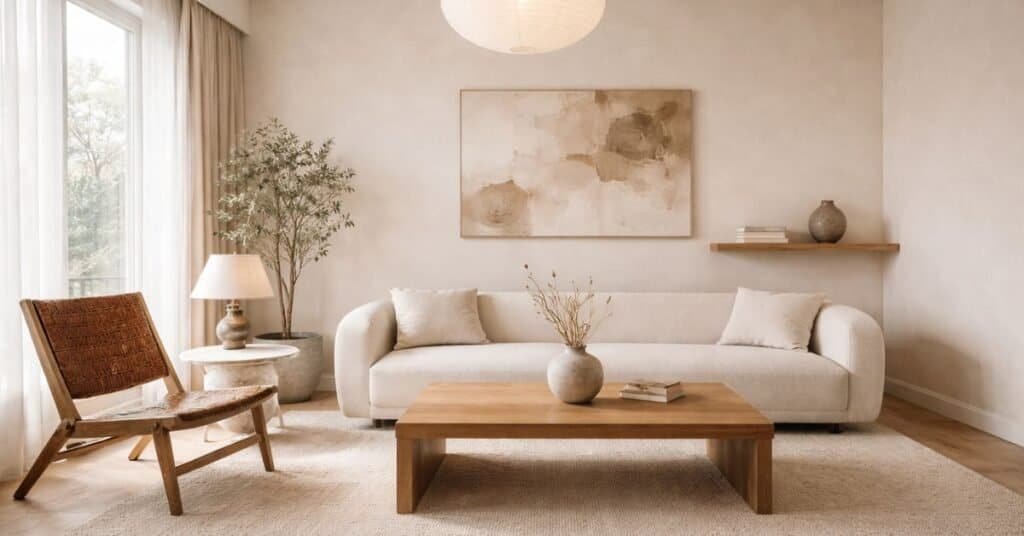
Why Designers Love Minimalist Decorating Style
Many designers gravitate toward minimalist decorating style because it makes a room read clearly.
When there are fewer objects in a space, the important pieces stand out. The sofa, the lighting, the materials, and the layout become easier to see and appreciate.
Minimalist rooms also tend to feel calmer to live in. Instead of constant visual movement from patterns, objects, and accessories, the eye can rest.
It helps rooms feel lighter and more open
Minimalist decorating style creates visual breathing room. That space between furniture and decor pieces matters more than people expect.
Erika MacKinnon explains that modern interiors allow more decorative freedom, while minimalist spaces strip things back and keep only a few focal pieces in each room. This often makes minimalist homes feel lighter and more serene.
You can see this difference easily in a living room.
A modern room may include several decor layers: art, pillows, sculptural objects, and accent pieces. A minimalist version keeps the layout similar but removes most extras so the space feels simpler and quieter.
It makes everyday life easier
Minimalist decorating style also works well because it is practical.
When surfaces hold fewer objects, cleaning becomes faster. When furniture is simple and purposeful, rooms are easier to rearrange and maintain.
Designers often prefer this because the home stays functional instead of feeling staged.
It lets materials stand out
When a room is not crowded with decor, the materials start doing the work.
Wood tones feel warmer. Linen upholstery looks softer. Stone and ceramic pieces add texture without clutter.
Lush Decor notes that in minimalist spaces every piece is chosen intentionally, and the quality of materials becomes more noticeable when there is less competing decoration.
That is why minimalist homes often feel expensive even when they are simple. The room is not louder. It is clearer.
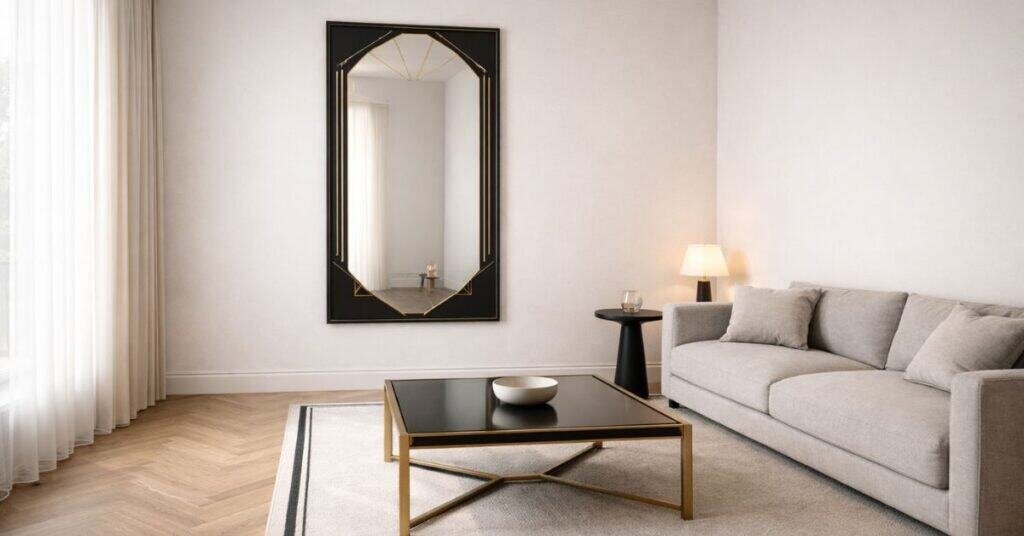
Key Characteristics of Minimalist Decorating Style
Once you know what to look for, minimalist decorating style becomes easy to recognize.
The room usually feels quiet and balanced. Furniture is simple. Decor is limited. Surfaces are mostly clear.
Several visual traits tend to appear in almost every minimalist home.
Clean lines and simple furniture
Minimalist rooms rely on furniture with uncomplicated shapes.
Instead of ornate details, curved carvings, or heavy trim, pieces tend to have straight edges and smooth forms. Sofas often sit lower to the floor. Tables have simple legs. Storage pieces stay streamlined.
This keeps the room visually calm even when several items are present.
A limited color palette
Color in minimalist decorating style usually stays within a small range.
Most rooms revolve around soft neutrals such as:
- warm white
- beige
- light gray
- natural wood tones
One subtle accent color may appear in pillows, artwork, or a chair, but the palette stays restrained so the room feels cohesive.
Open space and visual breathing room
One of the most important elements of minimalist decorating style is space itself.
Many people feel the urge to fill every wall or surface. Minimalist homes resist that impulse.
HGTV Canada notes that negative space is actually helpful in a room. Leaving areas open can make the space feel larger and less cluttered.
In practice, this might look like:
- a console table with only one tray and lamp
- a wall with a single large artwork instead of several small ones
- shelving with gaps between objects
Those small decisions help the room feel lighter.
Quality over quantity
Minimalist decorating style favors fewer pieces, but ones that feel thoughtful and durable.
Instead of several decorative objects, a room may include:
- one larger piece of art
- one textured rug
- one ceramic bowl or sculptural vase
Lush Decor points out that when excess decor disappears, the materials themselves start to stand out. Natural textures, wood finishes, and simple shapes become more noticeable. Source link already referenced above.
The result is a room that feels calm without feeling empty.
| Characteristic | What it looks like in a room | Simple way to try it |
|---|---|---|
| Clean lines | Furniture with simple shapes | Swap ornate tables for simpler ones |
| Limited palette | Neutrals with one accent tone | Repeat one color in 2 to 3 places |
| Visual breathing room | Clear surfaces and open walls | Remove half the small decor items |
| Quality pieces | Fewer but stronger items | Keep one larger focal object |
These traits are why minimalist decorating style feels so different from rooms filled with many small accessories. The space becomes quieter, which makes the home easier to enjoy.
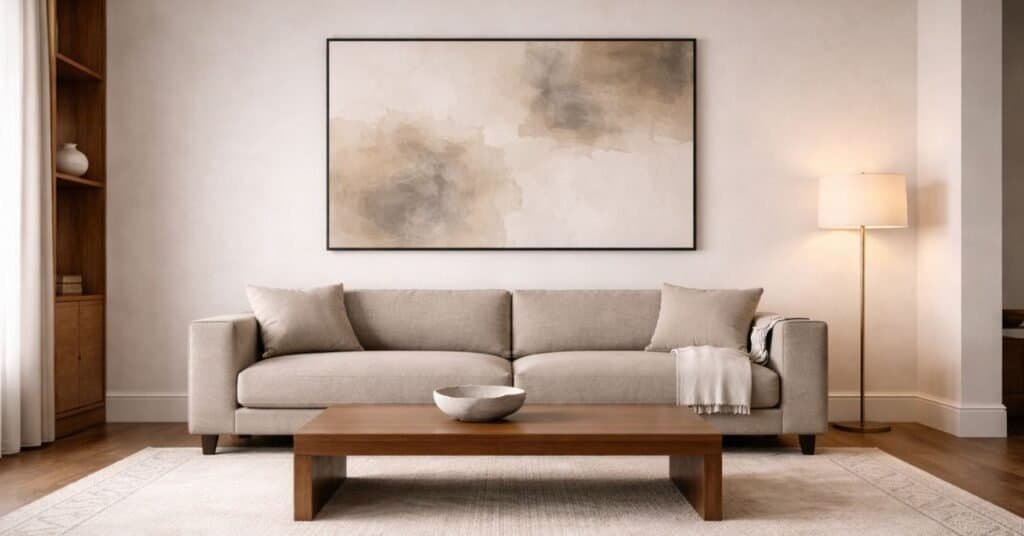
Minimalist vs Modern vs Contemporary
These three styles often get mixed up because they share clean lines and simple furniture. Yet they are not the same.
Understanding the difference helps you avoid decorating a room that feels busy when you were aiming for something calm.
Modern decor compared to minimalist decor
Modern decor grew out of twentieth century design movements. It uses clean lines, geometric shapes, and a mix of materials like wood, metal, and glass.
Minimalist decorating style takes that idea one step further.
Instead of layering several decorative elements, minimalist rooms remove anything that does not serve a purpose. The focus stays on only a few key pieces in the room.
Designer Erika MacKinnon explains that modern interiors allow more decorative freedom, while minimalist interiors strip things down and often feature only one or two focal pieces in each space. This is why minimalist homes tend to feel lighter and more serene.
In simple terms:
- Modern decor still includes decorative styling
- Minimalist decor removes most of that styling
The layout may look similar, but the amount of decor is very different.
Contemporary decor compared to minimalist decor
Contemporary decor refers to current design trends. That means it changes over time.
A contemporary living room might include bold lighting, textured walls, or trendy furniture shapes. It reflects what is popular right now.
Minimalist decorating style is more stable. It stays rooted in simplicity, restraint, and clear space rather than trends.
A contemporary room might feature several design elements working together. A minimalist room reduces the scene so only a few pieces stand out.
Why minimalist rooms often feel calmer
The difference becomes obvious when you walk into the room.
Modern and contemporary interiors can still feel visually active. Patterns, art, and decorative accents may all share attention.
Minimalist decorating style removes that competition. Instead of multiple focal points, the room usually highlights only one or two.
That clarity is what makes minimalist spaces feel so relaxing. Your eyes know exactly where to land.
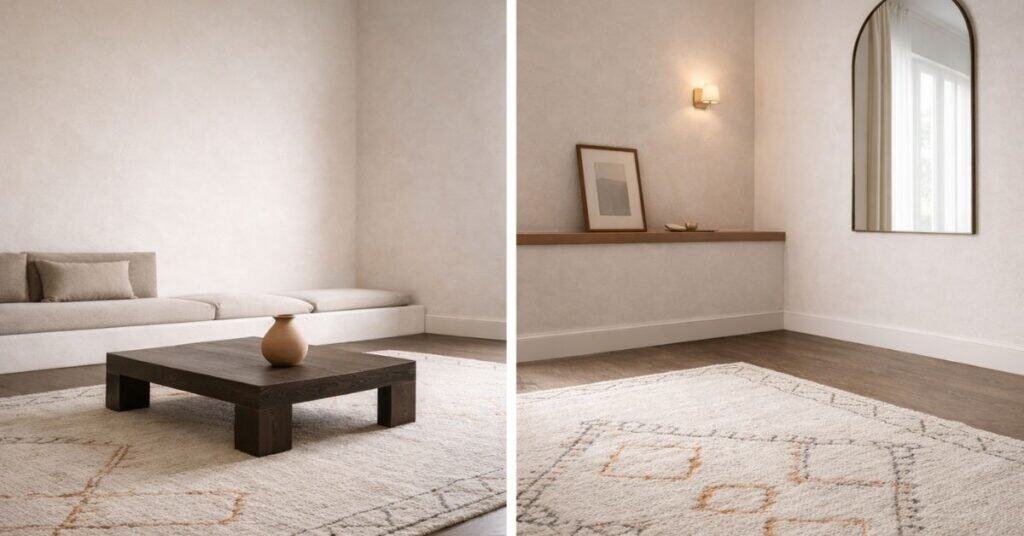
Core Principles of Minimalist Interior Design
Minimalist decorating style works because it follows a few clear ideas.
These ideas guide what stays in the room and what leaves. When they are applied consistently, the home begins to feel calmer and easier to maintain.
Function comes first
In minimalist decorating style, furniture and decor must serve a purpose.
A coffee table should hold everyday items. A shelf should store what you actually use. A chair should be comfortable enough to sit in regularly.
A minimalist interiors focus on pieces chosen with intention. Each item has a reason for being in the room instead of existing purely for decoration.
When function leads the decision, unnecessary objects naturally disappear.
Edit before you add
Many homes become cluttered because decorating happens in reverse. Items are added first, then people try to organize around them.
Minimalist decorating style starts with editing.
Walk through a room and remove the things that no longer serve a purpose. After that step, it becomes easier to see what the space actually needs.
Often the answer is very little.
Use open space on purpose
Open space is one of the most overlooked design tools.
Leaving areas empty can help a room feel larger and more comfortable. Negative space allows furniture and decor to breathe instead of competing for attention.
A simple example might be a console table with only two items on top instead of five.
The room immediately feels lighter.
Repeat materials to keep the room calm
Minimalist decorating style also works well when materials repeat across the space.
Instead of mixing many finishes, choose a few and carry them through the room. For example:
- light oak furniture repeated in the coffee table and shelving
- brushed brass used for lighting and hardware
- linen fabric appearing in pillows and curtains
This repetition reduces visual noise and helps the room feel balanced.
| Principle | What it looks like in practice | Simple way to apply it |
|---|---|---|
| Function first | Furniture used daily | Remove decor that has no purpose |
| Edit before adding | Fewer items on shelves | Start by clearing surfaces |
| Open space | Empty wall sections | Leave room between objects |
| Material repetition | Same wood or metal tones | Limit finishes to two or three |
These principles are why minimalist decorating style feels so effortless. The room is not trying to impress. It simply works.
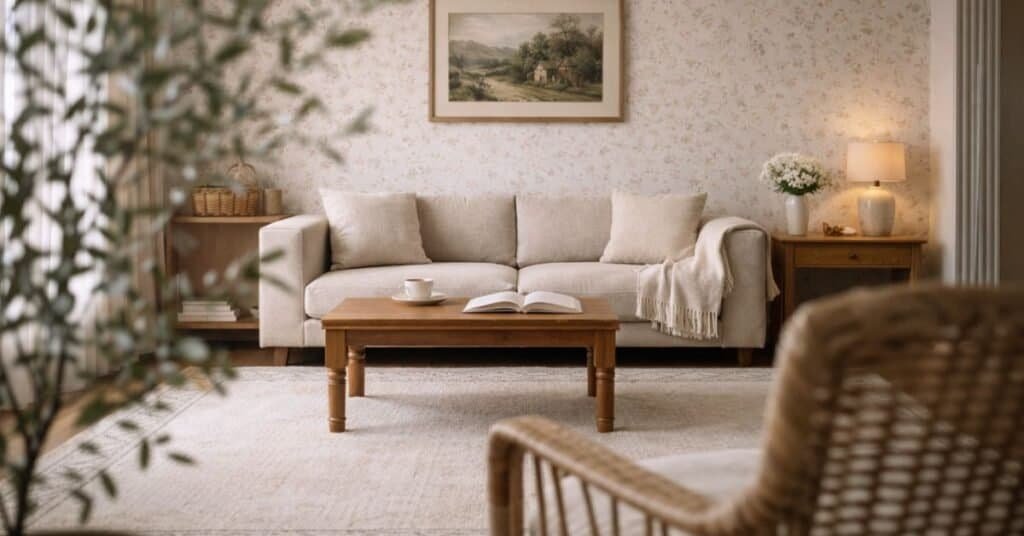
How To Start Minimalist Decorating Style in Your Home
Minimalist decorating style does not require buying new furniture.
Most homes already have everything needed to start. The change usually comes from removing a few things, not adding more.
If the idea feels overwhelming, start with one small area.
Step 1 Clear the most visible surfaces first
Begin with the surfaces your eyes notice immediately.
Examples include:
- the entry console near the door
- the coffee table in the living room
- the kitchen counter by the sink
Apartment Therapy encourages keeping surfaces from feeling crowded and selecting only a few items you truly enjoy displaying.
A quick rule that works well is this: keep two or three items per surface.
Everything else can be stored elsewhere.
Step 2 Keep the furniture and remove the extras
Many people assume minimalist decorating style means replacing furniture.
That is rarely necessary.
Often the room becomes calmer simply by removing small decorative pieces such as extra pillows, stacked books, or multiple trays on a table.
When those items leave, the furniture suddenly becomes the focus.
Step 3 Choose one calm color direction
Minimalist rooms tend to feel balanced because their color palette stays consistent.
Look at the tones already in the space. If the sofa is beige and the rug is soft gray, keep additional items within that range.
Avoid introducing several unrelated colors at once.
A room with fewer color shifts usually feels quieter.
Step 4 Add warmth with texture instead of more objects
Minimalist decorating style still needs warmth.
The easiest way to add it is through texture rather than extra decor.
Simply and Fiercely suggests using useful items such as plants, throws, or textiles that double as decoration.
For example:
- a linen throw draped on the sofa
- a woven basket holding blankets
- a plant placed near a window
These elements add comfort without creating clutter.
Common mistake
Trying to remove everything at once.
When a room becomes too empty too quickly, it can feel unfinished. Work gradually so the space still feels livable.
Budget option
Instead of buying new decor, reposition what you already own. A single vase moved from the kitchen to a console table may be enough.
Small space variation
In apartments, focus on vertical surfaces. A single piece of wall art or a slim shelf can keep the floor open while still giving the room character.
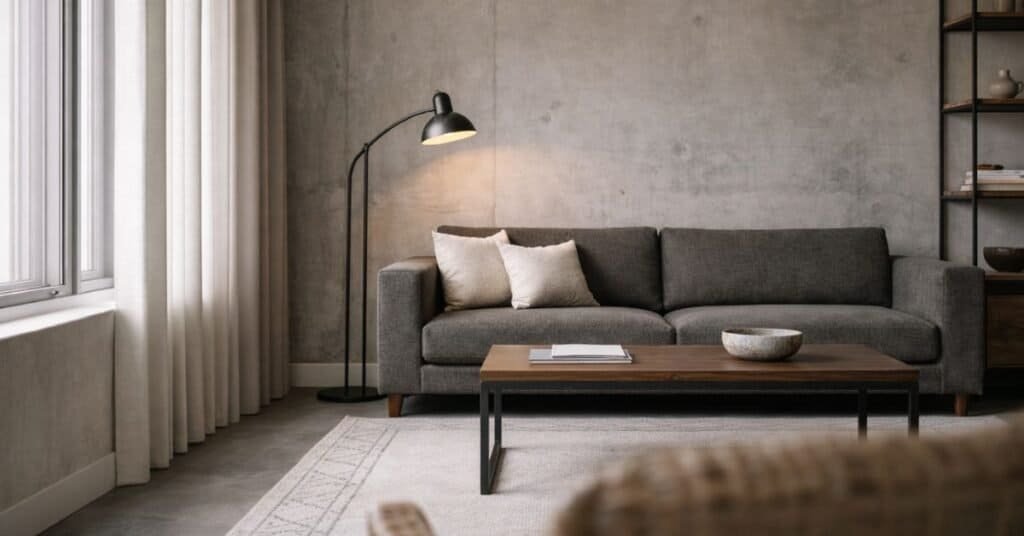
Minimalist Decorating Style vs Modern or Contemporary
This is where a lot of people get stuck.
A room can look modern and still feel busy. A room can look minimalist and still feel warm.
The difference is not the sofa style.
It is what you allow to stay in the room.
Minimalist decorating style is about subtraction
Minimalist decorating style removes anything that does not earn its spot. That includes extra decor, duplicates, and even furniture that blocks flow.
A simple way to spot the difference is to look at surfaces.
If every surface has something on it, the room is likely modern or contemporary styling. If most surfaces are clear, it leans minimalist.
Modern decor can still have more visual noise
Modern decor usually uses clean lines and simple forms.
But it may still include:
- more accent colors
- more mixed materials
- more decor items per shelf
- more statement pieces layered together
That can look beautiful, but it is not always restful.
Minimalist decorating style aims for visual rest.
Contemporary decor changes with trends
Contemporary decor shifts as trends shift.
You might see new shapes, new finishes, and new color palettes come in and out.
Minimalist decorating style does the opposite. It stays steady because it is built on fewer items and fewer visual changes.
Quick test that works in real homes
Stand in the doorway of the room.
Now ask:
- Is there one clear focal point?
- Or do my eyes bounce around?
If your eyes bounce, the room may need fewer competing elements.
Common mistake
Calling a room minimalist because it has neutral colors, but still keeping too many objects out.
Neutrals can still look cluttered.
Budget option
Choose one focal point you already have, like a large rug or a piece of art, then remove items that compete with it.
Small space variation
In small rooms, modern decor can feel tight fast if there are too many pieces. Minimalist decorating style often feels better because it leaves breathing room around furniture.
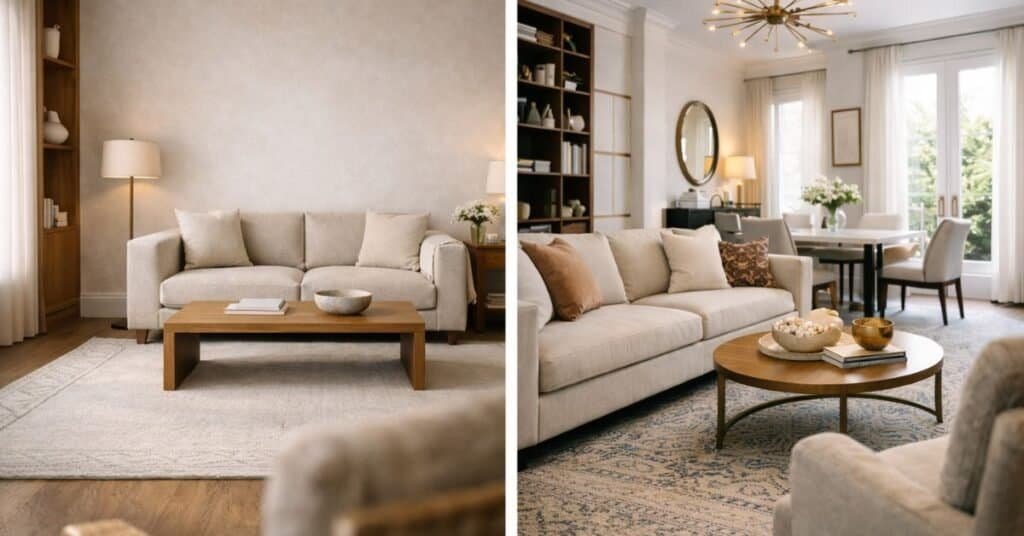
Minimalist Decorating Style on a Budget
A common myth is that minimalist homes require expensive furniture.
In reality, minimalist decorating style often costs less because it focuses on editing what you already have.
The first step is not shopping. It is reducing visual clutter.
What to remove first
Start with the items that tend to multiply without being noticed.
Examples include:
- extra throw pillows
- stacks of decorative books
- multiple trays on the same surface
- small decor pieces scattered across shelves
Apartment Therapy suggests curating a small group of items you truly enjoy instead of overcrowding surfaces with many objects.
Once the extras disappear, the room often looks more refined immediately.
Rearrange before replacing
Many people replace furniture too quickly when trying minimalist decorating style.
Instead, experiment with layout first.
Try these small changes:
- center the sofa so it has space on both sides
- move a lamp to a different table
- remove one chair to open the walking path
Sometimes the room simply needs breathing room.
Choose fewer but stronger pieces
If you do add something new, think in terms of fewer items that make a clear impact.
For example:
- one larger piece of artwork instead of three small frames
- one textured rug instead of several layered mats
- one ceramic vase instead of several small decor pieces
This keeps the room calm while still giving it personality.
Common mistake
Buying matching baskets or storage boxes before decluttering.
Containers often hide clutter rather than reducing it.
Budget option
Reuse containers you already have. A simple wooden bowl, glass jar, or tray can organize small items without spending money.
Small space variation
In smaller homes, removing just one side table or chair can dramatically improve flow. The room instantly feels larger and easier to use.
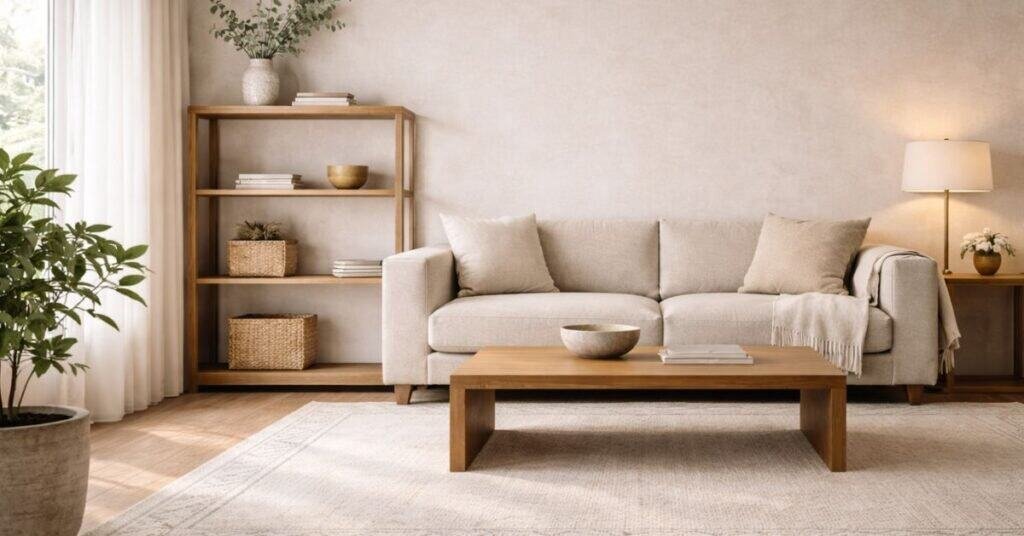
Best Colors for Minimalist Decorating Style
Color plays a quiet but important role in minimalist decorating style.
The goal is not to remove color completely. It is to keep the palette calm so the room feels balanced and easy to read.
When too many colors compete in one space, the room can feel busy even if the furniture is simple.
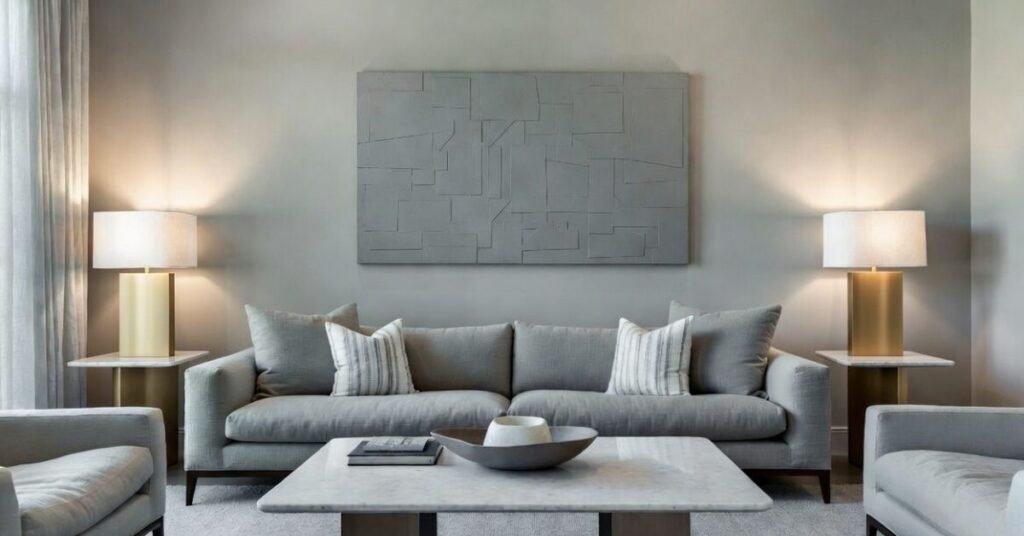
Warm neutrals usually work best
Most minimalist rooms begin with a neutral base.
Common choices include:
- warm white
- beige or sand tones
- light gray
- soft taupe
- natural wood tones
These colors reflect light well and help rooms feel open.
They also make it easier to repeat the same palette throughout the home.
Keep accent colors limited
Minimalist decorating style usually includes one or two accent colors at most.
Instead of spreading several colors across the room, repeat a single tone in a few places.
For example:
- a muted olive pillow
- a ceramic vase with a similar tone
- a small piece of art with the same color
Repeating the color keeps the room feeling calm instead of scattered.
Natural materials soften the palette
Neutral rooms can sometimes feel flat if everything has the same texture.
Natural materials help prevent that.
When decor is simplified, the materials themselves become more noticeable. Wood, linen, stone, and ceramic bring quiet character to the space without adding clutter.
Even subtle textures like a woven rug or linen curtains can add warmth.
Common mistake
Using several neutral colors that do not relate to each other. For example mixing cool gray with warm beige can make the room feel slightly off.
Budget option
Instead of replacing furniture, change smaller items like pillow covers, throws, or lampshades so the palette feels more consistent.
Small space variation
In small rooms, lighter tones often help walls recede visually. This makes the space feel more open and less crowded.
How To Keep Minimalist Decor Cozy, Not Cold
A common fear with minimalist decorating style is that the room will feel sterile.
That usually happens when the space removes too many textures at once.
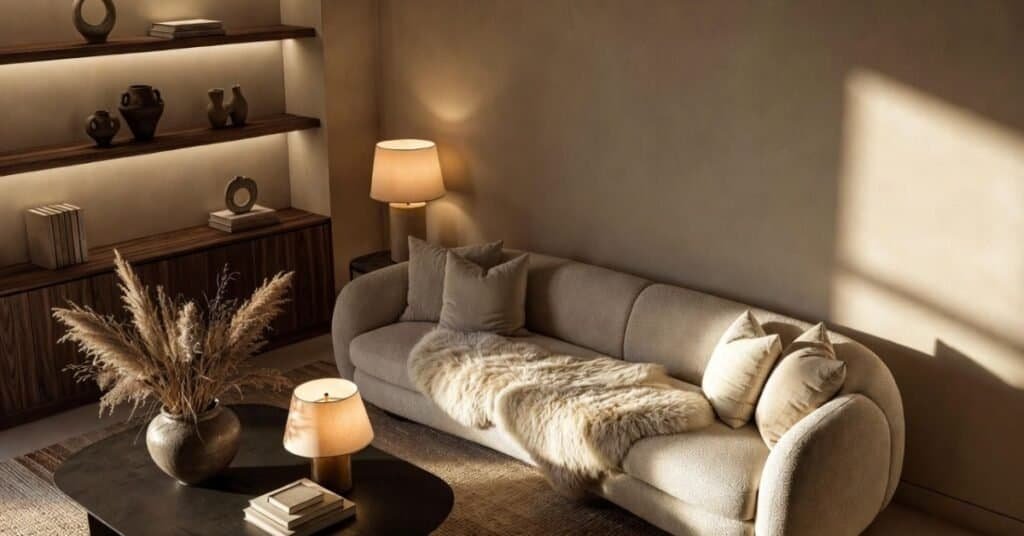
Minimalist rooms still need warmth. The difference is that warmth comes from materials and lighting rather than extra decor.
Use texture instead of more objects
One of the easiest ways to soften minimalist spaces is through texture.
Instead of adding more decorative pieces, introduce a few tactile materials.
Examples include:
- a linen throw on the sofa
- a wool rug under the coffee table
- woven baskets for storage
- ceramic bowls or vases
Simply and Fiercely suggests using everyday items such as plants, textiles, or simple organic materials because they add comfort while still keeping the room uncluttered.
These pieces make the room feel lived in without crowding surfaces.
Layer warm lighting
Lighting has a big impact on how minimalist rooms feel.
If the only light source is a bright overhead fixture, the room can feel stark.
Adding a few softer light sources usually fixes that.
Try layering:
- a floor lamp in the living room corner
- a table lamp on a console table
- warm bulbs around 2700K
Soft lighting adds depth and makes the room feel inviting in the evening.
Bring in natural elements
Natural materials instantly soften minimalist interiors.
Wood furniture, linen curtains, and indoor plants help balance the simplicity of the space.
Apartment Therapy describes minimalist interiors as calm and purposefully pared back rather than empty. Natural textures help create that calm feeling.
Even one plant placed near a window can make the room feel more relaxed.
Common mistake
Removing too many items and forgetting to add texture back in. The room becomes flat instead of calm.
Budget option
Use what you already have. A folded blanket, a basket, or a small plant can add warmth without buying anything.
Small space variation
In smaller rooms, wall mounted lighting or slim floor lamps can add warmth without taking up extra floor space.
Mistakes That Make Minimalist Decor Look Cluttered
Minimalist decorating style is supposed to feel light.
But there is a quick way to ruin it.
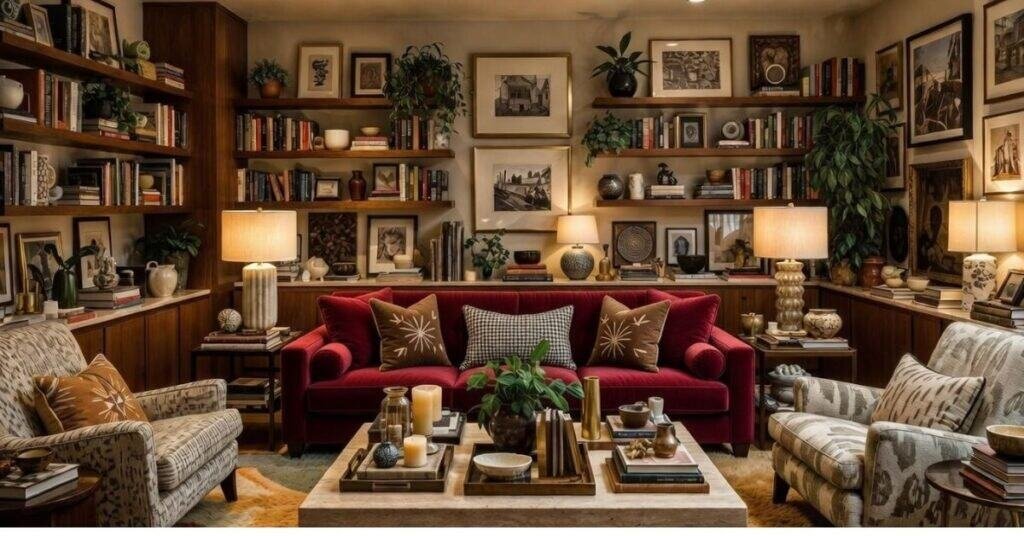
The room starts collecting “pretty little things” until every surface has something on it.
Then the space feels busy again, just with nicer clutter.
Over accessorizing as a big reason homes start to look cluttered, and they mention negative space as your friend for making a room feel more open.
Here are the mistakes that show up the most.
Too many accessories per surface
If every table has a candle, a vase, and a stack of books, the eye never gets a break.
A minimalist room does better with one clear focal piece per surface.
Try this simple rule:
- one main item
- one optional supporting item
- leave the rest clear
Example: one ceramic bowl on the entry table, nothing else.
Bulky furniture that eats the room
Minimalist spaces need breathing room.
Oversized sofas, thick armchairs, and heavy coffee tables can make the room feel crowded even if the decor is simple.
Home and Gardens notes that minimalists steer clear of bulky oversized furniture and overly embellished decor.
Look for furniture with:
- slimmer arms
- raised legs
- lighter visual weight
Too many patterns fighting each other
A few patterns are fine.
But in minimalist rooms, mixed patterns can start to feel loud quickly.
If you want pattern, keep it subtle:
- one patterned rug with a simple weave
- pillows in solids and soft texture
- one piece of art that ties colors together
Ignoring empty wall space
Some people feel like a blank wall means the room is unfinished.
In minimalist decorating style, blank space is part of the look.
If you want something on the wall, keep it simple:
- one larger piece of art
- one mirror
- one calm pair of prints
Buying decor before editing what you already have
This is the sneaky one.
People try to “style” a minimalist home while keeping all the extras tucked in drawers and closets.
Minimalism works better when it starts with removing, not adding.
Start by decluttering and keeping only what is essential or brings joy, then choosing simple furniture and decor with open space and natural light.
Common mistake
Trying to make every corner look decorated. It breaks the calm.
Budget option
Store extra decor in a box for two weeks. If you do not miss it, donate it.
Small space variation
In apartments, choose wall mounted lighting and slim shelving so you can keep surfaces clear without losing function.
Frequently Asked Questions
What is minimalist decorating style in simple terms?
Minimalist decorating style focuses on keeping a room simple and uncluttered. Furniture is practical, decor is limited, and colors stay calm. Instead of filling every surface, the goal is to keep only items that serve a purpose or add quiet character to the room.
How is minimalist decorating style different from modern decor?
Modern decor still allows several decorative elements such as layered textures, statement lighting, or accent pieces. Minimalist decorating style removes many of those extras and highlights only one or two focal pieces. As explained in the article on the difference between modern and minimalist interior design (Erika MacKinnon), minimalist spaces often feel lighter because they strip the room down to its key elements.
Does minimalist decorating mean no color or personality?
No. Minimalist decorating style simply limits the number of colors in a room. Many minimalist homes still include warm tones, plants, artwork, or natural materials. The difference is that these pieces are chosen carefully so they add character without overwhelming the space.
What are the core principles of minimalist interior design?
Minimalist interiors follow a few simple ideas. Furniture should be functional, decor should stay limited, and open space should remain visible. Minimalist homes focus on simple shapes, clean lines, and materials chosen with intention so each piece has a purpose.
How can I start minimalist decorating on a small budget?
Start by removing items instead of buying new ones. Clear visible surfaces, keep the furniture that works well, and repeat a calm color palette. Rearranging what you already own often changes the room more than adding new decor.
What colors work best for a minimalist living room?
Neutral colors usually work best. Soft white, warm beige, light gray, and natural wood tones create a calm base. One subtle accent color can appear in pillows or artwork, but the palette stays limited so the room feels open and relaxed.
How do you make minimalist decor feel cozy instead of cold?
Texture and lighting help minimalist rooms feel warm. Linen fabrics, woven baskets, wood finishes, and plants add comfort without clutter. Apartment Therapy describes minimalist interiors as calm and purposefully pared back rather than empty, which is why natural materials work so well in these spaces.
What mistakes ruin a minimalist decorating style?
The biggest mistake is adding too many accessories. Shelves, tables, and walls quickly feel crowded when every surface holds decor. Over accessorizing removes the open space that makes rooms feel calm and spacious.
Can minimalist decorating work in small apartments or rentals?
Yes. Minimalist decorating often works especially well in smaller homes. Fewer items leave more open floor space, which makes rooms feel larger. Multifunctional furniture and hidden storage can keep the layout simple while still meeting everyday needs.
How much decor should a minimalist room have?
A minimalist room usually focuses on only a few decorative elements. Designers often suggest choosing one or two focal items per area such as artwork, a plant, or a simple centerpiece. Keeping decor limited helps the room feel calm while still showing personality.
Conclusion
Minimalist decorating style is not about empty rooms or strict rules.
It is about giving your home breathing room.
When furniture is simple, colors stay calm, and decor is chosen carefully, the space begins to feel easier to live in. Surfaces stay clearer, rooms feel lighter, and everyday life becomes less visually busy.
If your home has been feeling cluttered even after cleaning, a small shift toward minimalist decorating style can make a big difference.
Start with one surface. Remove what you do not need. Let the room settle for a few days.
You might be surprised how quickly the space begins to feel calmer.
If you want to see how simplifying a home actually plays out room by room, read Minimalist Home Ideas: I Tried Simplifying My Space… Here’s What Actually Happened.