
Maybe your bed is made, the pillows are in place, and the room is tidy, but it still feels a little flat. That happens a lot when the bedding has color but no depth, or softness but no shape.
That is where layered bedding ideas can make a big difference. A few well placed layers can make the bed feel fuller, calmer, and much more inviting without turning the room into a crowded mess.
A luxurious bed usually starts with a simple base, then adds texture, height, and a little contrast in the right spots. Think crisp sheets, a quilt or coverlet for shape, a duvet with some loft, and pillows that frame the bed instead of swallowing it.
In this post, you will find 15 realistic ways to layer bedding so your bedroom feels warm, polished, and comfortable. Some ideas are soft and minimal, some feel more hotel inspired, and some work well in a small bedroom where too many layers can make the space feel tight.
Table of Contents
Why Layered Bedding Makes a Bedroom Look More Luxurious
A flat bed can make the whole room feel unfinished, even when everything is clean and tidy. Layering fixes that by giving the bed more shape, softness, and depth, so it feels like the clear focal point of the room.
As House Beautiful explains in its bedscape feature, a welcoming bed comes from building it in layers instead of stopping at the basic sheet and comforter setup. That matters because a bed with visible layers feels more restful and styled, which is often what people notice first in a bedroom.
The base layers do a lot of quiet work. Martha Stewart’s bedscape article points to high quality sheets and a relaxed duvet as the starting point, then texture and color do the rest. In real life, that can be as simple as crisp cotton sheets, a soft quilt folded low on the bed, and a duvet that looks full without spilling over the sides.
Texture is usually what makes a bed look richer. A smooth sateen sheet, a lightly quilted coverlet, and a linen or cotton duvet cover each catch light in a slightly different way. In morning light, those small changes in surface and fold make the bed feel fuller and more finished, even in a simple white, beige, or soft gray palette.
Layering also helps the bed look more comfortable, which is a big part of a luxurious bedroom. A single comforter can look plain. A bed with a base layer, a middle layer, and one soft top layer feels warmer and more thoughtful, like a room that is ready to be used instead of just looked at.
One common mistake is piling on too many pieces at once. A luxurious bed should still have some breathing room, so each layer can be seen. A queen bed usually looks balanced with two sleeping pillows, two Euro shams, one quilt or coverlet, one duvet, and a folded throw or blanket near the foot of the bed.
This layered look also works well in smaller bedrooms. You do not need a huge room or a very tall bed frame to make it feel special. A few low profile layers in a calm color palette can still give a full, polished look without making the space feel crowded.

How to Layer Bedding the Right Way
A layered bed looks polished because each piece has a job. One layer gives the bed a clean base, another adds texture, and the top layer brings softness and shape.
Start with crisp base layers
Begin with a fitted sheet that sits smooth across the mattress. If you like a flatter, more tucked in bed, add a top sheet too. Better Homes and Gardens shows the classic bedding order here, with the sheets forming the base before blankets and the duvet go on top.
For a queen bed, a fitted sheet with deep enough pockets makes a visible difference. If the corners pull loose, the whole bed can look rumpled by noon. White, cream, soft gray, and warm beige work especially well here because they make the rest of the layers stand out.
Add a middle layer for softness and texture
The middle layer is where the bed starts to feel styled instead of basic. This is usually a quilt, coverlet, or lightweight blanket folded flat or pulled across most of the mattress.
A lightweight quilt can add texture without looking bulky, which makes it a smart pick if you want that plush layered look without too much height. In a smaller bedroom, this layer can do a lot of work on its own, especially if the top layer is kept simple.
Finish with the top layer
The top layer is usually a duvet or comforter. This is the piece that gives the bed fullness, so it should look soft and a little airy instead of flat and tightly stretched.
A simple styling move is to fold the duvet down about one third of the way from the headboard. House Beautiful shares this look in its bed styling piece, and it works because the fold adds shape right away. On a queen or king bed, that fold also lets the quilt, sheet, or coverlet underneath peek out, which makes the layering feel more natural.
Use pillows to frame the bed
Pillows give the bed height and structure. Start with your sleeping pillows, then place Euro shams behind them if you want a fuller hotel style look. One or two smaller accent pillows in front are usually enough.
Too many front pillows can make the bed look crowded and hard to use. For most beds, the sweet spot is:
- 2 sleeping pillows for a twin or full
- 4 sleeping pillows or 2 sleeping pillows plus 2 Euro shams for a queen
- 2 Euro shams, 2 sleeping pillows, and 1 to 2 accent pillows for a king
If your headboard is tall, you can go slightly fuller. If the room is small, keep the front row light so the bed does not feel too heavy.
Keep the layers visible
The most attractive layered beds let you see at least part of each piece. That might mean a quilt folded at the foot, a top sheet peeking above the duvet, or Euro shams sitting higher than the sleeping pillows.
A common mistake is covering one layer completely with the next. When that happens, the bed can feel thick without looking styled. Try leaving 8 to 14 inches of the lower layer visible, depending on bed size and how lofty the duvet is.
| Bedding Layer | What it adds | Good place to use it |
|---|---|---|
| Fitted sheet | Smooth base | Every bed |
| Top sheet | Neat fold and extra softness | Under the duvet |
| Quilt or coverlet | Light texture and shape | Middle layer or foot of bed |
| Duvet or comforter | Loft and fullness | Top layer |
| Throw blanket | Extra warmth and contrast | Foot or lower corner |

15 Layered Bedding Ideas To Make Your Bedroom Look Luxurious
1. Start with crisp white sheets and a quiet base
A calm base makes every other layer look better. White sheets, warm ivory, soft beige, or pale gray give the bed a clean starting point, so the texture on top has room to stand out.
This works especially well if your room already has wood tones, cream curtains, or soft wall color. The bed feels lighter right away, even before you add the rest.
2. Add a quilt under the duvet for gentle structure
A quilt under the duvet gives the bed shape without making it feel stiff. It also helps the bed look fuller from the side, which is one of those small details that makes a room feel more polished.
A lightweight quilt can add texture without too much bulk, so this layer works well for spring, warmer homes, or anyone who wants a softer look instead of a heavy one. Try letting 10 to 12 inches of the quilt show when the duvet is folded back.
3. Fold the duvet back halfway for a relaxed hotel feel
A fully pulled up duvet can look flat and heavy. Folding it down about one third to halfway gives the bed more shape and lets the lower layers show.
This is one of the easiest ways to make the bed feel more styled without buying anything new. If your duvet cover has a nice edge or subtle texture, that fold helps show it off.
4. Use a coverlet at the foot of the bed
A folded coverlet at the foot of the bed adds a neat extra layer. It gives the eye a resting point and helps the bed feel finished from top to bottom.
For a queen bed, a fold about 18 to 24 inches deep looks balanced. If your bed is in a smaller room, keep this layer smooth and simple so it adds interest without stealing too much space.
5. Mix linen with cotton for a softer, richer look
Beds look more interesting when the fabrics are a little different from each other. Smooth cotton sheets with a washed linen duvet cover can look relaxed and polished at the same time.
Martha Stewart’s bedscape advice leans on good base layers and added texture, and that is exactly why this fabric mix works so well. The cotton keeps the bed looking fresh, and the linen brings a softer, lived in finish.
6. Use tonal layers instead of strong color contrast
If you want the bed to feel luxurious, try layering shades from the same color family. Cream with oatmeal, taupe with mushroom, or soft gray with ivory can look full and calm without feeling busy.
This is a smart move for anyone who likes a quiet bedroom. The bed still has depth, though the room does not feel loud.

7. Add Euro shams behind your sleeping pillows
Euro shams give the bed height. They help the head of the bed feel fuller, which can make even a simple bed frame look more dressed.
Two Euro shams usually work well on a queen bed. Three can look nice on a king. In a room with a lower headboard, keep them slightly upright instead of overstuffed so they do not swallow the bed.

8. Limit the front row of pillows
One common mistake is using too many decorative pillows. The bed may look crowded before it looks luxurious, and it can become annoying to remake every morning.
Try one long lumbar pillow or one small square pillow in front of the sleeping pillows. That is often enough to finish the look while still keeping the bed easy to use.
9. Drape a throw across one corner instead of the whole bed
A throw does not need to cover everything. A soft drape across the lower left or lower right corner can make the bed feel more relaxed and natural.
This works well in bedrooms that already have a lot going on, like patterned curtains, wall art, or a darker paint color. The corner drape adds softness without creating one more heavy block across the mattress.
10. Choose one quilted layer for subtle texture
A quilted layer can make the bed look interesting even in a very simple color palette. It catches light in a gentle way, so the bed does not feel flat.
Apartment Therapy’s advice on layering for comfort and style fits nicely here, because texture often does more than color when you want a richer bed. A stitched coverlet, matelasse layer, or lightly quilted blanket can change the whole look of the room.
11. Pair a fluffy duvet with a flatter lower layer
A bed looks better when all the layers are not equally thick. A fuller duvet on top and a flatter quilt or coverlet below gives you contrast, and that contrast helps each layer stand out.
If both layers are very puffy, the bed can start to feel bulky. If both are very flat, it can feel underdone. One soft top layer and one neater lower layer usually hits the right balance.
12. Try a folded blanket or bed scarf at the foot
A folded blanket at the foot of the bed can make a plain bed feel more dressed. It also gives you a chance to bring in a quiet accent color like camel, muted olive, dusty blue, or soft blush.
This is also a nice budget option. A simple blanket you already own can do the job if the color fits the room and the fold looks neat.
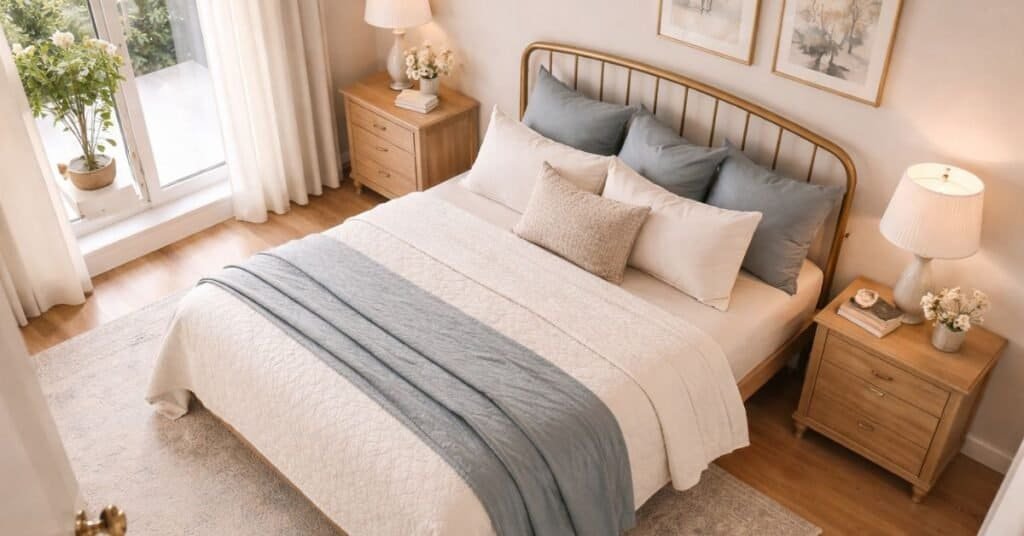
13. Add contrast through texture, not busy prints
If you want the bed to feel luxurious, strong pattern is not always the answer. Texture often looks calmer and more expensive than lots of print.
Think waffle weave, washed linen, soft cotton, or a lightly stitched coverlet. A room with cream walls and light wood nightstands can still feel rich if the bedding layers feel different to the eye and hand.
14. Create a plush hotel style bed with two top layers
For a fuller hotel inspired bed, try a quilt or light blanket under the duvet, then fold the duvet back so both layers show. Better Homes and Gardens also points to a double duvet look for a more plush bed, which can work well in a large bedroom with a tall headboard.
Keep the colors close so the bed still feels calm. If you want to try this on a queen bed, leave enough space at the sides so the bed does not spill too far over the frame and look heavy.
15. Keep the palette simple in a small bedroom
In a small bedroom, layered bedding still works beautifully. The trick is using fewer layers with more visible texture and staying with two or three soft colors.
A small space can look cramped when every layer is thick or dark. Try a fitted sheet, one quilt, one duvet, and a single accent pillow instead. That gives the bed depth while keeping the room open.
How to Make Layered Bedding Look Luxurious on a Budget
A richer looking bed does not always come from buying more pieces. In many bedrooms, it comes from using fewer pieces in a better order and paying more attention to texture, fold, and color.
Focus on texture before adding more layers
If the bed feels plain, the first fix is often texture, not volume. A quilted coverlet, a washed cotton duvet cover, or a soft throw at the foot of the bed can make the setup feel fuller without adding clutter.
That is one reason House Beautiful’s bed styling ideas work so well. A small styling change, like folding the duvet down instead of pulling it flat, can make the bed feel more polished without costing anything.
Stick to two or three calm colors
A bed usually looks more expensive when the colors feel connected. Try one base color, one soft supporting color, and one accent if needed. Cream, beige, soft gray, taupe, clay, muted olive, or dusty blue all work nicely for this.
Too many colors can make even nice bedding feel scattered. A smaller palette helps the room feel calm and gives each layer a clearer place.
Use what you already own in a new order
Before buying anything, pull out all the bedding you already have and test a few combinations. A throw that used to live on a chair may work better folded at the foot of the bed. A quilt from the closet may look nicer under the duvet than spread across the whole mattress.
This is also a helpful moment to look at the room as a whole. If you are trying to refresh the space without spending much, you might want to try to spice up your bedroom decor even without buying new stuff, because many of the same low cost styling ideas work well around the bed too.
Add one folded layer at the foot of the bed
A folded layer near the foot of the bed can make the whole setup feel more finished. It gives the eye a clear end point and adds a little shape without making the top half feel crowded.
Apartment Therapy’s layering tips support this idea well because comfort and visual depth often come from simple textile layering, not from stuffing the bed with extra pieces. A folded blanket about 18 inches deep on a queen bed is often enough.
Keep the pillows simple
Budget styling looks better when the pillows are controlled. Two sleeping pillows, two Euro shams, and one front accent pillow can look far more polished than six or seven mixed pillows that do not relate to each other.
If you only want to buy one new thing, make it the piece that changes the shape of the bed most. That is often a quilt, a coverlet, or a pair of Euro shams rather than another small accent pillow.
Try a small space version
In a small bedroom, budget layering can look especially nice because too much bedding would crowd the room anyway. Keep one smooth base layer, one visible textured layer, and one soft top layer. That gives the bed enough depth while still leaving the room airy.
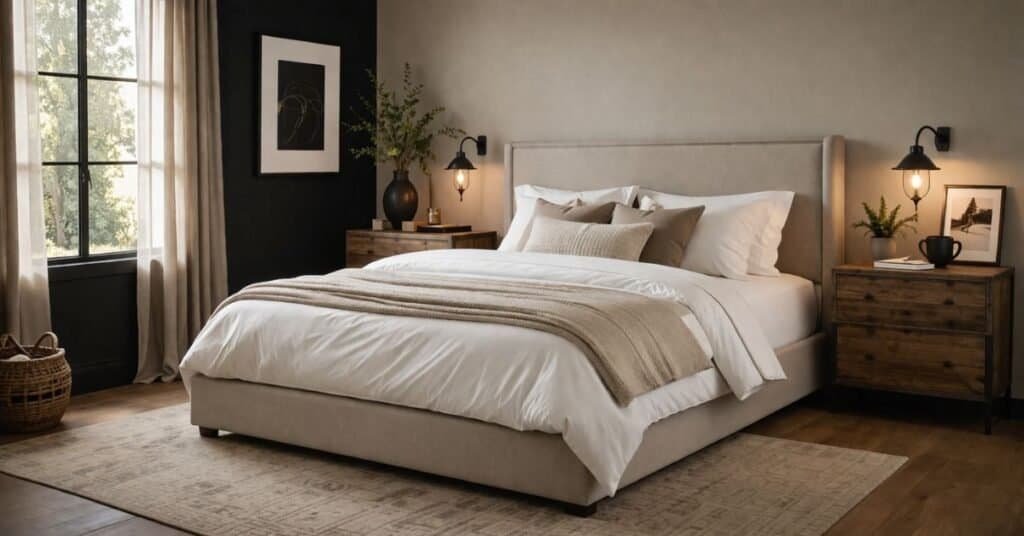
Common Layered Bedding Mistakes That Make a Bed Look Bulky
A bed can have beautiful bedding and still feel heavy. Most of the time, the problem is not the bedding itself. It is the way the layers are stacked, tucked, or crowded together.
Too many heavy layers at once
The fastest way to make a bed look bulky is to use several thick pieces that all compete with each other. A heavy comforter, a thick quilt, a chunky throw, and a long row of pillows can make the bed feel overfilled instead of calm.
That is why a lot of layered beds look better with one fuller top layer and one lighter layer underneath. If the room already feels warm or the bed frame is lower to the ground, too much thickness can also make the whole setup feel squashed.
Too many pillows across the front
A large stack of pillows can block the shape of the bed. It also makes the bed harder to use every day, which usually means the look does not last very long.
A simpler pillow setup often looks richer. Two sleeping pillows, two Euro shams, and one accent pillow is enough for many queen beds. On a full bed, even two sleeping pillows and one lumbar pillow can look complete.
Mixing too many colors and patterns
Layering works best when the eye can still rest. If every layer has a bold pattern or a different color story, the bed can feel busy and crowded.
Try keeping the pattern quiet and letting the texture do the work. A striped sheet, a quilted coverlet, and a soft linen duvet in connected tones usually feel calmer than three unrelated prints.
Using layers that do not fit the bed well
Short layers can make a bed look awkward. If the quilt barely reaches the mattress edge or the duvet looks too narrow for the frame, the bed can lose that full, luxurious feel.
Check the drop at the sides and foot of the bed. On taller mattresses, a slightly oversized quilt or duvet cover often looks better than one that is pulled too tight.
Forgetting the room around the bed
Sometimes the bed is not the only thing making the room feel full. If the nightstands are crowded, the wall art is too busy, or the bench at the foot of the bed is oversized, even good bedding can start to feel heavy.
This is where the bedroom layout matters. If you are working with a bed wall that already feels visually strong, it helps to keep the bedding calmer.
A simple fix that works in most bedrooms
If your bed feels bulky, remove one heavy layer and one extra pillow, then look at it again from the doorway. That quick reset usually shows what the bed actually needs.
A lighter middle layer, a cleaner pillow line, and a calmer palette often make the bed look more expensive right away.
| Mistake | Why it looks off | Easy fix |
|---|---|---|
| Too many heavy layers | Bed looks crowded and thick | Keep one lofted top layer and one lighter layer below |
| Too many pillows | Front of bed feels messy | Limit the front row to one accent pillow |
| Too many colors | Bed feels busy | Stay with two or three connected tones |
| Bedding is too small | Bed looks skimpy | Use layers with a fuller side drop |
| Too much around the bed | Room feels packed | Clear visual clutter near the bed |
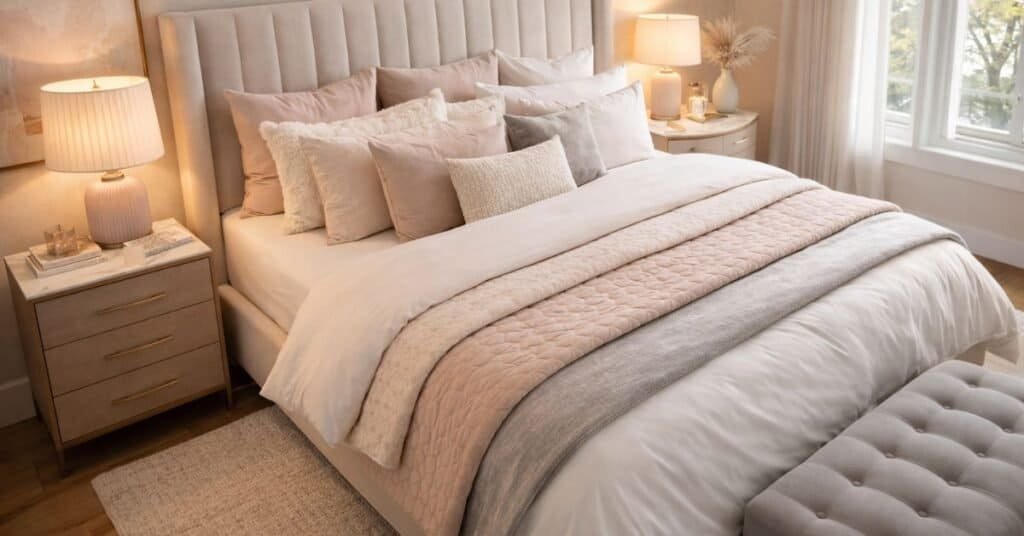
How to Style Layered Bedding in a Small Bedroom
A small bedroom can still look rich and inviting with layered bedding. The trick is keeping the layers easy to read, so the bed feels soft and full without taking over the whole room.
Keep the color palette light
Light bedding helps a small room feel more open. Warm white, ivory, oatmeal, pale gray, and soft beige reflect light better than very dark colors, so the bed looks airy instead of heavy.
That does not mean the room has to feel plain. You can still add depth by mixing tones that are close together, like cream with sand or light taupe with warm white.
Use fewer but fuller looking layers
In a small room, you do not need six bedding pieces to get a layered look. A fitted sheet, one quilt or coverlet, and one duvet is often enough.
The bed usually looks better when each layer can be seen clearly. If the room is tight on both sides, let the duvet sit a little neater instead of using a very oversized one that spills too far over the frame.
Choose one standout texture
Texture gives the bed interest without asking for more color or more bulk. In a small bedroom, one strong texture is usually enough.
A quilted coverlet, washed linen duvet, or waffle weave blanket can all do the job. Pick one texture that stands out, then keep the rest softer and smoother so the bed still feels calm.
Keep the pillow setup simple
Too many pillows can make a small bedroom feel crowded in seconds. A cleaner setup usually looks more expensive anyway.
For a full or queen bed in a smaller room, try:
- 2 sleeping pillows
- 2 Euro shams or 1 long lumbar pillow
- 1 small accent pillow if the bed still needs a finishing touch
If the headboard is low, skip the extra front pillow and let the bedding layers do more of the work.
Leave some space around the bed
A luxurious bed needs a little breathing room. If every edge of the mattress is covered with thick layers, the whole room can start to feel packed.
Try folding the quilt or blanket lower on the bed so more of the sheet and duvet can show. A foot fold around 16 to 20 inches often looks balanced in a small room without making the bed feel too dense.
Try a simple small space formula
If you want an easy setup that works in most smaller bedrooms, use this:
- smooth fitted sheet
- lightweight quilt or coverlet
- soft duvet folded back
- two sleeping pillows
- one accent texture only
That gives you shape, softness, and enough contrast to make the bed look styled, while still keeping the room light.
If the rest of the space also feels crowded, it helps to simplify more than just the bed. A cleaner nightstand, one calm piece of wall art, and a little more open floor space can make the bedding look better too.

Frequently Asked Questions
What is the best order for layering bedding?
The easiest order is fitted sheet, optional top sheet, quilt or coverlet, then duvet or comforter on top. That order helps the bed look full without hiding every layer.
If you want a more styled look, fold the duvet back enough to let the lower layer show. Even 8 to 12 inches can make the bed feel more finished.
Do you need a top sheet for a layered bed look?
No, you do not always need one. A top sheet can make the bed look a little neater and more traditional, though many people skip it and still get a beautiful layered look with a quilt and duvet.
It really comes down to comfort and how tucked in you want the bed to feel. If you like a more relaxed bedroom style, you can leave it out.
How many pillows should you use on a luxury looking bed?
For most queen beds, two sleeping pillows, two Euro shams, and one accent pillow is enough. That gives the bed height and shape without making it hard to use.
In a smaller room, you can scale back to two sleeping pillows and one lumbar pillow. A bed usually looks better when the pillow setup feels balanced instead of crowded.
Is a duvet or comforter better for layered bedding?
A duvet is often easier for layering because it gives the bed a softer, fuller top layer and lets you swap covers for a different look. A comforter can work too, especially if you prefer a simpler setup.
If you want the bed to feel more plush, a duvet usually gives you a little more shape. If you want less fuss, a comforter may feel easier day to day.
What fabrics look most luxurious on a bed?
Cotton, linen, and lightly quilted fabrics usually look the most refined because they add texture without looking too heavy. A smooth cotton sheet with a washed linen duvet cover is a great mix for a calm, rich looking bed.
A quilted coverlet or waffle weave blanket can also help. The nicest layered beds usually mix two or three fabric finishes instead of using the same texture everywhere.
How do you layer bedding without making it look bulky?
Use one full top layer and one lighter layer underneath instead of stacking several thick pieces. A quilt, coverlet, or lightweight blanket under a duvet usually gives enough depth without making the bed feel heavy.
Keep the pillows under control too. If your room still feels crowded, you can spice up your bedroom decor without buying new things. This easy ideas will work well with simpler bedding.
Can you make a bed look luxurious on a budget?
Yes. A luxurious bed often comes from color, texture, and folding the layers well rather than buying many new pieces. A blanket folded at the foot of the bed or a pair of Euro shams can make a big change.
Start by restyling what you already own first. Then add one piece only if the bed still needs more shape or texture.
What is the easiest way to make a bed look hotel style?
Use crisp light bedding, a full duvet, and pillows that sit upright and even. Folding the duvet down slightly and keeping the palette soft can make the bed feel more hotel inspired right away.
Two Euro shams behind sleeping pillows also help. That extra height makes the bed feel more dressed without adding much effort.
Should bedding layers match or contrast?
They should relate to each other more than match exactly. Bedding looks softer and more natural when the tones are close but not identical.
Texture can do the contrast work for you. Cream cotton, beige linen, and a quilted ivory layer can look far more interesting than one flat matching set.
How do you add texture to bedding without cluttering the room?
Choose one or two textures that stand out, then keep the rest of the bed simple. A quilted coverlet, linen duvet cover, or waffle throw can add depth without making the room feel busy.
In smaller bedrooms, one textured layer is often enough. Let the folds and fabric finish create interest instead of adding more pillows or more color.
Conclusion
A luxurious bedroom often starts with a bed that feels soft, layered, and easy on the eyes. You do not need a huge room or a pile of bedding to get there. A few thoughtful layers, a calm color palette, and better texture can change the whole feel of the space.
Try one or two of these layered bedding ideas first and see how your room feels. Even a simple quilt, a folded duvet, or a cleaner pillow setup can make your bedroom look more polished and inviting.
For more calm and beautiful ways to style your space, visit Bedroom Décor Ideas: Beautiful Ways to Transform Your Space.