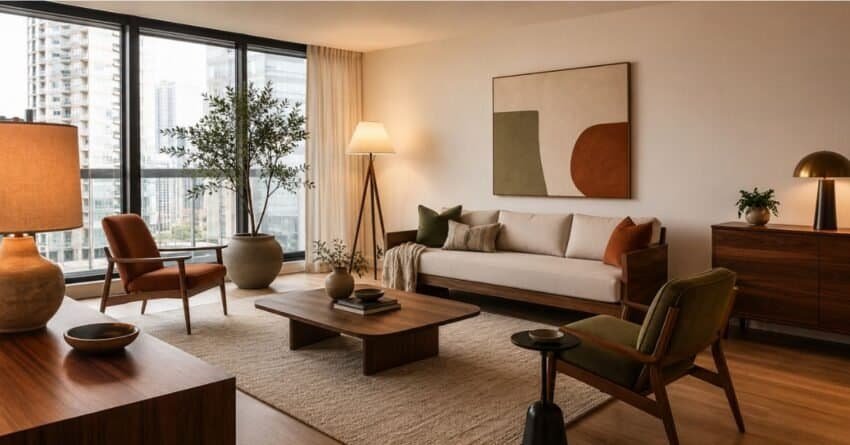
A room can be clean and still look busy.
You may have cleared the floor, wiped the counters, and put things away, but the space still feels visually heavy. The coffee table has too many small items. The sofa has too many pillows. The shelves look full, even when everything is neat.
That is where the idea of a simple living aesthetic starts to make sense.
It is not about turning your home into a plain white box. It is about making small decor swaps that help each room feel lighter, calmer, and easier to live in.
Think softer textiles, clearer surfaces, warmer lighting, fewer tiny accents, and storage that blends into the room. These changes can make a home look cleaner without a full makeover or a big budget.
The best part is that you do not have to start from scratch. You can keep the pieces you already love and change how they are placed, grouped, stored, or styled.
This post walks through 15 cleaner looking home decor swaps that work in real homes, from living rooms and bedrooms to kitchens, shelves, and small spaces.
Table of Contents
Simple Living Aesthetic Swaps That Make Rooms Look Cleaner
A simple living aesthetic usually starts with the surfaces you see first.
Coffee tables, nightstands, entry consoles, open shelves, and kitchen counters can make a room look busy fast. Even small items add up when they sit close together.
Real Simple shares a helpful point about reducing visual clutter for a calmer room. The idea is simple: when the eye has fewer small things to sort through, the room feels more peaceful.
That does not mean every surface has to be bare. It means each surface needs a little breathing room.
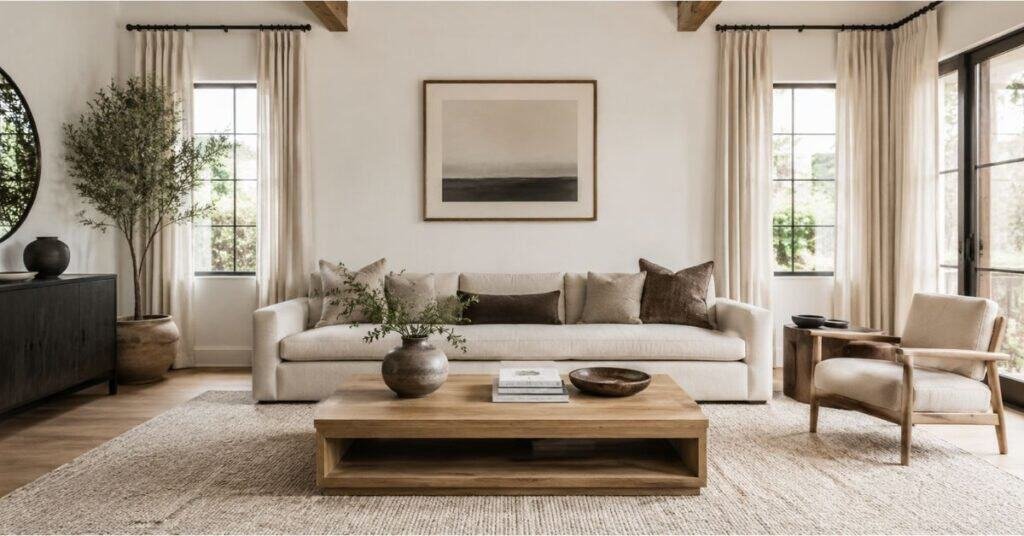
Swap Busy Surfaces for Open Surfaces
Start with one surface that bothers you most.
It might be the coffee table in the living room or the counter near the kitchen sink. Clear everything off first, then add back only what helps the room look calm or work better.
Try this simple surface formula:
- One tray
- One useful item
- One soft decor detail
- Open space around the group
For a coffee table, that could mean a tray for remotes, a book stack, and a small ceramic bowl. For a nightstand, it could mean a lamp, one book, and a small dish for glasses or lip balm.
Leave about one third of the surface empty if the table is small. Leave closer to one half open if the surface is large.
That open area is what makes the room feel cleaner.
Swap Random Decor for Fewer Larger Pieces
Tiny decor pieces can feel harmless on their own.
One small candle. One mini vase. One little frame. One small bowl.
But once they sit together on a shelf or table, they can make the whole room feel crowded.
Apartment Therapy gives a useful reminder about simpler finishes that feel more current, especially when a room has too many dated or visually heavy details. A cleaner room often comes from fewer pieces, calmer finishes, and less competition between objects.
Try swapping several small accents for one larger item with a cleaner shape.
| Instead Of | Try This |
|---|---|
| Five tiny shelf pieces | One larger vase and open space |
| A crowded coffee table | Tray, book stack, and one bowl |
| Many small wall frames | One larger art print |
| Several little candles | One candle on a tray |
| Mixed tabletop decor | Two pieces in the same material |
A common mistake is keeping every small decor piece because each one feels cute or useful. The room may be tidy, but the eye still reads it as cluttered.
Pick the pieces that do the most work. Then give them room to be seen.
Simple Living Aesthetic Home Decor Starts With Softer Textiles
Textiles can make a room feel heavy or light within seconds.
Dark thick curtains, bulky throws, busy pillow covers, and high contrast bedding can make a clean room feel full. Softer fabrics help the room breathe without removing comfort.
Real Simple recommends lighter linen or cotton textiles as a way to make rooms feel cooler, cleaner, and easier on the eye.
That swap works because fabric covers so much visual space. A duvet, curtain panel, sofa pillow, or throw can change the mood of the whole room.
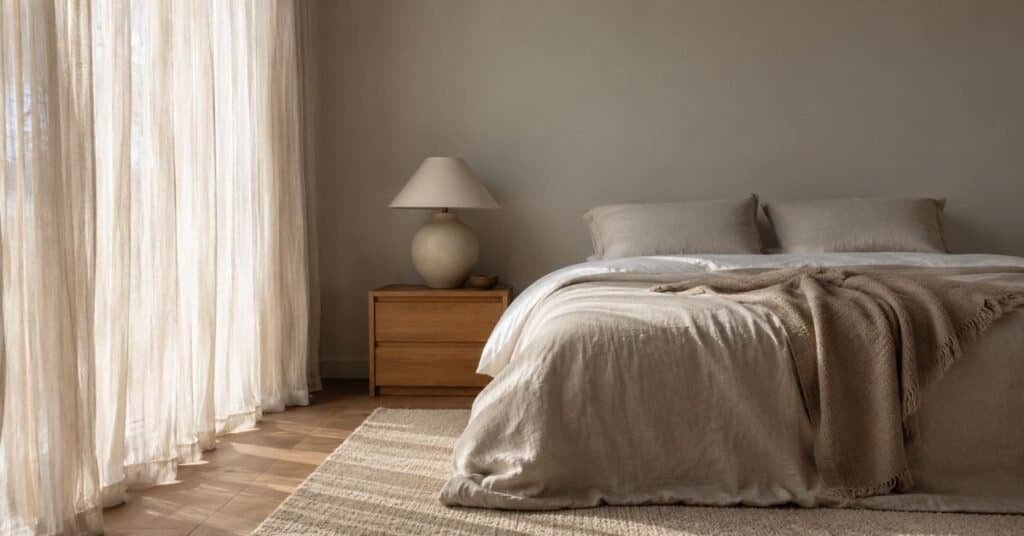
Swap Heavy Fabrics for Linen and Cotton
Look at the biggest fabric pieces first.
In a living room, that may be curtains, pillow covers, and throw blankets. In a bedroom, it is usually the duvet, sheets, pillow shams, and rug.
Try swapping:
- Heavy dark curtains for light linen panels
- Shiny pillow covers for cotton or woven covers
- Thick busy throws for one soft neutral throw
- High contrast bedding for calmer sheets and a simple duvet
- Patterned slipcovers for solid or softly textured fabric
You do not need every textile to be white or beige. Soft clay, oatmeal, warm gray, muted sage, dusty blue, or cream can still feel clean.
A good rule is to keep large textiles quiet, then use one small accent if the room needs color.
For example, a bedroom with cream sheets, an oatmeal duvet, and one muted green pillow can feel calm without looking plain.
Swap Extra Pillows for Fewer Better Placed Pillows
Too many pillows can make a room look messier than it is.
Real Simple shares a helpful styling point about limiting extra pillows and throws. The room feels cleaner when the sofa or bed has enough softness, but not so many layers that it looks hard to use.
For a sofa, try two larger pillows instead of five small ones.
For a queen bed, try:
- Two sleeping pillows
- Two larger pillows
- One folded throw at the foot of the bed
That is enough to make the bed feel finished without creating a pile you have to move every night.
Budget option: keep the pillow inserts you already own and only switch the covers. Choose cotton, linen look, or soft woven covers in colors that repeat elsewhere in the room.
A small space variation works well here too. In an apartment or small bedroom, fewer pillows free up chairs, beds, and benches so the room feels easier to use.
Cleaner Looking Home Decor Swaps for Small Spaces
Small rooms can look cluttered faster because every item sits closer together.
A basket on the floor, a stack of books beside the sofa, and a small table in the corner might all be useful. But in a tight room, those pieces can make the floor feel crowded.
The goal is to lift storage, group daily items, and keep walking paths clear.
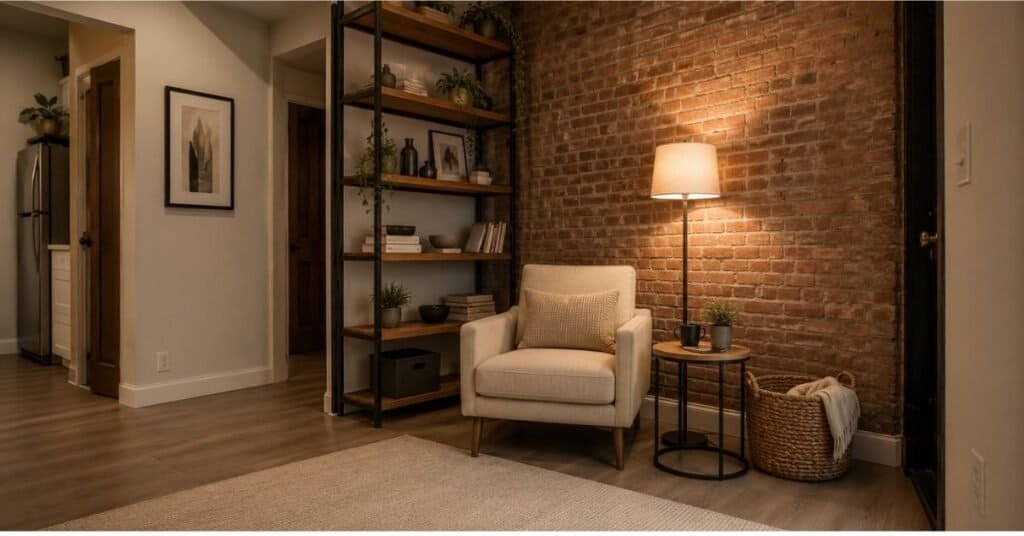
Swap Floor Clutter for Vertical Storage
If the floor feels full, look at the walls.
Apartment Therapy shares storage ideas that save floor space, including wall mounted storage, tall bookcases, and vertical pieces that use height instead of width.
That is a smart swap for apartments, condos, and small homes. It keeps useful items nearby while making the room feel more open.
Try these vertical storage swaps:
- Replace three small floor baskets with one tall bookcase
- Replace a crowded desk corner with wall shelves
- Replace loose entry items with hooks and a narrow shelf
- Replace stacked floor piles with a tall cabinet
- Replace small scattered bins with one slim shelving unit
Leave the lower part of the room as clear as possible. When the floor line stays open, the room feels larger.
A good rule is to keep at least 24 to 30 inches of walking space in main paths when the room allows it. In very tight spaces, keep the main route clear enough that you do not have to turn sideways to move through.
Swap Open Clutter for Matching Containers
Open storage can still look messy if every bin, box, and basket is different.
A red bin, a clear plastic box, a printed basket, and a random tote can make a shelf feel crowded even if everything is organized. Matching containers help the eye read the area as one clean group.
Try this simple swap:
| Small Space Problem | Cleaner Looking Swap |
|---|---|
| Mixed bins on open shelves | Matching baskets in one color |
| Toys scattered near the sofa | One lidded basket beside the chair |
| Entry items on the floor | Wall hooks and one slim basket |
| Craft items in clear bags | Fabric bins inside a shelf |
| Blankets piled on furniture | One woven basket near the sofa |
Choose containers that match the room’s main texture. Woven baskets feel warm. Fabric bins feel soft. Lidded boxes look cleaner on open shelves.
Budget option: use matching labels or matching colors before buying new containers. Even reused boxes can look calmer when they sit inside a cabinet or closet.
Simple Living Room Aesthetic Without Making It Feel Cold
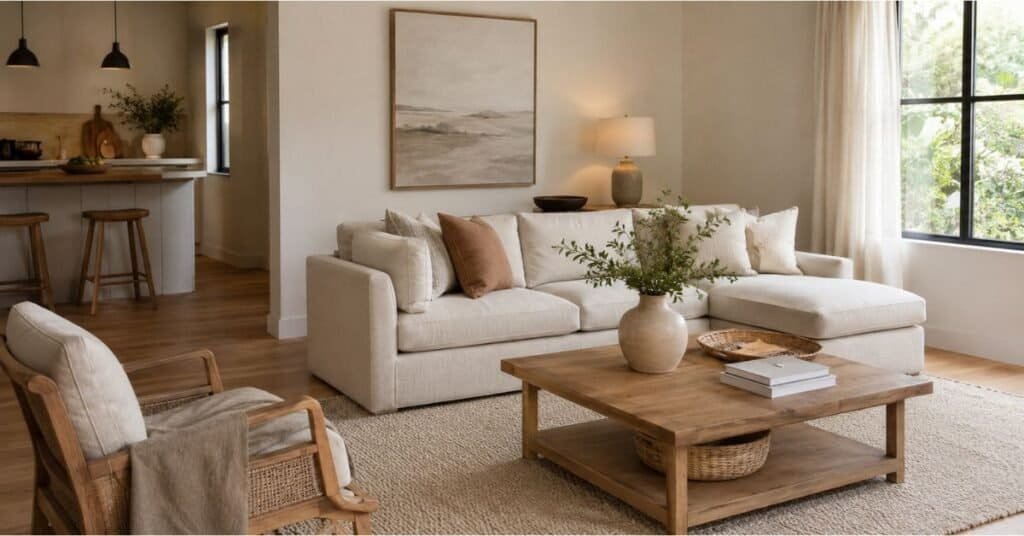
A simple living room aesthetic can feel calm without feeling cold.
The difference is usually texture and lighting. A room with clear surfaces but no soft materials can feel unfinished. A room with fewer items, warm light, wood tones, and one or two cozy layers feels easier to live in.
Martha Stewart shares that small decor swaps with lamps and textiles, such as lampshades, baskets, vases, and throws, can change the feeling of a room without a full reset.
That is a helpful way to think about your living room. You may not need new furniture. You may only need softer light, better spacing, and a few warmer textures.
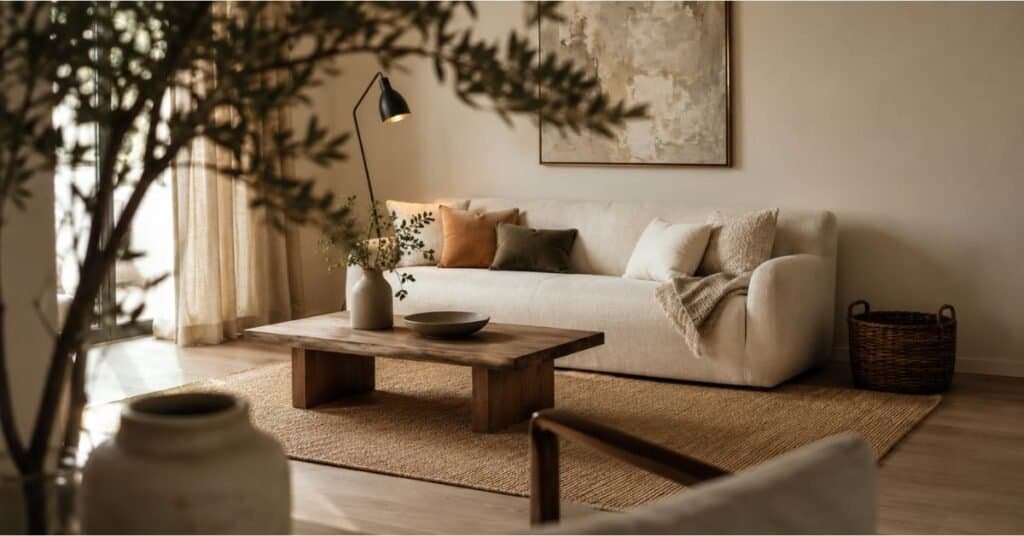
Swap Harsh Overhead Light for Layered Lamps
Ceiling light can make a room look flat, especially at night.
Better Homes & Gardens notes that easy lighting swaps for more style can change the feel of a room quickly. In a simple living room, lighting helps clean surfaces feel soft instead of stark.
Try using two or three light sources instead of one bright overhead light.
Good options include:
- A table lamp beside the sofa
- A floor lamp in a dark corner
- A small lamp on a console table
- A dimmable bulb where possible
- A warm bulb around 2700K for a soft evening glow
Place lamps where the room feels flat. A corner beside a chair, a console behind the sofa, or a side table near the window can change the whole mood.
Small detail: if your room has only one lamp, place it across from the darkest corner instead of right beside another bright area. This helps spread the light more evenly.
Swap Cold Minimalism for Warm Minimalism
A room can be simple and still feel warm.
House Beautiful shows warm minimalist living rooms with clean layouts, softer textures, and different styles that still feel comfortable.
Use that idea in a practical way. Keep the room simple, then add warmth through touchable materials.
Try:
- Warm wood instead of glossy black surfaces
- Linen or cotton instead of stiff shiny fabrics
- One woven basket instead of several visible storage pieces
- A soft rug instead of bare flooring
- One folded throw instead of a pile of blankets
For a room that feels minimal but still comfortable, you can use this minimalist home ideas to keep the space soft without adding too much.
Simple Kitchen Decor Ideas for Clearer Counters
Kitchen counters can look crowded even when they are clean.
The problem is usually not dirt. It is too many visible items fighting for space. A mug, soap bottle, paper towel roll, cooking oil, mail, and a small appliance can make the whole kitchen feel visually full.
A simple living aesthetic works well in the kitchen because it keeps daily items easy to reach while giving the counter a cleaner look.
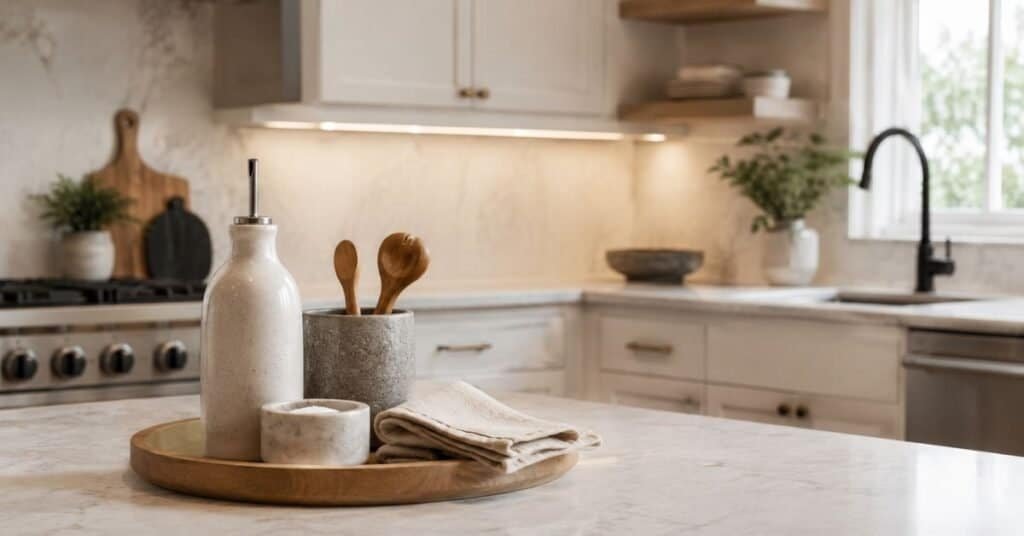
Swap Countertop Clutter for One Daily Use Tray
Start with the items you use every day.
Do not hide the pieces you reach for each morning if that will make the kitchen annoying to use. Instead, group them on one tray so they look planned.
A daily use tray could hold:
- Coffee jar
- Two mugs
- Small spoon rest
- Oil bottle
- Salt and pepper
- Soap and brush near the sink
- Small utensil cup near the stove
Keep the tray tight. A 10 to 14 inch tray usually works well for most counters. If the tray gets too large, it can become another clutter zone.
Here is a simple kitchen counter guide:
| Kitchen Item | Keep Out | Store Away |
|---|---|---|
| Coffee supplies | Daily mugs and coffee jar | Extra mugs and seasonal cups |
| Cooking items | Oil, salt, pepper | Extra spices and backup bottles |
| Sink area | Soap and brush | Extra sponges and cleaners |
| Counter decor | One vase or bowl | Extra signs and small objects |
| Appliances | Daily use appliance | Rarely used appliances |
Leave clear space around the sink and stove whenever possible. Those are work areas, so open counter space makes the kitchen easier to use.
Swap Mixed Colors for a Quieter Palette
A kitchen can feel busy because of color, not clutter.
Bright towels, mixed mugs, colorful containers, printed labels, and mismatched jars can make open counters look full. You do not need everything to match, but the visible pieces should feel calm together.
Try swapping:
- Bright dish towels for soft neutral towels
- Mixed plastic bottles for one simple soap dispenser
- Colorful jars for clear glass or ceramic containers
- Random mugs on display for two daily favorites
- Busy counter decor for one bowl or vase
Use wood, glass, ceramic, and soft fabric when possible. These materials feel cleaner than a mix of shiny plastic and printed packaging.
Small space variation: if your kitchen is tiny, keep only one decorative item on the counter. Let the rest of the clean look come from clear space.
Simple Bedroom Decor Ideas for a Softer Look
A bedroom can look busy even when the bed is made.
Too many pillows, high contrast bedding, crowded nightstands, and visible cords can make the room feel restless. A softer bedroom starts with fewer visible items and calmer layers.
Better Homes & Gardens notes that fresh duvet covers and sheets can refresh a room without a full makeover. That is useful for bedrooms because bedding takes up the most visual space.
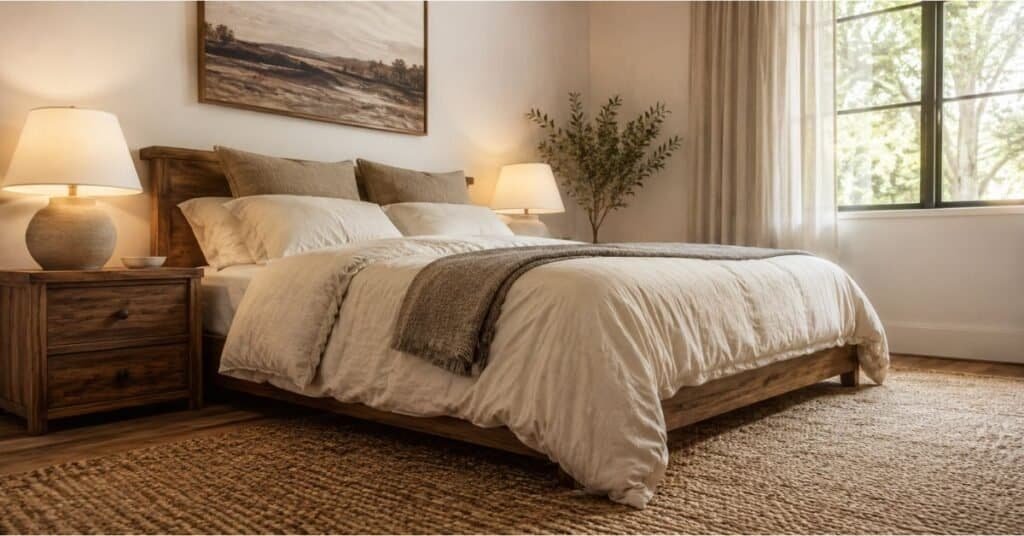
Swap Busy Bedding for Calm Layers
Start with the bed because it is usually the largest piece in the room.
Busy bedding can make the whole bedroom feel crowded, especially in a small room. High contrast patterns, too many pillows, and several throws can make the bed look harder to use.
Try this calmer setup:
- Two sleeping pillows
- Two larger pillows
- One clean duvet
- One folded throw at the foot of the bed
Choose soft neutrals or muted colors that repeat in the room. Cream, oatmeal, warm gray, soft clay, muted blue, or pale sage can all work.
For a queen bed, fold the throw across the bottom 18 to 24 inches of the mattress. This keeps the bed styled without covering the whole surface.
Swap Nightstand Clutter for a Three Item Setup
The nightstand is one of the easiest places to reset.
A nightstand can collect water glasses, books, hair ties, lotion, receipts, charging cords, and small items from the day. Even if the pile is small, it can make the whole bedroom feel less restful.
Try a three item setup:
- One lamp
- One book
- One small dish or tray
Keep chargers in a drawer or clip the cord behind the nightstand so it does not sprawl across the top. If you need lotion, glasses, or lip balm at night, place them in the small dish.
Budget option: shop your own home first. A small saucer, shallow bowl, or unused candle lid can work as a bedside tray.
Simple Wall Decor Swaps That Calm a Room
Walls can make a room feel busy before you even notice the furniture.
Too many small frames, dark heavy borders, crowded gallery layouts, or wall decor placed too high can add visual noise. A simple living aesthetic works best when the wall has enough art to feel finished, but enough open space to feel calm.
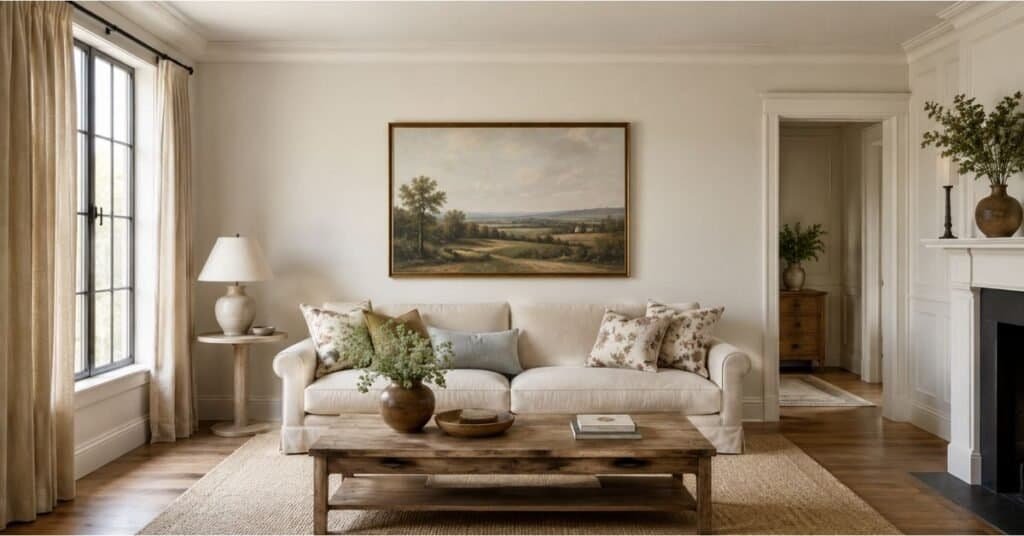
Swap Gallery Clutter for One Main Art Piece
Gallery walls can look beautiful, but they can also overwhelm a small room.
If the room already has open shelves, patterned pillows, books, plants, or a busy rug, a large group of frames may be too much. One larger art piece can make the wall feel cleaner and more settled.
Try this swap:
- Replace five small frames with one medium or large print
- Replace mixed frame colors with one frame finish
- Replace tiny art above a sofa with a wider piece
- Replace scattered wall decor with one centered focal point
For art above a sofa, leave about 6 to 8 inches between the top of the sofa and the bottom of the frame. If the art is too high, the wall can feel disconnected. If it is too small, the sofa wall can feel unfinished.
A good size is usually about two thirds the width of the sofa. It does not have to be exact, but the art should feel related to the furniture below it.
Swap Dark Heavy Frames for Slimmer Frames
Frames carry visual weight.
A thick dark frame can look strong and classic, but too many of them can make a room feel heavier. Slimmer frames often look cleaner, especially in small rooms, rentals, hallways, and bedrooms.
Try:
- Slim black frames for a crisp look
- Light wood frames for warmth
- White frames for a softer wall
- Brass toned frames for a little glow
- One matching frame style in a hallway
This does not mean every frame in your home has to match. But inside one room, using one or two frame finishes keeps the wall easier to read.
Rental tip: use removable picture hooks when possible and test the art placement with painter’s tape first. Tape the outline on the wall, step back, and check the height before hanging anything.
A 15 Swap Plan for a Simple Living Aesthetic
A simple living aesthetic is easier when you think in swaps.
You are not starting over. You are trading heavy, busy, or scattered details for pieces that feel calmer and easier to live with.
Use this list as a room by room reset. Start with the swap that will make the biggest visual change in your home today.
| Swap This | Try This Instead |
|---|---|
| Crowded coffee table | Tray, book stack, small vase |
| Heavy dark pillows | Linen or cotton pillow covers |
| Too many sofa pillows | Two or three calm pillows |
| Ceiling light only | Table lamp or floor lamp |
| Mixed storage bins | Matching baskets or boxes |
| Floor clutter | Tall storage or wall shelves |
| Busy bedding | Clean duvet and one throw |
| Crowded nightstand | Lamp, book, small dish |
| Many tiny decor pieces | One larger vase or art piece |
| Full open shelves | Books, basket, open space |
| Random counter items | One daily use tray |
| Bright mixed towels | Soft neutral towels |
| Heavy curtains | Linen or cotton curtains |
| Small scattered frames | One larger wall art piece |
| Cluttered entry table | Bowl, basket, lamp |
How to Use the 15 Swaps Without Overthinking It
Pick one room first.
Then choose one surface in that room. A coffee table, nightstand, shelf, counter, or entry table is usually the easiest place to begin.
Use this order:
- Remove loose items that do not belong there.
- Group daily items in one tray, basket, or bowl.
- Replace tiny scattered pieces with one larger piece.
- Add one soft texture if the room feels too plain.
- Leave part of the surface open.
This keeps the room from feeling stripped. You are making the home cleaner looking, not empty.
The Best First Swap for Most Homes
The best first swap is usually the coffee table or entry table.
Those spots are easy to see, easy to fix, and easy to mess up again. A tray and one small bowl can keep loose items from spreading across the whole surface.
Try this quick setup:
- One tray for remotes or keys
- One bowl for small daily items
- One vase, lamp, or book stack
- Open space around the group
If the room still looks busy after that, remove one more small item.
The common mistake is trying to fix every room in one day. That can make the whole home feel pulled apart. One clear surface gives you a better starting point.
Budget Swaps That Still Look Clean
A cleaner looking room does not need a high price tag.
Use what you already own first. Move a basket from a closet to the living room. Use a small plate as a tray. Fold a throw neatly instead of buying a new one. Remove extra pillows before buying new covers.
Budget friendly swaps include:
- Pillow covers instead of new pillows
- A thrifted basket for blankets
- A plain tray for remotes
- A warmer bulb for a lamp
- A clean duvet cover instead of new bedding
- One larger print instead of several small frames
Small swaps work best when the colors feel connected. Cream, beige, warm gray, soft green, wood, woven texture, and matte ceramic usually sit together quietly.
Frequently Asked Questions
What decor makes a home look cleaner without a full makeover?
Start with the decor that takes up the most visual space. Coffee tables, shelves, bedding, curtains, and kitchen counters usually change the room fastest.
A simple living aesthetic can begin with open surfaces, lighter textiles, matching baskets, and warm lamps. These swaps make the home feel calmer without replacing all your furniture.
What are the easiest minimalist decor swaps on a budget?
The easiest budget swaps are pillow covers, a tray for loose items, a basket for blankets, lighter curtains, and a warmer lamp bulb.
You can also move pieces from one room to another. A basket from a closet may work better beside the sofa, and a small bowl from the kitchen can become a clean catchall on an entry table.
How do I make my home look more modern and uncluttered?
Use fewer small items, clearer surfaces, and cleaner lines.
Start by removing tiny decor pieces that sit close together. Then keep one larger item, like a vase, lamp, framed print, or basket, so the room still feels finished.
Which textiles make a room feel lighter and cleaner?
Linen, cotton, soft woven fabric, and light neutral rugs usually make a room feel lighter.
You do not have to use all white. Cream, oatmeal, warm gray, muted sage, dusty blue, and soft clay can still keep the room calm while adding a little warmth.
How do I style a minimalist living room without making it feel cold?
Use texture and warm light.
A simple living room can still feel cozy with a soft rug, a folded throw, linen pillows, warm wood, and one lamp near the sofa. For more layout help, these simple minimalist living room styling ideas can help you keep the room calm without making it feel bare.
What lighting makes a home feel softer and less cluttered?
Use table lamps, floor lamps, and warm bulbs instead of relying only on ceiling light.
A bulb around 2700K works well in living rooms and bedrooms because it gives a soft evening glow. Place lamps in dark corners, beside chairs, or on console tables to make the room feel more balanced.
How do I make open shelves look neat instead of messy?
Group items by material, color, or use.
Try books on one side, a basket on another shelf, and one vase with open space around it. Leave some empty space so the shelf feels styled, not packed.
What should I remove first if a room feels visually crowded?
Remove loose items first.
Paper piles, extra pillows, tiny decor pieces, tangled cords, receipts, and random daily items usually make the biggest mess visually. Once those are handled, you can decide if any larger decor still feels too heavy.
Are neutral colors always better for a simple living aesthetic?
Neutral colors help, but they are not the only option.
Soft muted colors can still work if the room stays calm. Try sage, clay, dusty blue, warm gray, cream, taupe, or light wood tones instead of bright colors spread across every surface.
How can I make a rental feel more minimalist without permanent changes?
Use swaps that do not change the walls or fixtures.
Try lighter curtains, removable hooks, baskets, lamps, pillow covers, trays, and better shelf styling. Keep the biggest visual areas calm first, then use small personal pieces so the room still feels like yours.
Conclusion
A simple living aesthetic does not mean your home has to feel plain, empty, or hard to live in.
It starts with small swaps that make each room easier on the eye. Clear one surface. Trade heavy textiles for softer ones. Use warm lighting. Group daily items in baskets, trays, or bowls. Let a little open space show.
The best swap is the one you can do today.
Maybe it is clearing the coffee table. Maybe it is folding one throw at the end of the bed. Maybe it is moving loose kitchen items onto one tray. These small changes help your home feel cleaner without taking away its warmth.
For more calm room ideas, visit Minimalist Home Ideas: I Tried Simplifying My Space… Here’s What Actually Happened.