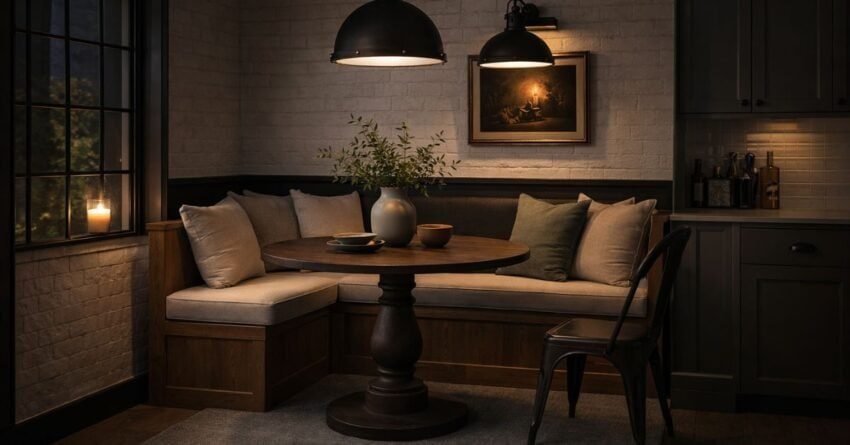
A dining nook can be one of the nicest spots in the house, but it can also end up feeling cold, awkward, or forgotten. Maybe the table is too sharp for the corner, the lighting feels flat at night, or the whole area looks more like leftover space than a place you want to sit and stay.
That is why the best dining nook decor ideas start with comfort. A nook feels better when the scale is smaller, the seating feels soft, and the room has a little texture and warmth instead of hard lines everywhere.
Recent inspiration from The Coolist points to built in seating, layered texture, and smart layouts as key details in dining nooks that feel more inviting day to day. A warm nook is not about filling the corner with more decor. It is about making the space feel easy to use for coffee, quick lunches, slow dinners, and those in between moments that happen around the table.
Even a few small changes can help. Bespoke Bride highlights how warm lighting, comfortable seating, and layered textiles help a dining nook feel more welcoming and more useful at the same time. That is good news if you are working with a small kitchen corner, a window wall, or a tucked in breakfast spot that needs a little more life.
In the ideas ahead, you will find simple ways to warm up your nook with better seating, softer lighting, calmer color, and a few collected details that make the whole space feel settled and lived in.
Table of Contents
Why Dining Nook Decor Ideas Feel So Inviting
Some dining spaces feel formal the minute you walk past them. A nook feels different. It feels closer, calmer, and easier to use in real life.
Part of that comes from scale. A smaller table, tighter seating, and a corner setting can make meals feel more relaxed. In many of the breakfast nook spaces shared by Studio McGee, the seating feels tucked in without looking cramped, which is a big part of why these rooms feel so warm.
Texture matters too. In a larger dining room, you can lean on size and distance. In a nook, comfort has to come from what is close to the body: seat cushions, wood grain, wall color, lighting, and the shape of the table. That is one reason the cozy breakfast nook examples from Our Farmer House feel so welcoming. The mix of built in seating, wicker, and warm wood keeps the corner from feeling flat or plain.
A nook also earns its place quickly. It can be where you answer emails with coffee, feed kids after school, or sit a little longer on a quiet weekend morning. The Coolist points to dining nooks as spaces that blend comfort with function, and that balance is what makes them easy to love. When a corner works hard and still feels soft, it becomes part of the daily rhythm of the home.
One helpful thing to keep in mind is that a cozy nook does not need many pieces. It needs the right pieces. A round table that gives you room to move, a bench that softens the wall line, and one layer of warm light can do more than a crowded setup with too many small items.
12 Cozy Dining Nook Decor Ideas for a Warm, Collected Look
1. Start with a built in banquette or bench
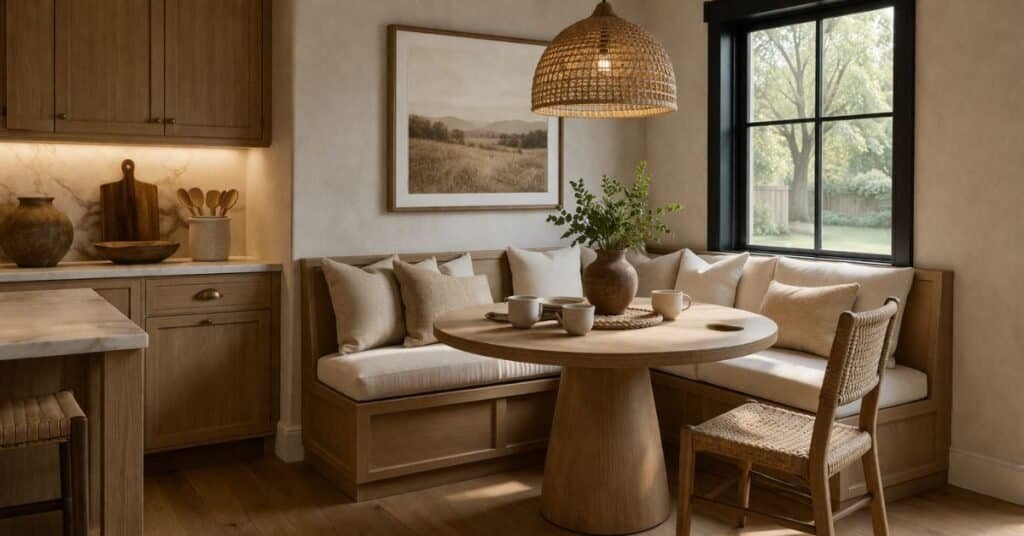
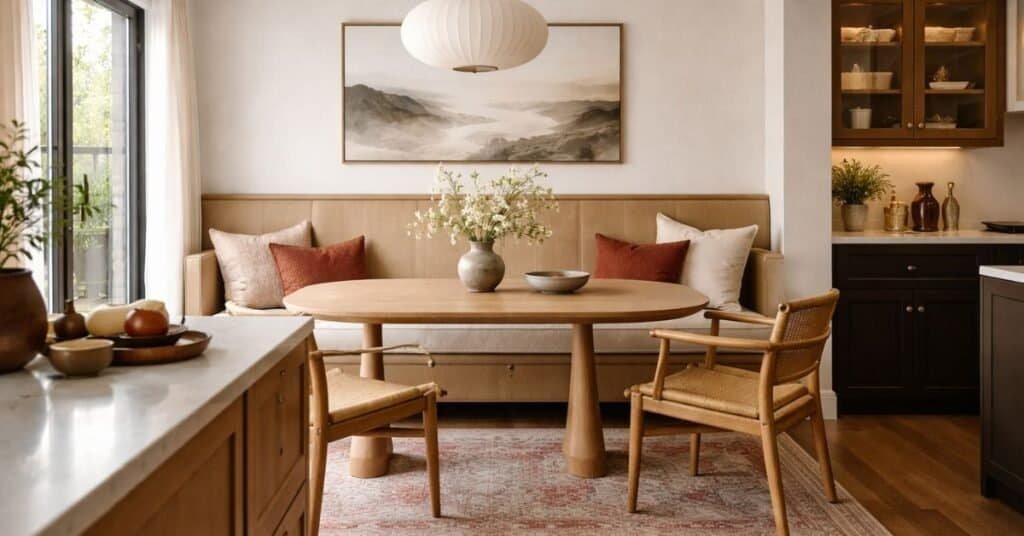
A built in banquette makes a dining nook feel tucked in right away. It softens the corner, uses wall space well, and gives the area that settled look people want from cozy dining nook decor ideas.
Decoholic points out that a built in banquette is one of the most stylish and practical ways to shape a cozy nook, and that is easy to see in small kitchens where every inch matters. A bench along one wall or in an L shape can hold more people than separate chairs without making the area feel crowded.
For a small space, try a seat depth around 16 to 20 inches so the bench feels comfortable but does not eat into the walkway. Lift up seats or drawer bases work well if you need room for placemats, table linens, or holiday pieces.
2. Choose a round pedestal table for easier flow
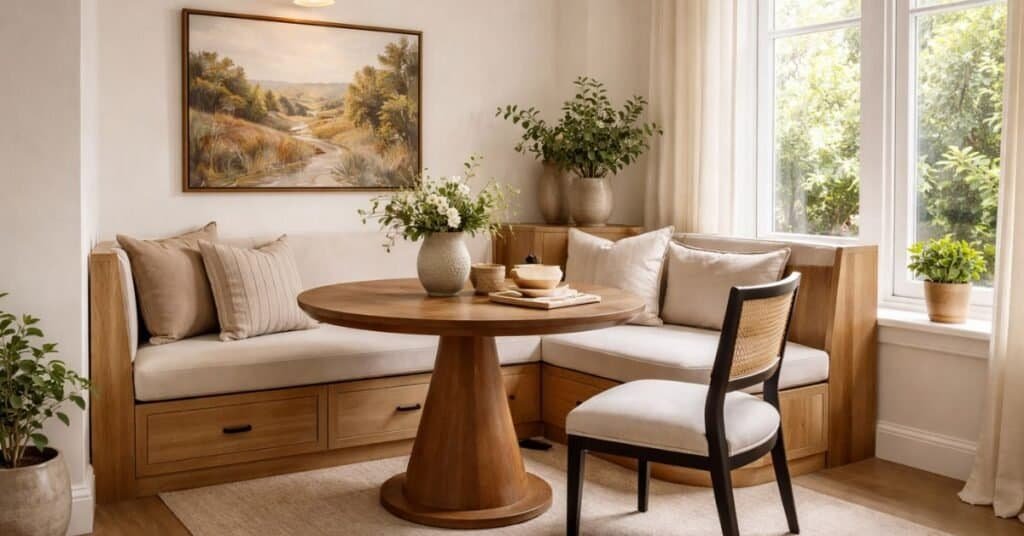
A round pedestal table helps a nook feel softer and easier to move around. Sharp corners can make a tight dining corner feel awkward, while a round shape keeps the layout calm and gives chairs more room to slide in and out.
In several breakfast nook designs from Studio McGee, pedestal tables help smaller seating areas feel balanced instead of crowded. Kind of place like round tables in corner nooks because they improve movement and make the whole setup feel less boxed in.
A table around 36 to 42 inches wide works well for many nooks that seat two to four people. If you want a budget option, paint or stain a secondhand pedestal table in a warm wood tone instead of buying a new one.
3. Layer seat cushions and soft textiles
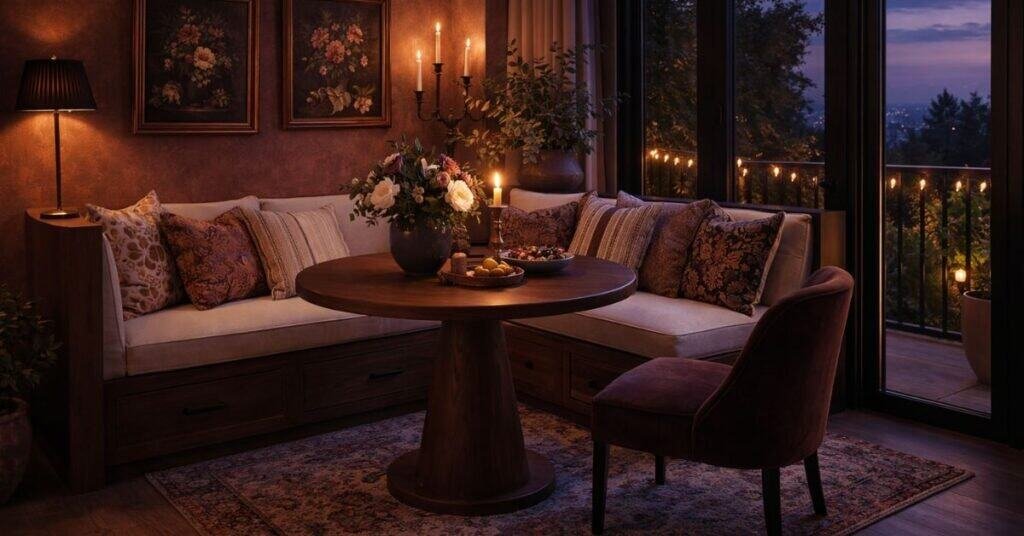
Texture is one of the fastest ways to make a nook feel warm. A hard bench and bare floor can look neat, but they will not give you that collected, comfortable feeling the title promises.
The Coolist highlights soft textures and smart layouts in its dining nook coverage, and that pairing matters. A nook works best when it is both useful and easy to settle into. Seat pads, a washable rug, linen curtains, and one or two soft pillows can change the mood right away.
Try mixing one woven texture with one soft fabric. For example, pair linen bench cushions with a jute style rug, or add a woven shade above a smooth painted bench. Keep the palette warm with cream, sand, muted olive, clay, or faded stripe patterns.
4. Mix wood tones for a more collected feel
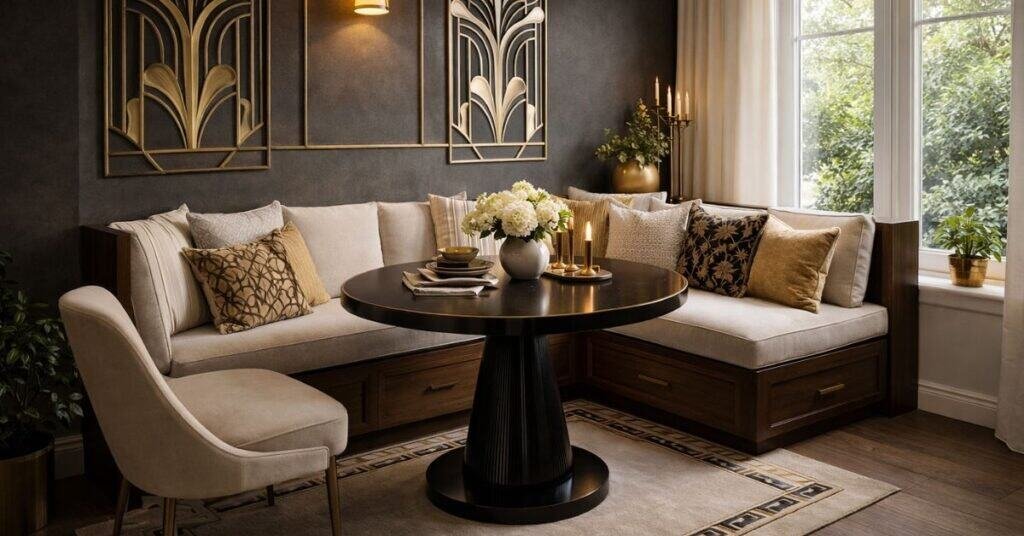
A nook can start to feel flat when every piece matches too closely. Mixing wood tones gives the space more depth and helps it look like it came together over time.
That idea shows up clearly in the cozy breakfast nook examples from Our Farmer House, where built in seating, wicker, and warm wood finishes create a relaxed corner that feels easy to live with. A pale oak bench, medium wood table, and darker chair legs can sit together nicely when the undertones stay warm.
A simple rule helps here: keep the wood family warm or keep it soft, but do not mix orange heavy tones with cool gray brown finishes in a small nook. One painted piece can also break things up in a good way, such as a cream bench with walnut chairs.
5. Add lighting that feels soft, not harsh
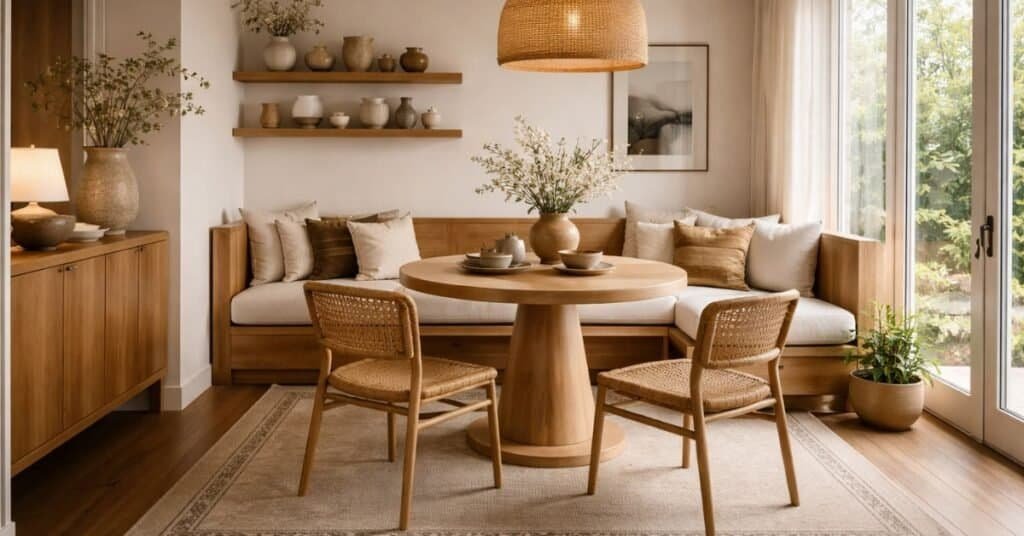
Lighting can make a dining nook feel inviting at night or leave it looking cold. One common mistake is using a bright overhead bulb with no shade, which makes the whole corner feel flat and a little stark.
The budget friendly lighting hack from Storied Design is a helpful reminder that you do not need hardwiring to warm up a nook. Plug in sconces, cordless table lamps, battery picture lights, and shaded pendants can all add softer light without a big project.
Try to place light at eye level or slightly above seated height where possible. A small lamp on a nearby shelf or side surface can make the nook feel far more relaxed than one ceiling bulb alone.
6. Warm up the wall with color, paneling, or art
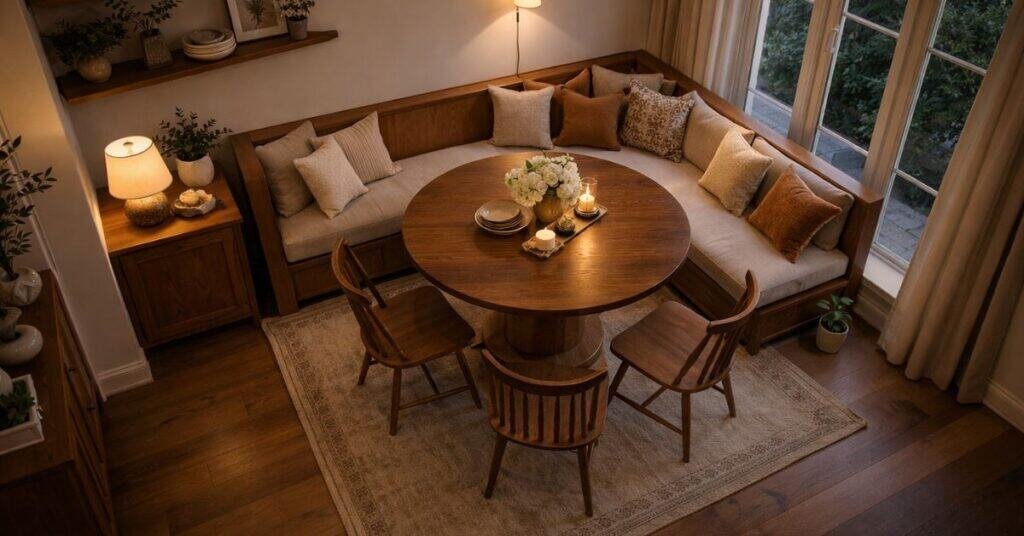
The wall behind a nook does a lot of work. If it is blank and bright white, the seating can feel unfinished. If it is too dark or busy, the corner can feel heavy.
Warm paint colors such as creamy white, soft taupe, muted olive, clay, or greige help the nook feel quieter and more settled. If you want more detail, beadboard, narrow wood trim, or one piece of framed art can give the wall some shape without crowding it.
The wall and seat materials should feel like they belong together. In the Houzz breakfast nook examples, the best spaces pair wall texture and upholstery in ways that feel balanced, with neither one fighting for attention.
7. Bring in greenery and natural texture
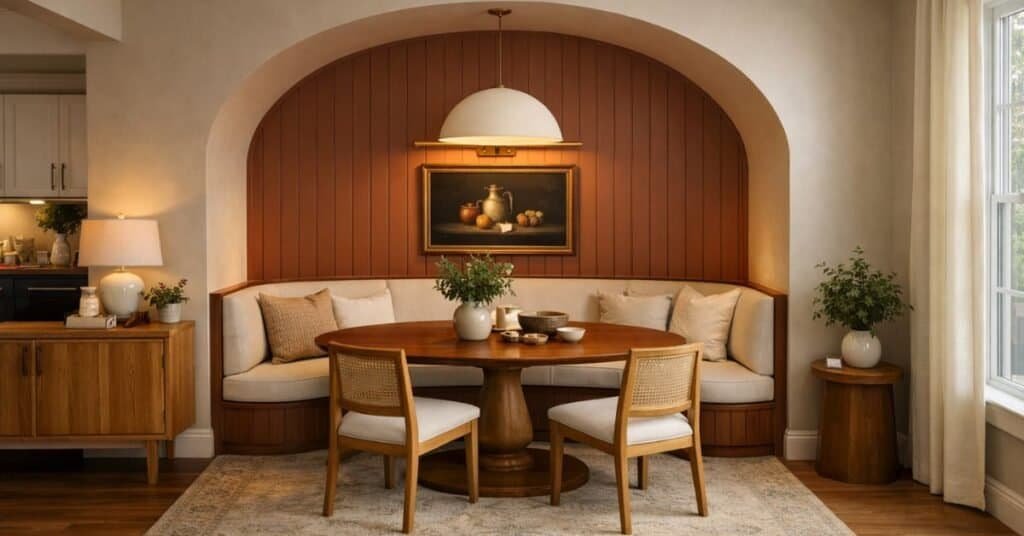
A little greenery can soften a hard kitchen corner in seconds. It does not need to be big. One vase of branches, a small herb pot, or a trailing plant on a nearby shelf can make the nook feel fresher and more lived in.
Natural elements like greenery and woven placemats as a simple way to tie the dining nook into the rest of the room. That works especially well in modern spaces that need a little softness.
For a smaller nook, stop at one or two green touches. Too many plants can eat up table space. If you are styling nearby storage, these kitchen shelf styling ideas for a softer corner can help you keep the area feeling warm without adding clutter.
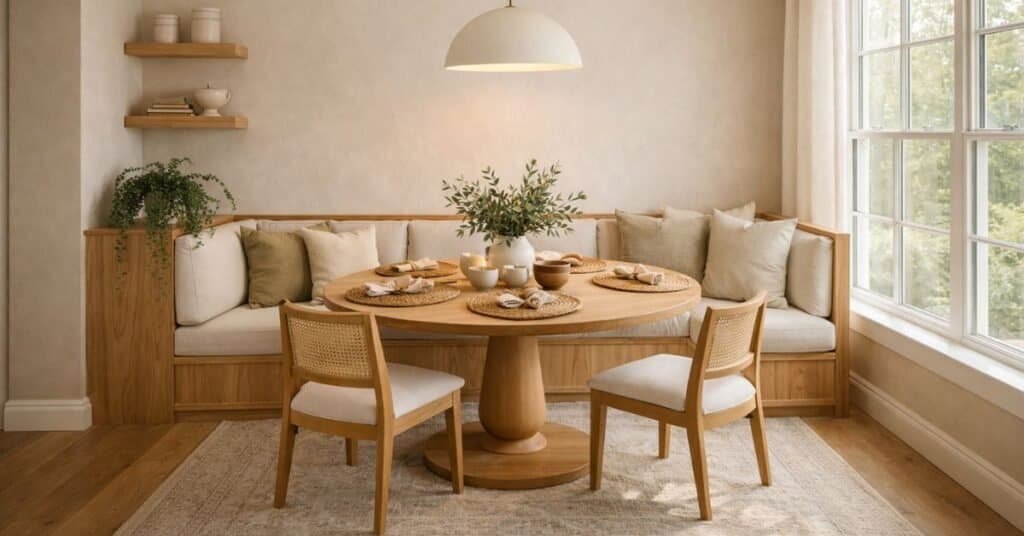
8. Use open shelving or nearby storage with restraint
A nook feels more personal when there are a few useful pieces nearby. A small shelf with bowls, cookbooks, or wood boards can help the corner feel settled. Too many open shelves, though, can make the whole area feel busy.
In the Studio McGee breakfast nook spaces, open shelving often holds a few pieces of serveware or cutting boards without making the wall feel crowded. That balance matters more in a nook than in a large dining room because the whole area is close to the eye.
Try grouping items by material or tone. Two stacks of neutral dishes and one board leaning behind them often look calmer than a mix of many small colors and shapes.
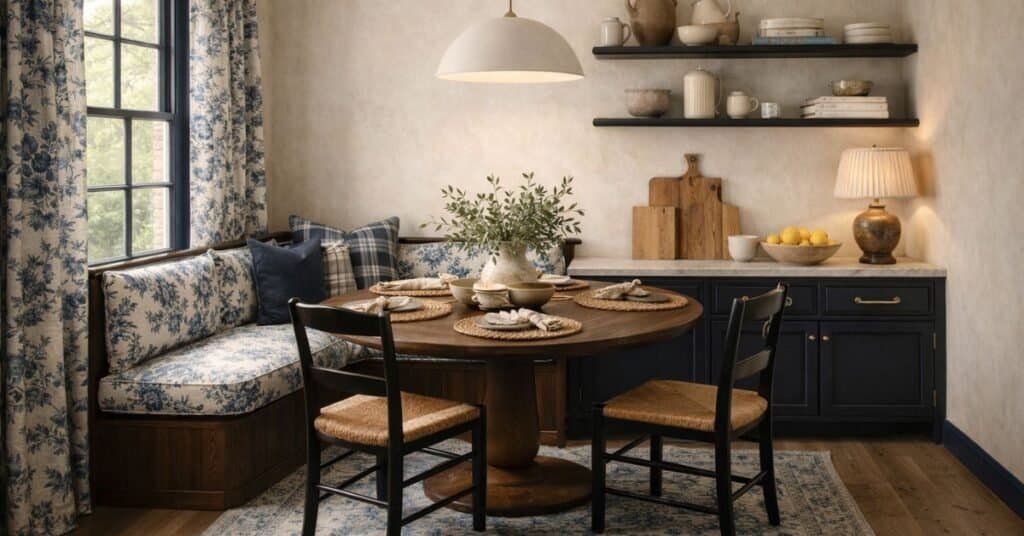
9. Blend farmhouse warmth with cleaner lines
Farmhouse style can still feel current when it is handled with restraint. You do not need signs, heavy distressing, or lots of themed decor to make a nook feel warm.
The Our Farmer House nook examples show how built in seating, wicker, and warm wood create that familiar comfort without making the area look dated. Stick to plain seat cushions, simple spindle or wicker chairs, and wood finishes that feel soft rather than rough.
A good small tweak is pairing one farmhouse leaning piece with cleaner shapes. A bench with shaker lines works nicely with a round pedestal table and plain ceramic pieces.
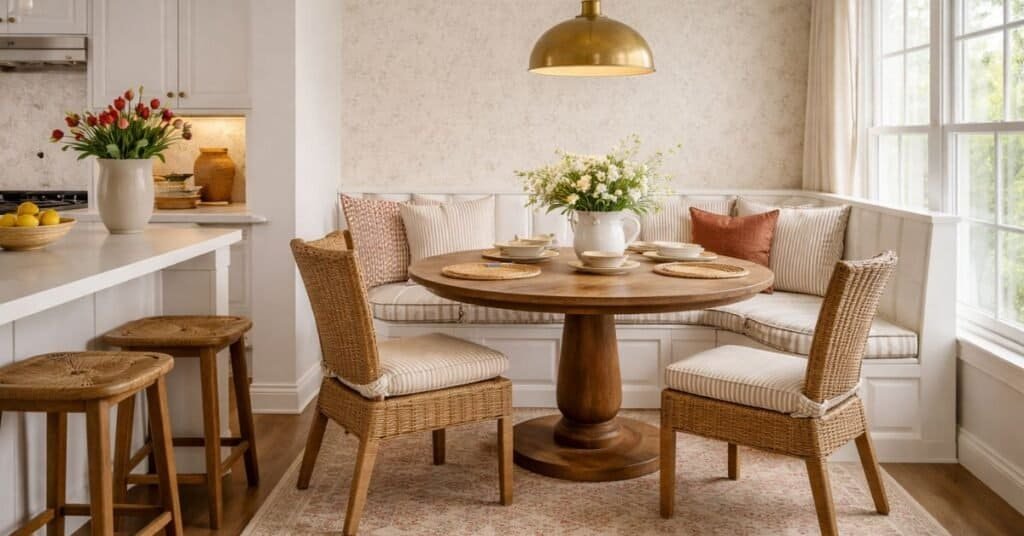
10. Try a simple DIY table or thrifted mix
A cozy nook does not need a custom budget. It needs a few pieces that fit the scale and feel comfortable to use.
The DIY dining nook table project from The Sorry Girls shows how a custom looking table can come together with a practical build and thrifted finds. The breakfast nook makeover from Designed to the Nines also shows how affordable materials like butcher block can make a small eating area feel richer.
A simple version could be a thrifted pedestal base with a stained wood top, or secondhand chairs painted in one calm color. For many small nooks, a table between 36 and 42 inches wide keeps the room easier to move through.
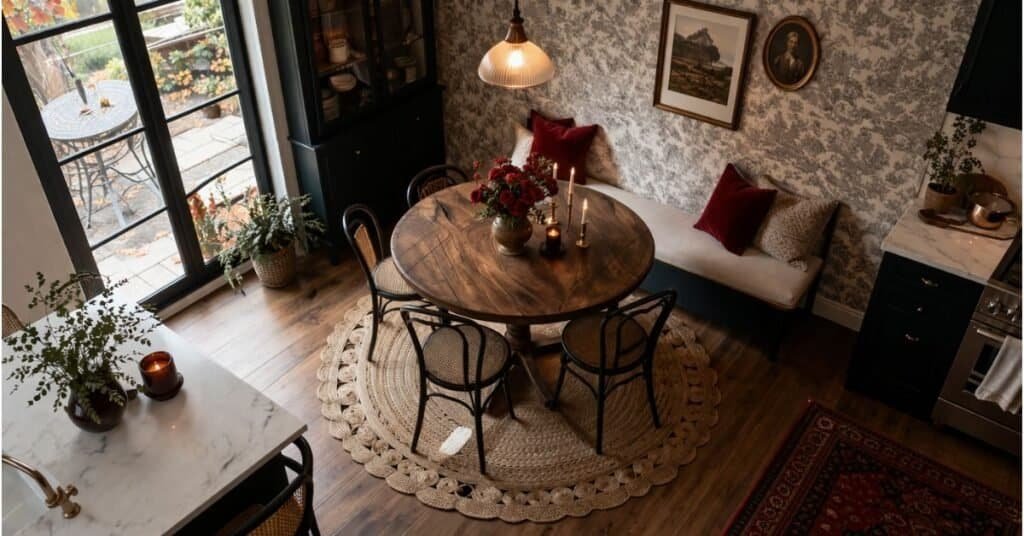
11. Keep the tabletop simple and calm
A nook table needs room to work. If it is always covered in decor, it stops feeling easy to use for breakfast, homework, coffee, or quick meals.
Keep the center simple with one low vase, one bowl, or a folded runner. That is often enough to give the nook a finished look without making it feel cramped. This is a good place to think about proportion. A low bowl works better than a tall branch arrangement if the table sits near a window or under a pendant.
For a calm finishing touch on the table, take a look at these modern dining centerpiece ideas for a calm focal point that suit smaller dining surfaces.
12. Finish with personal pieces that feel collected over time
The warmest nooks usually have one or two details that feel personal. A framed family photo, a vintage mirror, old cutting boards, or a handmade bowl can make the space feel real without making it look busy.
In the dining nook ideas shared by The Coolist, layered details help turn practical corners into places people want to spend time in. That works best when the pieces are edited. Pick a few things with meaning and give them room to breathe.
If the nook sits near the kitchen, keep the nearby layout feeling warm and balanced with these bold ideas for a cozy kitchen design so the whole area feels connected.
Common Decorating Mistakes That Make a Dining Nook Feel Cold
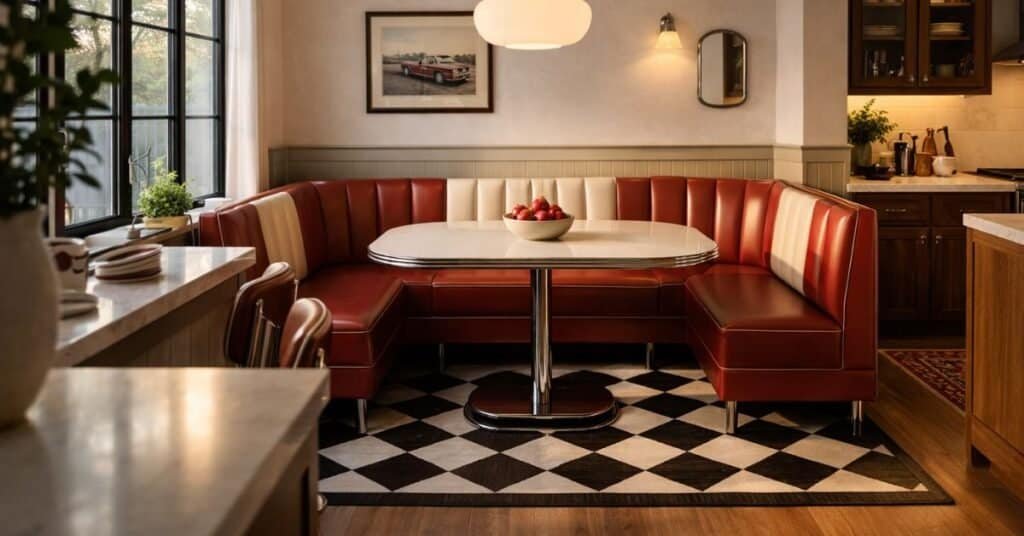
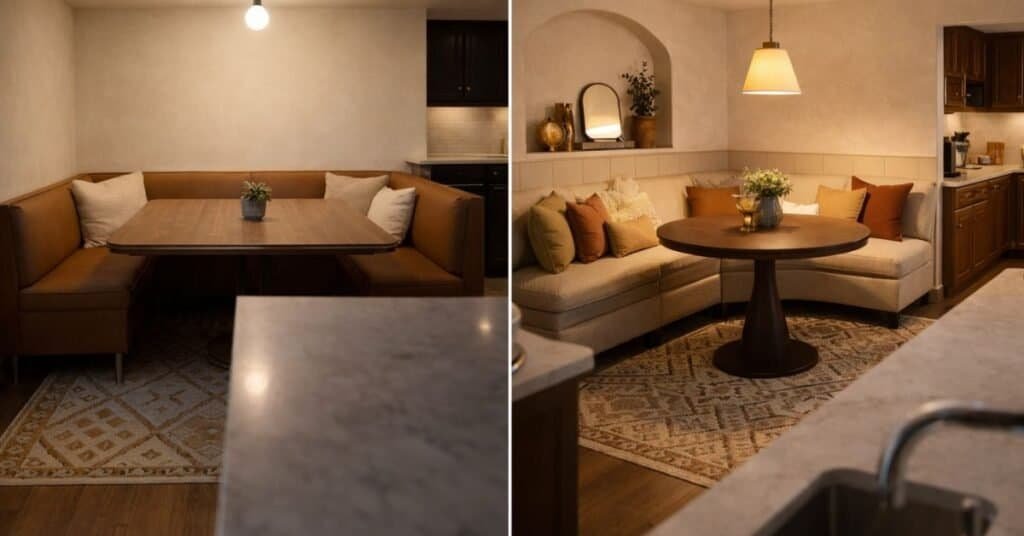
A dining nook can have nice furniture and still feel a little off. Most of the time, the problem is not the size of the space. It is a mix of scale, light, and texture.
One common mistake is using lighting that is too bright and too direct. A single exposed bulb can make a warm nook feel more like a work corner. The softer setups shown in the Storied Design lighting hack video show why layered light feels better in a nook where people sit close to the wall and table.
Another mistake is choosing a table that is too large or too angular for the corner. A heavy rectangular table can block movement and make seating harder to pull out. That is one reason a round and corner friendly layouts in smaller nooks is much favourable.
A third issue is skipping softness. Bare wood benches, hard flooring, and blank walls can make a nook feel stiff even when the layout works. The Coolist leans into layered materials for a reason. Texture helps a compact dining area feel warmer and more settled.
The last big mistake is adding too many small decor pieces. A nook usually looks better with one strong focal point than lots of tiny objects. One framed print, one soft cushion layer, and one simple centerpiece will usually do more than a crowded wall and a busy tabletop.
| Problem | Why it feels off | Simple fix |
|---|---|---|
| Harsh overhead light | The nook feels cold at night | Add a shaded sconce, lamp, or softer bulb |
| Oversized table | Movement gets tight fast | Switch to a round pedestal table |
| Bare bench seating | The corner looks stiff | Add seat pads and one or two pillows |
| Too many small decor items | The nook feels crowded | Keep one clear focal point |
| Stark wall color | The area feels flat | Use a warmer paint tone or art |
Frequently Asked Questions
How can I make a dining nook feel cozy on a budget?
Start with the pieces that change comfort first. Seat cushions, a washable rug, thrifted chairs, and a warm lamp can do a lot without a big spend.
The Bespoke Bride dining nook ideas support this kind of layered update. A small corner feels warmer when it has softness, warm light, and one or two pieces with character.
What is the best seating for a small dining nook?
Built in banquettes, slim benches, and armless chairs usually work best. They keep the footprint tighter and make it easier to fit a table without crowding the walkway.
If you need flexibility, use a bench on one side and chairs on the other. That keeps the nook feeling lighter while still giving you enough seating for daily use.
Can I add dining nook lighting without electrical work?
Yes, you can. Plug in sconces, cordless table lamps, and battery picture lights are all useful in a nook.
The Storied Design lighting idea is a good example of how a simple lighting update can warm up the whole area fast. Try to place the light where it softens the wall and table at the same time.
How do textures create a warm, collected look in a dining nook?
Texture keeps a nook from feeling flat. Wood grain, woven finishes, linen cushions, and a soft rug make the space feel more comfortable and more layered.
A collected look usually comes from mixing a few materials that feel lived in, not from matching every finish. Even a smooth painted bench looks better with a woven placemat or textured cushion nearby.
What furniture shapes work best in a corner dining nook?
Round, oval, and pedestal tables are often the easiest shapes for a corner nook. They leave more room to move and make the layout feel calmer.
Benches that follow the wall line also work well because they use space that chairs sometimes waste. In small corners, softer shapes almost always feel better than sharp ones.
What table styles work best in a small dining nook?
Round pedestal tables are one of the easiest options for small nooks. They let chairs tuck in neatly and keep legs from getting in the way.
A 36 to 42 inch table suits many two to four person nooks. For tabletop styling on a smaller surface, these easy centerpiece ideas for a smaller dining table can help you keep the setup simple.
How should I style greenery in a modern dining nook?
Keep it light. One small herb pot, one vase with branches, or one trailing plant is often enough.
A greenery ties to woven texture and natural materials, which works well in modern nooks that need softness. The goal is to freshen the corner, not fill every surface.
What wall colors make a dining nook feel warmer?
Warm white, soft taupe, muted olive, greige, and clay are all good choices. These colors feel gentler than stark white and usually sit well with wood and woven finishes.
If the nook gets little daylight, stay a shade lighter than you think you need. That keeps the space warm without making it feel heavy.
How much storage can fit under a dining nook banquette?
Quite a bit, especially if the seat base is built with lift tops or drawers. You can store placemats, table linens, candle holders, serving trays, or seasonal pieces.
This is one reason banquettes work so well in smaller homes. They make the nook feel cozy while giving the corner another job.
Can farmhouse dining nook decor still feel modern?
Yes, it can. Keep the lines simple, skip themed signs, and use farmhouse touches in smaller amounts.
A shaker style bench, wicker chair, warm wood table, and plain striped cushion can still feel current. These examples can still show that warmth comes from texture and shape more than from adding lots of rustic decor.
Conclusion
The best dining nook decor ideas are usually the simple ones. A softer table shape, warmer light, better seat cushions, and a few personal details can make a forgotten corner feel like one of the nicest spots in the house.
You do not need a full remodel to get there. Start with the part that feels most off right now, whether that is the lighting, the wall, the seating, or the tabletop, and build from there. A nook feels warm and collected when it is comfortable to use every day and calm to look at from across the room.
For more small updates that can warm up the whole space, visit Kitchen and Dining Decor: The Small Styling Tweaks That Made My Space Feel Brand New.