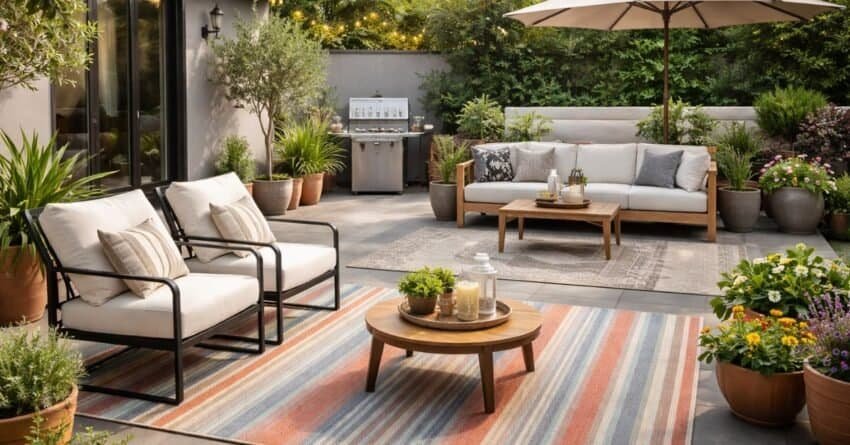
A patio can have all the basics and still feel like it is missing something. The chairs are there. The plants are there. The table looks fine. Yet the whole setup can still feel flat, scattered, or a little unfinished.
That is often the moment when an outdoor rug starts to make sense. The right one can warm up the floor, pull nearby colors together, and give the seating area a clearer shape without changing the patio itself.
That is also why so many people get stuck on the same question. Should the rug stay neutral and soft, or should it bring in more color and pattern?
This post walks through outdoor rug patio ideas that help you make that call with more confidence. You will see when a calm rug works better, when a colorful one can wake up the space, and how size, placement, and material can change the final look.
A soft beige rug under black metal chairs can make a small patio feel lighter and calmer. A striped blue or terracotta rug under simple seating can add life fast, especially when the rest of the space feels plain. The best pick depends on what your patio already has and what it still needs.
You do not need a full patio makeover to make the space feel more finished. In many cases, one rug in the right size and color can do more than a pile of extra decor.
Table of Contents
Why Outdoor Rug Patio Ideas Matter More Than Most People Think
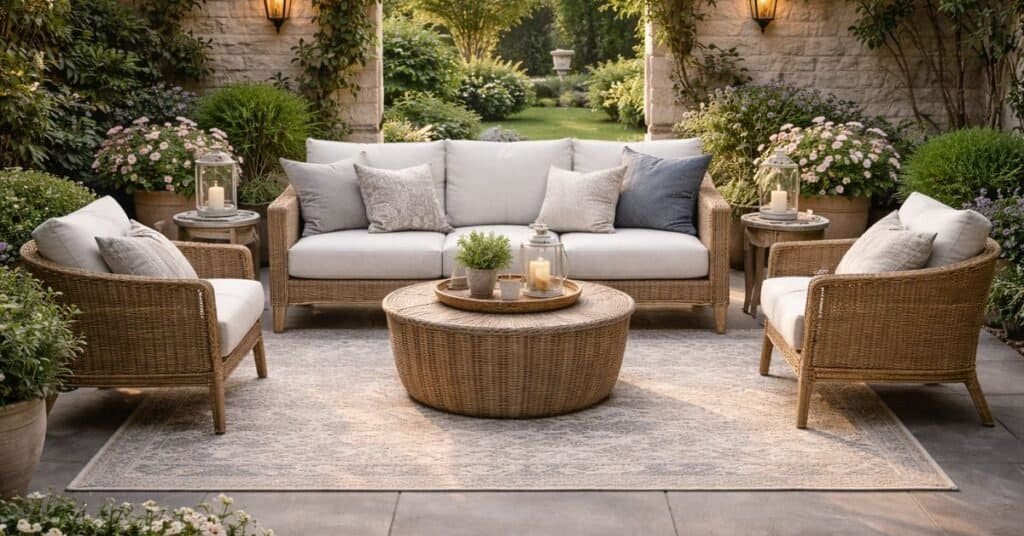
A patio rug does more than fill an empty patch of floor. It gives the seating area a clearer shape, makes the furniture look more settled, and helps the space feel like a real outdoor room instead of a few pieces set on a hard surface.
That shift can happen faster than most people expect. Ideal Home points out that a rug can help pull different patio colors together, which is often what a space needs when the chairs, planters, and cushions feel a little disconnected.
A rug can pull the whole patio together
If your patio feels scattered, the problem is often not the furniture itself. It is the lack of something underneath that ties it all into one zone.
A rug can do that job quietly. A black metal bistro set, two cream cushions, and a few terracotta pots can look much more finished once they sit on one shared base. Even a simple striped rug can help connect the tones already in the space, especially if it picks up a color from nearby planters, pillows, or greenery. Ideal Home also notes that rugs can echo colors from planting, which makes the whole patio feel more joined up.
Rugs can change the mood without changing the patio itself
This is one reason outdoor rugs work so well for renters, small patios, and budget updates. You are not repainting concrete. You are not replacing deck boards. You are changing the feel of the space with one layer.
That can be a smart move when the patio itself is plain or a little cold. Well Woven describes the effect as “just unroll, and voila! Instant makeover,” while talking about a patterned outdoor rug that adds color without making permanent changes to the patio surface. The big takeaway is simple: a rug can bring in pattern and warmth fast, even if the rest of the patio stays exactly as it is.
A budget-friendly version of this works well too. If you already have plain outdoor chairs and neutral cushions, a rug can do most of the visual work for less money than buying new furniture. For a small balcony or compact seating area, that single change can have more impact than adding extra decor that only makes the area feel crowded.
Neutral or Colorful? How to Pick the Right Direction for Your Patio
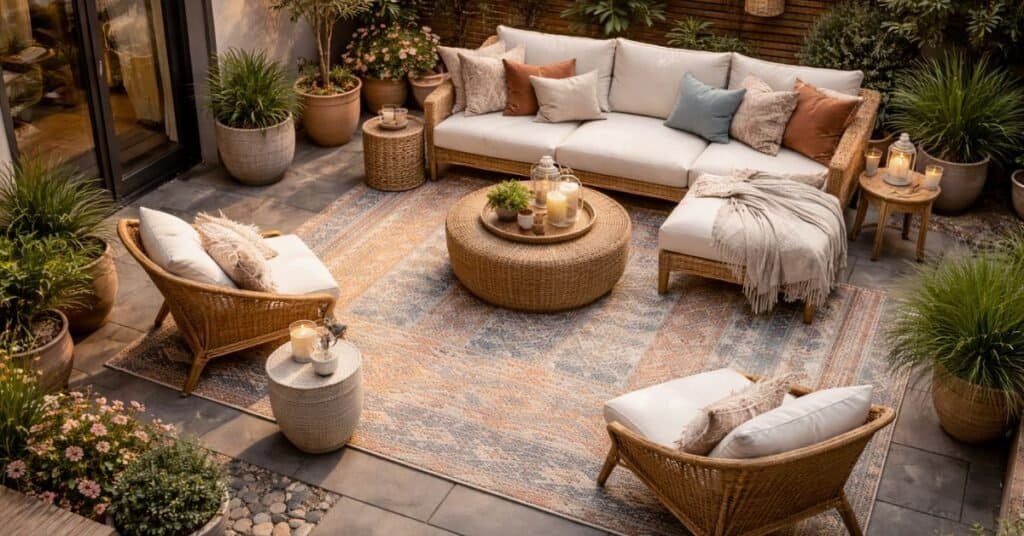
This is the part that changes the whole feel of the space. A neutral rug can make a patio feel calm and open. A colorful rug can wake it up and give it more personality. Neither one is always better. The better choice depends on what is already happening around it.
Wayfair leans toward neutral outdoor rugs for a calm base in modern patios, while brighter options work well when the space needs more energy. That lines up with what usually works in real patios too. If the furniture already has texture, wood tone, or patterned cushions, a quieter rug often balances the look. If the patio feels plain, a rug with more color can do a lot of the heavy lifting.
When neutral outdoor rug patio ideas make more sense
Neutral rugs work well when the patio already has enough going on. That could mean warm wood furniture, woven lanterns, striped cushions, leafy planters, or a textured privacy screen. In that setup, a beige, soft gray, muted stripe, or black and white rug helps settle the space instead of adding more noise.
They also work especially well on small patios. A softer rug usually keeps the floor feeling more open, which can help a narrow balcony or tight seating area feel less crowded. If you want more small layout ideas for compact patios, see 21 genius small outdoor space ideas.
A good example is a balcony with two black chairs, a slim side table, and a few olive green plants. A soft sand colored rug underneath can make the whole setup feel lighter without asking for more decor.
When colorful outdoor rug patio ideas work better
A colorful rug makes more sense when the patio looks flat or unfinished. This often happens with simple furniture in black, white, or gray, especially when the cushions are plain and the floor surface feels cold.
In that case, color helps the patio feel more alive. Wayfair shows how bold rugs can lift a simple setup, and that is often the easiest fix when a patio needs more warmth. Blue, terracotta, coral, soft green, and rust can all work well outdoors because they sit nicely with greenery, wood, and stone.
This does not mean the rug has to be loud. Even a faded stripe or low contrast geometric pattern can add enough movement to make plain seating feel less stiff.
A simple way to decide if your patio needs calm or contrast
Look at the three biggest things in the space first. Usually that means the furniture, the floor, and the soft pieces like cushions or umbrellas.
If two of those already have texture, pattern, or strong color, the rug should usually calm things down. If most of the space is simple and flat, the rug can bring in more contrast.
Here is a quick way to think about it:
| Patio setup | Better rug direction | Why |
|---|---|---|
| Black metal furniture and white cushions | Colorful | Adds warmth and breaks up the hard lines |
| Wood seating and patterned pillows | Neutral | Keeps the patio from feeling too busy |
| Small balcony with limited decor | Neutral or soft stripe | Helps the space stay open |
| Plain rental patio with basic furniture | Colorful | Adds personality without changing the patio itself |
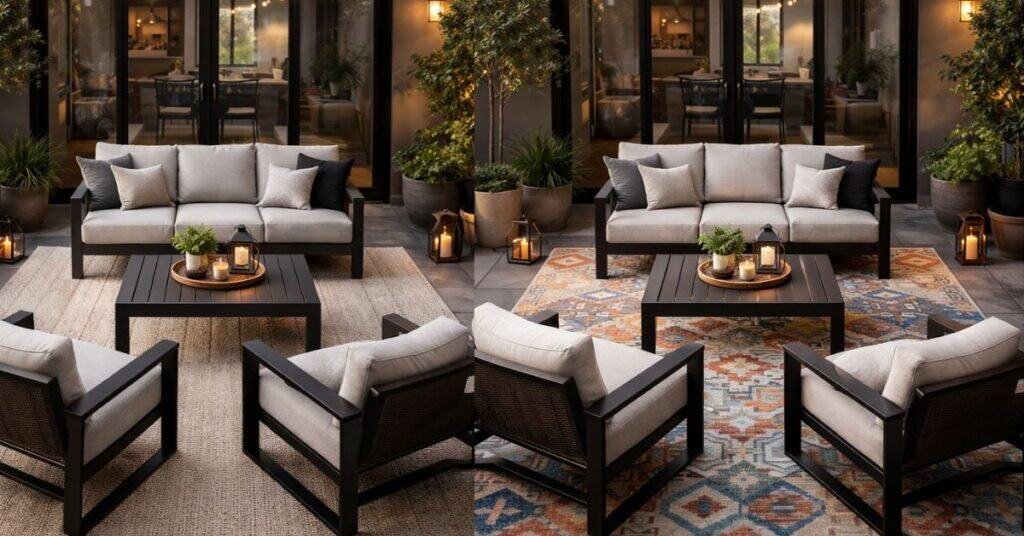
One common mistake is trying to fix a busy patio with an even busier rug. If you already have patterned cushions, bright flowers, and strong furniture lines, a loud rug can make the whole space feel crowded fast.
Outdoor Rug Patio Ideas by Patio Style
The same rug can look very different depending on the patio around it. A striped rug that feels calm in one space can look too busy in another. That is why it helps to match the rug to the style of the patio first, then think about color.
Modern patio rug ideas that feel clean and relaxed
Modern patios usually look best with rugs that feel simple and grounded. That can mean a soft beige rug, a black and white pattern with plenty of open space, or a low contrast geometric design that adds interest without taking over.
This works well when the patio already has clean furniture lines, matte black frames, pale cushions, or warm wood. A neutral rug gives all of that a softer base. It also helps the patio feel less broken up, which matters a lot in compact outdoor areas.
A good small space version of this is a slim balcony with two chairs and a round table. A light woven look rug or soft stripe can make the setup feel calmer without making the floor feel crowded.
Colorful patio rug ideas for layered outdoor spaces
Color works best when it has something to connect to. That could be cushions, planters, flowers, or painted furniture. Once a rug repeats one or two of those tones, the whole patio starts to feel more pulled together.
Rugs Direct shows this well with patios where matching rug colors with seating and greenery makes the setup feel more joined up. A rug with ivory and coral can work beautifully if those same warm tones show up in cushions or pots. A blue rug can also sit nicely with green plants and weathered wood.
This is a good place to use color with a little control. You do not need five bright tones. Two or three colors repeated across the patio usually feels much better than a rug that introduces a whole new palette on its own.
Small patio rug ideas that do not make the space feel crowded
Small patios need a bit more care because the wrong rug can make the floor feel chopped up. That often happens when the rug is too small, too dark, or packed with tight busy pattern.
A better move is to keep the pattern more open and the contrast a little softer. A faded stripe, wide border, or simple geometric print usually gives enough detail without making the eye stop in too many places.
Shape matters too. A narrow balcony can look better with a runner than a standard rectangle. A tiny seating nook can look more settled with a rug large enough to touch the front legs of both chairs instead of floating alone under the table.
You can also borrow a few layout ideas from 21 genius small outdoor space ideas if your patio feels awkward or narrow.
How to Choose the Right Rug Size and Placement
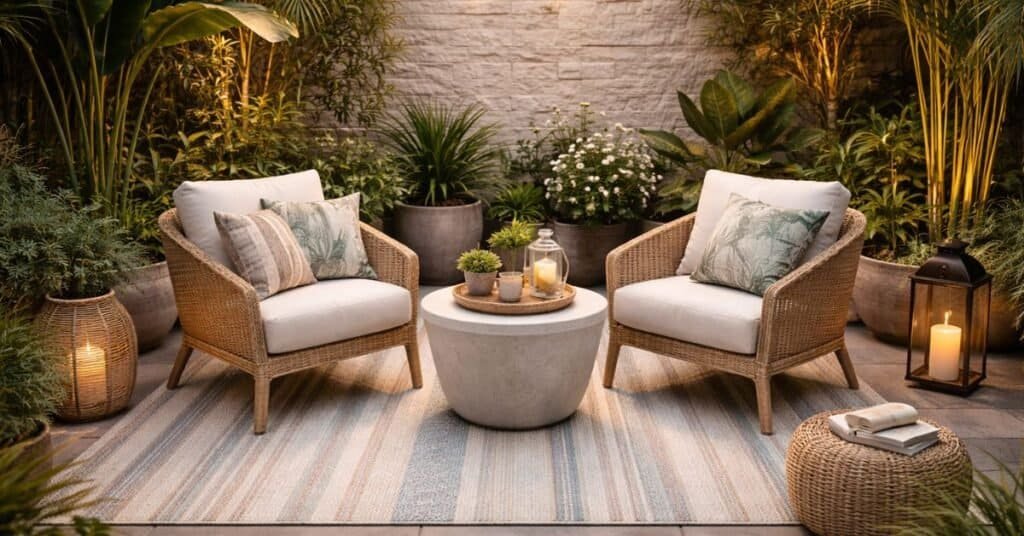
A nice rug can still look off if the size is wrong. This is where many patios start to feel awkward. The rug may be pretty, but if it is too small, pushed too close to the edge, or sitting nowhere near the furniture, the whole setup can feel disconnected.
Measure first before choosing a rug
Before picking color or pattern, measure the space and the furniture layout. Wayfair Canada notes that measuring your patio before choosing a rug size is the first step, and that simple habit can save a lot of guesswork.
Start with the seating zone, not the full patio. Measure the area where the chairs and table actually sit. That usually gives a better rug size than measuring the whole deck or slab, especially if part of the patio is just open walkway.
For a small seating area, a rug that sits under the front legs of the chairs often looks much better than one that floats in the middle like an afterthought.
Should all furniture legs sit on the rug?
The best look is when the rug feels connected to the furniture. Erin Zubot Design recommends that front legs should at least touch the rug, and that is a helpful rule for most patios.
If you have room, placing all chair and sofa legs on the rug can make the setup feel more settled. That works especially well in larger seating areas. On a smaller patio, getting at least the front legs on the rug is usually enough to make the layout feel planned.
A common mistake is using a rug that only fits under the coffee table. That can make the furniture feel like it is drifting around the rug instead of sitting on it.
How much space should you leave around the edge?
A rug needs a little breathing room around it. BBQGuys suggests you leave space between the rug and patio edge, usually around 1 to 2 feet when the patio is large enough.
That border helps the patio look balanced. It also keeps the rug from feeling wall to wall outdoors, which can look heavy in an open space.
On a very small balcony, you may not have that much room. In that case, aim for a visible edge around the rug, even if it is closer to 6 to 10 inches. The goal is to make it look placed, not squeezed in.
| Patio area | Rug placement tip | Common mistake |
|---|---|---|
| Small seating area | Let the front legs sit on the rug | Rug too small and floating under the table |
| Dining zone | Use a rug large enough for chairs to stay on it when pulled out | Rug only fits the table |
| Long narrow balcony | Try a runner or slim rectangle | Rug blocks the walking path |
| Open patio corner | Keep a clear border around the rug | Rug pushed too close to the patio edge |
What Material Works Best and What Mistakes to Avoid
Color matters, but the material still does a lot of the practical work. A rug may look great on day one, then start holding moisture, fading fast, or feeling rough after a short stretch outside if the material is not a good match for the patio.
The best material for a patio rug that needs to last
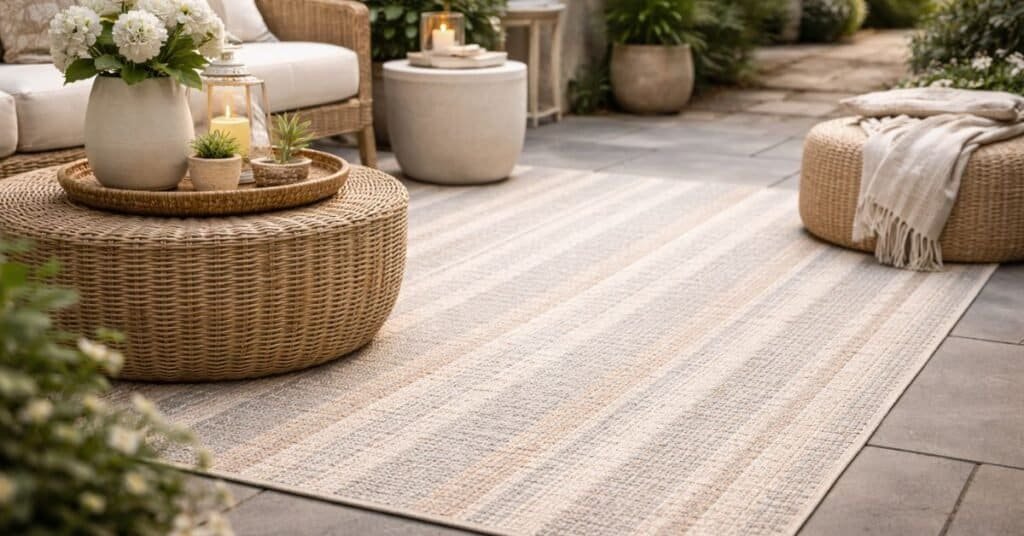
For most patios, polypropylene is one of the safest choices. Consumer Reports recommends it for outdoor use because it handles weather well and dries more easily than many other options.
That makes it a strong pick for busy patios, open decks, and spots that get regular sun or a bit of rain. It is also a good budget option if you want something practical without spending too much. A flat woven polypropylene rug in a stripe or simple pattern can still look good while being easier to live with.
Natural fiber looks can be nice, but they are often harder to keep in good shape outside for long stretches. If your patio gets damp in the morning or sits under trees, a more weather-friendly material is usually the easier choice.
One mistake that can make even a nice patio rug fail
One of the biggest mistakes is choosing a rug that traps moisture underneath. That can become a real problem on damp concrete, shaded patios, or wood surfaces that do not dry quickly.
Consumer Reports warns that rugs that hold moisture can lead to mildew. In real life, that means even a pretty rug can start causing trouble if the patio surface stays wet and the material does not let air move through.
A simple fix is to use a breathable outdoor rug and lift or move it once in a while if your patio tends to stay damp. That matters even more after heavy rain.
A simple care habit that helps rugs last longer
A little seasonal care goes a long way. Outdoor rugs can work well if you choose them wisely, and part of that comes down to how you care for them through the year.
If you live somewhere with a long wet season or a snowy winter, it helps to shake out the rug, let it dry fully, and roll it up when the season ends. That can help slow fading and wear, especially on lower priced rugs.
For day to day care, even simple habits help. Sweep off leaves, hose the rug down when it gets dusty, and avoid letting puddles sit under it for too long.
Frequently Asked Questions
Should you choose a neutral or colorful outdoor rug for a patio?
A neutral rug works well when the patio already has texture, pattern, or strong furniture lines. A colorful rug makes more sense when the space feels plain and needs more life. The better choice usually depends on what the patio already has, not just what looks nice on its own.
What outdoor rug colors work best for modern patios?
Soft beige, warm gray, muted stripe, black and white, and low contrast geometric styles usually work well in modern patios. These colors help the space feel clean and calm while still giving the furniture a stronger base.
Do colorful outdoor rugs make a small patio look busier?
They can, but it depends on the pattern and contrast. A rug with too many tight shapes or very sharp color contrast can make a small patio feel crowded. A softer pattern with one or two clear colors usually feels easier on the eye.
Can a neutral outdoor rug make a patio feel bigger?
Yes, it often can. A rug in a light or soft tone can make the floor feel more open, especially on a small balcony or narrow patio. Open patterns and lower contrast also help the space feel less chopped up.
How do you match an outdoor rug to patio furniture colors?
Start by picking up one or two colors that already show up in the furniture, cushions, planters, or nearby greenery. That keeps the rug connected to the rest of the patio. If the furniture is plain, the rug can carry a bit more color without feeling out of place.
What size outdoor rug works best for patio seating areas?
The rug should usually sit under at least the front legs of the seating. That helps the layout feel more grounded. A rug that only fits under the table often looks too small for the furniture around it.
Should all patio furniture legs sit on the outdoor rug?
That is a nice look when the patio has enough room. On smaller patios, getting the front legs on the rug is often enough to make the setup feel settled. The main goal is to keep the furniture connected to the rug instead of floating around it.
How far should an outdoor rug sit from the patio edge?
A visible border around the rug usually looks best. On a larger patio, around 1 to 2 feet of open space can help the layout feel balanced. On a smaller patio, even a smaller border can still make the rug look placed instead of squeezed in.
Do outdoor rugs help define small patio zones?
Yes, very well. A rug can turn a group of chairs and a side table into a clear seating area, even on a small patio. That is one reason rugs work so well in compact layouts and narrow balconies.
What material is best for an outdoor rug that looks good and lasts?
Polypropylene is one of the best all around options for outdoor use. It handles weather well, dries faster than heavier materials, and is usually easier to clean. That makes it a smart pick for patios that see regular sun, dust, or damp conditions.
Conclusion
The best outdoor rug is not always the boldest one or the quietest one. It is the one that helps your patio feel more settled, more comfortable, and easier to enjoy.
If your space already has a lot of texture, plants, or pattern, a neutral rug can calm it down. If the patio feels plain or a little cold, a colorful rug can add warmth fast. Once the size, placement, and material are right, the whole patio usually starts to feel more finished.
If you want more ideas for pulling your outdoor space together, explore Outdoor Decor Ideas: Smart Tricks to Transform Your Space.