
A front yard can look lovely for a few weeks, then start to feel plain, patchy, or a little forgotten once the season shifts. That is usually the hard part. It is not getting the yard to look nice once. It is making it feel pulled together in spring, summer, fall, and winter without starting over every few months.
That is where a simple front yard garden design can help. When the base is strong, the seasonal changes get much easier. A few evergreen shapes, a clear layout near the walkway, and one or two spots for planters can carry the whole space through the year.
This post shares how to style a front yard garden for every season with easy DIY ideas that feel doable, even if the space is small or the budget feels tight. The goal is to make the front of your home feel fresh and welcoming with changes that are simple to keep up.
A good front yard usually starts with the areas people notice first. That might be the path to the door, the edge of the porch, or the planting bed under the front window. Even a 3 to 4 foot bed with layered greenery and one container near the entry can make the whole yard feel more settled.
The nice part is that you do not need a full makeover for this to work. A clean bed line, a repeated plant shape, and seasonal planters near the door can do a lot of the visual work. Once those pieces are in place, the yard starts to feel easier to refresh instead of harder to manage.
Table of Contents
Front Yard Garden Design Starts With a Simple Base
A front yard is easier to style through the year when the base already looks steady. That usually means the layout feels clear before the seasonal extras go in. Flowers can change. Pots can move. The structure underneath should still make the space feel settled.
One simple way to think about it is to style the yard around the places people see first. The path, the front steps, and the area around the door do most of the work. As Gardener Hampstead notes, the front garden is your home’s “outdoor handshake”. That is a good reminder to keep the strongest styling close to the entry instead of spreading it too thin across the whole yard.
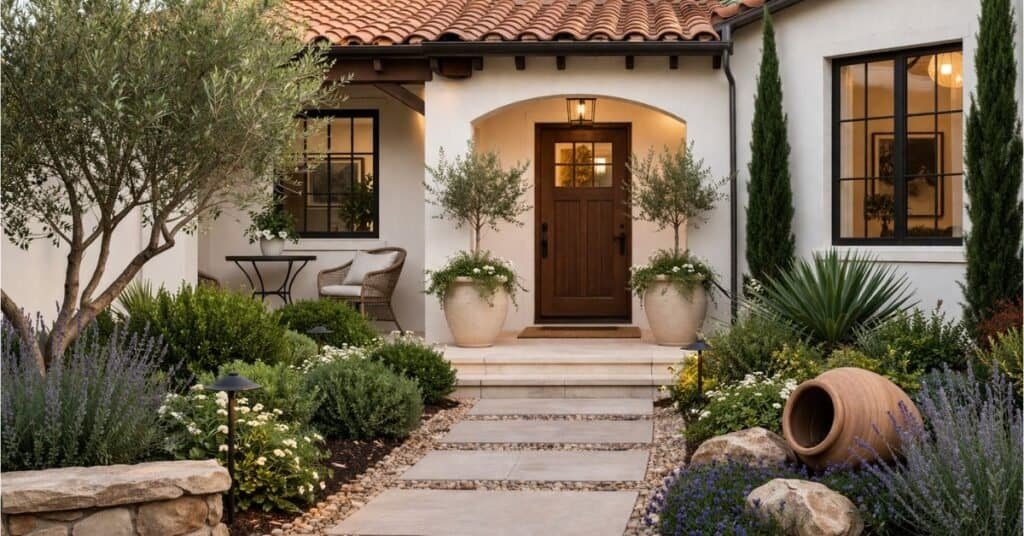
Build around the walkway, porch, and front door
Start with the front path and entry. If the walkway is straight, soften it with planting on one or both sides. If the path is short, place more attention near the porch so the eye still has a clear focal point.
Try keeping the main planting beds within about 2 to 5 feet of the path or front steps. That makes the yard feel connected to the house. A pair of planters near the door, a low border near the walkway, and one fuller bed under a window is often enough for a tidy front yard.
A useful tip here is to let the house shape guide the planting. Apartment Therapy points out that landscaping tends to look better when it matches the home’s architectural style. A simple house front usually looks better with cleaner bed lines and repeated plant forms. A softer cottage style home can handle a looser mix.
Use three layers for a front yard that feels finished
A lot of front yards look unfinished because everything sits at one height. The fix is often simple. Use three layers.
- Low plants near the edge of the bed
- Mid height plants in the center
- Taller shrubs, grasses, or anchors near the house
This layering helps the yard look fuller without feeling messy. For a bed that is about 4 feet deep, you might use a low edging plant in the first 8 to 12 inches, a fuller mound in the middle, and one taller shape near the wall or window.
Layering also helps in winter. Even when flowers fade, the bed still holds its shape. That is part of what makes seasonal styling easier later.
Pick one style before buying anything
It is much easier to style a front yard when you choose a direction first. Clean modern, relaxed cottage, natural and soft, or classic and balanced can all work. Problems usually start when the yard mixes too many looks at once.
A black planter, curved cottage edging, bright tropical flowers, and rustic wood accents may each look nice on their own. Together, they can feel scattered. Pick one look, then repeat it through plant shape, pot style, and bed lines.
This also saves money. When the style is clear, it becomes easier to say no to random extras that do not help the yard feel finished.
| Area | What to focus on | Easy styling move |
|---|---|---|
| Walkway | Clear entry line | Add low repeated planting along the edge |
| Front door | Strong focal point | Place two matching planters or one larger grouped set |
| Window bed | Balance against the house | Use layered plants with one taller anchor |
| Porch edge | Softness near hard surfaces | Add one pot and a small planting bed |
A good base does not need to be complicated. It just needs to feel steady enough that each season has something to build on.
How to Style a Front Yard Garden for Every Season
Once the base is in place, the seasonal changes get much easier. You are not rebuilding the yard each time. You are keeping the structure steady, then swapping a few details so the space still feels alive in a new season.
This is where a lot of front yards start to feel easier to manage. You keep the same path, the same anchor shrubs, and the same main layout. Then you change color, texture, and containers around that foundation.
Spring front yard garden design ideas
Spring is a good time to wake the yard up again after winter. Start with the simple cleanup first. Trim anything broken, clear out old leaves, and freshen the mulch if the beds look thin or faded.
After that, bring in lighter color near the entry. Soft whites, pale pinks, fresh greens, or gentle purple tones can make the whole front yard feel brighter. Better Homes and Gardens shares front porch planter ideas that mix annuals, perennials, grasses, and small shrubs, which works well for spring because it gives the containers shape, color, and some staying power.
A simple spring setup might look like this:
- one taller grass or shrub in the back of the planter
- one fuller flowering plant in the middle
- one trailing plant at the edge
- one small pot on the opposite side of the door to balance the look
Spring is also a nice season to fill bare spots. If a bed looked flat in winter, this is a good time to add one or two repeating plants instead of many different ones.

Summer front yard garden design ideas
Summer usually needs less styling and more editing. By then, the yard already has growth. The main job is keeping it from looking overgrown or uneven.
This is a good season to let foliage do more of the work. Healthy green leaves, fuller containers, and one strong focal planter near the door can carry the whole front yard. Try not to add too many extra colors at once. Two or three tones usually feel calmer than five or six.
A small tip that helps in summer is to check plant size against the path. If plants are spilling more than 6 to 10 inches into the walkway, the yard can start to feel crowded. Trimming edges keeps the entry looking clean without changing the design.
Summer is also the season where repetition helps. Repeating the same planter style, the same flower color, or the same rounded shrub shape can make the space feel more settled.
Fall front yard garden design ideas
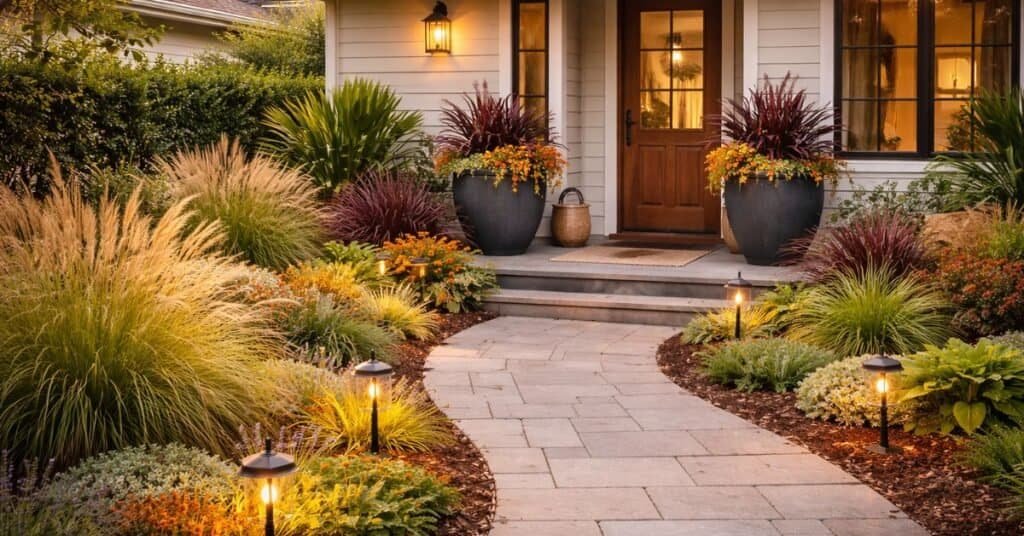
Fall styling works best when it leans into richer texture. This is a good time to swap brighter summer flowers for deeper tones, seed heads, grasses, and fuller containers with a little more weight to them.
Better Homes and Gardens shows how fall planters can mix annuals, perennials, and grasses for seasonal color. That kind of mix works well at the front door because it still feels full even when the weather starts to cool.
A simple fall front yard might include:
- ornamental grass for height
- one or two plants in deeper tones
- a sturdy planter that still looks good once blooms fade
- cleaned up beds with less spent growth showing
This is also a good season to cut back what looks tired. Faded flowers and messy stems can make the whole yard feel neglected even if the layout is good. A cleaner bed with fewer plants often looks better than a busy bed full of end of season growth.
Winter front yard garden design ideas
Winter styling depends more on shape than color. Flowers may be gone, but the yard can still look good when it has strong structure. That is why evergreen form matters so much.
The Canadian four season landscaping ideas from Avanti Landscaping are useful here because they focus on evergreen shrubs for year round structure, flowering shrubs for warmer months, and hardy perennials for texture through the seasons. That mix helps a front yard hold its shape even in colder months.
In winter, it helps to look for:
- evergreen shrubs with clean form
- sturdy grasses or stems that still look neat
- containers that do not collapse visually when flowers are gone
- balanced placement near the front door
Symmetry can work especially well in winter. Two matching planters on either side of the door or one centered planter near the steps can make the yard feel calm even when there is less color around.
This is also where the three layer idea keeps helping. Even without blooms, a bed with low edging, mid height mounds, and taller anchors still looks planned.
A front yard does not need dramatic changes every season. It just needs a stable base and a few steady updates that match the time of year. That is what makes the whole design feel easier to live with.
Easy DIY Front Yard Garden Ideas That Do Not Cost Much
A front yard can look better without a big project or a long shopping list. In many cases, the fastest change comes from cleaning up what is already there and making a few small updates in the places people notice first.
That is part of why budget friendly yard styling works so well. Martha Stewart shares simple front yard landscaping ideas that keep cost in mind, and that same idea works here too. Start with the pieces that make the biggest visual difference, then build from there.
Start with planters instead of redoing the whole yard
If the yard feels flat, planters are often the easiest fix. They bring color, height, and shape close to the entry without asking you to rework every planting bed.
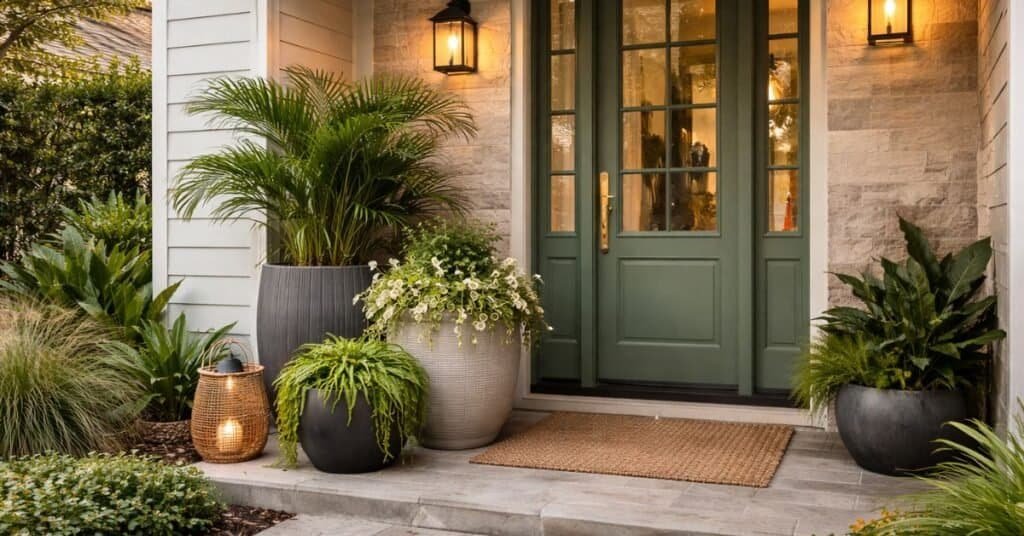
Try placing one larger planter by the door or grouping two to three pots near the front steps. Keep the spacing close enough that they read as one styled moment. About 4 to 8 inches between pots usually looks connected instead of scattered.
This kind of seasonal swap also works well if you already enjoy small outdoor refreshes. A front entry can feel more pulled together when the planting style relates to other outdoor updates, much like these spring refresh ideas for outdoor spaces.
Refresh edges, mulch, and bed lines first
One of the most overlooked DIY upgrades is also one of the cheapest. Clean edges can make an average front yard look cared for in a single afternoon.
Start by cutting a neater bed line along the walkway or porch. Then top up the mulch where soil looks patchy or tired. Even a narrow front bed looks more finished when the border is clear and the mulch tone is even.
A good target is to make the bed edge read clean from the curb. If you can see a crisp line from the street, the yard already feels tidier before any flowers go in.
Group pots in odd numbers near the entry
Grouped containers can help a front yard feel styled without making it look stiff. Apartment Therapy’s piece on pot scaping shows how mixing pot heights can add visual interest, and that works especially well in front yards because the arrangement can change with the season.
A simple grouping might include:
- one taller planter at the back
- one medium planter with fuller shape
- one lower pot near the front edge
Keep one detail consistent so the group does not feel random. That could be one planter color, one plant color family, or one repeated material like black, terracotta, or soft gray.
Reuse what you already have
A DIY front yard often looks better when it starts with editing, not buying. Move a healthy pot from the backyard to the front steps. Clean older containers. Divide a fuller plant and repeat it in two places instead of adding a new type.
This is also where simple seasonal decorating ideas can help you keep the whole exterior feeling connected. If you like tying outdoor areas together by season, it helps to borrow the same calm rhythm used in seasonal home decor ideas for year round styling.
Try one budget option before doing more
If the budget is tight, start with this order:
- clean the bed edges
- refresh the mulch
- add one planter near the entry
- repeat one plant shape in two places
- remove anything that looks worn or out of place
That kind of order keeps the yard from feeling half done. It also makes it easier to stop at any point and still have the space look better than it did before.
| Budget update | What it changes | Best season to do it |
|---|---|---|
| Fresh mulch | Makes beds look cleaner and fuller | Spring or fall |
| One large planter | Adds a focal point by the entry | Spring, summer, fall |
| Grouped pots | Brings quick height and color | Any season |
| Sharper bed edge | Makes the yard look tidier fast | Spring or early summer |
| Reused containers | Saves money while filling empty spots | Any season |
Small DIY changes work because they help the front yard feel cared for. You do not need a full redesign to get that effect. A few clear updates in the right places can carry a lot of visual weight.
Best Plants for a Front Yard Garden That Looks Good Longer
A front yard usually feels easier to style when the plants do more of the work on their own. That does not mean filling the yard with the most colorful options. It usually means choosing plants with good shape, steady structure, and a mix of textures that still look nice when the season changes.
The goal is to keep the yard from going flat between peak bloom times. That is why it helps to think in layers of structure first, then smaller moments of color after.
Use evergreen structure first
Evergreens help hold the front yard together when other plants fade back. A few shrubs with neat shape can keep the beds from looking empty in late fall and winter, and they also give spring and summer flowers something to sit against.
This matters even more in colder parts of the US and Canada where the yard can look sparse for longer stretches. Try using one or two evergreen anchors near the house, near the front steps, or at the back of a bed. In a smaller yard, even one rounded evergreen at each side of the path can make the space feel more settled.
A good visual mix often includes:
- one evergreen anchor shrub
- one softer grass or airy plant form
- one repeating lower plant along the edge
Add seasonal color in smaller doses
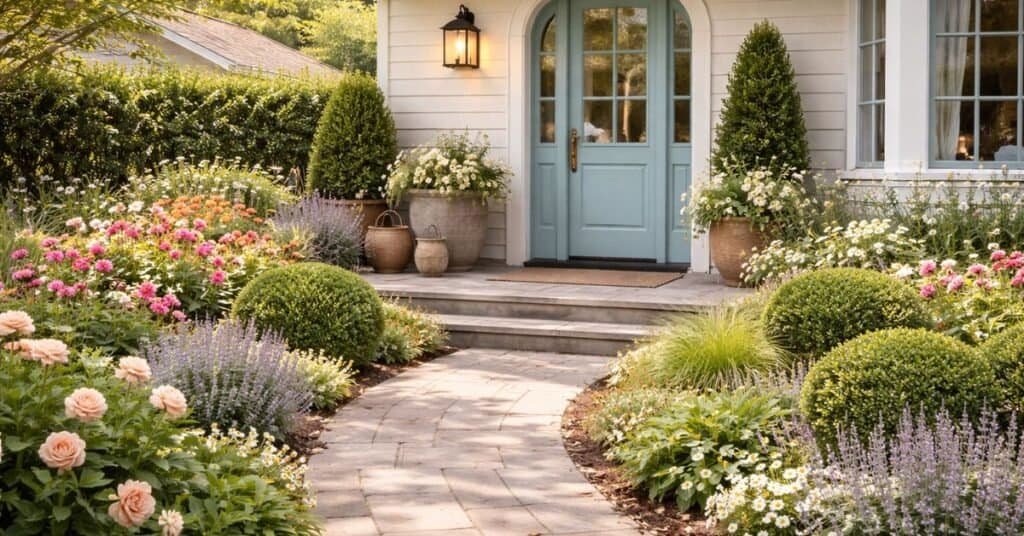
It is tempting to chase color everywhere, but small doses often look better. A front yard usually feels calmer when the strongest seasonal color stays close to the front door, the path, or one main bed.
That could mean using flowering planters near the steps, repeating one color family near the walkway, or adding a window box if the house style suits it. Keeping the color contained makes the yard easier to update later.
This can also help the front yard feel more connected to the rest of your outdoor space. If you are updating the outside of your home as a whole, a quieter planting palette often pairs well with small patio decor that feels calm and uncluttered, where repetition and a little breathing room make everything feel more settled.
Choose low maintenance plants for busy weeks
A front yard should still look decent when life gets busy. That is why low maintenance plants matter so much. Look for shrubs and perennials that keep a good shape without needing constant trimming, deadheading, or daily watering.
This does not mean the yard has to look plain. A simple mix of hardy shrubs, ornamental grasses, and a few repeating perennials can still feel full and welcoming. The benefit is that the yard keeps its shape with less work in the middle of the week.
For many homes, a low effort planting mix is what makes year round styling realistic. It is much easier to swap one seasonal planter than to rescue several fussy flower beds all at once.
Mix texture, height, and leaf shape
A front yard can feel dull even when the plants are healthy if every plant has the same shape. Try mixing round shrubs with softer grasses, finer leaves with broader leaves, and upright forms with mounded ones.
This kind of contrast helps the bed look fuller without needing a huge plant list. In a bed that is 5 feet deep, one upright shrub near the house, two rounded plants in the middle, and a low edge planting can already feel balanced.
One common mistake is using only one plant type all the way across the front of the house. That can look tidy at first, but it often feels flat from the curb. A little variation gives the eye more to land on.
A good plant mix usually does three things at once:
- holds shape through more than one season
- repeats a few forms so the yard feels calm
- leaves room for one or two seasonal changes
That is what makes the front yard easier to style later. The plants are already doing part of the visual work before the seasonal touches even go in.
Front Yard Garden Mistakes That Can Make It Look Dated
A front yard can have good plants and still feel off if the styling choices fight each other. In a lot of cases, the yard does not look dated because it is old. It looks dated because too many pieces feel unrelated, overgrown, or left halfway between seasons.
The good news is that these problems are usually fixable without redoing the whole space. A few edits can make the yard feel cleaner and more current very quickly.
Planting too many unrelated colors at once
A front yard usually looks better when the color palette feels tighter. If one bed has bright red flowers, another has orange and purple, and the planters by the door are a different look again, the yard can start to feel busy instead of welcoming.
Try picking one main color direction for the season and one supporting neutral. For spring, that might be soft white and green. For summer, maybe one stronger flower color with plenty of foliage. For fall, deeper tones with grasses and seed heads often feel calmer than a mix of every seasonal shade.
A simple rule that helps is this: if the pots, flowers, and bed plantings all pull in different directions, scale it back to one main story.
Using only one plant type across the whole yard
This can happen when the goal is to keep the yard simple, but too much repetition can make the space feel flat. A row of identical shrubs across the whole front of the house may look neat, yet it often lacks depth and movement.
Try adding contrast through height or texture instead of through more color. One rounded shrub form, one airy grass, and one lower edge planting usually feels better than one plant copied everywhere.
This is especially true near the entry. The front door area needs a little shape variation so the eye has somewhere to land.
Leaving beds bare or messy between seasons
One of the fastest ways for a front yard to feel neglected is to leave empty soil, faded stems, or patchy beds sitting too long. Apartment Therapy suggests removing dead growth and adding seasonal potted plants to lift curb appeal, and that advice works well because it fixes two visual problems at once. The yard looks cleaner, and it still has life near the entry.
A simple fix is to keep one part of the yard ready for seasonal swaps. That might be two planters by the door or one section near the path where you can refresh the look without touching every bed.
If the main garden beds are between bloom cycles, fresh mulch and a planted container can still make the whole front yard look cared for.

Ignoring the scale of the house
Scale matters more than many people expect. Tiny pots beside a wide garage can disappear. A very large shrub in a narrow entry bed can make the front door feel crowded.
Try matching the size of the plants and containers to the width of the house front and the size of the walkway. On a smaller entry, one medium planter and a narrow layered bed may be enough. On a wider front porch, a pair of fuller planters usually makes more sense.
This is also where restraint helps. Not every empty patch needs filling. A little breathing room can make the styled areas stand out more.
A quick check before you add anything new
Before buying another plant or pot, look for these signs:
- too many flower colors in one view
- empty patches of soil near the entry
- plants crowding the walkway
- containers that look too small for the house
- one flat row of the same plant with no height change
Fixing those issues usually does more for the yard than adding something extra. When the basics look clean, the whole space starts to feel more current.
Small Front Yard Garden Ideas That Still Feel Stylish
A small front yard does not need a lot of plants to look good. In fact, smaller spaces usually look better when the planting feels calmer and more edited. Too many plant types, colors, or accessories can make the area feel crowded fast.
The goal is to make the space feel clear from the sidewalk to the front door. That usually comes from repetition, one focal point, and enough open space for the eye to rest.
Keep the planting palette tighter
Small yards tend to look better with fewer plant varieties. That does not make them boring. It makes them feel cleaner and easier to read from the curb.
A simple setup might use:
- one evergreen shape repeated twice
- one lower edging plant along the path
- one seasonal planter by the door
That kind of repetition can make a narrow yard feel more settled. It also makes seasonal updates easier because you are swapping one or two details instead of reworking everything.
Use vertical spots near the entry
When ground space is limited, use height instead. A tall planter near the door, a window box, or a climbing plant where it suits the house can add presence without taking over the walkway.
This works well in yards where the path is short or the porch is shallow. A single tall planter can do more than several small pots scattered around the steps. It also helps frame the entry so the yard feels styled even if the planting bed is only 2 to 3 feet deep.

Make one area the star
In a small front yard, it helps to choose one main focal point. That could be the front steps, one corner bed, or the space around the mailbox if that area is close to the entry.
Once that spot looks good, the rest of the yard can stay simpler. This is often the easiest way to avoid the busy look that happens when every corner tries to do too much.
A good example is a 4 foot wide bed near the porch with one evergreen anchor, two mid height plants, and one seasonal planter beside it. That can carry the whole front of the house without needing more decoration spread around.
Leave breathing room
One of the best things you can do in a small yard is leave some empty space on purpose. A front yard does not need to be packed to feel full. Open mulch areas, a clean path edge, or a small stretch of lawn can help the styled parts stand out more.
This same idea shows up in indoor spaces too. Rooms often feel better when a few areas stay open, much like these minimalist home ideas that still feel warm and lived in. The front yard works the same way. A little restraint can make the whole space feel calmer.
A small space version that still feels full
If your front yard is narrow or the house sits close to the street, try this:
- keep the bed depth around 2 to 4 feet if space is tight
- repeat one shrub shape instead of mixing many
- place one taller planter by the door
- use one seasonal accent color near the entry
- keep the path edge clean and open
That kind of setup gives the yard shape without making it feel cramped. In a smaller space, neat placement matters more than having more plants.
Frequently Asked Questions
How do you design a front yard garden layout?
Start with the path, front steps, and door since those are the areas people notice first. Then build around them with one clear bed shape, a few repeated plants, and one focal point near the entry so the yard feels connected instead of scattered.
What should you put in a front yard garden?
Most front yards look better with a mix of structure and softer seasonal detail. A simple combination of evergreen shrubs, lower border plants, one or two flowering accents, and a planter near the door usually gives the space enough shape without making it feel busy.
How can you make your front yard look attractive year round?
Keep a steady base in place through every season. Evergreen form, neat bed edges, fresh mulch, and one area for seasonal pots can help the yard stay welcoming even when flowers are not at their best.
What are the best low maintenance plants for a front yard garden?
The easiest choices are usually plants that hold their shape well and do not need constant trimming or replanting. Evergreen shrubs, hardy perennials, and ornamental grasses are often a good starting point because they give the yard structure with less upkeep.
What mistakes should you avoid when planning a front yard garden?
A few common ones are using too many unrelated colors, planting everything at the same height, and letting beds sit bare between seasons. It also helps to avoid containers that are too small for the house or plants that crowd the walkway.
How do you style a front yard garden for each season?
Keep the main layout the same, then swap smaller details through the year. Spring can bring fresh mulch and lighter planters, summer can lean on fuller greenery, fall can bring deeper tones and grasses, and winter can rely on evergreen shape and sturdy containers.
How can you make a front yard garden look better on a budget?
Start with the changes that show the fastest. Clean bed edges, refreshed mulch, grouped planters, and reused containers usually do more than trying to redo the whole yard at once.
What front yard features can make a garden look dated?
Patchy beds, tired plants, too many competing flower colors, and random container styles can all make a yard feel older than it is. A cleaner palette, better spacing, and steadier structure usually help right away.
How do you choose the best plants for a front yard garden?
Pick plants based on shape first, then color second. It helps to choose a few that suit your climate, match the scale of the house, and still look good during quieter parts of the year.
How do you make a small front yard garden look stylish?
Use fewer plant types, repeat shapes, and make one area near the door the main focus. If you like a calmer look in smaller spaces, some of the same ideas in these minimalist home styling ideas can also help a compact front yard feel more open and settled.
Conclusion
A front yard does not need a full makeover to look good through the year. In most cases, it just needs a clear base, a few plants with steady shape, and seasonal touches that are easy to swap as the months change.
That is what makes this kind of styling feel more manageable. You are not trying to redo the whole yard every season. You are building a front yard garden that already has structure, then refreshing it with small changes that keep it feeling welcoming.
If the space is small, keep the plant palette tighter and let one area near the entry do most of the visual work. If the budget is limited, start with bed edges, mulch, and one planter by the door. Those simple moves can make a bigger difference than filling every corner at once.
The nicest front yards usually feel calm, cared for, and easy to keep up. A little structure, a little repetition, and a few seasonal updates can carry the space much further than most people expect.
For more ideas that help your home feel fresh through the year, see Seasonal Home Decor Ideas. Inspiring Year Round Styling Tips.