
A living room can have a good sofa, a decent rug, and the right wall color, yet still feel flat by late afternoon. In many homes, the missing piece is light. The room is not always dull because of the decor. Sometimes it just needs better placed light that feels softer, warmer, and easier to live with.
That is why living room lighting ideas matter so much. A room can shift fast when you swap a cool bulb for a warm one, add a lamp beside the sofa, or bring light into a corner that always feels a little dead. Those small moves can make the whole space feel calmer at 7 p.m., when the daylight fades and the room starts doing its real work.
If your space feels cold at night, too shadowy near the seating area, or oddly flat once the main ceiling light turns on, you are not imagining it. Architectural Digest notes that harsh cool light does not help a room feel relaxing, which is exactly why some living rooms feel less inviting than they should. A softer setup often changes the mood faster than buying new decor.
On Purely Home Vibe, I come back to this often because a room that feels finished usually has softer light in the places people actually use. If you want more ideas that help a room feel settled from the start, browse these modern living room ideas that make a space feel more finished.
This post walks through cozy lighting choices that make a dull room feel warmer without asking you to redo the whole space. We will look at bulb warmth, lamp placement, layered light, common mistakes, and a few easy changes that work well in small living rooms too.
Table of Contents
Why a Living Room Starts to Feel Dull
A dull living room is often a lighting problem before it is a decor problem. The sofa may be fine. The rug may work. The wall color may even be warm. Still, the room can feel tired if the light is too harsh overhead, too cool in tone, or missing in the places your eyes keep landing.
Too Much Ceiling Light and Not Enough Glow at Eye Level
One bright ceiling light can make a living room feel flat. It pushes all the brightness from above, which leaves the sofa area feeling exposed instead of relaxed. It can also create dark patches along the walls, behind chairs, and in corners.
That is part of why a room can look fine during the day and then feel cold the second the main light goes on. A softer mix works better in real life. Light at eye level, like a table lamp on a side table or a floor lamp near a chair, helps the room feel calmer and more balanced.
A good rule is to look at the room while seated, not while standing. If everything feels bright overhead but dim where you actually sit, the room probably needs one or two lower light sources.

Cool Bulbs Can Make Soft Decor Feel Less Cozy
Bulb color matters more than many people expect. If the bulbs are too cool, even soft fabrics and warm wood tones can look a little hard. Cream can start to feel gray. Beige can lose warmth. A room that should feel calm can end up looking stark.
This is why warm bulbs usually work better in a living room. In simple terms, warm white tends to feel softer and more comfortable at night. The room does not need to be dark. It just needs light that feels gentle rather than sharp.
A useful range for a cozy living room is often around 2700K to 3000K. That tends to give you a warmer glow without making the room feel yellow. In a space with white walls, linen shades, or light oak furniture, that small swap can make a big difference.
Dark Corners Make the Whole Room Feel Unfinished
One dim corner can pull down the whole room. It sounds small, but it is easy to feel. Your eye keeps catching that shadowy spot near the chair, beside the media console, or between the window and the sofa. The room starts to feel incomplete, even when everything else is in place.
This is where a single floor lamp, a small table lamp, or even a plug in sconce can help. You do not need to flood the room with brightness. You just need to wake up the parts of the room that go flat after sunset.
If your living room feels dull, check the corners first. A lamp in the emptiest corner often does more for the mood than adding another decorative object.
| Problem | Why the room feels dull | Simple lighting fix |
|---|---|---|
| One ceiling light only | Bright from above, flat at seating level | Add a table lamp beside the sofa |
| Cool white bulbs | Makes soft colors feel cold | Swap to warm white bulbs |
| Dark corners | Room feels unfinished and heavy | Add a floor lamp or plug in sconce |
| Light clumped in one area | One side feels bright, the rest feels dim | Spread lamps across two or three zones |
Real Simple shares that cooler high Kelvin bulbs can feel harsh in a home, which helps explain why a living room can feel less inviting even when the furniture and layout are working. A simple fix is to start with bulb warmth before buying anything new.
House Beautiful also warns against bright overhead light in cozy rooms. In a living room, that often means the better move is not more brightness. It is softer light in better places.
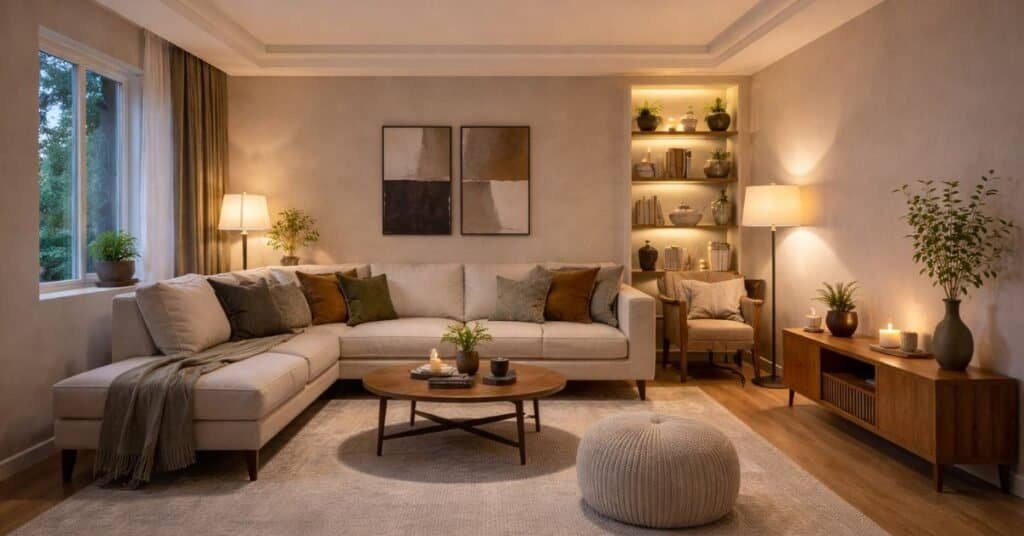
Cozy Living Room Lighting Ideas That Make a Room Feel Better
Once you know why the room feels dull, the next step is fixing the light in a way that feels calm and livable. The goal is not to make the room brighter at all costs. It is to make the light feel better in the places where you sit, read, talk, and wind down at night.
Start With Ambient Light That Feels Soft, Not Harsh
Ambient light is the base layer. It is the general light that helps the room function, but it should still feel easy on the eyes. In a living room, that often means a flush mount, a shaded pendant, or a ceiling fixture that spreads light gently instead of blasting it straight down.
If your current ceiling fixture feels too sharp, the problem may be the bulb, the shade, or both. Frosted glass, fabric shades, and warmer bulbs can soften the effect right away. This works well in open living rooms where the ceiling light needs to stay on for part of the evening.
Apartment Therapy explains that a good living room usually mixes fixture types instead of leaning on one source. That is a helpful reminder to treat the ceiling light as the base, not the whole plan.
Add Table Lamps Where People Actually Sit
Table lamps do some of the most useful work in a living room. They bring light down to sofa height, which helps the room feel more relaxed. They also light the places people use most, like the end of the sofa, the reading chair, or the console behind a sectional.
A simple placement tip is to put the bottom of the lampshade close to eye level when you are seated. In many rooms, that means a lamp around 24 to 30 inches tall on a side table that is about 22 to 26 inches high. This helps the light feel useful without shining directly in your face.
If you are working with a small budget, start with one table lamp near the main seating area. Even a single lamp can shift the room if it lights the right spot. If your side table is narrow, choose a lamp with a slimmer base and a light fabric shade so it does not feel bulky.
Use Floor Lamps to Lift Dark Corners
Floor lamps are one of the easiest ways to fix a living room that feels heavy in the corners. They work well beside a chair, near a window wall, or at the far end of a sofa where the light does not quite reach. In many rooms, that one change helps the space feel more finished by night.
For a softer look, choose a shade that diffuses light instead of exposing the bulb. If the room is small, use a slim floor lamp with a narrow footprint so it does not crowd the walkway. Arc lamps can work too, though they need enough clearance to avoid feeling oversized.
This is also a good renter friendly move because it does not require wiring or wall changes. If you have a dead corner that always looks flat, a floor lamp is often the fastest fix.

Bring in Accent Light for Shelves, Art, and Quiet Corners
Accent light is what keeps a room from feeling flat. It is not there to flood the space. It is there to add depth. A small lamp on a console, a plug in sconce beside a reading chair, or a picture light over art can help the room feel warmer and more layered.
This kind of light works well in places that already have decor but still look a little dull at night. A bookshelf, a low cabinet, or a corner behind the sofa can all feel more alive with one soft source nearby. The glow pulls your eye around the room, which helps the whole space feel more balanced.
House Beautiful UK breaks living room lighting into ambient, task, and accent layers. That is useful because it shows why a room feels better when the light is spread out across more than one level. A lamp beside the sofa handles task light, while a smaller lamp on a console can add that quieter background glow.
Real Simple also recommends layering light with table lamps, sconces, and floor lamps for a softer feel. In a real room, that might look like one lamp beside the sofa, one floor lamp in the darkest corner, and one smaller light on a shelf or console.

How to Layer Light in a Living Room Without Making It Feel Busy
Layered lighting sounds more complicated than it is. In practice, it just means the room has light in more than one place and at more than one height. That keeps the space from feeling flat, but it also helps it stay calm.
The Three Light Layers Every Cozy Room Needs
Most living rooms feel better with three types of light. The first is ambient light, which gives the room its base level of brightness. The second is task light, which helps with reading, games, or anything you do while seated. The third is accent light, which adds depth and soft glow around the edges of the room.
A room does not need a lot of fixtures to do this well. One ceiling light, one table lamp, and one floor lamp can already cover a lot. The point is to spread the light around the room so one side does not feel bright while the other side disappears.
A Simple Living Room Lighting Layout to Copy
For a standard living room, a simple layout often works best:
- one ceiling light for general brightness
- one table lamp beside the main sofa seat
- one floor lamp in the darkest corner
- one smaller accent lamp on a console or shelf
That setup works because each light has a clear job. The ceiling fixture handles the room overall. The table lamp warms the seating area. The floor lamp fills the emptiest part of the room. The smaller accent light keeps the background from going flat.
In a longer room, try to place light in at least three zones. One near the main seating group, one near a corner or wall, and one closer to the far end of the room. This helps the room feel balanced from one side to the other. If your layout is narrow, this post on ways to make a rectangular living room feel more balanced can help with the rest of the room setup too.
How to Keep Layered Light Calm and Balanced
The easiest way to keep layered lighting from feeling messy is to make the fixtures relate to each other. They do not need to match exactly, but they should feel like they belong in the same room. Similar shade colors, repeated finishes, and a shared bulb warmth help a lot.
Try to keep most bulbs in the same warm range so the room does not feel patchy. If one lamp is very cool and the rest are warm, the shift stands out right away. Fabric shades also help because they soften the light and reduce glare.
Spacing matters too. If every lamp sits on one side of the room, the room will still feel off balance. A better move is to place one light near the sofa, one near the far corner, and one farther back on a console or shelf. Better Homes and Gardens recommends layered living room lighting that feels both pretty and useful, which is a good way to think about placement. The room should work well, but it should also look calm once the sun goes down.
| Lighting layer | What it does | Where to use it |
|---|---|---|
| Ambient light | Gives the room overall brightness | Ceiling fixture, flush mount, shaded pendant |
| Task light | Helps with reading or seated activities | Table lamp by sofa, lamp near chair |
| Accent light | Adds depth and soft background glow | Console lamp, wall sconce, picture light |

Warm Bulbs, Dimmer Switches, and Other Small Changes That Help Fast
Some of the best lighting fixes are the smallest ones. You do not always need a new fixture or a full room update. In many living rooms, the faster change is a warmer bulb, a softer shade, or a dimmer that lets the room shift from daytime use to a calmer evening feel.
Pick a Warmer Color Temperature for a Softer Feel
Bulb warmth can change how the whole room reads. A cooler bulb can make beige look flat, white walls look stark, and wood tones feel less rich. A warmer bulb usually brings back softness, which is why this is one of the first things worth changing.
For most living rooms, 2700K to 3000K feels comfortable. That range tends to look warm without making the room feel too yellow. If your space already has cream upholstery, linen curtains, or warm wood, this swap usually helps the room feel better right away.
A good place to test this is the lamp closest to the sofa. Turn it on at night and compare it to the ceiling light. If the lamp feels softer and the room looks calmer around it, you have already found the direction that works.
Add Dimmers for Day to Night Flexibility
A living room does not need the same brightness all day. Mid morning, you may want more light for cleaning, folding laundry, or helping kids with homework. By evening, that same brightness can feel too sharp.
Dimmers help because they let you change the room without changing the room. If your ceiling light is on a dimmer, it can carry the space during the day and then drop into the background after sunset. If you rent or want an easier option, plug in dimmers for lamps can help too.
House Beautiful mentions dimmable sconces and softer lamp shades for a cozier feel. In practical terms, that means a room can feel warmer at half brightness than it does at full brightness, even with the same fixtures.

Use Shades That Soften the Bulb, Not Expose It
The shade matters almost as much as the bulb. Bare bulbs or very open shades can throw light too directly, which makes the room feel harder than it needs to. Fabric shades, frosted glass, and light diffusing materials usually give a living room a calmer look.
Linen shades work especially well because they soften the bulb and add a little texture at the same time. This is useful in rooms that already have neutral decor, where every small material choice shows up more clearly at night. Even a simple lamp can look better once the shade diffuses the light instead of sending it straight into the room.
This is also one of the easiest ways to stop glare near the sofa. If someone seated can see the bulb directly, the lamp may be the wrong height, the shade may be too shallow, or both.
Make One Budget Swap Before Buying Anything New
Before you buy a new floor lamp or wall light, try one low cost change first. Swap out the coolest bulbs in the room. Then move one lamp from another room into the living room and test it in the darkest corner or beside the main seat. Sometimes that tells you more than shopping ever could.
Another budget friendly move is a plug in sconce. It gives you light at eye level without taking up table space, which can help in a small room. You can also try a lighter lamp shade if your current one blocks too much glow.
Apartment Therapy points out that good lighting builds from a solid base and then adds smaller sources where needed. That is a useful reminder to test a few smart changes first. One warmer bulb, one better shade, and one extra lamp in the right corner can already make a dull room feel much less flat.

Living Room Lighting Ideas for Small Rooms and Dark Corners
Small living rooms need light that works hard without taking over the room. A bulky lamp can crowd the walkway. A dark corner can make the whole space feel tighter. The goal is to place light where it helps the room feel open, warm, and easy to use at night.
Use Slim Lamps That Do Not Eat Up Floor Space
In a small room, the lamp shape matters almost as much as the light itself. A slim floor lamp with a narrow base can brighten a corner without making the room feel packed. A small table lamp with a compact footprint can do the same on a side table that is only 12 to 16 inches wide.
Plug in sconces can also work well here. They free up table space and bring the light up to a more flattering height. This helps the room feel layered without adding another object to the floor.
If your room already has a lot going on near the sofa, keep the lamp base simple and the shade light in color. That helps the fixture blend in while still giving you a useful glow.
Brighten a Dark Room Without Changing Paint
A dark living room does not always need a new wall color. Many times, it just needs light placed with more care. Start by lighting the emptiest corner first, then check the area near the sofa and any wall that feels heavy after sunset.
A mirror can help too when it sits near a lamp or across from one. It will not replace good lighting, but it can help move the glow farther across the room. Light shades, glass bases, and pale lamp shades also help because they reflect more light back into the space.
Better Homes and Gardens shares that small spaces feel better when lighting is layered with purpose. In a small living room, that might mean one ceiling light, one lamp by the sofa, and one slim floor lamp in the far corner instead of several small lights scattered around.
Make a Small Living Room Feel Cozy, Not Crowded
A small room can still feel cozy without being full of fixtures. In fact, fewer lights placed well often work better than a lot of little lights placed without a plan. One lamp near the seat you use most and one light in the darkest part of the room is often enough to start.
Try to keep the light spread across two or three areas instead of stacking everything near the sofa. That makes the room feel more balanced when you look across it. A room with one bright side and one dim side can feel smaller than it really is.
Warm light also helps a smaller room feel softer at night. Architectural Digest notes that cool harsh lighting does not help a room feel inviting, which matters even more in compact spaces where the mood shifts fast once the sun goes down.
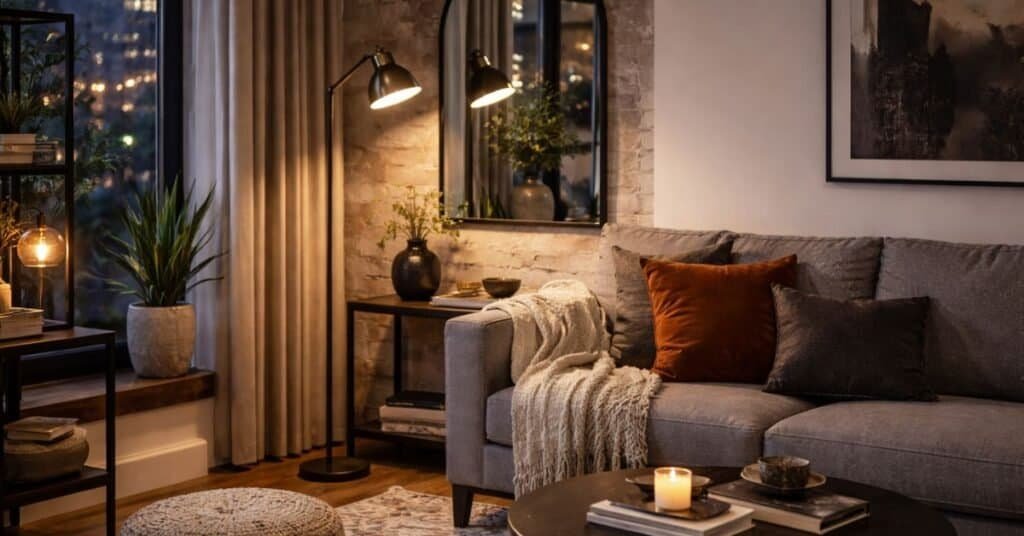
Common Lighting Mistakes That Make a Room Feel Cold
A cozy living room does not always need more light. Sometimes it just needs fewer mistakes. A room can feel cold even with several lamps if the bulb color is off, the light is all coming from one direction, or every fixture is working too hard.
Relying on One Overhead Light
This is one of the most common problems. A single ceiling light can make the room bright enough to see, but it rarely makes it feel calm. The light falls from above, which can flatten the room and leave the seating area feeling exposed.
This is why many living rooms feel worse at night than they do in the daytime. The furniture has not changed. The mood has. If your room only comes alive with the ceiling light on, it usually needs at least one lower lamp near the seating area.
Choosing Bulbs That Are Too Cool
Cool bulbs can make a room feel sharper than it needs to. White walls can start to look stark. Beige upholstery can lose warmth. Wood tones can look flatter and less rich.
Real Simple warns that cooler bulbs can give off a harsher blue toned light, which is exactly the kind of shift that can make a living room feel less restful at night. In most living rooms, warm white bulbs are the safer choice for a softer feel.
Leaving Corners and Side Walls Unlit
A room can feel cold even when the center is bright. That usually happens when the corners stay dark and the side walls never catch any soft glow. Your eye reads the room as unfinished, even if the furniture layout is working.
A floor lamp in the emptiest corner or a small lamp on a side table can fix this fast. The room does not need wall to wall brightness. It just needs a better spread of light.
Using Exposed Bulbs With Too Much Glare
Glare changes the mood right away. If you can see a bare bulb from the sofa, the room will often feel harder and less comfortable than it should. This is common with shallow shades, open bulb designs, or lamps placed too high beside a chair.
A softer shade usually helps. Linen, cotton, and frosted glass diffuse the bulb so the glow feels easier on the eyes. That matters most at night, when the room is supposed to feel relaxed.
Placing Every Lamp on One Side of the Room
This mistake is easy to miss until evening. You may have enough lamps, but if they all sit near the sofa or all line up on one wall, the room can still feel off balance. One side feels lit. The other side fades away.
Try to spread the light across two or three zones instead. Put one lamp near the seating area, one in the darkest corner, and one farther back on a console or shelf. That simple shift often makes the room feel more complete.
House Beautiful points out that harsh overhead light can work against a cozy room. In real life, that means warmth often comes from softer lamps placed around the room, not from turning the ceiling light up brighter.
| Mistake | What it does to the room | Better choice |
|---|---|---|
| One overhead light only | Makes the room feel flat and exposed | Add a table lamp or floor lamp at eye level |
| Cool white bulbs | Makes soft decor feel cold | Swap to warm white bulbs |
| Dark corners left unlit | Pulls the whole room down | Light the emptiest corner first |
| Bare bulbs or glare | Feels sharp and uncomfortable | Use a fabric shade or frosted glass |
| Lamps all on one side | Makes the room feel uneven | Spread light across two or three zones |
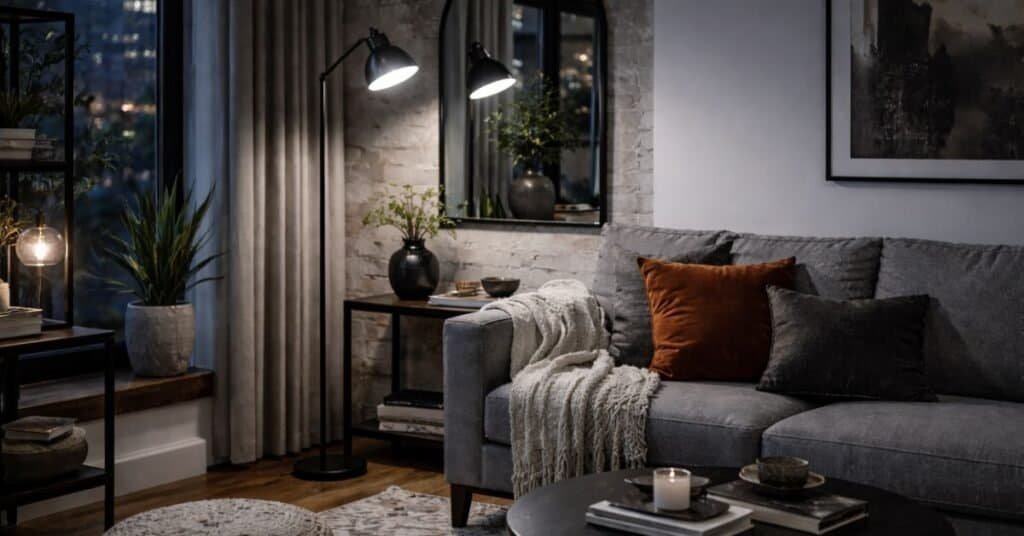
A Simple Room by Room Lighting Plan You Can Try Tonight
If your living room still feels dull after all the ideas above, it helps to make the next step very small. You do not need to redo the whole room tonight. You just need to change one or two light sources in the area that feels the most off.
If Your Room Feels Flat
Start near the seat you use most. Add a table lamp beside that spot, then turn off the main ceiling light and see how the room feels. If the lamp already makes the room feel calmer, you are moving in the right direction.
A lamp beside the sofa works well because it gives the room light where people actually sit. That one shift can make the room feel less washed out and more comfortable right away.
If Your Room Feels Too Dark
Find the emptiest corner first. That is usually where the room starts to feel heavy after sunset. A slim floor lamp placed there can spread light farther than you expect.
If the room still feels dim, check the shade and bulb before buying more. A warm bulb and a lighter shade often do more than adding a second fixture too soon.
If Your Room Feels Cold at Night
This is usually a warmth issue, not a brightness issue. Swap the coolest bulb in the room first, then lower the brightness if you can. A dimmer switch or plug in dimmer helps because the room can shift into a softer evening look without changing the layout.
You can also try using lamp light only after dinner. Many living rooms feel much better once the ceiling light is off and the room is lit from the sides instead of from above.
If Your Room Is Small
Keep the plan simple. One compact table lamp and one slim floor lamp is enough for many small spaces. What matters most is that the light lands in two different parts of the room instead of staying trapped in one area.
If you are working with a narrow layout, think about light and furniture together.
Frequently Asked Questions
How do I make a living room feel cozy with lighting?
Start by using more than one light source. A ceiling light alone often feels flat, while a table lamp and floor lamp add softer light at the level where people sit. Warm bulbs and fabric shades help too.
What lighting makes a living room look less dull?
A mix of warm ambient light, lamp light near seating, and one accent light in a dark corner usually helps the most. Rooms look less dull when the light is spread across the space instead of coming from one bright source overhead.
What color temperature is best for cozy living room lighting?
For most living rooms, warm white bulbs around 2700K to 3000K feel the most comfortable. That range tends to look soft at night and works well with neutral walls, wood furniture, and cozy textiles.
How do I layer lighting in a living room?
Use three levels of light. Start with ambient light from a ceiling fixture, then add task light near the sofa or reading chair, then finish with accent light on a console, shelf, or wall. House Beautiful explains this as ambient, task, and accent lighting, which is a useful way to plan the room without overdoing it.
Are floor lamps or table lamps better for a cozy living room?
Both help, but they do different jobs. Table lamps are great beside the sofa or a chair because they warm the seating area. Floor lamps are better for dark corners or places where you need light without using table space.
How can I brighten a dark living room without changing paint?
Start by lighting the darkest corner and the main seating area. A slim floor lamp, a table lamp with a light shade, and a mirror placed near a lamp can help the room feel brighter without changing the walls.
How do dimmer switches help living room lighting?
Dimmers let the same room work for different times of day. You can use more brightness when you need it, then lower it at night so the room feels softer and calmer. Plug in dimmers can also work well for lamps in rental homes.
What lighting mistakes make a room feel cold?
The most common ones are cool bulbs, harsh overhead light, dark corners, and visible glare from exposed bulbs. If your room feels cold at night, start by checking those before changing anything else.
Can warm bulbs make a dull living room feel better?
Yes, they often can. Warm bulbs make neutral decor feel softer and more welcoming, which helps a room feel less flat. That is one of the easiest changes to test before buying new lamps.
Where should lamps go in a living room for a cozy feel?
Place one lamp beside the main seat, then add another light in the darkest corner or on a console farther back in the room. In a small room, keeping the light in two or three zones helps the space feel balanced.
Conclusion
A dull living room does not always need new furniture or a bigger makeover. Many times, it just needs better light in better places. A warmer bulb, a lamp beside the sofa, or a floor lamp in a dark corner can change the room more than people expect.
The goal is not to make the room bright from every angle. It is to make it feel soft, warm, and easy to be in at night. When the light is layered well, the room starts to feel calmer, more useful, and much more inviting.
If you want to keep building that warm, finished feel, this Epic Modern Living Room Guide: What No Decorator Will Show You is a good next read.