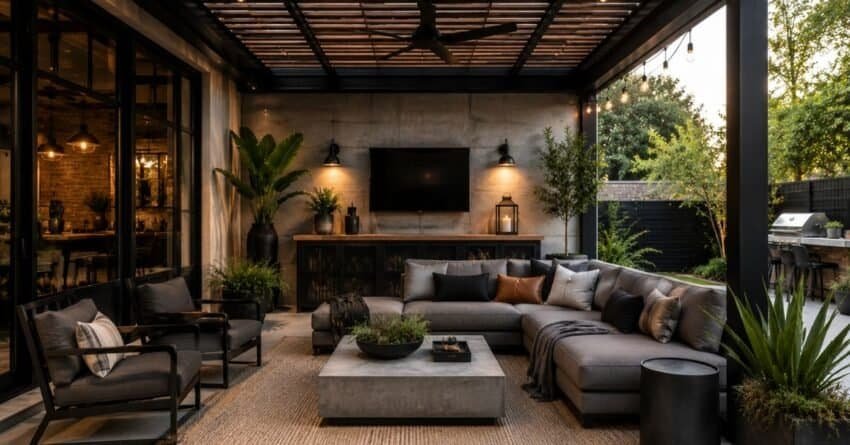
You can have a beautiful patio sofa, a fresh outdoor rug, and a coffee table styled just right, but if the sun is beating down at 3 p.m., nobody wants to sit there for long. The space looks nice, but it feels too hot, too bright, and a little unfinished.
That is why covered outdoor living rooms matter. A good shade plan can turn a patio from a space you pass through into one you actually use for coffee, reading, dinner, or slow weekend afternoons.
The right cover also helps the whole layout feel more like a real outdoor room. A pergola, awning, gazebo, shade sail, or outdoor curtains can soften the heat, protect seating, and make the patio feel calmer without closing it in.
If your patio is small, shade planning becomes even more important. Before choosing a cover, it helps to think about furniture flow, seating size, and how people move through the space. These small outdoor patio layout ideas that save space can help you plan the layout before adding a shade structure.
Better Homes and Gardens shares that covered patio ideas for cozy furniture and comfort can help make an outdoor space feel more usable and welcoming. That is the heart of this post: finding a shade setup that works with your patio, not against it.
Ahead, we will look at covered outdoor living rooms that use pergolas, awnings, shade sails, curtains, and roof structures in smart ways. You will also see what to avoid, especially if your patio is small, sunny, windy, or used often in the warmer months across the US and Canada.
Table of Contents
Why Covered Outdoor Living Rooms Feel More Comfortable
A patio without shade can look beautiful in photos but feel hard to enjoy in real life. Strong sun can heat up cushions, fade fabrics, and make the seating area feel too bright during the best part of the day.
Covered outdoor living rooms solve that problem by adding comfort first. The cover gives the furniture a defined place, softens the light, and helps the patio feel like an outdoor extension of the home.
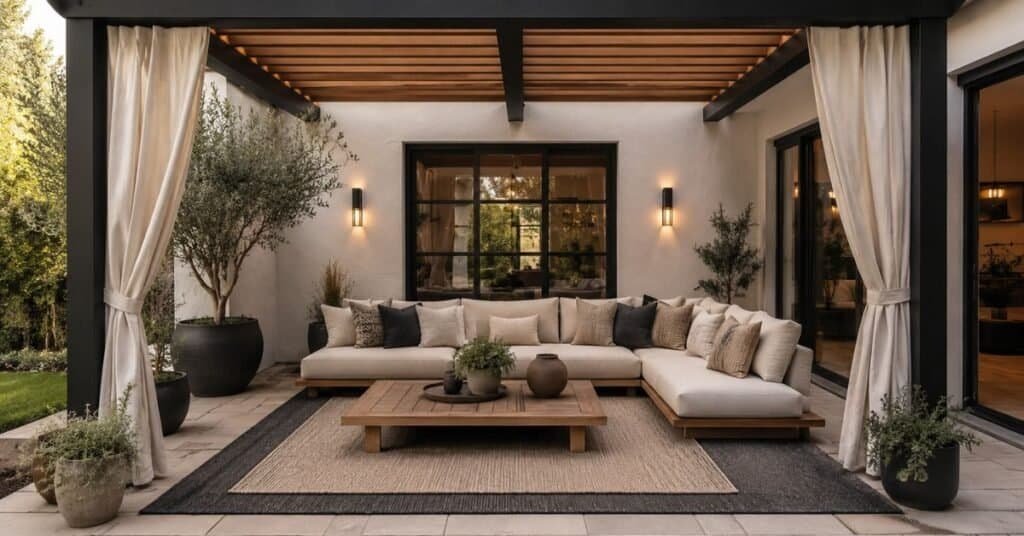
They Protect Seating From Harsh Afternoon Sun
Afternoon sun is often the biggest comfort problem, especially on west facing patios. Even a simple shade structure can make the seating area feel calmer and easier to use.
A pergola over an outdoor sectional, a retractable awning over a dining table, or a gazebo around a lounge zone can help reduce direct sun without making the space feel closed off.
Better Homes and Gardens explains that covered patios can be styled with cozy furniture, decor details, and comfort features. That works best when the shade actually covers the seats people use most.
Practical fix:
Watch your patio between 2 p.m. and 5 p.m. Then mark where the sun hits the seating. That is the zone your shade should cover first.
They Make Outdoor Spaces Easier to Use
The best covered outdoor living rooms do more than block sun. They help create a comfortable spot for real life.
Think about:
• morning coffee
• weekend reading
• family dinners
• evening chats
• quiet time after work
When the patio has a clear covered zone, people know where to sit. The space feels more settled because the furniture, rug, and shade structure all work together.
This is also helpful for larger backyards. A covered area gives the eye a landing point instead of leaving furniture floating in the open.
They Help Protect Furniture From Weather
Outdoor furniture is built for exterior use, but sun, wind, moisture, and changing temperatures still affect it over time.
Apartment Therapy notes that moisture, wind, and UV rays can quickly fade outdoor furniture. This is one reason covered patio living rooms feel so practical, especially in places with strong summer sun or rainy seasons.
A roof, pergola canopy, awning, or curtains can help reduce daily exposure. It will not replace good furniture covers or storage, but it can slow down wear and keep the seating area looking better.
Small space variation:
On a compact patio, protect the main seating zone first. Even one covered bench with a rug and side table can feel like a true outdoor lounge.
Covered Outdoor Living Rooms With a Powerful Shade Solution
A powerful shade setup does not always mean a full roof. Sometimes the best choice is a pergola with fabric, a retractable awning, a shade sail, or curtains that soften glare at the right time of day.
The goal is simple: match the shade to how you actually use the patio.
Pergolas for Filtered Shade
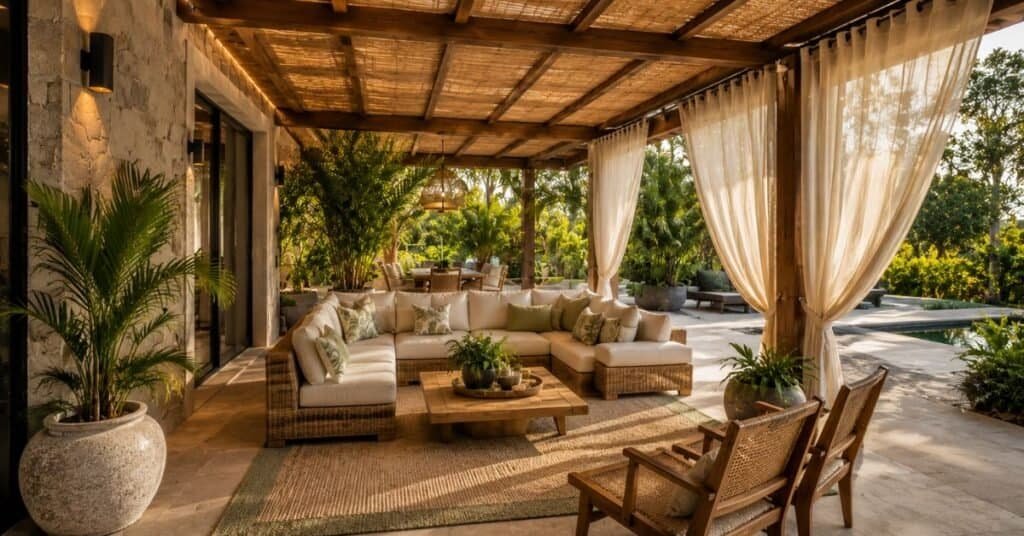
Pergolas are one of the most popular choices for covered outdoor living rooms because they define the lounge zone without fully closing it in.
They work well over:
• outdoor sectionals
• dining tables
• fire pit seating
• backyard gathering areas
Martha Stewart shares backyard shade ideas like pergolas and gazebos, along with umbrellas, awnings, and trees. A pergola gives structure first, then you can add fabric panels, climbing plants, or shade cloth if you need stronger coverage.
Practical fix:
If your pergola creates pretty lines but not enough shade, add a retractable canopy or woven outdoor fabric across the top.
Covered Outdoor Living Rooms With Retractable Awnings
Retractable awnings are great when you want control. You can extend them during hot afternoons, then pull them back when the patio feels cooler.
They work especially well for patios attached to the back of the house. Awnings can cover a dining table, small lounge zone, or sliding door seating area without needing a separate structure in the yard.
Real Simple notes that shade options for different budgets can range from freestanding structures to curtains and awnings.
This makes awnings useful for homeowners who want shade but do not want a full roof.
Covered Outdoor Living Rooms Using Shade Sails
Shade sails give patios a modern, relaxed look. They are especially helpful when you need angled shade over one part of the yard.
A shade sail can work over:
• a small dining table
• a corner lounge
• a play area
• a narrow side patio
The key is strong anchor points. A poorly placed shade sail can sag, flap, or miss the area you actually want covered.
Small space variation:
Use one triangular shade sail over the seating corner instead of trying to cover the entire patio. This keeps the space open and airy.
Covered Outdoor Living Rooms With Outdoor Curtains
Outdoor curtains are one of the easiest ways to add both shade and privacy.
They are helpful for patios that get strong side sun, especially in the morning or late afternoon. Curtains can also soften a hard structure like a pergola or covered deck.
Real Simple explains that outdoor curtains can soften bright light and be tied back when you want a clearer view.
Use curtains on the side where the sun hits hardest. You do not need to wrap the entire patio.
Budget option:
Start with one curtain panel on the sunniest side before adding a full set.
Covered Outdoor Living Rooms With Gazebos
Gazebos create the strongest covered outdoor room feeling. They work well when you want a defined lounge that feels sheltered from above.
A gazebo can be a good fit for:
• larger backyards
• outdoor dining rooms
• hot sunny patios
• all weather outdoor living space goals
Because gazebos have more visual weight, scale matters. A large gazebo on a tiny patio can feel crowded fast.
Before choosing one, measure your seating zone and leave room to walk around the furniture.
How to Choose the Right Shade for Your Patio
A shade structure can look beautiful and still miss the mark if it is the wrong size, placed in the wrong location, or blocks airflow.
The best covered outdoor living rooms feel comfortable because the shade works with the layout. Before choosing a pergola, awning, canopy, or curtains, spend a little time studying how your patio is used.
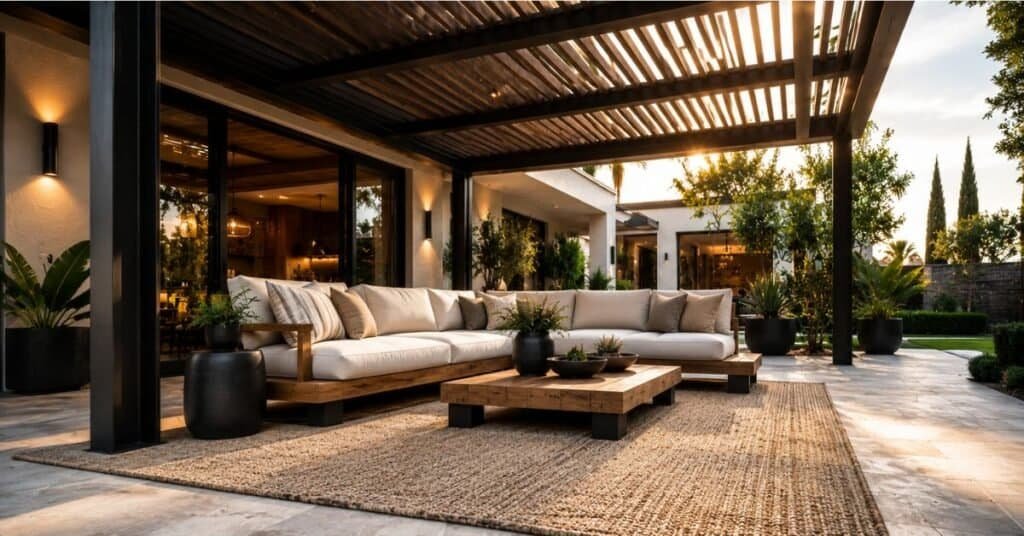
Check Where the Sun Hits First
Many homeowners choose a shade structure before checking where sunlight actually lands during the day.
A patio that feels comfortable at 10 a.m. may become almost unusable by 3 p.m. if afternoon sun pours directly onto the seating area.
Try this simple exercise:
• Check the patio at breakfast time
• Check again at noon
• Check once more in late afternoon
• Note where the strongest sunlight falls
This helps you place the cover where it will make the biggest difference.
For example, a west facing patio often benefits from side curtains because the afternoon sun comes in at a low angle.
Match Shade Size to Your Seating Zone
One common mistake is choosing a shade structure that looks too small once furniture is placed underneath it.
Better Homes and Gardens notes that shade structures should be scaled to your space so they provide balanced coverage and actually protect the seating area.
Think about the furniture footprint first.
A pergola covering only half of the sectional leaves part of the seating exposed. Likewise, an umbrella that shades the coffee table but not the chairs will not solve the comfort problem.
Practical rule:
• Measure the seating area first
• Add 18 to 24 inches beyond the furniture edges where possible
• Make sure the main conversation zone stays shaded during peak sun hours
Leave Room for Airflow
More coverage is not always better.
A patio can start feeling stuffy if every side is enclosed. Shade should reduce heat while still allowing air to move through the space.
This is especially important in warmer regions where airflow helps cool the seating area naturally.
Good airflow often comes from:
• Open pergola sides
• Curtains that can be tied back
• Shade sails with gaps around the edges
• Gazebos with vented roofs
A breezy patio usually feels more comfortable than a fully enclosed one.
Shade Structure Comparison Table
| Shade Type | Best For | Watch Out For |
|---|---|---|
| Pergola | Lounge areas and dining zones | May need added fabric for stronger shade |
| Retractable Awning | Patios attached to the house | Requires wall mounting |
| Shade Sail | Budget friendly coverage | Needs secure anchor points |
| Outdoor Curtains | Privacy and glare control | Can move during windy weather |
| Gazebo | Full outdoor room feel | Requires enough floor space |
Common Planning Mistake
Many patios fail because shade is treated as an afterthought.
Apartment Therapy points out that patios can become uncomfortable without proper shade. A beautiful seating arrangement means very little if everyone retreats indoors during the hottest hours.
Plan the shade first, then position furniture underneath it.
If you are also working on furniture placement, these outdoor seating arrangements that improve flow can help create a patio that feels comfortable and easy to use.
Small Covered Outdoor Living Rooms That Still Feel Open
Small covered outdoor living rooms need shade, but they also need breathing room. If the cover feels too heavy or the furniture is too large, a cozy patio can quickly feel tight.
The goal is to protect the seating without making the space feel boxed in.
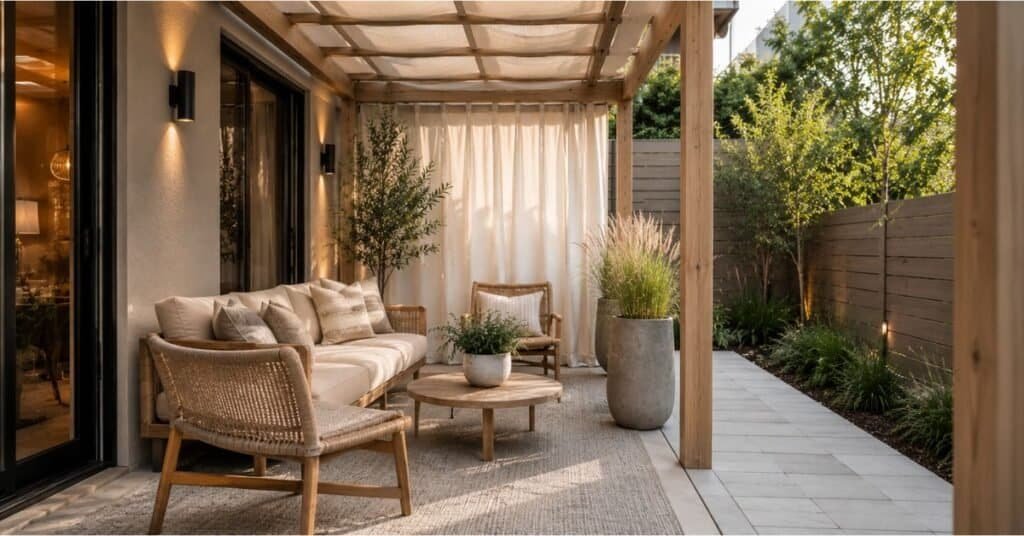
Apartment Patios
Apartment patios often need flexible shade because renters may not be allowed to drill, build, or install permanent structures.
A patio umbrella, freestanding shade screen, or outdoor curtains can work well without major changes. Wayfair Canada notes that umbrellas and curtains for small patios can add shade and privacy in compact outdoor spaces.
For a small apartment patio, keep the furniture simple:
• one loveseat
• one compact coffee table
• one tall planter
• one shade element
That gives the space function without crowding the floor.
Narrow Backyard Patios
A narrow backyard patio needs a clear walking path first. If the shade structure covers the whole walkway, the space can feel squeezed.
Try placing seating along one side and using a slim pergola, awning, or shade sail over only the lounge zone.
A good rule is to leave at least 30 to 36 inches for walking space. This helps guests move around without bumping into chairs, tables, or planters.
Compact Decks
Covered deck living room ideas work best when the furniture fits the shape of the cover.
A small deck may feel better with:
• two club chairs instead of a full sectional
• a round coffee table instead of a rectangle
• an outdoor rug that stops before the edges
• curtains on one side only
This keeps the deck feeling open while still giving it that outdoor room feeling.
Small space variation:
If the deck is under 10 feet wide, choose one main seating zone instead of trying to fit both dining and lounging.
Covered Outdoor Living Room Styling Ideas
Once the shade structure is in place, the styling helps the space feel complete. The best covered outdoor living rooms are comfortable because every piece works together, from the rug underfoot to the lighting overhead.
The goal is not to fill every corner. It is to create a patio that feels welcoming and easy to use.
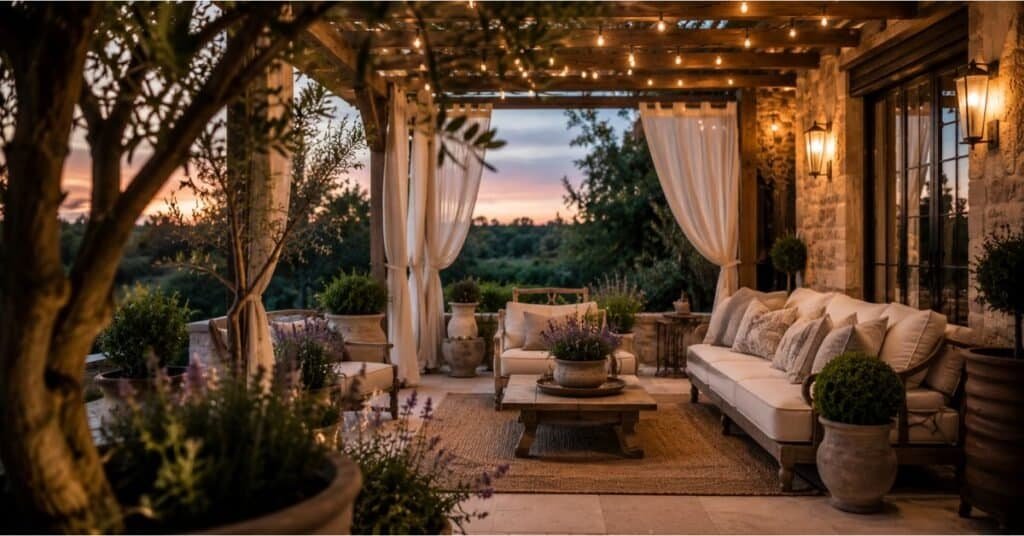
Use Outdoor Rugs to Define the Lounge Zone
A rug helps anchor furniture and visually separate the seating area from the rest of the patio.
This is especially helpful in larger patios where the furniture can feel like it is floating.
A good outdoor rug should:
• extend slightly beyond the front furniture legs
• leave visible floor space around the perimeter
• complement the shade structure rather than compete with it
For ideas on color and styling, see these outdoor rug ideas for covered patios.
A simple rug can make a pergola lounge feel much more intentional without adding clutter.
Add Lighting Under the Cover
Many patios look beautiful during the day but lose their appeal after sunset.
Lighting helps extend the use of covered outdoor living rooms into the evening.
Good options include:
• warm string lights
• wall sconces
• lantern style fixtures
• recessed pergola lighting
• pathway lights near seating zones
Warm light creates a more comfortable atmosphere than bright cool white bulbs.
If you are planning evening entertaining, these cozy outdoor lighting ideas for evening patios can help avoid common lighting mistakes.
Choose Furniture That Fits the Shade Shape
Furniture should follow the footprint of the shade structure.
For example:
• A rectangular pergola works well with a sectional.
• A square gazebo works well with four chairs around a coffee table.
• A narrow awning often works better with a loveseat and two chairs than a large sectional.
One common mistake is forcing oversized furniture into a small covered space. The cover may look balanced, but the seating can make movement awkward.
Leave enough room for guests to move comfortably around tables and chairs.
Add Plants Without Blocking Airflow
Plants help soften hard surfaces and make covered patios feel more inviting.
The trick is placing greenery where it frames the seating instead of blocking it.
Good locations include:
• patio corners
• behind accent chairs
• beside entry points
• near support posts
Avoid creating a wall of plants around the entire patio. Air movement helps keep the space comfortable during warm weather.
A few large planters often work better than many small containers scattered around the patio.
Quick Styling Formula
If you are not sure where to start, try this simple formula:
- Shade structure
- Seating
- Rug
- Lighting
- Plants
- Small decorative accents
This order helps build the room naturally without overcrowding the space.
Common Covered Outdoor Living Rooms Mistakes
Even beautiful patios can feel uncomfortable if the shade plan is not thought through carefully. Most problems come from sizing, placement, or trying to solve every issue with one shade structure.
The good news is that these mistakes are usually easy to avoid.
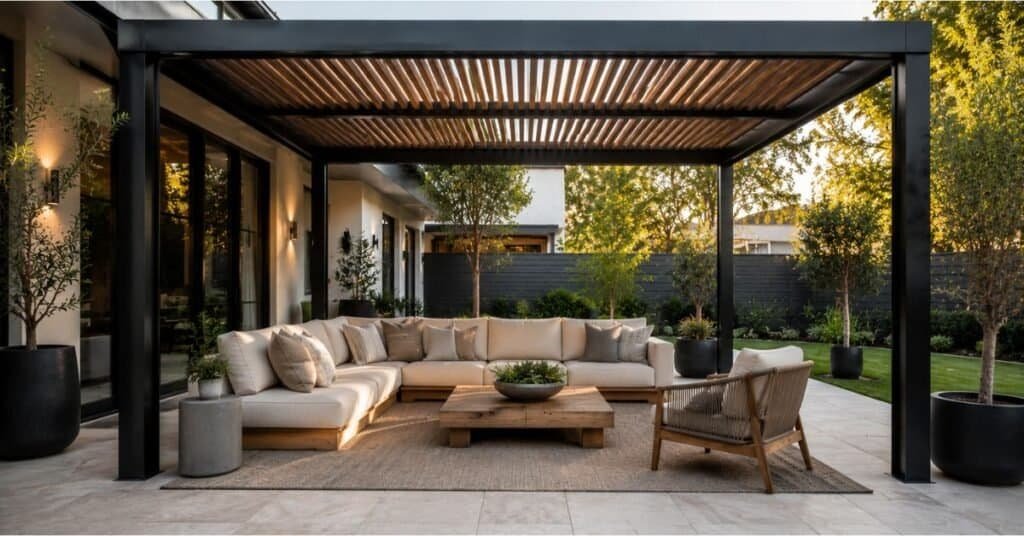
Picking Too Little Shade
One of the biggest mistakes is assuming a small amount of shade will cover the entire seating area.
A pergola that only shades half the sofa or an umbrella that protects only the coffee table leaves people moving their chairs throughout the day.
Apartment Therapy points out that patios can become uncomfortable without proper shade. A patio should feel inviting during the hottest hours, not just in the morning.
Practical fix:
• Measure the furniture footprint first
• Add extra coverage around the seating edges
• Check afternoon sun patterns before installation
Choosing the Wrong Size Cover
A cover that is too small looks disconnected from the furniture.
A cover that is too large can overwhelm the patio and make the yard feel smaller.
The best covered outdoor living rooms feel balanced. The seating area should sit comfortably underneath the structure without large empty gaps or crowded edges.
A good visual test is to imagine the furniture and cover as one zone. If they look disconnected, the scale probably needs adjustment.
Blocking Too Much Light
Many homeowners focus so much on shade that they accidentally remove all natural light.
Heavy roofs, dark panels, and fully enclosed curtains can make a patio feel darker than the interior of the house.
Instead, look for ways to filter sunlight.
Examples include:
• slatted pergola roofs
• light colored shade fabric
• curtains tied back during cooler hours
• partially covered seating zones
This keeps the patio bright while still reducing glare.
Forgetting Furniture Protection
A covered patio helps, but furniture still needs protection from changing weather.
Apartment Therapy notes that moisture, wind, and UV rays can damage outdoor furniture over time. Shade structures reduce exposure, but cushions, rugs, and decorative pieces still benefit from seasonal care.
Simple habits help:
• Store cushions during long rainy periods
• Secure lightweight decor before storms
• Clean outdoor fabrics regularly
• Move delicate accessories indoors during winter
These small steps can help outdoor furnishings last much longer.
Common Mistakes and Quick Fixes
| Mistake | What Happens | Simple Fix |
|---|---|---|
| Too little shade | Seating stays hot and uncomfortable | Extend coverage over the full lounge area |
| Cover too small | Patio feels unbalanced | Match cover size to furniture footprint |
| Cover too large | Patio feels crowded | Scale the structure to the space |
| Blocking all sunlight | Patio feels dark and closed in | Use filtered shade instead |
| Ignoring furniture protection | Faster fading and wear | Combine shade with seasonal care |
Frequently Asked Questions About Covered Outdoor Living Rooms
What is the cheapest way to shade a patio?
A patio umbrella is usually one of the most affordable options. Shade sails can also provide large coverage for a relatively low cost while maintaining an open feel.
Are pergolas enough shade for outdoor living rooms?
Pergolas provide filtered shade and work well for many patios. If stronger protection is needed, fabric panels, retractable canopies, or outdoor curtains can be added.
What is better for small spaces: umbrellas or shade sails?
For very small patios, umbrellas are often easier to position and move. Shade sails work best when there are secure mounting points and enough clearance around the seating area.
Do retractable awnings work well for patios?
Yes. Retractable awnings allow you to control sunlight throughout the day. They are particularly useful for patios attached directly to the house.
How do outdoor curtains help with sun and privacy?
Outdoor curtains reduce glare and block low angle sunlight. They also create a sense of privacy without making the patio feel fully enclosed.
What is the best shade solution for renters?
Freestanding umbrellas, portable pergolas, and outdoor curtains are often renter friendly options. For compact outdoor areas, these renter friendly balcony storage ideas can also help keep the space functional.
How do I make a covered patio feel cozy and modern?
Start with comfortable seating, a properly sized rug, layered lighting, and a few large planters. Keeping the color palette simple often creates a calmer look.
What size shade structure should I choose for my patio?
Measure the furniture layout first. The shade structure should extend beyond the main seating area so the furniture remains protected during different sun angles.
Do covered patios help protect outdoor furniture?
Yes. Covered patios reduce exposure to direct sunlight, rain, and moisture. This can help cushions, rugs, and furniture finishes last longer.
How many shade options should I layer in one space?
Two layers are often enough. For example, a pergola combined with curtains or a pergola combined with lighting and fabric panels usually provides both comfort and flexibility.
Conclusion
Covered outdoor living rooms work best when shade, airflow, layout, and comfort all support each other. A pergola may be perfect for filtered light, while a retractable awning may work better for a patio that gets hot afternoon sun.
The right shade structure should make the space easier to use, not heavier or darker. Start with the area where people sit most, then choose the cover that protects that zone without blocking every bit of natural light.
If your patio feels too hot, too exposed, or uncomfortable during the day, do not start with more decor. Start with shade. Once the seating area feels cooler and more protected, everything else starts to feel more natural.
For more outdoor styling help, visit Outdoor Decor Ideas: Smart Tricks to Transform Your Space.