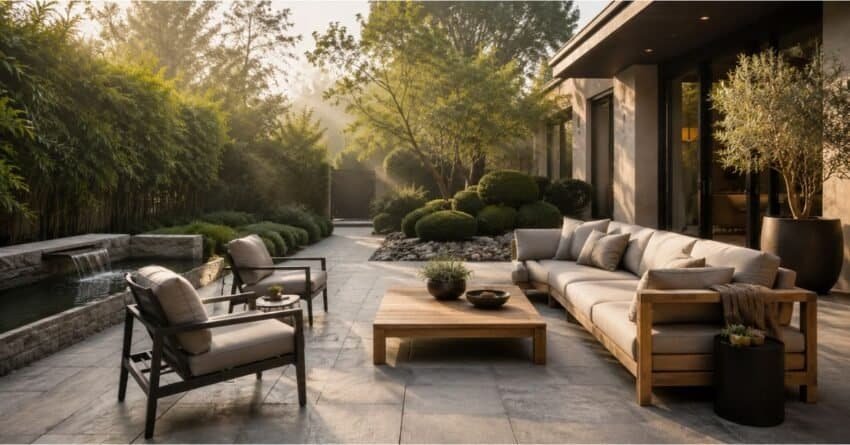
Outdoor furniture can look perfect in a photo, then feel wrong the second it lands on your patio.
The chairs are too deep. The table blocks the walkway. The cushions soak up rain. The color looked soft online, but outside in full sun it feels too bright.
That is why learning how to choose outdoor furniture starts with real life, not just style.
Before you pick a sofa, dining set, or lounge chair, think about how the space will actually be used. A patio for family meals needs different furniture than a quiet balcony coffee corner. A sunny open deck needs different pieces than a covered porch.
For layout help before you buy, these outdoor seating arrangement ideas that make patios easier to use can help you picture the spacing first.
The best outdoor furniture should feel comfortable, fit the space, and handle your local weather. In the US and Canada, that can mean hot sun, heavy rain, wind, snow, humidity, or long months of storage.
Style still matters.
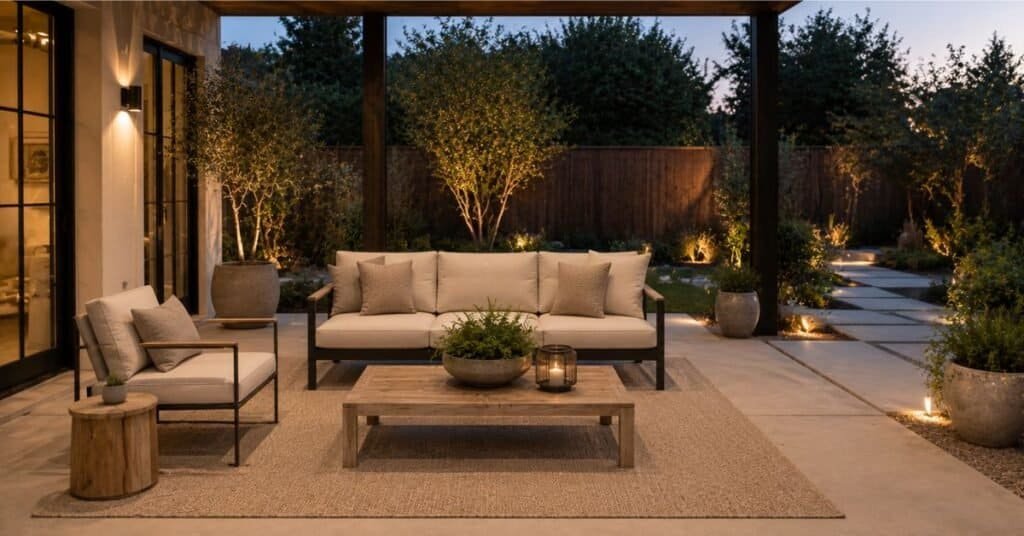
Warm wood, neutral cushions, woven texture, black metal, and soft outdoor fabrics can make a patio feel calm and inviting. But if the frame weakens, the cushions fade, or the chairs crowd the door, the look will not matter for long.
A better plan is to choose furniture by size, material, comfort, weather, and care.
That way, your outdoor living space can look good now and still feel worth using next season.
Table of Contents
How to Choose Outdoor Furniture That Fits the Way You Live
Before you think about color, cushions, or style, start with how you actually use the space.
A patio for slow weekend breakfasts needs different furniture than a backyard lounge area for guests. A balcony used for morning coffee does not need the same pieces as an open deck built for family meals.
Better Homes & Gardens recommends that you identify your patio furniture requirements first. That is a helpful place to start because it keeps you from buying a pretty set that does not match your real routine.
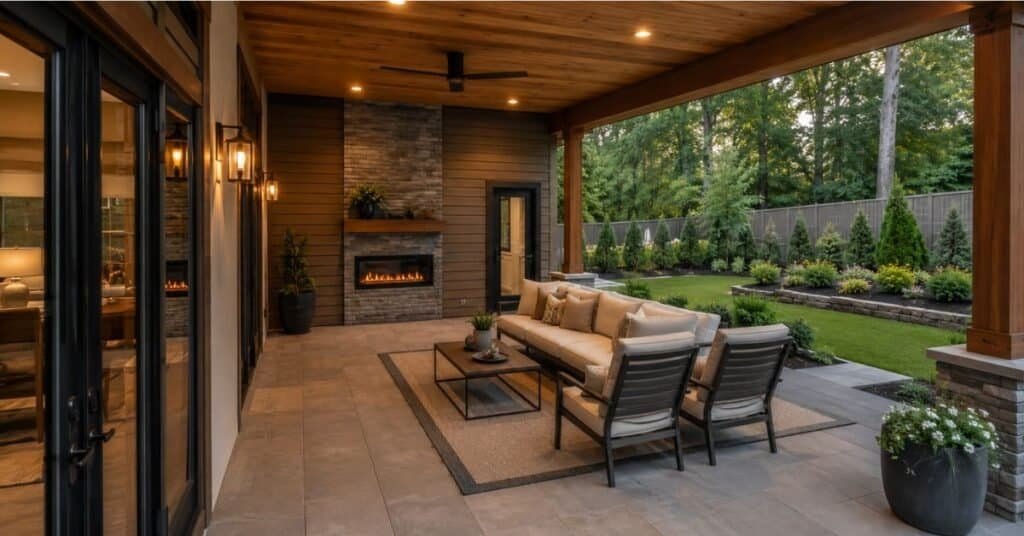
Think About How You Actually Use the Space
Picture a normal day outside.
Do you sit with coffee before work? Eat dinner outside in summer? Watch kids play in the yard? Read in the shade? Host friends around a low table?
Write down the main use before you shop.
For example:
- If you eat outside, start with a dining table and chairs.
- If you relax outside, start with lounge chairs or an outdoor sofa.
- If you have a small balcony, start with two slim chairs and a side table.
- If you host often, choose seating that can move around easily.
This one step can save you from buying extra pieces that look nice but never get used.
Match the Furniture to the Patio Size
Furniture should fit the space with room to move around it.
If the patio is small, choose slim chairs, nesting tables, folding pieces, or a compact loveseat. If the patio is larger, you can create separate zones for dining, lounging, and a cozy fire pit area.
Try to leave about 30 to 36 inches for the main walking path when possible. Around a dining table, leave enough room to pull chairs out without bumping into a wall, planter, railing, or sliding door.
A small patio can still feel comfortable when the furniture is scaled well. For more help with compact layouts, use these small outdoor space ideas for tight patios and balconies.
Choose Comfort Before Extra Pieces
A full patio set is not helpful if nobody wants to sit in it.
Before buying, check seat depth, cushion firmness, arm height, and back support. A chair that looks beautiful but feels stiff will probably stay empty.
For lounge seating, deeper cushions feel relaxed, but they may take up more room. For dining chairs, a slightly upright seat usually works better because people need to eat comfortably.
If the budget is limited, start with fewer pieces that feel better. One comfortable outdoor chair and a good side table can beat a full set that feels flimsy.
Best Outdoor Furniture Materials for Rain, Sun, and Daily Use
The material matters because outdoor furniture has a harder job than indoor furniture.
It has to deal with sun, rain, wind, pollen, dirt, humidity, cold nights, and daily use. A chair might look beautiful on day one, but the frame, fabric, and finish decide how it looks after a full season outside.
The best outdoor furniture materials are the ones that match your weather and the amount of care you are willing to do.
Teak Wood for a Warm Natural Look
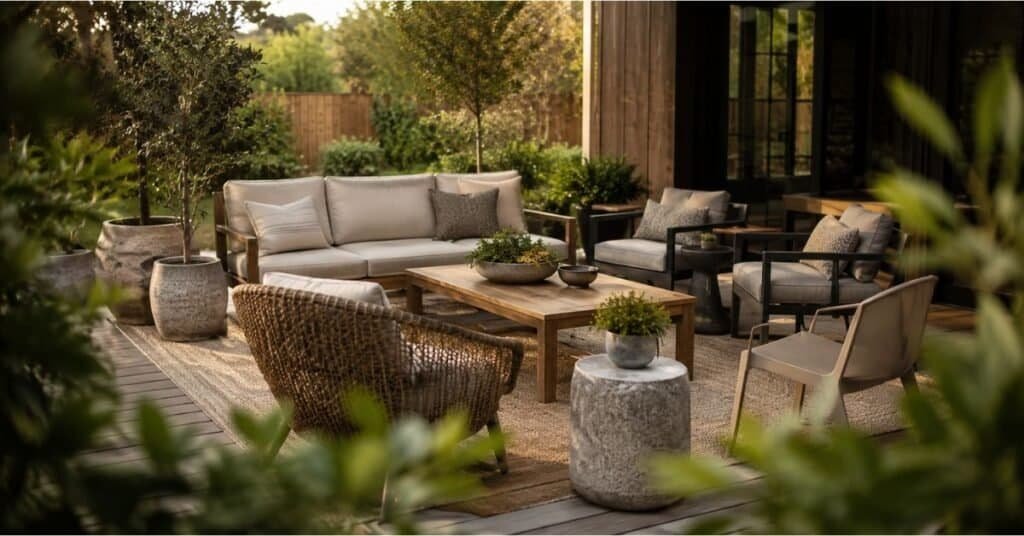
Teak wood is popular because it has a warm, natural look that works well in many outdoor living spaces.
It can look beautiful with cream cushions, black metal accents, stone planters, and a woven outdoor rug. It also fits several styles, from modern to rustic to traditional.
The main thing to know is that teak changes over time. If left outside, it can weather into a silvery gray tone. Some people love that softer aged look, while others prefer to maintain the warmer wood color with regular care.
Use teak if you like:
- Warm wood tones
- Natural texture
- A higher end outdoor look
- Furniture that can age with character
If you want the color to stay closer to golden brown, plan for cleaning and care during the outdoor season.
Aluminum for Low Maintenance Outdoor Furniture
Aluminum is a smart choice for low maintenance outdoor furniture.
It is lighter than many other metals, which makes it easier to move around a patio, deck, or balcony. It also resists rust better than some heavier metal options, especially when the frame has a powder coated finish.
Powder coated aluminum can fit many outdoor styles. A black frame can feel modern or industrial. A soft white frame can lean farmhouse or coastal. A bronze or warm gray frame can feel more transitional.
One thing to watch is wind.
Because aluminum can be light, very open decks or windy balconies may need heavier pieces, lower seating, or furniture that can be moved inside during storms.
Resin Wicker for Woven Texture
Resin wicker gives outdoor furniture a softer, more relaxed look.
It brings in woven texture without using natural wicker, which is not always a good fit for open outdoor weather. Resin wicker can look beautiful on a covered patio, balcony, or backyard lounge area.
The frame underneath matters.
A resin wicker chair with a weak frame may sag or wobble over time. Look for sturdy construction, tight weaving, and cushions that fit well without sliding around.
Resin wicker works well with:
- Neutral cushions
- Warm outdoor rugs
- Side tables
- Planters
- Lanterns
- Covered patios
It is a good option if you want outdoor furniture that feels cozy without going too rustic.
Recycled Plastic for Easy Care
Recycled plastic furniture can be practical for rain, family use, and casual outdoor seating.
It is usually easy to wipe clean, and it can handle moisture better than some lower quality wood or untreated metal pieces. It can work well around pools, open decks, and patios where furniture needs to be simple and sturdy.
The style can feel more casual, so color choice matters.
Neutral tones like black, white, gray, taupe, or soft green usually blend better with the rest of an outdoor space. Bright colors can be fun, but they may limit how easily you can change the look later with cushions and rugs.
Quick Material Comparison
| Material | Best for | Watch for |
|---|---|---|
| Teak wood | Warm natural patios | Color changes with weather |
| Aluminum | Rain and easy moving | Can feel light in wind |
| Resin wicker | Soft woven texture | Frame quality matters |
| Recycled plastic | Easy care seating | Style can feel casual |
| Steel | Strong structure | Needs rust protection |
Weather Resistant Outdoor Furniture Starts With Your Climate
Outdoor furniture should match the weather it will face most often.
A covered porch in British Columbia has different needs than a sunny patio in Arizona. A windy condo balcony in Toronto needs different pieces than a shaded backyard deck in Oregon.
Before choosing a sofa, dining set, or lounge chairs, think about your local mix of rain, sun, wind, snow, and humidity.
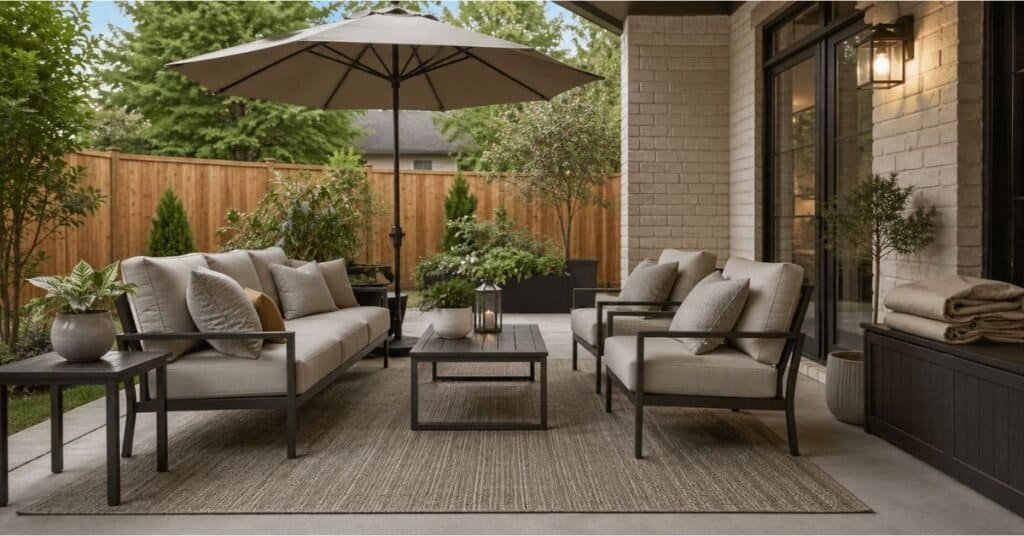
For Rainy or Humid Areas
Rainy and humid spaces need furniture that dries well and does not hold moisture for too long.
Aluminum, recycled plastic, and outdoor grade resin wicker can work well in wet areas. For cushions, look for quick dry filling and outdoor fabric that can handle damp weather.
Rainy patios also need smart storage.
Use a deck box, covered bench, or indoor shelf for cushions when the forecast looks rough. Even outdoor cushions last longer when they are not sitting wet for days.
A simple rainy climate setup could include:
- Aluminum frame lounge chairs
- Quick dry cushions
- A small side table that wipes clean
- A storage bench near the door
- Furniture covers for long wet stretches
If your patio has poor drainage, avoid placing furniture legs where puddles form. Move seating slightly away from low spots so the frames and cushions dry faster.
For Hot Sunny Patios
Full sun can be hard on outdoor furniture.
Cushions may fade. Dark metal can feel hot. Wood can dry out faster. Plastic can weaken if the quality is poor.
For sunny patios, look for UV resistant fabric, fade resistant cushions, and lighter colors that do not absorb as much heat. A patio umbrella, shade sail, pergola, or covered corner can also help protect the furniture.
Real Simple notes that higher quality outdoor furniture can last longer, even if it costs more at the start. That matters in sunny spaces because cheaper materials may show wear faster under daily UV exposure.
A smart sunny patio setup could include a neutral outdoor sofa, light cushions, a shade source, and a small coffee table that does not overheat by afternoon.
For Windy Balconies or Open Decks
Wind changes what outdoor furniture feels safe and practical.
Very light chairs can shift during strong gusts. Small tables can tip. Thin cushions can blow out of place if they are not tied or stored.
For windy spaces, choose sturdy frames, lower profiles, and pieces with a little weight. If you live in a condo or apartment, check building rules before adding umbrellas, tall screens, or loose décor.
Wind friendly choices include:
- Lower lounge chairs
- Heavier side tables
- Cushions with ties
- Planters placed away from edges
- Furniture that can move indoors during storms
Keep the layout simple. A windy balcony does not need lots of small accessories. It needs stable furniture, safe spacing, and a clear path to the door.
How to Pick Cushions and Fabrics That Hold Up Outside
Outdoor cushions do more than add color.
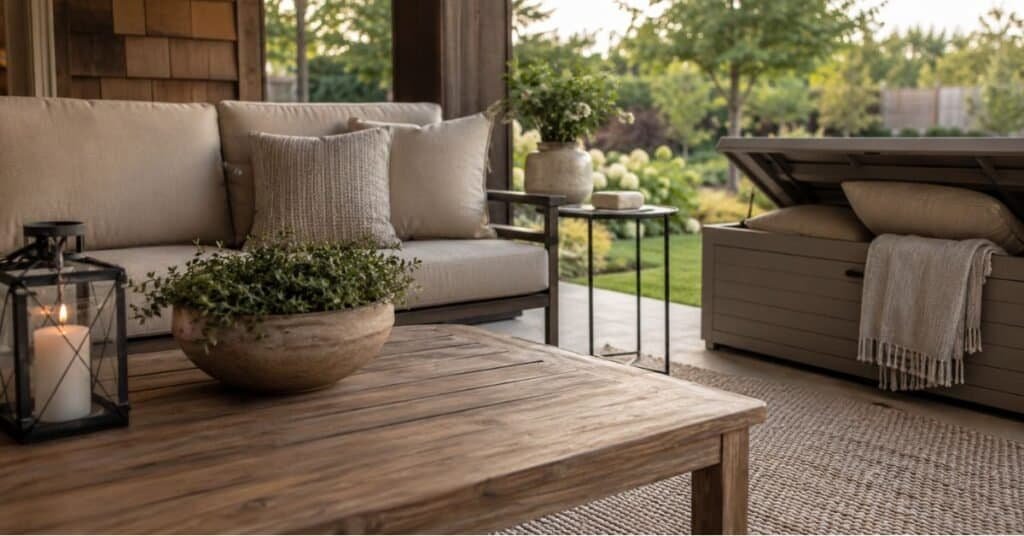
They decide how comfortable the furniture feels, how polished the patio looks, and how much cleaning you will need to do later. A strong frame can last for years, but if the cushions fade, flatten, or stay damp, the whole seating area starts to feel tired.
For outdoor spaces in the US and Canada, cushions need to handle sun, rain, pollen, dust, and storage season.
Look for UV Resistant and Fade Resistant Fabric
If your patio gets strong sun, fabric choice matters.
Dark cushions can look sharp at first, but they may fade faster in full afternoon sun. Very pale cushions can look fresh, but they may show dirt, pollen, and pet marks more quickly.
A safe middle ground is a neutral cushion in beige, taupe, gray, sage, or warm cream. These colors work with wood, black metal, woven texture, and most outdoor rugs.
For sunny patios, look for fabric described as:
- UV resistant
- Fade resistant
- Outdoor grade
- Water repellent
- Easy to clean
A covered patio has more room for softer fabrics and lighter colors. An open deck needs tougher fabric and better storage.
Choose Quick Dry Cushions for Rainy Spaces
Rainy patios need cushions that dry fast.
If cushions hold water too long, they can feel heavy, smell musty, or become unpleasant to sit on. This is especially true in humid areas, shaded yards, and patios that do not get strong afternoon sun.
Quick dry cushions are helpful for uncovered patios because they let water move through instead of staying trapped inside. Still, they should not be left wet for long stretches if you want them to look good longer.
A simple routine helps:
- Stand cushions upright after rain.
- Brush off loose dirt once they dry.
- Store cushions before long storms.
- Let them dry fully before placing them in a deck box.
A cushion storage bench near the patio door can make this easier. If storage is too far away, cushions are more likely to stay outside in bad weather.
Check the Care Label Before Cleaning
Not every outdoor cushion should be cleaned the same way.
Apartment Therapy recommends that you check care labels before washing outdoor cushions. This matters because some cushion covers can be removed and washed, while others need spot cleaning only.
Before cleaning, brush away loose dust, leaves, and pollen. Then test a small hidden area if you are using a cleaner for the first time.
For most patios, a simple cushion care rhythm works well:
- Brush off dry dirt weekly during heavy use.
- Spot clean spills right away.
- Let cushions dry fully in open air.
- Store them dry when the season ends.
This keeps the fabric looking fresher and helps your seating area feel ready when you want to use it.
Outdoor Furniture Layout Ideas That Make the Space Feel Better
Layout can make outdoor furniture feel comfortable or cramped.
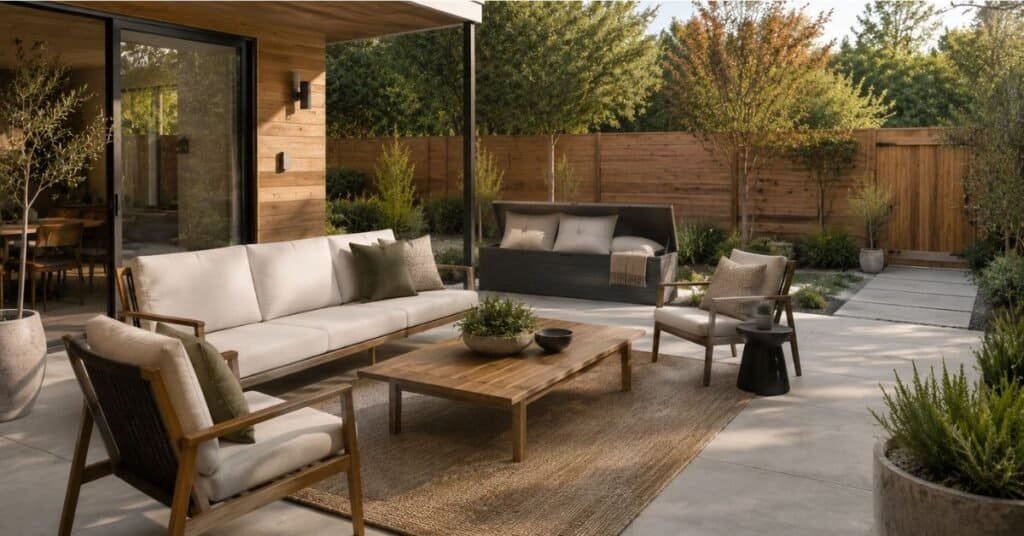
A sofa might be the right material and the right color, but if it blocks the patio door, the whole space feels off. The same thing happens when a coffee table is too large, dining chairs cannot pull out, or planters crowd the walkway.
Before buying, measure the space and mark the furniture size with painter’s tape, cardboard, or even a few outdoor cushions on the ground.
Leave Room to Walk Around the Furniture
Better Homes & Gardens recommends that you measure before buying large furniture pieces. That advice matters outdoors too, because patios and balconies often have fixed doors, railings, steps, and narrow walkways.
A good layout should let you move around without turning sideways.
Try these spacing checks:
- Leave 30 to 36 inches for a main walking path when possible.
- Keep 18 inches between a sofa and coffee table for easy reach.
- Leave room behind dining chairs so they can pull out.
- Keep planters away from door swings and steps.
- Do not block access to grills, storage boxes, or garden paths.
For a small balcony, even 24 inches of clear walking space can help the area feel easier to use.
Build Around One Main Purpose
Outdoor furniture works better when the space has one clear purpose.
A dining patio needs table clearance, sturdy chairs, and space to carry plates in and out. A lounge area needs softer seating, a coffee table, shade, and a side table for drinks.
A morning coffee spot can be much smaller. Two chairs, one side table, and a planter may be enough.
Think of the main purpose first:
- Dining area: table, chairs, shade, clear access to the door
- Lounge area: sofa or chairs, coffee table, outdoor rug, side table
- Reading corner: one deep chair, footrest, shade, small table
- Balcony setup: compact chairs, folding table, railing safe pieces
- Family space: easy clean surfaces, sturdy frames, open walking room
This keeps the patio from becoming a pile of nice pieces that do not work together.
Use Smaller Pieces for Flexible Seating
Smaller pieces can make outdoor living feel easier.
A side table can move beside a lounge chair. A small stool can act as a footrest or extra seat. Lightweight chairs can shift from the dining table to the fire pit area.
This works well if your patio has to do more than one job.
For example, a compact outdoor setup might include two lounge chairs, a small coffee table, and one extra stool. During the day, it works for coffee. At night, the stool can move closer for guests.
For more spacing help, use these outdoor seating arrangement ideas for better patio flow.
Budget Tips for Outdoor Furniture That Still Looks Good
Outdoor furniture can get expensive fast.
A sofa, dining set, rug, umbrella, cushions, covers, planters, and side tables can turn into a long receipt before the patio even feels finished. The goal is not to buy everything at once. The goal is to spend where it matters most.
A budget friendly patio can still look warm and pulled together when the main pieces are chosen well.
Spend More on the Pieces You Use Most
Start with the furniture your body actually touches.
If you sit outside every evening, the outdoor sofa or lounge chairs deserve more of the budget. If you eat outside every weekend, the dining chairs should feel sturdy and comfortable.
Accent pieces can stay simple.
A small side table, ceramic stool, or plant stand does not need to cost as much as the main seating. Those pieces help finish the space, but they do not carry the same daily wear.
A simple budget split could look like this:
- Spend more on the main seating.
- Choose sturdy dining chairs if you eat outside often.
- Save on small side tables and stools.
- Use planters, cushions, and rugs to add warmth later.
- Buy slowly instead of filling the whole patio in one weekend.
This keeps the outdoor living space from feeling cheap, even when the budget is tight.
Avoid the Cheapest Materials if You Want Longevity
Cheap outdoor furniture can be tempting, especially when the patio is empty.
But if the goal is durable outdoor furniture, the lowest price is not always the best value. Better Homes & Gardens warns that some cheap plastic furniture can fade and become brittle over time.
That does not mean every affordable piece is bad. It means you should check the frame, finish, weight, cushion quality, and care needs before buying.
Look for signs of better value:
- A sturdy frame that does not wobble
- Outdoor fabric with a tight weave
- Cushions that hold their shape
- Hardware that feels secure
- Materials that match your weather
If a chair feels weak in the store or looks thin in photos, it may not handle daily use outside.
Use Accessories to Change the Look Later
Neutral outdoor furniture is easier to update.
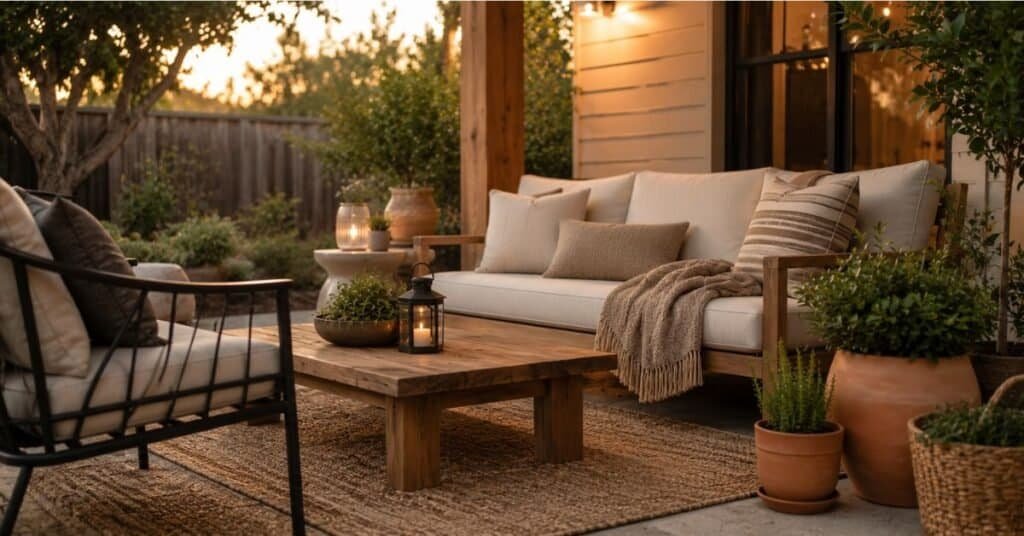
A black metal frame, teak table, gray sofa, or warm beige cushion can work through many seasons. Later, you can change the mood with pillows, an outdoor rug, planters, lanterns, or a patio umbrella.
This is a good way to save money because you are not replacing the largest pieces every time your style changes.
For example, a neutral outdoor sofa can feel fresh in spring with green pillows and pale planters. In fall, it can feel warmer with rust cushions, a woven throw, and a darker outdoor rug.
For more budget friendly styling ideas, see these small porch decor ideas that look high end.
Outdoor Furniture Care That Helps It Last Longer
Choosing outdoor furniture is only the first part.
The second part is care. Even strong materials need cleaning, drying, storage, and protection from rough weather. A patio set can last longer when dirt, moisture, and mildew do not sit on it for weeks.
The good news is that care does not need to feel like a big chore. A few small habits can keep your outdoor living space looking fresh through the season.
Clean Furniture at the Start and End of the Season
Outdoor furniture collects more than you think.
Dust, pollen, leaves, bird mess, rain marks, and sunscreen can build up on frames and cushions. If you leave all of that sitting too long, the furniture can start to look older than it is.
Martha Stewart recommends that you deep clean patio furniture at least twice a year. A smart rhythm is once when the outdoor season starts and once before furniture is stored or covered for colder months.
A simple care rhythm:
- Brush away loose dirt and leaves.
- Wipe frames with mild soap and water.
- Rinse gently if the material allows it.
- Dry metal and wood surfaces with a clean towel.
- Let cushions dry fully in open air.
For Canada and colder US states, the end of season cleaning matters a lot. Furniture should go into storage clean and dry, not covered with damp leaves and dirt.
Store Cushions When Bad Weather Hits
Outdoor cushions last longer when they are not left sitting wet.
Even weather resistant cushions can struggle when they stay damp for days. Rain, humidity, and shade can make fabric smell musty or leave marks that are harder to clean later.
Keep cushion storage close to the patio if possible.
Good storage options include:
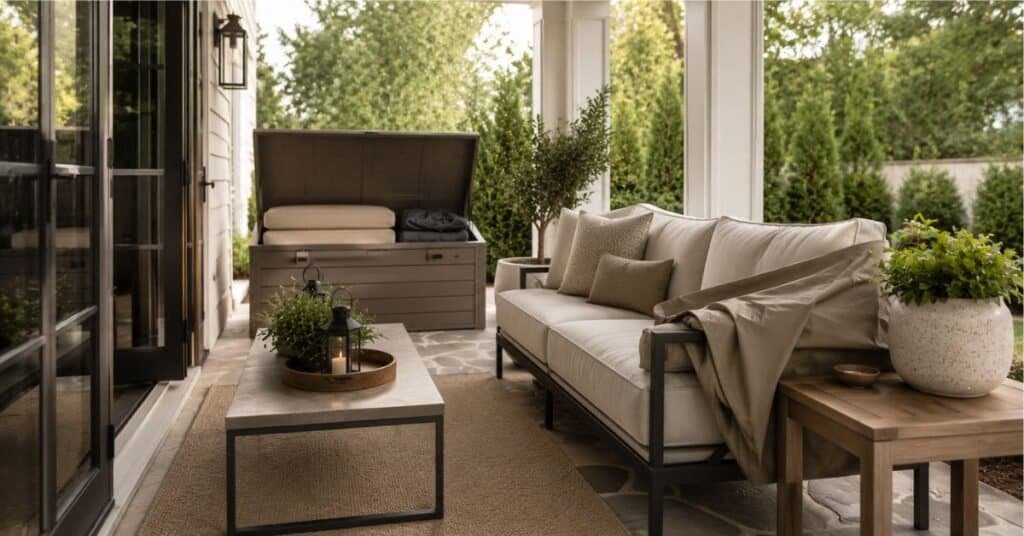
- A deck box near the door
- A storage bench under a covered area
- A garage shelf
- A mudroom basket for small pillows
- A dry basement shelf during winter
Do not store cushions while they are damp. Stand them upright first, let air move around them, then put them away once they are dry.
Use Covers the Right Way
Furniture covers can help protect outdoor pieces, but they work best when the furniture is dry first.
If you cover damp cushions or wet frames, moisture can get trapped. That can lead to mildew, marks, or musty smells.
Use covers during heavy rain, snow, long trips, or the off season. During normal patio days, uncover the furniture so air can move around it.
A clean cover should fit snugly but not trap water in deep dips. If water pools on top, adjust the cover or lift the center slightly with a safe support underneath.
When your furniture is clean, dry, and covered during rough weather, it has a better chance of looking good next season.
Lighting also helps outdoor furniture feel more usable after dark. If your patio includes a balcony or small deck, this guide on how to light a balcony without hardwiring can help you finish the setup without major DIY.
Common Patio Furniture Mistakes to Avoid
Outdoor furniture should make the patio easier to enjoy.
But a few common mistakes can make the space feel crowded, uncomfortable, or harder to maintain. Most of them happen when the furniture is chosen too quickly, before thinking about comfort, shade, size, and weather.
A good outdoor setup should feel simple to sit in, easy to walk around, and realistic to care for.
Buying for Looks Before Comfort
A chair can look beautiful and still feel terrible.
The back might be too straight. The seat might be too low. The cushion might look thick but feel flat after ten minutes. The arms might sit at the wrong height for eating, reading, or relaxing.
Before buying outdoor seating, check:
- Seat depth
- Back angle
- Cushion firmness
- Arm height
- Chair width
- How easy it is to stand up
For lounge chairs, a deeper seat can feel relaxed. For dining chairs, a more upright shape usually works better.
If you cannot test the furniture in person, check the measurements carefully. Compare the seat height and depth with a chair at home that already feels comfortable.
Forgetting About Shade
Shade affects comfort and furniture life.
A patio in full afternoon sun can make dark metal hot, fade cushions faster, and make seating less pleasant during summer. Even beautiful furniture will not get used often if the area feels too hot by 3 p.m.
A shade source can help protect both the furniture and the people using it.
Good options include:
- A patio umbrella
- A covered patio
- A pergola
- Tall planters near the sunny side
- A shade sail if allowed in your space
For small patios, use one umbrella or a narrow shade piece instead of crowding the area with too many large items. Keep the base out of the main walking path.
Choosing Too Much Furniture for the Space
Too much furniture can make even a pretty patio feel awkward.
A sofa, two lounge chairs, four dining chairs, a coffee table, a fire pit, three planters, and a storage box may sound useful. But if the door cannot open fully or guests have to squeeze sideways, the patio will feel cramped.
A smaller setup with better spacing usually feels calmer.
Try removing one piece from the plan before buying. If the layout still works, you probably did not need that extra chair or table.
For a small patio or balcony, focus on:
- One main seating area
- One table within reach
- One or two planters
- Clear walking space
- Easy access to the door
Outdoor comfort is also shaped by lighting. These cozy outdoor lighting mistakes that affect patio mood can help you avoid a space that feels harsh or flat after sunset.
Frequently Asked Questions
What is the most durable outdoor furniture material?
Teak, aluminum, recycled plastic, and high quality resin wicker can all hold up well outside when they match the climate.
For rainy areas, aluminum and recycled plastic are practical choices. For a warmer natural look, teak can be a strong choice if you are willing to clean and care for it.
Is teak worth it for outdoor furniture?
Teak can be worth it if you like warm wood tones and want outdoor furniture with a natural look.
It can age into a silvery gray color if left untreated. If you want it to stay closer to its original golden tone, plan for regular cleaning and seasonal care.
Is aluminum or wicker better for outdoor use?
Aluminum is usually easier to maintain because it resists rust and is simple to wipe clean.
Resin wicker gives a softer woven look, which can feel warmer on a patio or covered porch. If you choose wicker, check the frame underneath and make sure the weave feels firm and well made.
How do I choose outdoor furniture for a small patio?
Measure the patio before buying, then choose slim pieces that leave room to walk.
For a small patio or balcony, two chairs and one side table can work better than a bulky set. These small outdoor space ideas for balconies and patios can help you plan the layout before adding more furniture.
What kind of cushions last longest outside?
Outdoor cushions usually last longer when they use UV resistant, fade resistant, and quick dry fabric.
They still need care. Brush off dirt, dry them fully after rain, and store them during long storms or the off season.
How often should outdoor furniture be cleaned?
Light cleaning can happen often during the outdoor season, especially if pollen, dust, or leaves build up.
For deeper care, Martha Stewart recommends you deep clean patio furniture at least twice a year. A good rhythm is once when patio season starts and once before colder weather or storage.
How do I keep outdoor furniture from fading?
Use shade, furniture covers, UV resistant fabric, and cushion storage when possible.
Full sun can be rough on fabric, wood, and plastic. A patio umbrella, covered area, or simple storage habit can help your furniture keep its color longer.
Should I cover outdoor furniture all the time?
Furniture covers are helpful during heavy rain, snow, long trips, and the off season.
Just make sure the furniture is dry before covering it. Covering damp cushions or wet frames can trap moisture and create musty smells or marks.
What outdoor furniture is best for rainy or humid climates?
Rainy or humid climates do well with aluminum, recycled plastic, resin wicker with a strong frame, and quick dry cushions.
Storage matters too. Keep cushions in a dry spot during long wet stretches, and avoid placing furniture legs where water pools.
How much should I spend on patio furniture?
Spend more on the pieces you use the most, like the outdoor sofa, lounge chairs, or dining chairs.
Save on smaller pieces like side tables, stools, planters, and accessories. This helps the patio feel comfortable without making the whole setup too expensive.
Conclusion
Outdoor furniture should do more than look nice on the first sunny day.
It should fit your patio, feel comfortable, handle your weather, and stay easy enough to care for. A beautiful sofa will not help much if it blocks the door, holds rainwater, or feels too stiff to use.
Start with the way you live outside.
Do you need a dining spot, a quiet coffee corner, a family lounge area, or flexible seating for guests? Once you know that, it becomes much easier to choose the right size, material, cushions, and layout.
The best way to think about how to choose outdoor furniture is simple: match the furniture to your space, your weather, and your routine.
A smaller setup with sturdy pieces, soft cushions, clear walking space, and simple care habits will usually feel better than a patio packed with furniture that only looked good online.
For seasonal styling after your main furniture is chosen, visit these seasonal home decor ideas for year round styling.