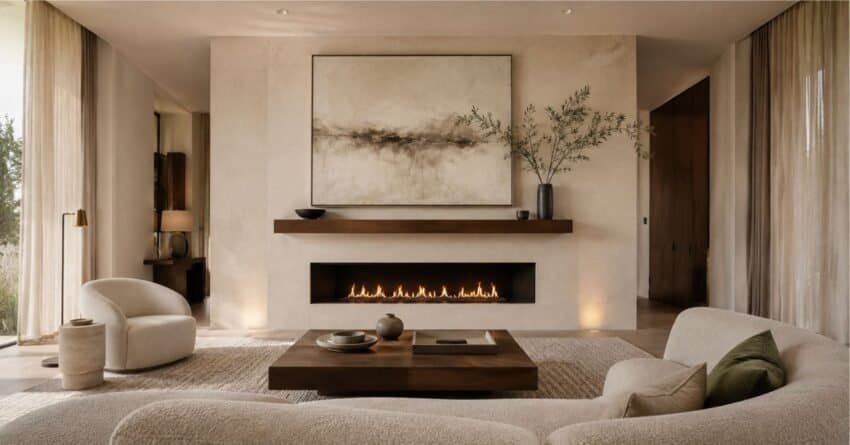
A fireplace can be the coziest part of a living room, yet the area around it can still feel bare. Maybe the mantel looks empty, the hearth feels forgotten, or the wall above the fireplace does not connect with the rest of the room.
These living room fireplace decor ideas focus on warmth without piling on extra objects. A large mirror, simple artwork, soft lighting, natural wood, layered texture, or a few well placed mantel pieces can help the fireplace feel more connected to the seating area.
House Beautiful shows how wood burning, electric, and even faux fireplaces can bring a cozy feeling to a room. The fire itself does not have to do all the work. The wall, mantel, lighting, and furniture around it can carry much of that warmth.
You can also borrow ideas from these modern living room ideas for a warmer focal area when choosing colors, furniture placement, and lighting around the hearth.
The ten ideas ahead cover mantel styling, mirrors, artwork, natural materials, hearth decor, unused fireplaces, lighting, modern finishes, and seasonal touches. The goal is a fireplace area that feels warm and finished while still leaving enough open space for the room to breathe.
Table of Contents
1. Living Room Fireplace Decor Ideas With Layered Mantel Style
Start With One Main Anchor
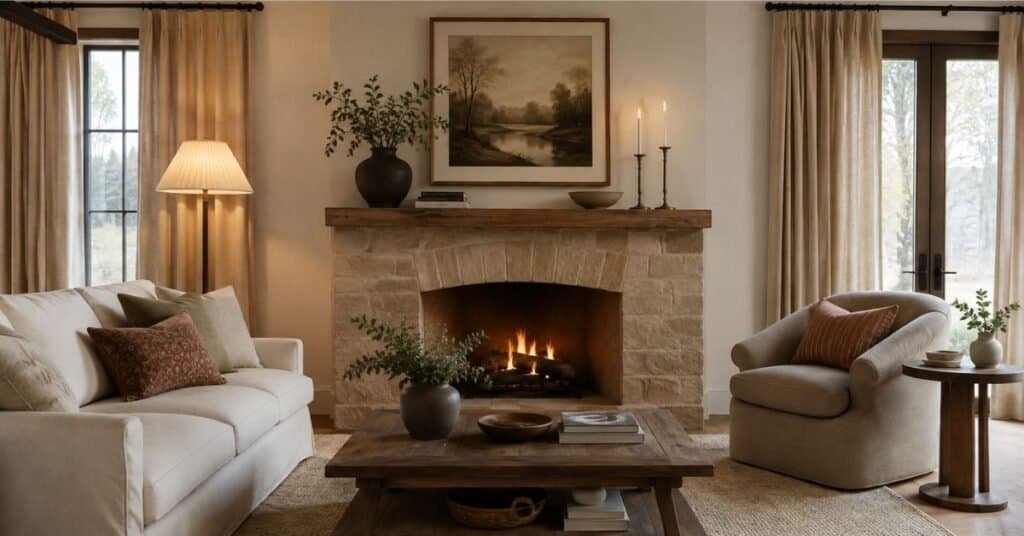
A mantel looks more settled when one larger piece gives the arrangement a clear center. Use a mirror, framed artwork, or one sculptural object as the main anchor before adding smaller decor.
Keep the anchor slightly narrower than the mantel so it feels connected to the fireplace rather than wider than it. For a 60 inch mantel, a piece around 36 to 48 inches wide often feels balanced.
Good Housekeeping suggests using artwork as the main anchor, then adding smaller objects around it at varied heights. This keeps the display layered without making every object compete for attention.
Add Two or Three Smaller Pieces
Once the main anchor is in place, add a few pieces that differ in height and material.
Good choices include:
- One ceramic vase
- Two stacked books
- A small bowl
- Olive branches
- Brass candle holders
- One low sculptural object
Keep the colors connected to the room. A cream vase, walnut frame, and muted brass candle holder can tie back to the sofa, coffee table, and lighting nearby.
A common mistake is filling the full mantel from end to end. Leave some open space so each piece is easier to notice.
Vary Height Without Making the Mantel Busy
Use one tall object, one medium piece, and one low object rather than several items at the same height. This creates more movement across the mantel.
For example, place a tall vase on one side, a low stack of books near the center, and one small bowl on the opposite side. The arrangement does not need to be perfectly symmetrical.
If the fireplace wall already has strong stone, brick, or tile, use fewer mantel pieces. The material itself already adds texture.
Try an Easy Budget Version
You do not need new decor to restyle the mantel. Move a vase from another room, stack two books you already own, and use branches clipped from the yard where appropriate.
A secondhand frame can also change the look of existing artwork without replacing the art itself.
Small Space Variation
In a compact living room, use one larger artwork and only one or two mantel objects. This keeps the fireplace warm and finished without adding too much detail to a small wall.
Layered mantel decor works best when the fireplace still has room to stand on its own. A clear anchor, varied height, and a few warm materials can create depth without covering every inch of the shelf.
2. Use an Oversized Mirror to Add Warmth and Light
Choose the Right Mirror Size
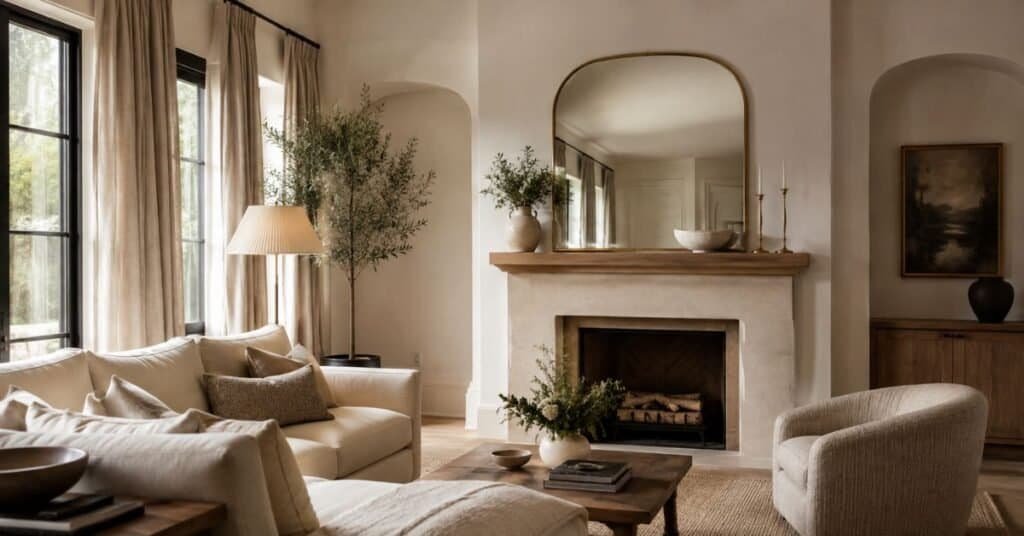
A mirror that is too small can leave a wide fireplace wall feeling unfinished. Choose one that feels connected to the mantel without covering the full wall.
A mirror around two thirds to three quarters of the mantel width is a useful starting point. For a 60 inch mantel, a mirror around 40 to 48 inches wide can feel balanced.
Keep a little open wall around the frame. This helps the fireplace and mirror read as one area instead of making the wall feel crowded.
Reflect the Best Part of the Room
The mirror will double whatever sits across from it, so check the reflection before hanging it.
Good reflections include:
- A bright window
- A floor lamp
- Greenery
- Artwork
- A warm seating area
Avoid positioning the mirror where it mainly reflects a television, cluttered storage, or a dark hallway.
A large mirror can also help a compact room feel more open. Good Housekeeping notes that a mirror over the mantel can create the impression of more space, which works especially well when it catches natural light.
Keep the Mantel Simple Underneath
A large mirror already carries a lot of visual weight, so the mantel does not need many objects.
Try:
- One vase
- One low bowl
- One pair of candle holders
Keep the pieces low enough that they do not block much of the mirror surface.
A common mistake is placing several tall objects in front of a large mirror. The result can hide the reflection and make the mantel feel busy.
Use Shape to Soften the Fireplace Wall
A rounded or arched mirror can soften a fireplace with straight stone lines, square tile, or a boxy mantel.
A rectangular mirror can work well too, especially in Modern or Industrial rooms. Keep the frame slim if the fireplace wall already has strong texture.
For a small room, one rounded mirror can replace several framed pieces and keep the wall easier to read.
Try a Budget Friendly Version
A secondhand mirror can work well if the size and frame shape suit the fireplace. Paint the frame matte black, warm white, or muted brass to connect it with the rest of the room.
You can also lean a lightweight mirror on a deep mantel if the setup is secure and suitable for the fireplace type.
A large mirror can add light, height, and warmth while keeping the mantel simple. The strongest result comes from good scale, a useful reflection, and enough open space around the frame.
3. Style the Fireplace With Artwork Instead of a Mirror
Match Artwork Scale to the Fireplace
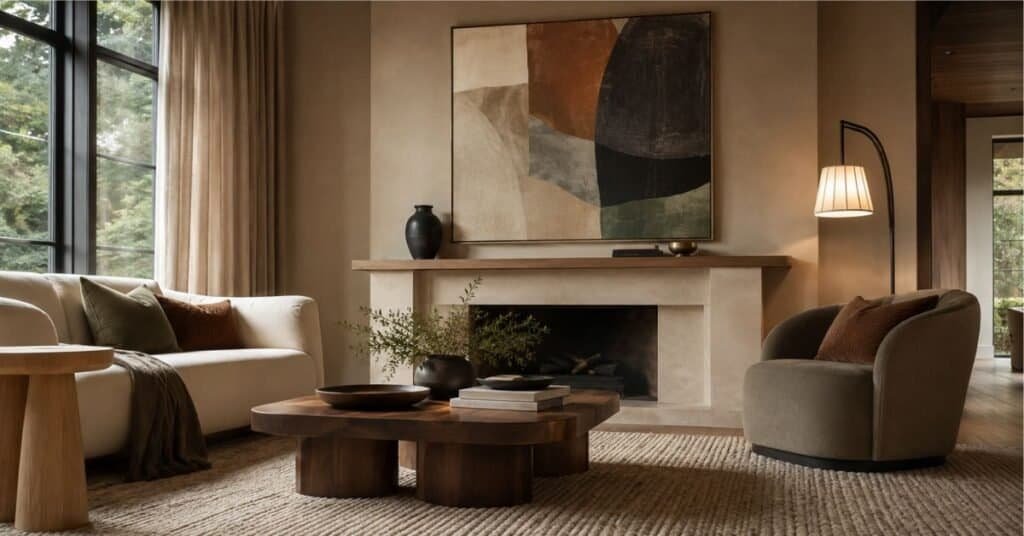
Artwork above a fireplace should feel connected to the mantel, not like a small frame floating on a large wall.
Choose a piece that is slightly narrower than the mantel. For a 60 inch mantel, artwork around 36 to 48 inches wide can give the wall enough presence without overpowering the fireplace.
Keep the bottom edge of the artwork close enough to the mantel that both pieces read as one group. A gap of around 4 to 8 inches often works well, depending on the frame size and mantel depth.
A common mistake is hanging one small picture too high. The fireplace may still feel bare because the artwork lacks enough scale.
Pull One or Two Colors From the Room
The artwork should connect with the room without matching every detail.
Use one or two shades already present in:
- The rug
- Sofa
- Curtains
- Wood furniture
- Accent chair
- Lamp finish
A cream and walnut room may suit artwork with taupe, charcoal, and one muted rust accent. A softer room with olive and pale wood can carry artwork with warm white, soft green, and brown.
House Beautiful includes fireplace rooms where artwork becomes the main visual feature while the rest of the styling stays restrained. The useful idea is to let the artwork carry most of the color and shape, then keep the mantel quieter.
Keep the Mantel Decor Low
Large artwork already adds height, so the objects below it should stay fairly low.
Try:
- One short vase
- One shallow bowl
- Two stacked books
- One small brass object
Avoid placing several tall branches or candle holders directly in front of the artwork. They can block too much of the image and make the wall feel busy.
Add Light Beside the Artwork
Soft light can help the fireplace wall feel warmer in the evening.
Use a floor lamp beside the seating area, a small table lamp nearby, or wall sconces if the layout supports them. Keep the light warm, around 2700K.
Avoid aiming a strong bulb directly at glossy art. Matte or lightly textured artwork handles reflections better.
Small Space Variation
In a compact living room, use one larger artwork instead of a mirror plus several mantel pieces.
Choose a frame with a slim edge and keep the surrounding wall open. This gives the room color and depth without adding many objects.
Budget Option
Update an existing framed print with a new mat or frame finish. A warm wood, soft black, or muted brass frame can help older artwork connect with newer furniture.
You can also create a simple abstract canvas using two or three room colors and hang it above the mantel for a lower cost update.
Artwork can give the fireplace wall warmth, color, and personality while keeping the rest of the styling simple. Good scale, a connected palette, and soft light are often enough to make the fireplace feel finished.
4. Bring in Warm Wood and Natural Texture
Use Warm Wood Near the Hearth
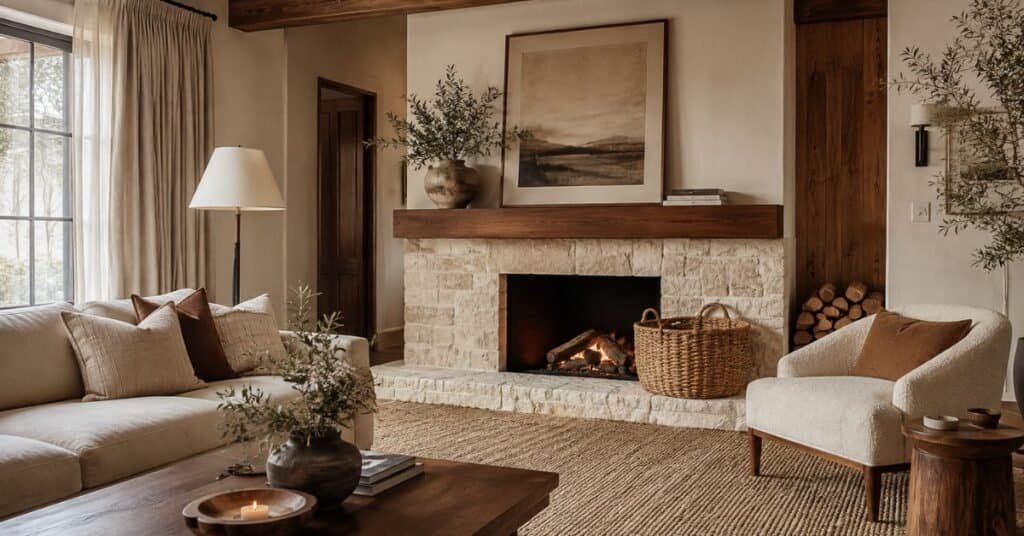
Wood helps soften stone, brick, plaster, and black fireplace surrounds. A mantel, side table, picture frame, or small stool can bring warmth without changing the fireplace itself.
Repeat the same wood family two or three times. A walnut mantel can connect with the coffee table and picture frame, while pale oak can repeat through a side table and chair legs.
Avoid mixing several unrelated wood stains in one small area. Too many tones can make the fireplace wall feel busy.
Add Woven and Soft Materials Nearby
Hard fireplace materials need softer surfaces around them.
Use:
- A wool rug
- Linen curtains
- A boucle chair
- A woven basket
- A soft throw
- One textured cushion
These layered living room textures for a warmer room can help connect the fireplace with the rest of the seating area.
A woven basket beside the hearth works well for throws or decor, but keep it outside any required clearance zone for an active fireplace.
Repeat Natural Materials Two or Three Times
A material feels more connected when it appears in more than one place.
Try repeating:
- Wood in the mantel and coffee table
- Linen in curtains and pillows
- Ceramic in a vase and lamp
- Wool in the rug and throw
- Stone in the fireplace and side table
The room does not need every material everywhere. Two or three repeats are enough to make the fireplace feel part of the full living room.
Keep the Hearth Area Open
A common mistake is placing too many baskets, stools, logs, and decor pieces around the firebox. The fireplace can start to feel crowded and harder to use.
Keep one side simple. One basket or low stool may be enough.
For a working fireplace, keep all decor away from vents, controls, and required heat clearances. Follow the fireplace manual and local fire safety rules before placing wood, fabric, baskets, or plants nearby.
Budget Option
Use one existing wood item near the fireplace rather than buying several new pieces. A small stool, frame, tray, or side table can bring in enough warmth to change the look.
A secondhand basket can also add natural texture, especially if the room already uses cream, taupe, or warm wood.
Small Space Variation
In a compact living room, use one woven basket and one wood accent instead of several floor pieces.
A slim wood mantel, small basket, and wool rug can add warmth without reducing walking space.
Natural texture works well with many living room fireplace decor ideas because it softens the harder materials around the hearth. A few repeated wood, linen, wool, and woven details can make the fireplace area feel warmer without adding clutter.
5. Make the Hearth Feel Styled Without Clutter
Keep the Hearth Mostly Open
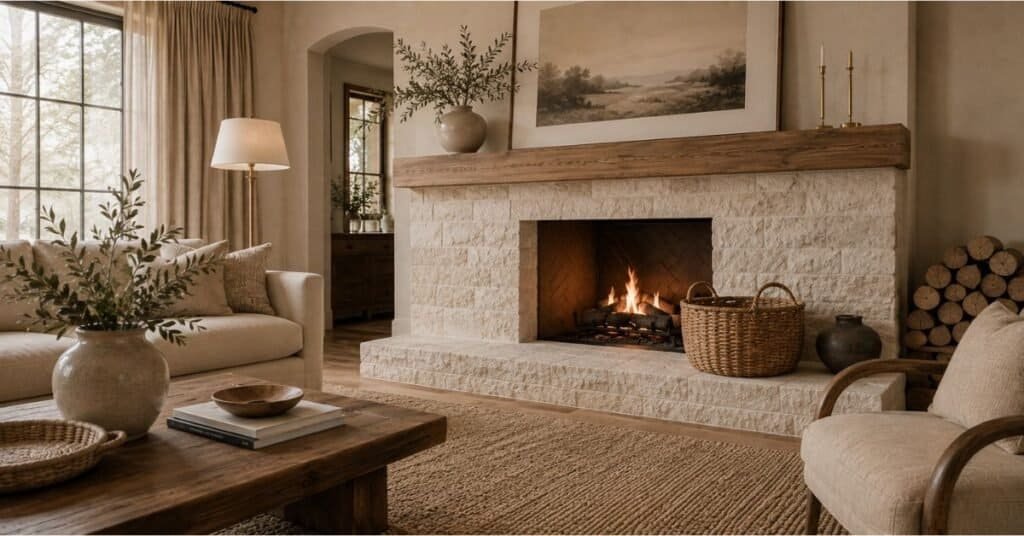
The hearth does not need several objects to look finished. One or two pieces can add texture while keeping the fireplace easy to see and use.
Try one of these:
- One woven basket
- One low ceramic vessel
- A small stack of decorative logs
- One simple lantern for a fully unused fireplace area
Leave plenty of open space around the firebox. The fireplace itself should remain the main feature.
The Spruce shares fireplace decor ideas that use logs, plants, candles, and simple objects without letting the hearth disappear. A practical way to use this is to choose one main hearth accent rather than filling both sides.
Use Scale Instead of Quantity
One larger basket usually looks calmer than three small baskets grouped together. The same applies to vases, lanterns, and decorative logs.
If the fireplace is wide, use one substantial piece on one side and leave the other side open. This can feel more relaxed than forcing perfect symmetry.
Keep hearth objects lower than the fireplace opening when possible. Tall pieces can block the view and make the area feel crowded.
A common mistake is treating every empty inch beside the firebox as space that needs decor.
Protect the Firebox and Clearances
For a working wood burning or gas fireplace, decoration should never interfere with the firebox, vents, controls, doors, or required clearances.
Check the fireplace manufacturer instructions before placing:
- Baskets
- Fabric
- Plants
- Candles
- Decorative wood
- Furniture
Keep anything that can burn well away from active heat. If you are unsure about a placement, leave the hearth open rather than moving decor closer to the fire.
Add Texture Without Blocking the Fireplace
The hearth can still feel warm through the materials around it.
A woven basket beside stone, a wool rug several feet in front of the fireplace, or a ceramic vessel on one side can soften hard surfaces without covering them.
Repeat one of those textures elsewhere. A woven basket near the hearth can connect with a natural fiber tray on the coffee table, while a ceramic vessel can repeat the finish of a lamp or vase.
Budget Option
Use a basket, vase, or wood stool you already own before buying new fireplace decor.
Sometimes moving one larger object from another room is enough to make the hearth feel finished. Clear away smaller pieces first, then judge the area from across the room.
Small Space Variation
In a small living room, keep the hearth almost completely open.
Use one slim basket beside the fireplace or place the decorative detail on the mantel instead. This protects walking space and keeps the fireplace wall from feeling crowded.
The strongest living room fireplace decor ideas do not hide the architecture. A mostly open hearth with one warm texture can make the fireplace feel cozy while keeping the area practical and visually calm.
6. Decorate a Non Working Fireplace for Cozy Warmth
Fill the Firebox With Decorative Logs
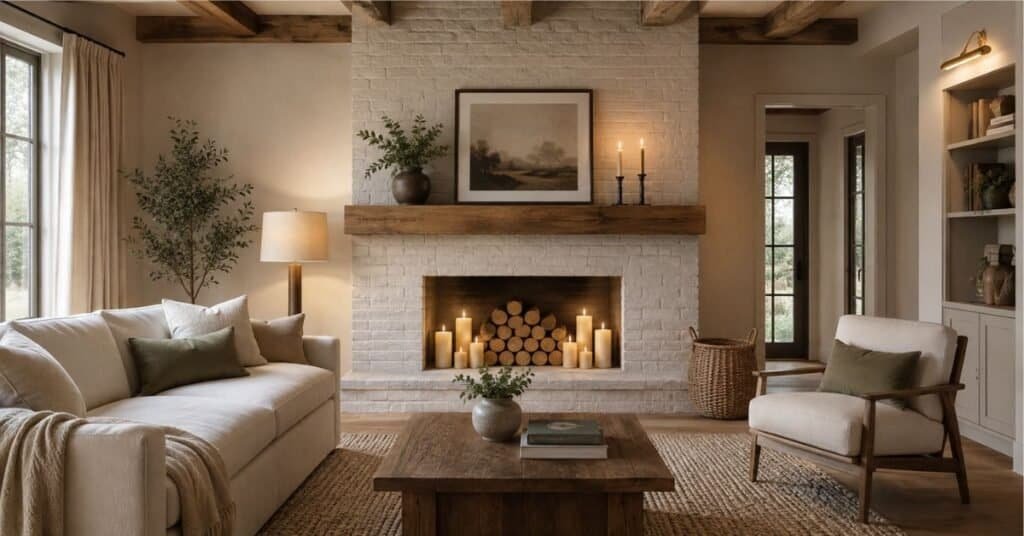
A non working fireplace can look empty when the opening is left completely bare. A neat stack of decorative logs gives the firebox texture and keeps the architecture feeling purposeful.
Use clean logs with similar lengths and stack them neatly inside the opening. Keep the arrangement contained rather than letting pieces spill onto the hearth.
The Spruce suggests using decorative firewood, candles, plants, books, or other objects inside an unused fireplace. Choose one main idea and keep the display simple.
Add Flameless Light
Warm flameless candles can give an unused fireplace some of the glow people expect from a hearth.
Use LED pillar candles in two or three heights. Place them inside the firebox rather than spreading them across the hearth.
Keep the light warm, around 2200K to 2700K if possible, so it blends with nearby lamps.
A common mistake is using too many candles in different sizes and colors. A smaller group in similar tones usually feels calmer.
Use Greenery or Books in a Fully Unused Firebox
A fireplace that will never be used can also hold books, greenery, or one sculptural object.
Try:
- A stack of vintage books
- One large ceramic vessel
- A low plant
- A bundle of decorative branches
- A pair of matching baskets
Keep the display easy to remove in case the fireplace is ever put back into service.
Budget Option
Use logs, books, or decor you already own.
A few clean firewood pieces, two flameless candles, and one ceramic vase can be enough to make the firebox feel finished without buying a full fireplace styling set.
Small Space Variation
In a compact living room, keep everything inside the firebox and leave the hearth clear.
This gives you the cozy look without taking up extra floor space around the fireplace.
A non working fireplace can still add warmth through texture, light, and simple decor. The strongest version keeps the opening styled but not packed, so the fireplace still feels like part of the room rather than a storage niche.
7. Add Decor Beside the Fireplace for Better Balance
Use Built In Shelves or Cabinets
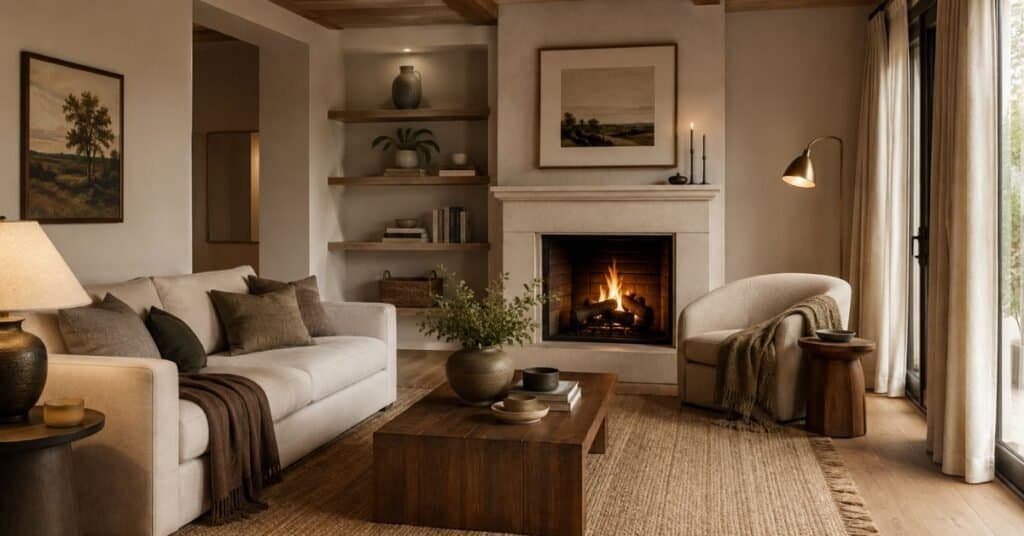
The space beside a fireplace can feel awkward when one or both sides are left empty. Shelves or cabinets can give that wall a useful purpose while keeping the fireplace as the main feature.
The Spruce suggests using built in shelving, cabinets, sconces, floor lamps, planters, and other vertical elements beside a fireplace. Keep the shelf styling light so the side area supports the fireplace rather than competing with it.
Use a small mix of:
- Books
- Ceramic vases
- One or two plants
- Woven baskets
- One framed object
Leave some shelf sections empty. A common mistake is filling every shelf edge to edge, which can make the fireplace wall feel busier than the rest of the room.
Create a Reading Corner Beside the Hearth
A chair, floor lamp, and side table can make one empty side of the fireplace feel useful.
B&Q suggests using shelves, books, baskets, plants, and a reading chair to make fireplace alcoves feel more connected to the room. Keep the chair angled slightly toward the room rather than pressing it flat against the wall.
A simple setup could include:
- One compact armchair
- One slim floor lamp
- One small side table
- One folded throw
Keep the chair and lamp outside the fireplace clearance area if the hearth is active.
Add a Tall Planter or Floor Lamp
A narrow empty strip beside the fireplace may not need furniture at all.
One tall planter or slim floor lamp can add height and soften the edge of the chimney wall. This works especially well when the fireplace is centered and the side wall feels visually bare.
Use a planter with a simple shape and keep the foliage contained so it does not spread too close to the firebox.
Balance Both Sides Without Matching Them
Both sides of the fireplace do not need identical furniture.
One side could have shelving while the other has a chair and lamp. The goal is similar visual weight, not perfect symmetry.
For example, a tall shelf filled lightly with books can balance a floor lamp and chair on the opposite side.
Small Space Variation
In a smaller living room, use one narrow shelf or one floor lamp rather than adding a chair and cabinet.
This keeps the side of the fireplace useful without tightening the walking path.
Budget Option
Move an existing chair or floor lamp beside the fireplace before buying new decor.
Sometimes the empty area needs one larger piece rather than several small accessories. Test the placement for a few days and check whether the full fireplace wall feels more balanced.
Decor beside the fireplace works best when it supports the hearth instead of turning the wall into several competing focal points. One shelf, chair, lamp, or planter can be enough to make the area feel finished.
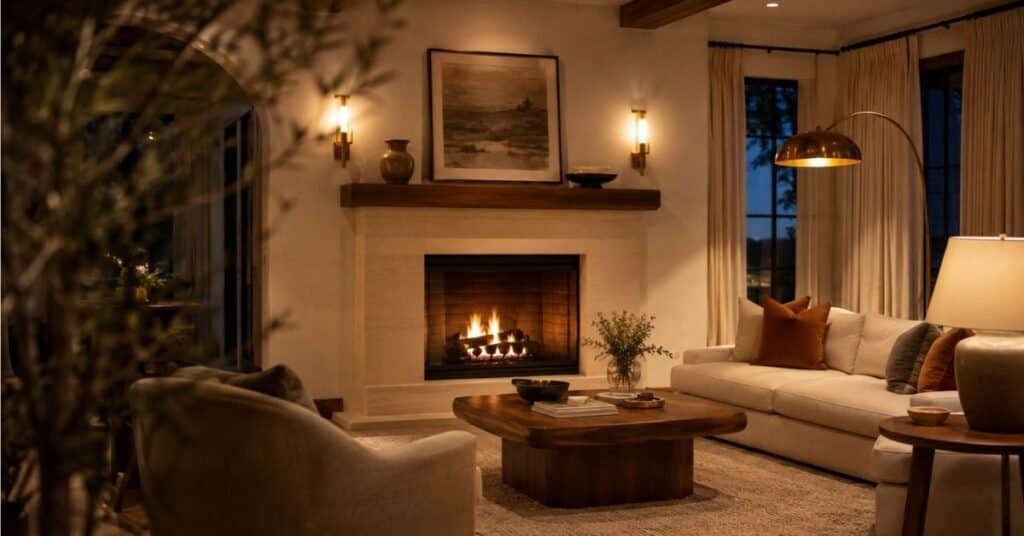
8. Use Lighting to Make the Fireplace Feel Warm After Dark
Add Light at Different Heights
A fireplace can look warm while it is burning, but the rest of the room may still feel dark. Adding light at several heights helps spread the glow beyond the hearth.
Try combining:
- One floor lamp beside a chair
- One table lamp across the room
- Wall sconces beside the fireplace
- A soft ceiling light for broader coverage
Place the lamps in different areas instead of grouping them beside the fireplace. This helps the whole seating zone feel connected after sunset.
Use Warm Bulbs
Cool white bulbs can make stone, cream upholstery, and warm wood look flatter at night. Bulbs around 2700K usually give living rooms a softer glow.
Keep the bulb temperatures close across the room. A warm floor lamp beside a cool white ceiling fixture can make one half of the room look yellow and the other half look blue.
For more placement ideas, these cozy living room lighting ideas for softer evenings can help you spread light around seating, corners, and wall decor.
Light the Corners Around the Fireplace
Sometimes an empty corner feels unfinished because it is dark, not because it needs more furniture.
Place a slim floor lamp beside a reading chair or use a small lamp on nearby shelving. The light can soften the edges of the fireplace wall and make the room feel deeper.
Avoid placing lamps where cords cross the hearth or main walking path.
Keep the Light Soft Around Artwork and Mirrors
If you have artwork above the mantel, aim light beside it rather than directly at the surface. Strong direct light can create glare.
Mirrors also reflect bright bulbs, so check the view from the sofa before settling on lamp placement.
A fabric shade, frosted glass globe, or softly diffused sconce can spread light without creating a harsh bright spot.
Budget Option
Move an existing lamp from another room before buying anything new. Test it beside the fireplace for a few evenings and see whether the seating area feels warmer.
Changing a cool bulb to a warm one can also make a noticeable difference at very little cost.
Small Space Variation
In a compact living room, use one narrow floor lamp or one wall light rather than several lamps.
Keep the floor around the hearth open and place the light beside the sofa or chair. This adds warmth without making the fireplace zone feel crowded.
Lighting can carry much of the cozy feeling people want from living room fireplace decor ideas. A few warm light sources placed at different heights can make the hearth feel inviting even when the fire is not lit.
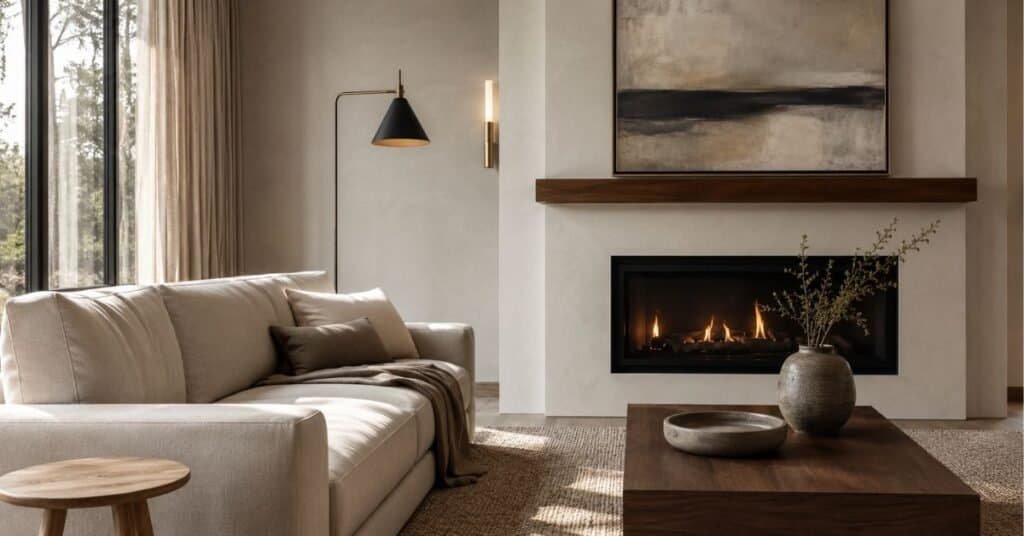
9. Style a Modern Fireplace With Clean Materials
Keep the Wall Finish Simple
A modern fireplace often looks strongest when the wall material carries much of the visual interest.
Real Simple highlights fireplace directions that use plaster, brick, built ins, and clean finishes for a modern look. A smooth plaster wall, pale brick, simple stone, or warm white paint can give the fireplace a clear shape without needing a lot of extra decor.
Keep the surrounding wall quiet if the firebox already has a strong black frame or dramatic stone.
Use Fewer Mantel Objects
Modern fireplace decor usually works better with a shorter list of larger pieces.
Try:
- One artwork
- One ceramic vase
- One low bowl
- One stack of books
Leave part of the mantel open. The empty space helps the materials and shapes stand out.
A common mistake is adding several tiny objects because the mantel feels bare. One larger vase or one wider artwork often gives the wall more presence with less visual noise.
Repeat Black, Wood, or Brass Details
Small repeated finishes can connect the fireplace with the rest of the room.
For example:
- Matte black firebox with black lamp stem
- Walnut mantel with walnut coffee table
- Muted brass lamp with brass picture frame
- Pale oak side table with pale wood chair legs
Two or three repeats are enough. Avoid using every finish on every piece of furniture.
Add Warmth Through Texture
Clean modern materials can feel cold when every surface is smooth.
Pair plaster or stone with:
- Wool
- Linen
- Boucle
- Warm wood
- Ceramic
- Soft woven fabric
A textured rug and linen curtains can soften a plaster fireplace without changing the wall itself.
Budget Option
Paint the fireplace wall in warm white, mushroom, or soft greige before replacing the surround.
A new wall color can change the full fireplace area for less than replacing tile, stone, or built ins.
Small Space Variation
In a compact room, keep the mantel very simple and use one larger artwork rather than several frames.
A slim black firebox, pale wall, one wood mantel, and one lamp nearby can give the fireplace enough detail without making the wall feel crowded.
Modern living room fireplace decor ideas work best when the material choices do more of the work. Plaster, wood, stone, and soft fabric can make the fireplace feel warm and finished while keeping the wall visually calm.
10. Add Seasonal Fireplace Decor Without Overdoing It
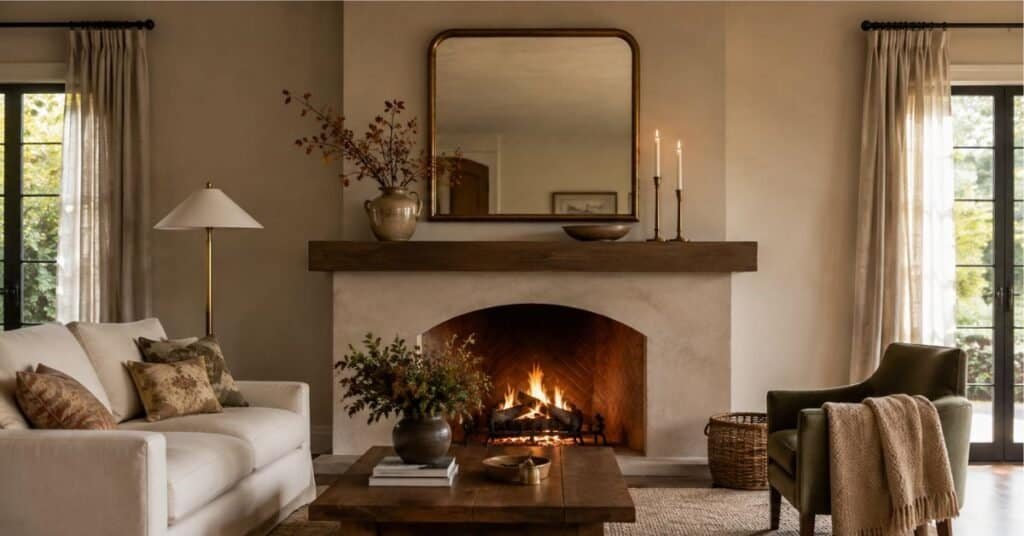
Change Only Two or Three Details
Seasonal fireplace decor can feel warm without replacing everything on the mantel.
Keep the larger pieces in place, then change only a few smaller details. A vase of branches, one bowl, or a soft throw nearby can shift the mood without making the wall feel busy.
Try:
- Autumn branches with rust or olive tones
- Evergreen stems in winter
- Pale flowers or soft green branches in spring
- Light leafy stems and linen textures in summer
The fireplace should still look like part of the living room rather than a temporary display.
Keep the Main Mantel Pieces Year Round
One mirror, artwork, or vase can stay in place through every season. This gives the mantel a steady base and makes seasonal changes easier.
For example, keep the same large artwork and ceramic vase, then change only the branches inside the vase. Swap a rust throw for a cream one in winter, or use lighter linen nearby in summer.
This keeps the room calm and reduces the need to store large amounts of decor.
Use Seasonal Color in Small Amounts
A little seasonal color can go a long way around a fireplace.
Use one or two accent shades rather than changing the entire room.
Good combinations include:
- Autumn: rust, olive, and warm brown
- Winter: cream, deep green, and muted brass
- Spring: pale green, soft blush, and warm white
- Summer: linen, sand, and soft blue gray
Repeat the seasonal color once nearby through a pillow, throw, or small vase so the mantel feels connected to the seating area.
Avoid Covering the Whole Mantel
A common mistake is adding so much garland, candle decor, signage, and small objects that the fireplace disappears.
Leave open mantel space between seasonal pieces. The fireplace shape, wall material, and main anchor should still be easy to see.
If you add greenery, keep it away from any active heat source and required fireplace clearances.
Budget Option
Use branches, dried stems, or decor you already own rather than buying a new seasonal set.
A simple vase filled with clipped branches can give the mantel a fresh look with very little cost. You can also move one pillow or throw from another room to repeat the seasonal color.
Small Space Variation
In a compact living room, keep seasonal decor to one mantel piece and one soft textile nearby.
One vase of branches plus a matching pillow can add enough seasonal warmth without making the fireplace wall feel crowded.
Seasonal living room fireplace decor ideas work best when the changes stay light. A few branches, one warm color, and a soft textile can shift the mood while keeping the fireplace calm and easy to live with.
Quick Fireplace Styling Guide
Use this quick check when your fireplace area feels bare, crowded, cold, or out of balance.
| Fireplace issue | What makes it feel off | Better move |
|---|---|---|
| Bare mantel | No clear focal point | Add one mirror or artwork |
| Mantel feels crowded | Too many small objects | Use fewer pieces at varied heights |
| Fireplace feels cold | Weak lighting and hard finishes | Add warm light, wood, and soft texture |
| Small room feels busy | Too much decor near the hearth | Use one large anchor and fewer objects |
| Unused firebox looks empty | Nothing inside the opening | Add decorative logs, flameless candles, or books |
| Fireplace wall feels uneven | One side is visually empty | Add a lamp, planter, shelf, or chair |
| Artwork feels too small | Scale is weak above the mantel | Choose art closer to the mantel width |
| Hearth feels cluttered | Too many baskets or floor pieces | Keep one low accent and more open space |
| Lighting feels harsh | Bulbs are too cool or too bright | Use warmer bulbs around 2700K |
| Seasonal decor takes over | Too many temporary pieces | Change only two or three details |
This works as a quick reference before you buy anything new. Check the fireplace from across the room first, then fix the weakest area with one clear change.
Frequently Asked Questions
How do I decorate a living room fireplace on a budget?
Start with what you already own. Move a vase, books, framed art, basket, or lamp from another room and test the arrangement before buying anything new.
A few larger pieces usually work better than many small objects.
What should I put above a fireplace mantel?
A mirror or one large artwork is usually the easiest starting point. Keep it slightly narrower than the mantel so the two pieces feel connected.
If the wall is already busy with stone, brick, or built ins, keep the decor above it simpler.
How can I style a fireplace without making the room look cluttered?
Use one main anchor and only a few smaller objects. Leave part of the mantel and hearth open so the fireplace still has room around it.
If the space starts to feel busy, remove the smallest item first.
What can I put inside a non working fireplace?
Decorative logs, flameless candles, books, greenery, or one ceramic vessel can work well inside a fireplace that is fully unused.
Keep the display contained inside the opening and easy to remove if the fireplace might be used again.
Is a mirror or artwork better above a fireplace?
A mirror works well when you want more light or the room feels small. Artwork is a better choice when you want stronger color, texture, or a more defined focal point.
The best option depends on what the fireplace wall needs most.
How do I decorate a modern fireplace?
Keep the materials and decor simple. Warm plaster, pale stone, clean brick, wood, matte black, and a small amount of brass can give the wall enough contrast without many accessories.
Use one artwork or mirror and leave open space around it.
What can I place on either side of a fireplace?
Try a floor lamp, tall planter, chair, slim shelf, or closed cabinet. The two sides do not need to match exactly, but they should carry similar visual weight.
Leave enough room around any active fireplace for required clearances.
How do I make a fireplace look cozy without lighting it?
Use warm lighting, soft textiles, natural wood, and layered texture nearby. These cozy living room lighting ideas for softer evenings can help spread warmth around the room even when the fire is off.
For a fully unused fireplace, flameless candles or decorative logs can also add visual warmth.
Can I decorate a fireplace mantel seasonally?
Yes. Keep the larger pieces in place and change only two or three smaller details, such as branches, a vase, or a nearby throw.
This keeps the mantel warm without covering the whole fireplace with seasonal decor.
How do I decorate a fireplace in a small living room?
Use fewer, larger pieces. One mirror or artwork above the mantel, one small basket beside the hearth, and one nearby lamp can be enough.
Keep the floor around the fireplace open so the room still feels easy to move through.
Conclusion
A fireplace already carries a lot of visual weight, so it does not need layers of decor to feel warm. The strongest living room fireplace decor ideas usually come down to one clear focal piece, soft lighting, natural texture, and enough open space around the hearth.
Start with the area that feels weakest. If the mantel looks bare, add one mirror or artwork. If the fireplace feels cold at night, bring in a floor lamp, warm bulb, or soft textile nearby. If the hearth feels crowded, remove a few smaller pieces and let the fireplace shape show.
For more ways to connect the fireplace with the rest of the room, see these warm modern living room styling ideas.
For a broader look at furniture placement, color, lighting, and focal points, visit the Epic Modern Living Room Guide: What No Decorator Will Show You.