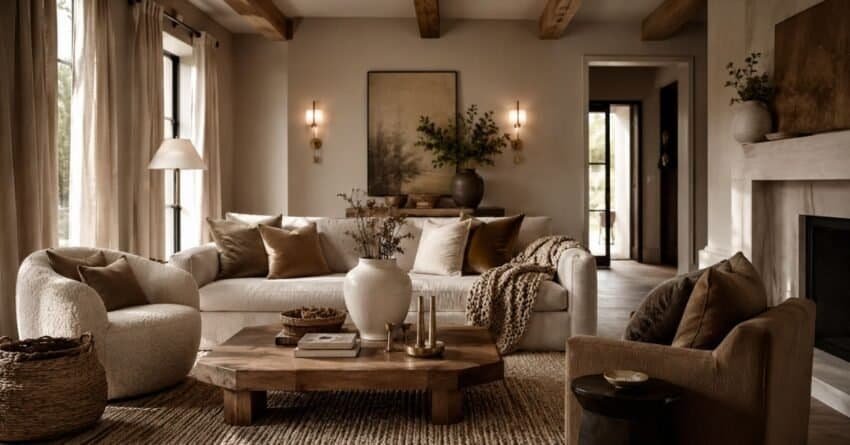
A living room can have a nice sofa, a calm paint color, and furniture that fits the space, yet still feel a little flat. It may look finished at first glance, but something is missing. That is usually where layered living room textures start to matter.
Texture is often the part that makes a room feel warm, full, and easy to settle into. A space can have a good color palette and still look one note if every surface feels too smooth or too similar. Homes & Gardens points out that a room can feel flat because the texture scheme is off, not just the color scheme. That is helpful because it means you do not always need new paint or new furniture. Sometimes you just need more contrast through fabric, wood, metal, and softer layers.
This is also why texture can make such a quick difference. The Coolist shares that living room texture ideas can add depth and visual interest without a full makeover. In real rooms, that might mean a rug with visible weave, linen curtains that soften the window, a nubby pillow on a smoother sofa, or a basket beside a chair that adds warmth near the floor.
For Purely Home Vibe readers, this topic fits naturally with modern living room ideas that feel warmer and fuller. Texture helps a room feel less plain without asking you to crowd it with more stuff. It gives the eye somewhere to land and makes even quiet colors feel richer.
In this post, the focus is on layered living room textures that look seriously good in real homes. You will see where texture should start, how to mix soft and smooth materials, how to keep a neutral room from feeling flat, and how to layer a space without making it feel busy.
Table of Contents
Why Layered Living Room Textures Matter More Than You Think
A room can have good bones and still feel a little lifeless. The layout may work. The furniture may fit. The colors may even feel calm and current. Still, the space can look flat if every surface has the same kind of finish or softness. That is exactly why layered living room textures matter so much.
Color alone cannot carry the whole room
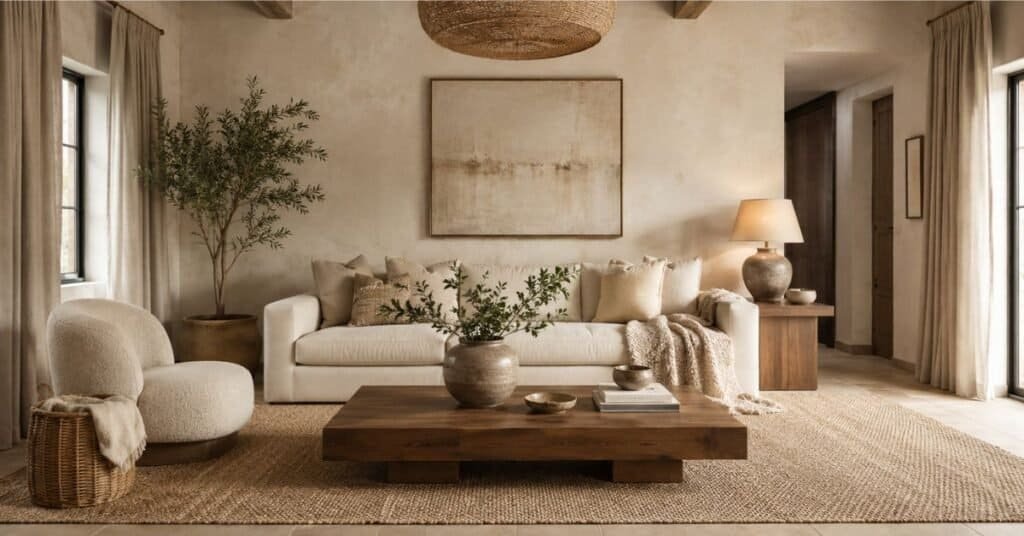
Color does a lot, but it cannot do all the work by itself. A room in warm beige, soft gray, or creamy white can still feel unfinished if the sofa, rug, walls, and curtains all read the same way. This is where texture changes everything. A woven basket, a slubby linen curtain, a soft wool rug, or a nubby pillow can make the same color palette feel more layered.
This is one reason neutral living rooms either feel warm or feel bland. The difference is often texture, not color. If the room has matte walls, smooth upholstery, and little contrast in material, it can start to look one note. Add wood grain, thicker fabric, and a little variation in surface feel, and the room starts to feel richer without changing the palette.
Texture makes a room feel warmer and more lived in
Texture helps a room feel more welcoming because it adds softness where you want comfort and structure where you want balance. Think about the difference between a sofa with one flat cotton cushion and a sofa with linen upholstery, one velvet pillow, one knit throw, and a wood table beside it. The second room does not just look better. It feels easier to settle into.
That is also why texture works so well in living rooms that need warmth without more clutter. Home explains that mixing materials can bring warmth, depth, and personality into a room. In real life, that can mean pairing a smooth leather chair with a soft rug, or placing a woven basket beside a cleaner lined media unit so the room does not feel too hard or too plain.
A layered room still works in calm and simple spaces
Texture is not only for heavily styled rooms. It matters even more in simpler spaces because there is less color and pattern doing the visual work. In a clean room with white walls and a neutral sofa, texture becomes the thing that makes the space feel thoughtful instead of bare.
This is helpful if you like a quieter living room and do not want too many accessories. You can keep the room calm and still make it feel full by mixing three or four textures that play well together. Linen curtains, a woven rug, a wood coffee table, and a ceramic lamp base are often enough to shift the whole mood.
If your room already feels simple, that is actually a good starting point. Texture does not need to shout. It just needs to show up in the places your eye and hand notice most.
Layered Living Room Textures That Set the Foundation First
The easiest way to build texture is to start with the biggest things in the room. A lot of people try to fix a flat space with a few small accessories, but that usually does not go far enough. If the sofa, rug, and curtains all feel too plain or too similar, the room will still look a little thin no matter how many candles or vases you add.
Start with the sofa, rug, and curtains
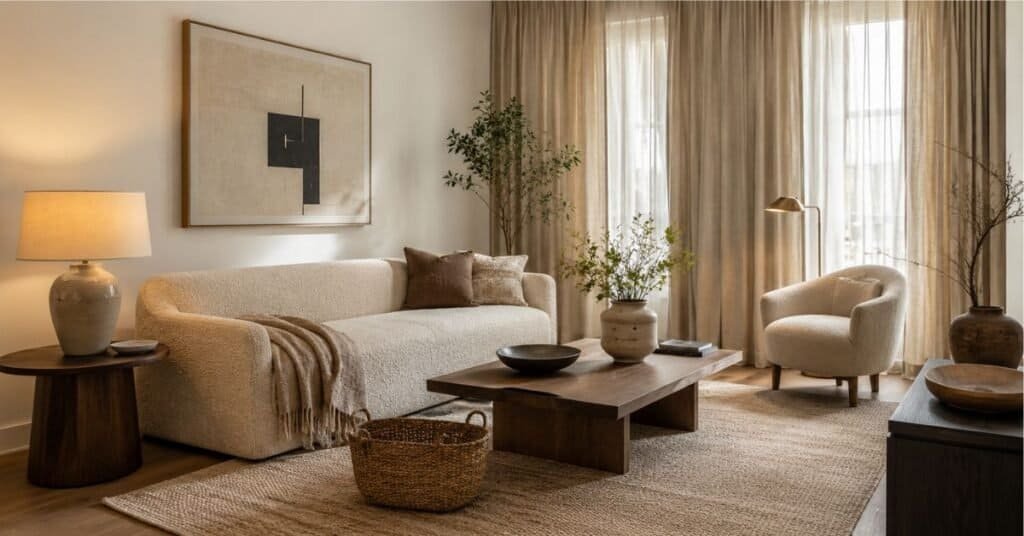
These three pieces do most of the texture work in a living room because they cover the largest visual areas. The sofa sets the tone for softness, the rug brings texture underfoot, and the curtains shape how the light feels around the room. When these three layers have contrast, the whole space starts to feel fuller.
Coohom explains that texture layering often starts with the main surfaces in the room, especially upholstery, rugs, and drapery. That makes sense in real homes because these are the pieces your eye notices first. A smooth sofa with a thick woven rug and airy linen curtains already gives you a stronger base than a room where every surface feels flat and even.
A practical way to think about it is this:
- the sofa gives you the main fabric texture
- the rug gives you weight and depth near the floor
- the curtains soften the wall and window area
If your rug feels too small, the room can look broken up before you even start layering. This is where how to choose the right rug size for a living room can help, because texture always works better when the scale of the room feels right too.
Pick one soft texture, one natural texture, and one smoother finish
A room feels balanced when the textures are different enough to notice but not so random that they fight each other. One easy formula is to use:
- one soft texture
- one natural texture
- one smoother finish
The soft texture could be a boucle chair, velvet pillow, wool rug, or chunky throw. The natural texture might be linen curtains, a woven basket, a wood table, or rattan accents. The smoother finish could be leather, ceramic, glass, metal, or a painted surface.
This mix works because it keeps the room from leaning too fuzzy, too rough, or too hard. Reynard Lowell talks about how contrast between materials gives a room more visual tension and depth. In a living room, that might look like a nubby sofa with a smooth ceramic lamp, or a plush rug beside a clean wood coffee table.
Let the biggest surfaces do the heavy lifting
It is tempting to think texture comes from decor alone, but the stronger result usually comes from the larger pieces. A textured rug, upholstered seating, curtains with visible weave, and a coffee table with natural grain do much more than a shelf full of little objects.
This is also the better path if you want the room to feel calm. Instead of adding ten small textured pieces, choose three or four larger texture anchors that already give the room presence. Then the smaller items can support the look instead of trying to rescue it.
If your room still feels flat, start by asking:
- does the rug have visible texture or pattern
- does the sofa fabric have some depth
- do the curtains soften the room or disappear into it
- is there at least one natural material like wood, wicker, or linen
That quick check usually tells you where the room is missing weight.
| Texture anchor | What it adds | Easy starting point |
|---|---|---|
| Sofa | Softness and visual comfort | Linen blend, boucle, or textured weave upholstery |
| Rug | Grounding and depth | Wool, flatweave, jute blend, or faded patterned rug |
| Curtains | Softness near the walls and windows | Linen or cotton panels with visible weave |
| Coffee table or side table | Natural contrast and structure | Warm wood, stone top, or woven lower shelf |
| Accent chair or ottoman | Extra texture without crowding | Velvet, leather, boucle, or cane detail |
Layered Living Room Textures That Make a Room Feel Cozy
Once the bigger texture anchors are in place, the next step is warmth. This is where the room starts to feel softer and more lived in, not just better styled. Cozy texture comes from contrast you can see and almost feel right away, like a knit throw on a smoother sofa, a woven basket near a wood table, or a soft rug under bare feet in the morning.
Use throws and pillows to soften the seating area
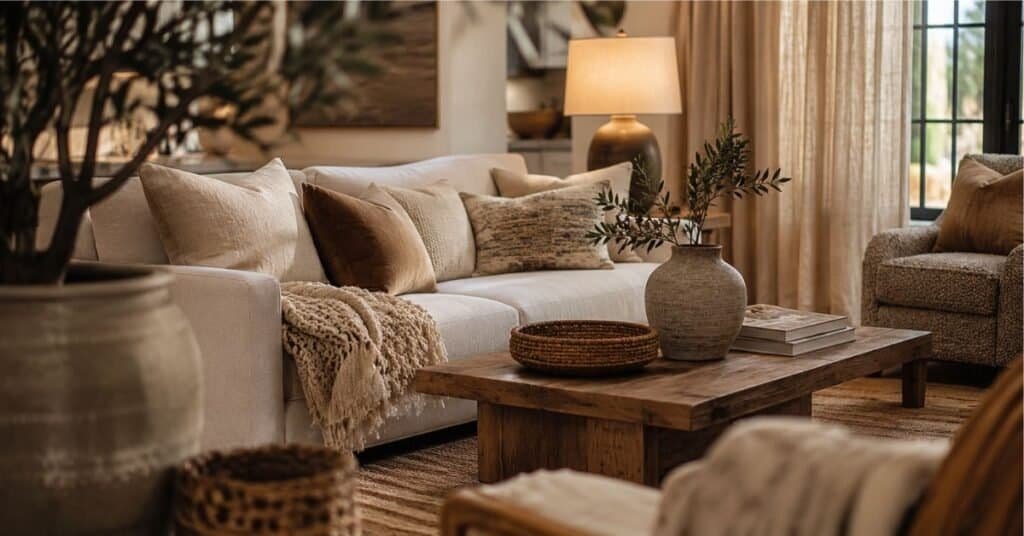
The sofa is usually the easiest place to add texture fast. A couple of pillows in different finishes and one throw with more weight can change the whole seating area without making it look busy. The key is to vary the feel, not just the color.
A useful mix might be:
- one linen or cotton pillow for a softer matte finish
- one velvet or boucle pillow for depth
- one heavier throw in knit, wool, or brushed fabric
This works because the sofa starts to feel layered instead of flat. The Coolist notes that throws, pillows, baskets, and wall finishes can all help add texture without needing a full room redo. In real rooms, that could mean adding a chunky knit throw folded on one arm of the sofa and keeping the other side cleaner so the seat still feels usable.
Try not to crowd the sofa with too many cushions. On a standard 84 to 90 inch sofa, three to five pillows is often enough. The goal is softness with breathing room.
Bring in wood, baskets, and woven pieces for warmth
Soft texture matters, but natural texture is what often keeps the room from feeling too polished. Warm wood, woven baskets, cane details, rattan, and natural fiber shades bring in a quieter kind of depth. These are the materials that help a neutral room feel grounded.
This is especially helpful in living rooms that already have smooth upholstery or painted walls. A wood coffee table, a basket tucked near the fireplace, or a woven tray on the ottoman can add the kind of contrast that makes the whole room feel less one note. @Home talks about how mixing materials adds warmth, depth, and personality, and that idea really shows up here. The room feels warmer because the materials are doing different jobs.
If you want the room to feel softer in the evening too, pair those warmer textures with cozy living room lighting ideas that soften the room. Texture always reads better when the light is gentle enough to show it.
Add one textured accent that changes the mood fast
Sometimes one stronger textural piece can do more than a group of smaller ones. A boucle chair, a ribbed ceramic lamp, a thick wool pouf, or a large piece of textured wall art can shift the mood of the room almost right away. This is a good move when the room feels finished but still a little flat.
A textured accent works best when it has enough space around it. If you add a boucle chair, let that be the softer standout in the corner. If you use textured wall art, keep the console below it simpler. The room starts to feel richer when each layer has room to be noticed.
This is also where surfaces matter. If the sofa and rug already have texture, your coffee table styling can stay simpler. These modern coffee table styling ideas that feel easy can help you keep that balance so the room feels warm instead of crowded.
How to Mix Living Room Texture Without Making It Feel Busy
Texture works best when the room still feels calm. The goal is not to pile on more and more materials until every surface competes for attention. The goal is to create enough contrast that the room feels layered, while still leaving space for the eye to rest.
Repeat a few textures instead of adding too many
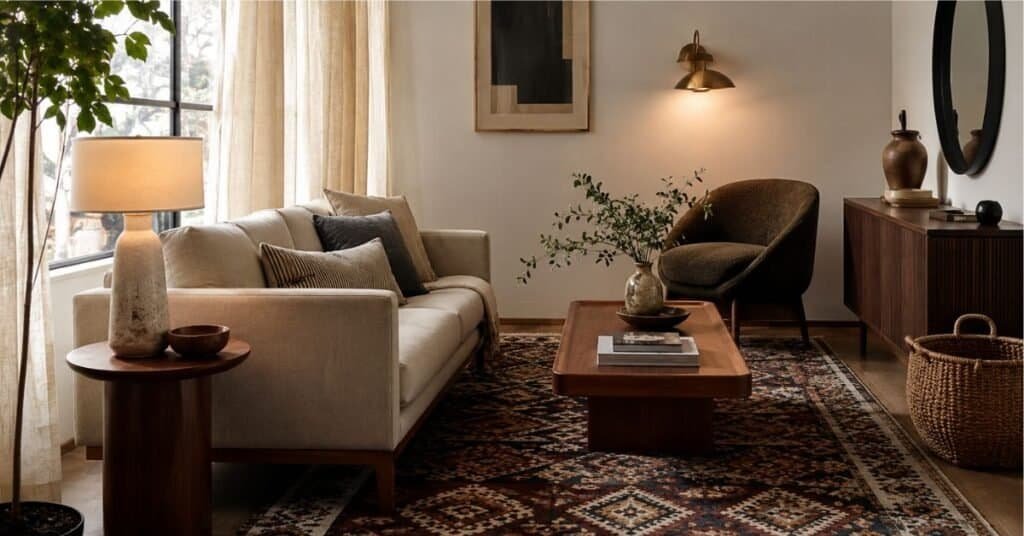
One of the easiest ways to keep a layered room from feeling messy is to repeat a few textures instead of using too many one time finishes. If linen shows up in the curtains, it can show up again in one pillow or lampshade. If warm wood is on the coffee table, it can appear again in a side table frame or a tray. That repetition makes the room feel more settled.
A useful rule is to work with three main texture families:
- one soft texture
- one natural texture
- one smoother or cleaner finish
Coohom recommends working with a small group of contrasting textures instead of throwing in every material at once. In a living room, that could be a wool rug, linen curtains, and a ceramic lamp, with wood tying the room together. The space feels interesting, but not overworked.
Mix texture and pattern in smaller doses
Texture and pattern can sit together beautifully, but they need a little breathing room. A patterned rug with plain velvet pillows works well because the texture on the pillows adds depth without competing with the pattern below. A textured throw can also sit nicely on a plain sofa because the eye gets one richer layer without too much movement.
This is where scale matters. If the rug already has a visible pattern, keep the other fabrics quieter. If the curtains have a lot of visible weave, the pillows can be smoother. Justin Esterling talks about layering texture along with color and pattern so the room feels connected. A good living room usually has one louder layer and a few quieter layers around it.
If you want a quick way to test balance, squint at the room from the doorway. If one side feels too busy or every surface is asking for attention at once, pull one patterned or heavily textured item out and see if the room settles.
Leave smooth surfaces in the room too
A room full of fuzzy, woven, or nubby finishes can start to feel heavy if nothing smoother is there to break it up. This is why smooth painted walls, cleaner wood finishes, glass, ceramic, or metal matter so much. They give the richer textures something to sit against.
Contrast is what makes texture stand out. A boucle chair looks better beside a cleaner side table. A chunky throw feels richer on a smoother sofa arm. A woven basket reads more clearly against a painted wall than against another very busy surface. The room needs both tactile and quiet finishes.
This is also helpful in smaller rooms where too much texture can make the space feel crowded. The smoother surfaces create pause, which makes the softer and more tactile layers feel more special.
Small space variation
In a small living room, use fewer textures but make them count. Let the rug and curtains do more of the work, then add one clear accent texture like a boucle chair, woven basket, or thick throw. You do not need every object in the room to be tactile.
It also helps to keep the palette steady. A small room with too many finishes and too many colors can feel cramped fast. If you need more help with that balance, these small apartment ideas that make rooms feel bigger pair well with texture layering because scale and simplicity matter just as much as softness.
| Texture mix | Why it works | What keeps it calm |
|---|---|---|
| Wool rug, linen curtains, ceramic lamp | Soft, airy, and grounded | Neutral palette and repeated tones |
| Velvet pillow, wood table, woven basket | Warm contrast between soft and natural | One color family ties it together |
| Patterned rug, plain sofa, knit throw | Movement at the floor, softness on the seat | One main pattern only |
| Boucle chair, smooth console, brass lamp | Textural depth with cleaner support pieces | Smooth surfaces give the eye rest |
Layered Living Room Textures for Neutral Rooms That Feel Flat
Neutral living rooms can be beautiful, but they are also the easiest ones to get wrong. A soft palette gives the room a calm base, yet if every surface is too smooth or too close in tone, the space can start to feel washed out. This is where layered living room textures make the biggest difference. They give a neutral room shape, depth, and warmth without asking you to add stronger color.
Use tonal texture instead of more color
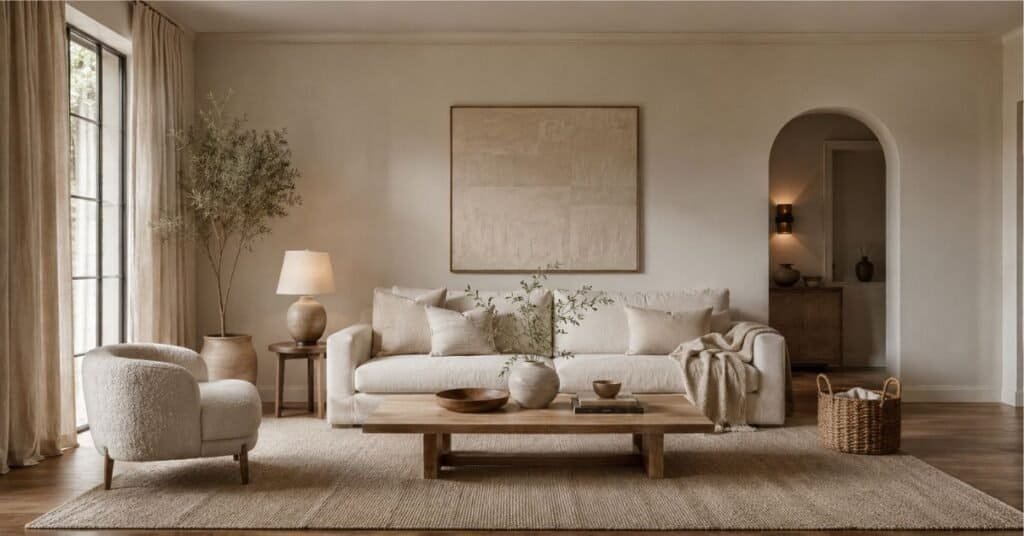
A neutral room does not need brighter accents to feel more interesting. It often just needs more variation in the surfaces. Cream, taupe, sand, oatmeal, mushroom, and warm gray can all work together if the materials feel different enough from one another.
That might mean a soft linen sofa against a slightly nubby rug, matte painted walls, a smoother ceramic lamp, and a wood table with visible grain. The colors stay quiet, but the room feels much fuller. This is often the better move if you like calm spaces and do not want the room to feel too decorated.
Mix matte, nubby, plush, and woven finishes
The easiest way to build interest in a neutral room is to bring in a few finishes that clearly feel different from each other. Matte walls keep the room soft. A nubby pillow or boucle chair adds gentle depth. Plush textiles make the seating area feel more inviting. Woven textures warm up the edges of the room.
A simple mix could look like this:
- a linen or cotton sofa
- a wool or woven rug
- a boucle or velvet pillow
- a wood coffee table
- a ceramic lamp or vase
- one woven basket or shade
This keeps the palette controlled while still giving the room enough contrast. The space feels layered because the eye moves from one surface to the next and notices the shift in finish, not just the shift in color.
Add depth with drapery, wall art, and soft lighting
Texture is not only for the sofa and rug. In a neutral room, some of the most helpful texture often comes from the vertical surfaces. Full length curtains with visible weave can soften a plain wall. Textured wall art or a framed fabric piece can make a room feel less flat than a basic print alone. Even a pleated lampshade or a ribbed lamp base can add a quieter layer.
Lighting matters here too. Soft light helps subtle textures show up. Linen curtains look better with daylight passing through them. A wool rug reads warmer when the lamp light is soft enough to show its depth. If your room still feels a little bare, some ideas from minimalist living room styling that still feels warm can help you keep the room simple while adding more depth.
A good neutral room rarely relies on one thing to carry all the interest. It feels better when the texture shows up in a few different places:
- underfoot through the rug
- at seat level through upholstery and pillows
- near the windows through drapery
- on surfaces through ceramic, wood, or woven details
- in the lighting through softer shades and warmer glow
Common Texture Mistakes That Make a Living Room Look Off
Texture can help a room feel warm and full, but it can also go wrong when the layers are not balanced. A living room usually looks off when the textures are either too few, too similar, or too scattered. The room may have nice pieces, but the mix does not feel settled.
Adding too many small textured objects
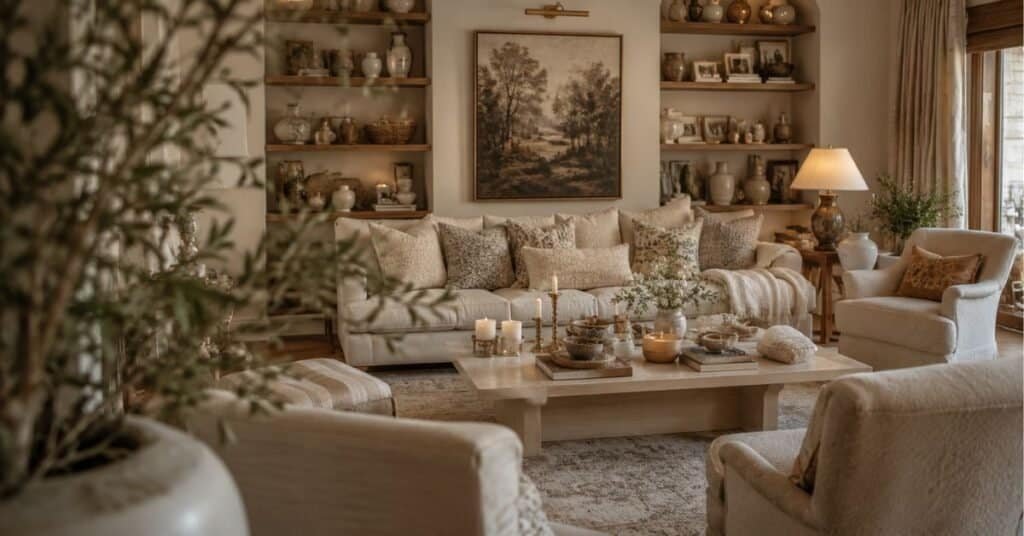
This is one of the most common texture mistakes. A room starts to feel busy when every shelf, table, and corner has a small textured item trying to help. Baskets, beads, candles, bowls, boxes, and little objects can pile up fast, yet the room still feels flat because the main surfaces never changed.
Coohom warns against over accessorizing when layering texture. That makes sense because the stronger result usually comes from the bigger pieces first. A textured rug, linen curtains, and one solid throw will do more than a dozen little decor items spread around the room.
If your living room feels cluttered, take a look at the coffee table, shelves, and side tables first. Pull back the smallest pieces, then ask whether the room is missing texture in the sofa, rug, or curtains instead.
Using the same finish everywhere
A room can also feel flat when everything is technically textured, but all the textures are too close to each other. If the rug is soft, the pillows are soft, the throw is soft, and the chair is soft in almost the same way, the room loses contrast. The same thing can happen with wood tones or metal finishes that repeat without any variation.
This is where tension helps. Reynard Lowell talks about mixing and matching materials so the room has contrast instead of sameness. In a living room, that could mean pairing a plush rug with a cleaner lined wood table, or mixing woven and smooth finishes so each one stands out more clearly.
A quick fix is to look for what is missing. If the room has plenty of soft fabric, add one smoother ceramic surface or a warmer wood piece. If the room has lots of woven and wood textures, add one plush layer through a pillow or throw.
Forgetting contrast between soft and smooth
A room full of tactile pieces can still feel heavy if nothing smooth breaks them up. This often shows up in cozy living rooms where every surface is fuzzy, woven, or thick. The room may feel warm, but it can lose shape if there is no pause between the richer materials.
Smooth finishes matter because they give the eye rest. Painted walls, clean wood surfaces, glass, metal, and ceramic all help soften the effect of heavier texture. A nubby chair looks better near a smooth side table. A thick throw looks richer on a simpler sofa arm.
If the room feels a little dense, do not remove all the soft layers. Just make sure one or two cleaner surfaces are still visible.
Treating decor as the whole texture plan
Small decor can help finish a room, but it cannot carry the full texture plan on its own. If the sofa fabric is flat, the rug is too thin, and the curtains disappear into the wall, a few bowls and vases will not fix the room. Texture needs to start with the pieces that shape the room first.
This is why larger layers matter more:
- sofa fabric
- rug texture
- curtain weight and weave
- wood grain on tables
- one or two stronger tactile accents
Once those are working, the decor starts to feel like support instead of a patch.
| Mistake | What it does to the room | Better move |
|---|---|---|
| Too many small textured objects | The room feels busy and fussy | Focus on sofa, rug, and curtains first |
| Same finish everywhere | The room feels flat | Mix soft, natural, and smooth surfaces |
| No smooth contrast | The room feels heavy | Keep some ceramic, wood, glass, or painted surfaces visible |
| Decor doing all the work | The room still feels thin | Build texture through larger anchors first |
A Simple Texture Plan You Can Try in One Weekend
A layered room does not need a full reset to look better. Most of the time, the fastest change comes from choosing one or two texture anchors and building from there. The room starts to feel richer when the larger surfaces carry more of the weight and the smaller pieces stop trying to do all the work.
If your room feels flat
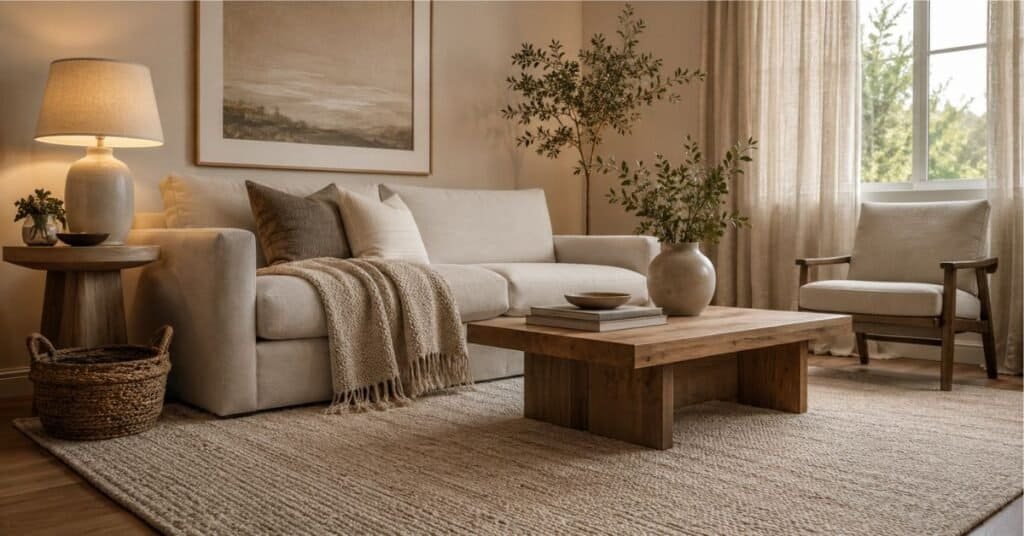
Start with the biggest area that looks too smooth. In many living rooms, that is the rug, the sofa, or the curtains. If the rug feels thin or visually quiet, swap in one with more weave, more softness, or a faded pattern. If the sofa fabric feels flat, bring in one throw and two pillows with clearer contrast.
A simple weekend reset could look like this:
- add one textured throw to the main seat
- swap in two pillows with different finishes
- bring in one woven or wood accent near the floor
- check whether the curtains need more softness or weight
This is usually enough to change the room without making it feel overdone.
If your room feels cold
A cold room often needs softer fabrics and warmer materials. Texture helps here because it makes the room feel less sharp. A wool or woven rug, a knit throw, a wood side table, and one basket can all make the space feel more settled.
It also helps to use warmer light on those surfaces. A lamp with a fabric shade or a softer glow near the seating area makes texture easier to notice. If the room still feels a little hard by evening, add one softer surface where your eye lands first, like the sofa corner, the chair, or the floor near the coffee table.
If your room feels too busy
When a room already has many layers, the best move is often to edit instead of add. Pull back the smallest decor first. Keep the rug, curtains, and main upholstery working together, then let one or two textured accents stay in view.
A useful reset is to keep:
- one main rug texture
- one main curtain texture
- one main sofa or chair texture
- one natural accent like wood or woven material
Everything else should support those layers, not compete with them. This is often where the room starts to calm down.
If your room is small
A small living room does not need fewer textures. It just needs clearer ones. Let one rug anchor the room, one curtain layer soften the wall, and one stronger accent texture add warmth. A boucle chair, a knit throw, or a woven basket can be enough.
Keep the pathways open and avoid filling every surface. In a smaller room, texture reads better when there is space around it. One warm wood table and one thicker textile will usually do more than lots of tiny accessories spread around the room.
If the room is very simple, even one change can make a difference. A better rug, a thicker curtain, or one warmer fabric on the sofa can shift the whole mood by the end of the day.
Frequently Asked Questions
How many textures should a living room have?
Most living rooms feel balanced with three to five clear textures. That can be as simple as a sofa fabric, a rug texture, curtain weave, wood grain, and one softer accent like a throw or pillow. The room usually looks better when those textures repeat a little instead of all being totally different.
What is the easiest way to add texture to a living room?
The easiest place to start is with a throw, pillows, or a rug. These layers make a visible difference fast and do not need a full room update. If the room still feels flat after that, look at the curtains and larger surfaces next.
How do you layer textures in a neutral living room?
Keep the palette soft, then make the surfaces do more of the work. Mix matte, woven, nubby, plush, and smooth finishes in the same color family so the room stays calm but does not feel washed out. Linen, wool, wood, ceramic, and boucle often work well together.
What textures make a living room feel cozy?
Cozy living rooms usually mix soft and warm textures like wool, knit, velvet, boucle, linen, and wood. Woven baskets and fabric shades help too. These layers make the room feel warmer both visually and physically.
Can you mix linen, velvet, and wood together?
Yes, those materials work very well together. Linen keeps the room relaxed, velvet brings depth, and wood adds warmth and structure. The mix feels balanced when the colors stay connected and the room still has a few smoother surfaces nearby.
What should be the first texture anchor in a living room?
The first texture anchor is often the rug or the sofa because those pieces shape the room the most. Curtains come right after that because they affect how the walls and light feel. If the base layers work, the smaller accents will make more sense too.
How do you keep layered textures from looking cluttered?
Start with the big surfaces, then add only a few supporting layers. If the room feels too busy, remove the smallest decor first and keep the rug, curtains, and upholstery doing most of the work. A room usually feels calmer when the textures repeat instead of constantly changing.
Do rugs count as part of texture layering?
Yes, rugs are one of the strongest texture layers in a living room. They ground the furniture, add softness near the floor, and help the whole room feel fuller. Even the right rug size can change how layered a room feels, because texture works better when the scale is right too.
How do you mix texture and pattern without making the room busy?
Let one or two patterned items lead, then keep the rest of the room quieter. A patterned rug with plain pillows or a textured throw with calm curtains usually works well. The room stays balanced when the eye has one main place to land.
What is the best budget friendly way to add texture?
A throw, a couple of pillows, a basket, or a thrifted rug can all help on a smaller budget. Focus on the pieces that cover more visual space first. One stronger texture layer usually does more than several tiny accessories.
Conclusion
Layered living room textures are often what make a room feel finished, warm, and easy to enjoy. A good color palette helps, but the real depth usually comes from the mix of fabric, wood, woven pieces, and softer layers that give the eye something to notice.
The best part is that you do not need to fill the room with more stuff to get there. A better rug, a softer curtain, one warmer textile, or one natural accent can change the whole mood. If you want to keep building that fuller look, Epic Modern Living Room Guide: What No Decorator Will Show You is a good next read.