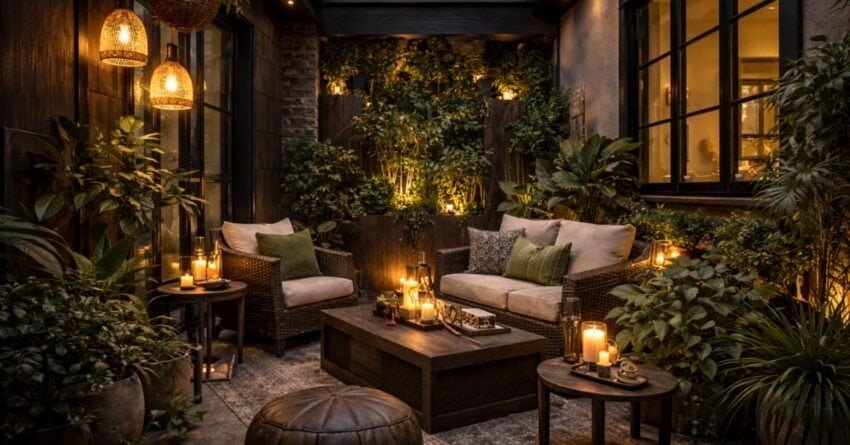
A small porch sounds charming until you try to decorate it. One chair, three plants, and suddenly the space feels crowded. Leave it bare, and it feels flat and forgotten.
That is where botanical themed decor works beautifully. When greenery is layered with the right layout, even a narrow porch can feel lush and welcoming instead of cluttered.
Many homeowners try to solve the problem by adding more plants. The result is often the opposite of what they hoped for. Pots pile up, the walkway shrinks, and the porch becomes hard to use.
Good porch design starts with layout. A few well placed plants, the right pot scale, and thoughtful spacing can make a small porch feel calm and refined.
House Beautiful points out that surrounding a small patio with greenery and florals can make the area feel more inviting and elegant The key is arranging the greenery so it frames the space rather than overwhelming it.
The seven layouts ahead show simple ways to create a botanical porch that feels relaxed, balanced, and quietly luxurious. Some rely on vertical greenery. Others use layered pots or cozy seating corners.
Each one is designed for tight outdoor spaces where every inch matters.
Table of Contents
Why Botanical Themed Decor Works So Well on Small Porches
Botanical styling suits small porches because it adds softness without asking for much floor space. A few leafy shapes, some natural texture, and a clear layout can make a tight entry feel fuller and calmer at the same time.
It also helps blur the line between porch and garden. That matters on small porches, where the goal is often to make the space feel less boxed in.
It adds softness without needing much square footage
Hard porch surfaces can feel a little stiff on their own. Concrete, railings, siding, and doors all have a practical look, but they can leave the space feeling flat.
Plants help break that up. A tall leafy planter near the door, a trailing plant near eye level, or a rounded pot at floor level can add shape without taking over. Martha Stewart notes that layering tall with short planters and mixing pot finishes can soften a front porch and make it feel more lively . That works well on small porches because the eye notices variety before it notices size.
A good rule is to use three height levels:
- one taller plant around 30 to 40 inches high
- one mid height planter near seat level
- one low accent near the floor
That kind of layering makes the porch feel styled, not stuffed.
The luxe look comes from layout, not just expensive pieces
A porch can look rich without looking expensive. Most of that feeling comes from restraint. The best layouts leave breathing room, repeat a few materials, and keep the walkway clear.
House Beautiful highlights that greenery can make a small outdoor area feel more inviting and elegant when the furniture and decor are properly sized. That is the real difference between lush and messy. Scale.
Common mistake: using pots that are too wide for the porch depth. On a porch that is only 4 to 5 feet deep, a 16 inch planter can eat up walking space fast. Slimmer pots or taller shapes usually work better.
Budget option: repeat two or three simple pot finishes instead of buying a lot of new decor. A porch often looks more polished when the containers do the visual work.
Small space variation: if your porch is narrow, style one side more heavily and leave the other side open. That keeps the space comfortable to walk through while still giving you that botanical feel.

Layout 1: The Framed Entry Layout
One of the simplest ways to create botanical themed decor on a small porch is to frame the doorway with greenery. This layout feels balanced and welcoming because the plants naturally guide the eye toward the entrance.
It also works well for tight spaces since most of the styling stays close to the wall.
Use matching planters to outline the doorway
Start with two taller planters placed on each side of the door. Matching containers keep the look calm and organized.
Good sizes for a small porch:
- planters around 10 to 12 inches wide
- height around 20 to 28 inches
Choose plants with upright shapes so the doorway remains visible. Small evergreens, dwarf shrubs, or leafy upright plants work well.
Martha Stewart notes that mixing tall and short planters with different finishes can soften a porch and make it feel more lively. In this layout, you can keep the taller pots near the door and add one shorter planter near the steps.
Add one soft accent so it does not feel stiff
Matching planters can look a little formal if nothing else breaks the symmetry. One small accent can help relax the space.
Examples include:
- a textured doormat
- a low leafy pot near the step
- a simple lantern style porch light
This keeps the entry feeling welcoming instead of overly structured.
Small space variation
If your porch is very narrow, bulky containers can shrink the walkway. Try slim profile pots or taller narrow planters instead.
Real Simple recommends choosing plants that match the scale of the space and using compact varieties in tight areas. Dwarf plants often work best because they give the same lush feeling without spreading too wide.

Layout 2: The Vertical Green Wall Layout
When porch floor space is tight, the best move is often to build upward. A vertical layout lets you add more greenery while keeping the walking area open.
This style works especially well on porches that are only a few feet deep.
Build upward when floor space is tight
Instead of filling the floor with pots, use vertical elements that lift the greenery higher on the wall.
Good options include:
- a slim trellis mounted against the wall
- a narrow plant ladder shelf
- hanging planters attached near the railing
- wall mounted planter pockets
Real Simple notes that adding vertical growing space can create layers and dimension in small garden areas. On a porch, that same idea keeps the floor open while still creating a lush look.
Try spacing plants every 12 to 18 inches vertically so the arrangement feels balanced instead of crowded.
Mix trailing plants with upright shapes
Vertical layouts look best when the plants have different movement. If every plant grows the same way, the wall can look flat.
A good mix might include:
- one upright plant near the base
- one trailing plant that spills downward
- one leafy mid height plant for fullness
Martha Stewart mentions that hanging planters paired with leafy, vining plants can add greenery without taking up valuable porch space.
That mix of shapes helps the greenery feel natural and layered.
Common mistake to avoid
Too many hanging planters at eye level can make a porch feel cluttered. When everything hangs at the same height, the eye has nowhere to rest.
Instead:
- keep one or two hanging plants
- place another plant lower on a shelf or stand
- leave some wall space open
Small spaces often feel more luxurious when the arrangement is edited.

Layout 3: The Layered Corner Lounge Layout
If your porch has even a small corner to spare, it can become the coziest spot in the house. A layered lounge layout turns that corner into a quiet place to sit with plants surrounding the space instead of filling the whole porch.
This layout works well for porches that are about 5 to 7 feet wide or have a railing corner that can hold a chair and a few planters.
Turn one porch corner into a lush sitting zone
Start with a compact chair or narrow bench. Leave enough space for the door and walking path, then build the greenery around the seating area.
A simple corner setup could include:
- a small chair or narrow bench
- a side table around 10 to 14 inches wide
- one tall plant behind the chair
- one mid height plant beside the seat
House Beautiful explains that outdoor spaces feel calmer when the seating and decor are properly scaled for the area. In their small patio examples, well sized furniture paired with greenery creates a more relaxed and inviting atmosphere.
That balance matters on a small porch. The seating should feel comfortable without blocking movement.
Use plant height in three levels
The layered effect works best when the plants rise at different heights.
Try arranging them like this:
- tall plant behind the chair
- medium plant near arm level
- low planter near the floor
This creates depth without adding more pieces.
Martha Stewart often suggests layering plant heights and mixing pot finishes to bring variety to porch arrangements. That small variation in height helps greenery feel more natural instead of lined up.
Budget option
You do not need expensive containers to make this corner feel special. Apartment Therapy shared an idea where a thrifted leather satchel was used as a porch flower display, showing how unusual containers can add personality to a porch arrangement.
A small vintage basket, wooden crate, or thrifted container can do the same job.
Just keep it to one statement piece so the layout stays calm.

Layout 4: The Moody Botanical Layout
Most botanical porches lean light and airy. A moody botanical layout takes the opposite direction. Deeper greens, darker containers, and fewer color accents can make a small porch feel rich and grounded.
This style works especially well on porches with darker siding, black railings, or shaded light.
Use deeper leaves and darker pots for a richer feel
Start with foliage that has depth in its color. Plants with glossy or deep green leaves stand out beautifully against neutral walls.
Good plant shapes for this layout include:
- broad leafy plants
- upright plants with darker stems
- trailing greenery that drapes from a higher shelf or railing
Pair these plants with darker containers such as charcoal, black, or aged stone finishes. The contrast helps the greenery stand out while keeping the palette simple.
Apartment Therapy describes the dark moody botanical trend as a lush, dramatic look that feels more like a fantasy jungle than a bright summer garden.
Even on a small porch, a few darker plants can create that feeling.
Keep the base palette simple
The key to making this layout feel polished is restraint. Too many colors can break the calm mood.
Try limiting the palette to:
- dark green foliage
- black or stone planters
- natural wood or woven textures
This keeps the porch grounded while letting the plants provide most of the visual interest.
Small porch tip
Because darker plants can feel visually heavy, place them along one side of the porch rather than spreading them everywhere.
For example:
- one tall plant near the railing
- one mid height plant near seating
- one trailing plant near a shelf or wall
Leaving the opposite side more open helps the space breathe.

Layout 5: The Soft Neutral Botanical Layout
Some porches feel calmer when the colors stay light. A soft neutral botanical layout focuses on pale containers, leafy greens, and warm textures that make the space feel relaxed.
This layout works well for porches with light siding, white trim, or natural wood doors.
Pair pale pots with leafy shapes
Neutral containers help plants stand out while keeping the porch quiet and balanced.
Good choices include:
- cream glazed pots
- light stone planters
- soft gray ceramic containers
Place two or three of these pots near the entry or railing, then add leafy plants with rounded shapes so the greenery softens the edges of the porch.
Martha Stewart highlights how mixing tall and short planters with different finishes can bring life to a front porch and soften the overall look.
Even a small porch can benefit from that mix.
Mix natural textures for warmth
Neutral layouts often look best when they include natural materials. Texture helps the porch feel cozy without adding more objects.
Try combining:
- woven baskets
- rattan or wood seating
- simple ceramic planters
- soft outdoor cushions
These materials add warmth while still keeping the palette calm.
Common mistake to avoid
Too many different pot finishes can make a neutral porch feel random. Stick to two finishes at most, such as cream ceramic and natural basket planters.
Repeating those finishes around the porch helps the layout feel organized.

Layout 6: The Luxe Privacy Layout
Some small porches sit close to sidewalks or neighboring homes. In those cases, plants can do more than decorate. They can also soften the view and give the porch a little privacy.
The trick is using plants that grow upward instead of outward.
Use taller dwarf plants to soften views
Tall, narrow plants can create a soft screen without blocking light or taking over the space.
Good options include:
- narrow evergreen shrubs
- upright leafy plants
- small topiary shapes
Real Simple explains that choosing plants scaled to the size of the space helps small gardens feel more balanced. They also suggest looking for dwarf plant varieties so the greenery stays manageable in tighter areas.
This advice works perfectly for porches where floor space is limited.
Keep privacy planting light enough for a small porch
Instead of lining the entire porch with tall plants, concentrate them on one side.
A balanced layout could look like this:
- two taller plants near the railing or edge
- one mid height plant near seating
- open space near the entry door
This gives the porch a sense of privacy without making it feel boxed in.
House Beautiful often shows small patios where greenery softens the edges of the seating area. In those spaces, properly sized furniture and plants help the area feel peaceful rather than crowded.
Pot scale matters here
Privacy layouts look better with fewer containers that are slightly larger.
Many small pots can look busy. Two or three taller planters usually create a calmer look.
Aim for containers around 12 to 14 inches wide so the plants have enough room to grow while still fitting the porch.

Layout 7: The Collected Botanical Mix Layout
Some porches look best when the plants and decor feel a little collected over time. This layout mixes greenery, a few decorative accents, and one or two unexpected pieces to create a relaxed botanical corner.
The goal is to keep the mix edited so the porch still feels calm.
Blend real plants, a few faux accents, and botanical decor
Real plants bring life to the porch, but a small number of artificial accents can help fill gaps where sunlight is limited.
Better Homes and Gardens has shown that lifelike topiary plants can add structure to a porch and stay looking fresh throughout the seasons.
A good balance for a small porch might be:
- two real plants with fuller leaves
- one faux topiary or structured plant
- one trailing plant to soften the arrangement
Keeping the number small helps the layout feel intentional.
Use thrifted and found pieces with restraint
A single vintage or thrifted item can give a porch personality. Apartment Therapy shared an example where a vintage leather satchel was used as a porch flower holder, proving that unexpected containers can add charm to outdoor spaces.
Other simple ideas include:
- an old wooden crate as a plant stand
- a small stool used as a plant pedestal
- a vintage basket holding a potted plant
Use one standout item so the porch feels curated rather than crowded.
How to keep it from feeling cluttered
Mixed layouts need a little discipline.
Try repeating one plant shape and one container color across the porch. This small pattern helps everything feel connected.
For example:
- leafy plants with rounded shapes
- neutral containers in cream or stone
Repeating these elements keeps the space visually calm even with a few varied pieces.

How to Make Any Small Porch Feel More Luxe
A small porch can feel refined even without expensive furniture or large spaces. The difference usually comes down to restraint, scale, and a few thoughtful styling choices.
Botanical themed decor looks best when the layout feels calm and balanced rather than full of random pieces.
Stick to a tighter pot palette
Too many pot styles can make a porch look scattered. Limiting the finishes keeps the greenery as the main focus.
A simple approach is to repeat two finishes:
- cream or light ceramic pots
- natural woven baskets
Repeating these materials across the porch helps everything feel connected.
Martha Stewart notes that mixing plant heights and container finishes can soften a porch and bring visual interest. The key is to keep the mix limited so the arrangement still feels organized.
Repeat one plant mood across the porch
Instead of using many different plant types, choose one plant style and repeat it.
Examples include:
- leafy tropical shapes
- compact evergreen forms
- trailing greenery for a softer look
This repetition helps the porch feel intentional.
Edit anything that blocks the walking path
A porch should still be easy to walk through. If plants block the door or force people to step around them, the layout will feel crowded.
House Beautiful shows small outdoor spaces where properly sized seating and greenery keep the area calm and usable instead of overcrowded.
A quick check helps here. Stand at the front step and look across the porch. If the path to the door feels tight, remove one planter.
Quick layout fixes
| Porch issue | Why it happens | Simple fix |
|---|---|---|
| Porch feels crowded | Too many floor planters | Move some plants upward using wall or hanging planters |
| Porch feels flat | All plants same height | Add a taller plant behind a shorter one |
| Porch feels random | Too many pot colors | Repeat two container finishes only |

Common Mistakes That Make Botanical Porch Decor Feel Messy
A botanical porch should feel relaxed and inviting. When the layout is rushed or overloaded with plants, the space can quickly feel cluttered instead of calm.
Many of these problems are easy to fix once you know what to watch for.
Oversized pots in a narrow porch
Large containers can look beautiful in a garden, but they often overwhelm a small porch. A pot that is too wide can shrink the walking space and make the entry feel cramped.
Try using taller, slimmer planters instead. They give the same leafy presence while keeping the path open.
Too many small planters with no spacing
Another common mistake is scattering many small pots across the porch. When every surface holds a plant, the arrangement loses structure.
A better approach is to group plants in two or three clusters rather than spreading them everywhere. This keeps the layout organized.
Artificial greenery that looks tired
Artificial plants can be useful in shaded corners, but too many of them can dull the overall look.
Martha Stewart warns that artificial plants tend to age with the home and can make outdoor spaces feel less fresh over time.
If you use faux greenery, mix it with real plants and keep the number small.
Spiky or hard to manage plants near entry paths
Some plants may look striking but create problems near walkways. Apartment Therapy shares a warning from gardeners about plants like yucca, whose sharp leaves can become difficult to manage in tight spaces.
For a porch entry, softer leafy plants are usually a better choice.
A simple rule helps keep things balanced: if one plant blocks the door, move it or replace it with a slimmer container.

Frequently Asked Questions
What plants work best for small porches in full sun?
Plants that handle strong sunlight usually perform best on exposed porches. Compact shrubs, herbs, and hardy flowering plants are common choices. Real Simple recommends choosing plants scaled to the size of the space, and dwarf varieties often work well for small areas. Smaller plants stay manageable and still provide the lush look people want.
How do I add height to botanical porch decor without crowding the space?
Height can come from vertical elements rather than larger containers. Trellises, hanging planters, or wall mounted plant shelves allow greenery to grow upward instead of spreading across the floor. This creates layered greenery while keeping the walkway clear.
Are faux plants okay for botanical porch decor on a budget?
Faux plants can help fill shaded corners where real plants struggle. One or two artificial accents mixed with real greenery can work well. Martha Stewart notes that artificial plants can start to look dull over time, so it helps to keep them limited and combine them with real plants whenever possible.
What size pots work best for small porch plant layouts?
Containers around 10 to 14 inches wide usually fit comfortably on narrow porches. Larger containers may block the entry path or make the porch feel crowded. Taller shapes often work better than wide pots because they add height without using extra floor space.
How do I layer greenery on a small porch without it feeling crowded?
Try building the layout in three height levels. Place a tall plant near the wall, a mid height plant near seating, and a low planter close to the floor. Martha Stewart highlights how mixing tall and short planters softens a porch and adds depth. This layered structure keeps the arrangement balanced.
Can thrifted items work for botanical porch plant displays?
Yes. Thrifted pieces can give a porch personality when used carefully. Apartment Therapy showed a creative example where a vintage satchel bag was used as a flower display container. One unusual container can make the space feel collected and unique.
What vertical elements work well in botanical porch decor?
Vertical styling works well on narrow porches. Trellises, plant ladders, hanging baskets, and railing planters all help lift greenery upward. Real Simple explains that vertical growing space adds layers and dimension to tight areas.
How do I mix textures in porch plant arrangements?
Combining different materials helps a porch feel warm and relaxed. Ceramic pots, woven baskets, wood furniture, and leafy plants create contrast without needing many colors. Keeping the palette simple allows the textures to stand out.
What dwarf plants work well for privacy on a porch?
Narrow evergreen shrubs, compact ornamental grasses, and small topiary shapes can provide soft screening. Real Simple recommends choosing dwarf varieties so plants stay proportional to small outdoor areas. These plants give privacy while remaining manageable.
How can I make a small porch feel lush without adding too many plants?
Focus on layering instead of quantity. A few plants with different heights often look fuller than many small pots. House Beautiful shows small outdoor areas where greenery placed thoughtfully around seating makes the space feel inviting without overcrowding.
Conclusion
A small porch does not need dozens of plants to feel lush. With the right layout, a few well placed containers and layered greenery can make the space feel calm, welcoming, and refined.
Botanical themed decor works best when the arrangement feels balanced. Repeating plant shapes, keeping the pot palette simple, and leaving room to walk through the porch can make a noticeable difference.
If your porch still feels a little dark or tired after winter, a seasonal refresh can help brighten the space. You might enjoy exploring 12 Spring Seasonal Decor Refresh Ideas That Lift Dark Rooms for simple ways to bring fresh energy into your home as the seasons change.