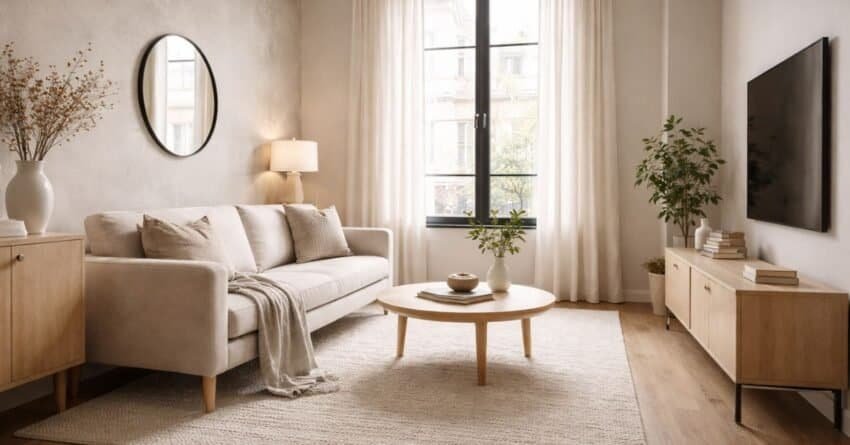
Small apartments have a way of feeling full long before they are actually full. The sofa may fit. The coffee table may fit. The rug may fit. Yet the room still feels tight once the TV, side table, cords, pillows, baskets, and daily clutter all start sharing the same view.
That is where minimalist living room styling can help. In a compact home, the goal is not to make the room look empty. It is to make it feel lighter, calmer, and easier to move through. Minimalist living room styling that makes apartments breathe comes down to open floor space, softer visual weight, and a few well chosen pieces that let the room rest.
If you want a pared back room that still feels warm and livable, these minimalist home ideas show how softness and restraint can work together. That balance matters in apartments, where one bulky piece or one crowded corner can change the whole mood of the room.
As Architectural Digest notes in its minimalist living room ideas, a minimalist room can still feel inviting and personal in compact quarters when there is restraint and space to let the room speak. That idea is useful in real apartments because the room does not need more things to feel finished. It usually needs fewer distractions, better spacing, and a clearer sense of what belongs.
In the sections ahead, the focus is on layout, furniture scale, color, warmth, rugs, storage, and a few small styling moves that can make an apartment living room feel more open without losing comfort.
Table of Contents
What Minimalist Living Room Styling Really Means in an Apartment
A minimalist living room is not a room with nothing in it. It is a room where each piece has a job, the layout feels easy to move through, and your eye is not being pulled in ten directions at once.
That distinction matters in apartments. In a small space, “empty” can feel unfinished, while true minimalism feels settled. The room still has comfort, texture, and personality. It just does not carry extra visual weight.
Minimalist does not mean bare
A lot of people picture minimalism as white walls, one chair, and almost nothing on the table. Real apartment living does not work that way. You still need seating, lighting, storage, and a few pieces that make the room feel like yours.
That is why the line from Architectural Digest’s minimalist living room ideas is so useful here: a minimalist room can be “inviting” and “highly personal” even in compact quarters. The takeaway is not to strip the room down until it feels cold. The better move is to pause before adding more and ask whether each piece helps the room feel calmer or just busier.
For example, a small apartment living room may feel finished with:
- one sofa
- one coffee table
- one lamp
- one rug
- one or two meaningful accents
That usually works better than trying to fill every wall, shelf, and corner.
Why apartments need breathing room more than extra décor
Apartments often have less separation between zones. The living room may open right into the entry, the dining spot, or even the kitchen. That means the eye takes in more at once, so clutter and heavy styling show up faster.
Breathing room comes from open floor space, cleaner sightlines, and fewer pieces with heavy visual weight. A sofa with visible legs often feels lighter than one that sits heavily on the floor. A round coffee table can soften a tight path better than a large boxy one. A single larger art piece can feel calmer than a cluster of smaller frames fighting for attention.
This is also where restraint helps the room feel more expensive. Instead of adding three side tables, you may only need one in the right place. Instead of five small objects on the console, you may only need a lamp and one bowl. When the room has space around the pieces, the whole apartment starts to feel easier to breathe in.
If your living room feels unfinished after editing it down, the fix is often warmth, not more stuff. A textured rug, a linen shade, or wood tones can do more than another shelf of décor.
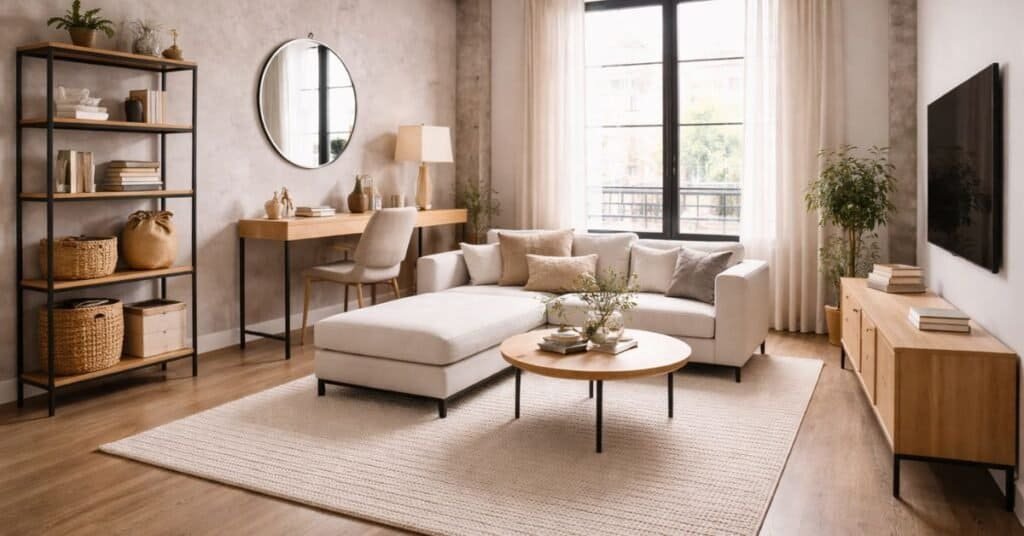
Minimalist Living Room Styling That Makes Apartments Breathe Starts With Layout
Before changing the sofa, paint, or pillows, look at the layout first. In a small apartment, the way furniture sits in the room affects the mood more than almost anything else. A good layout gives the eye a place to land and leaves enough open space for the room to feel calm.
When the layout is off, even beautiful furniture can make the room feel stuck.
Create one clear focal point
A small living room feels more settled when one thing quietly leads the room. That focal point might be the TV wall, a large window, a fireplace, or one piece of art above a console.
Better Homes & Gardens suggests designing a small living room around one clear focal point. That idea works well in apartments because too many competing focal points can make the room feel scattered fast. If the TV, art wall, bookshelf, and window all pull for attention at once, the room feels busier than it is.
A simple layout usually works best:
- place the sofa facing the main focal point
- keep side seating angled toward it
- let the coffee table sit in the middle as the anchor
- keep secondary décor quieter
If your focal point is the window, keep the area around it lighter and let the curtains frame it without crowding it. If the TV is the focal point, use a simple media console and avoid loading that wall with too many extra objects.
Keep walkways open and furniture easy to move around
A room starts to breathe when movement feels easy. You should be able to walk from the entry to the sofa, or from the sofa to the window, without weaving around furniture.
A helpful starting point is:
- about 16 to 18 inches between the sofa and coffee table
- a clear walking path along one side of the room
- no extra stool or basket blocking the main route
Long or narrow apartment living rooms need this even more. One bulky chair in the wrong spot can cut the room in half. That is where these living room layout ideas for a small rectangular room can be useful, especially if your sofa wall is long and the walkway feels tight.
It also helps to keep the biggest furniture close to the walls only when it supports the flow. In some apartments, floating the sofa just a few inches forward can make the room feel less flat. In others, pushing it back opens up the path. The better choice depends on where the door, window, and TV sit.
One good test is to stand in the entry and look across the room. If your eye can move easily from one side to the other, the layout is probably working. If your eye stops at a bulky corner or stacked furniture line, the room likely needs more breathing room.
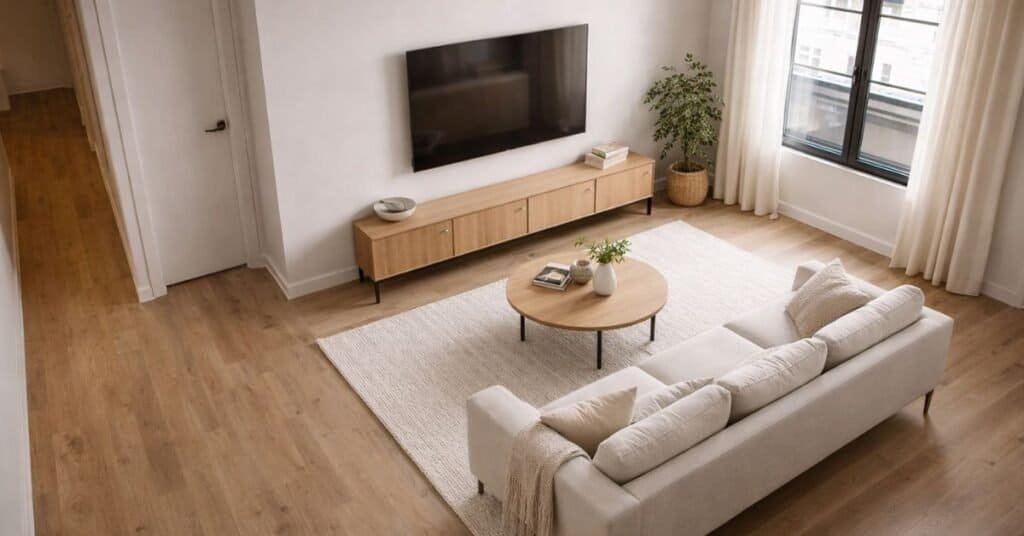
Choose Furniture With Low Visual Weight
In a small apartment, furniture does not just take up floor space. It also takes up visual space. That is why some living rooms feel crowded even when they do not have much in them. The room may only have a sofa, coffee table, chair, and lamp, but if each piece feels heavy, the whole space starts to feel packed.
This is where low visual weight helps. The goal is not tiny furniture. It is furniture that looks lighter, sits more cleanly in the room, and lets more floor and wall space stay visible.
Why smaller is not always better
A lot of people assume a small room needs very small furniture. That sounds logical, but it can make the room feel scattered and under-furnished. A tiny sofa beside a tiny table and tiny rug can make the whole space feel chopped up.
Real Simple points out that smaller furniture does not always make a room look larger. In many cases, one right-sized piece works better than several undersized ones. That matters in apartments because every inch has to earn its place.
A standard sofa with slim arms may feel better than a loveseat that leaves you adding extra seating later. One compact coffee table may work better than two small nesting tables that visually clutter the floor. The room feels calmer when the pieces feel intentional instead of pieced together.
A good way to judge furniture in a small living room is to look for:
- slim arms instead of wide padded ones
- visible legs instead of heavy skirted bases
- shallower depth when possible
- one clean profile instead of lots of extra shaping
These details let the room feel lighter without making it feel unfinished.
The best sofa shape for a small minimalist living room
The sofa is usually the biggest visual weight in the room, so it deserves extra care. In a small apartment, the best choice often depends on the room shape, the walkway, and how many people use the space daily.
Here is a simple comparison:
| Sofa type | Best for | What to watch |
|---|---|---|
| Love seat | very tight rooms | may leave you short on seating |
| Standard sofa | most apartment layouts | watch overall depth |
| Compact sectional | corners and open plans | can block flow if too deep |
A loveseat works in a very tight studio or narrow room, but it can force you to add more seating later. A standard sofa often works best when it has a slim frame and visible legs. A compact sectional can work in an open apartment, though it needs to stay proportional so it does not cut off the room.
The best shapes for a minimalist apartment living room usually have:
- straight or softly rounded arms
- a simple back line
- raised legs
- limited bulk underneath
A sofa around 78 to 84 inches wide often fits many apartment living rooms well, though the room still needs a clear path around it. If the sofa is too deep, even a beautiful piece can make the room feel harder to move through.
It also helps to keep the rest of the seating lighter if the sofa is the main anchor. One open frame chair, one small stool, or even no extra chair at all may work better than trying to fill every corner.
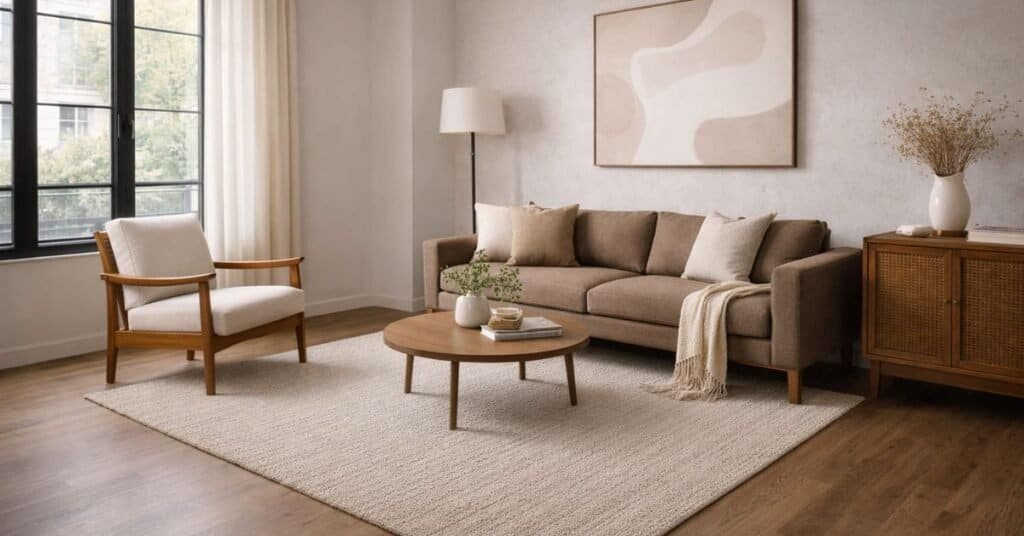
Use Color to Open the Room Without Making It Feel Flat
Color does a lot of quiet work in a small apartment living room. Before you notice the rug or the lamp, you usually notice whether the room feels light, calm, and easy on the eyes. In a tight space, too many color shifts can make the room feel broken up fast.
A simpler palette helps the room feel more open. It also gives the furniture and textures more room to stand out.
The easiest color palette for an airy apartment feel
A soft, connected palette usually works best in a small living room. Think warm white, oat, sand, light greige, pale taupe, and light wood tones. These shades keep the room feeling settled without pushing it into a cold all white look.
Homes & Gardens explains that small rooms tend to feel bigger when the tones stay within the same palette. That is helpful because the eye moves more smoothly when walls, trim, upholstery, and textiles feel related instead of sharply divided.
A simple apartment palette might look like this:
- walls in warm white or pale greige
- sofa in cream, flax, or light taupe
- rug in sand or oat
- wood tones in light oak or warm walnut
- black or bronze used only in small accents
This kind of palette keeps the room from feeling chopped into pieces. It also makes secondhand finds easier to blend in, which can help if you are styling on a budget.
Can dark paint still work in a tiny living room
Yes, but it works differently. A light palette usually makes a room feel airy and open. A darker palette can make it feel cozy and wrapped in, which some people love in apartments. The key is doing it on purpose.
Good Housekeeping notes that both dark and light paint colors can work well in a small living room when they are balanced with the right decor. So this is less about a hard rule and more about the mood you want.
A light and airy route usually needs:
- pale walls
- soft curtains
- reflected light
- fewer sharp contrasts
A darker, cocooned route usually works better with:
- one deep color used consistently
- warm lighting
- visible texture
- some reflective or lighter surfaces to keep balance
If your apartment gets good daylight, dark paint can feel rich instead of cramped. If the room is already dim, a softer neutral may be easier to live with. Either way, keeping the palette connected matters more than choosing only one color family.

Warm Minimalist Layers Keep the Room From Feeling Cold
A pared back apartment living room can feel peaceful fast, but it can also swing too far and start feeling flat. This usually happens after the big pieces are in place. The sofa fits. The rug fits. The layout works. Yet the room still feels a little unfinished.
That is where soft layers help. The room does not need more objects. It needs a little warmth in the right places.
What to add after the big pieces are in place
Once the sofa, rug, and main table are set, keep the next layer simple. A textured rug, a warm lamp, one throw, and two or three pillows usually do more than a shelf full of small décor.
House Beautiful shows how a neutral sofa can feel relaxed and lived in with a textured rug, a few throw pillows, and low wooden tables. That works especially well in apartments because the room stays light, but it does not feel blank.
A good living room layer often looks like this:
- one textured rug under the main seating area
- one throw folded over one corner of the sofa
- two or three pillows in quiet tones or subtle pattern
- one table lamp or floor lamp with a soft shade
- curtains with visible texture, like linen or linen look fabric
How much décor is too much on a minimalist sofa and table
In a small apartment, the room starts feeling crowded long before it is actually crowded. A few extra objects on the table, a few too many pillows, or one overfilled shelf can make the room lose that open feeling.
Martha Stewart points out that items with no real function are often the first things that add clutter. That is a good filter for styling. If an item is not useful, meaningful, or genuinely beautiful in the room, it may just be taking up visual space.
A helpful limit for many apartment living rooms is:
- sofa: two to three pillows and one throw
- coffee table: one tray with one or two items
- console: lamp plus one bowl, vase, or stack of books
- shelves: leave some open space instead of filling every inch
This kind of restraint makes the room feel calmer and more polished. It also makes everyday cleanup faster because there is less to move around.
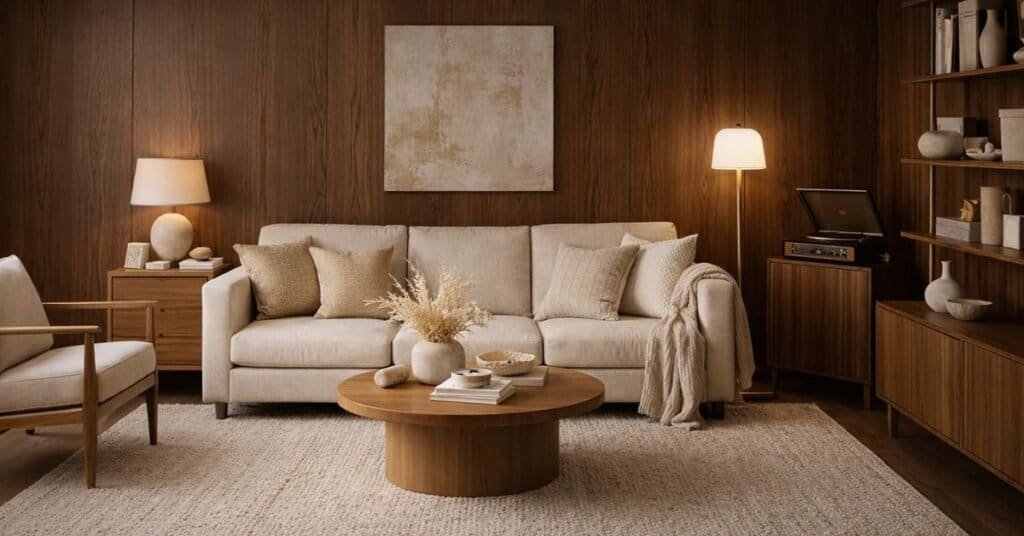
Rugs Curtains and Mirrors That Help Small Apartments Feel Bigger
A small living room can feel much more open when the soft pieces are sized and placed well. Rugs, curtains, and mirrors do more than decorate. They change how wide, tall, and bright the room feels.
When these pieces are off, the room can feel chopped up. When they are right, the whole apartment feels calmer.
The rug size mistake that makes a room feel chopped up
A rug that is too small can make a living room look tighter than it really is. It breaks the floor into smaller sections, and that makes the seating area feel disconnected.
Apartment Therapy points out that a rug should fit the space well because going too small can make a room feel more cramped. In most small apartment living rooms, the front legs of the sofa and chairs should sit on the rug. That simple move makes the seating area feel more grounded and less scattered.
A few easy rug guidelines:
- place at least the front legs of the sofa on the rug
- leave a border of visible floor around the outside when possible
- avoid tiny rugs floating under only the coffee table
If your sofa is around 80 inches wide, a rug around 8 by 10 feet often feels more settled than a smaller one, though the room shape still matters. In a very compact layout, even a slightly larger rug than you expected can help the room feel more open.
Use mirrors and full height curtains to stretch the room
Mirrors and curtains are two of the easiest ways to change how a small living room feels without adding more furniture.
Homes & Gardens suggests placing a mirror across from a window to reflect more light and make a small room feel bigger. That works well in apartments because one window often has to do a lot of work. A mirror helps spread that daylight deeper into the room.
Curtains help in a different way. Hanging them higher, closer to the ceiling, draws the eye upward and makes the room feel taller. Full length curtains also soften the room, which helps minimalism feel more comfortable.
A few curtain tips that work well:
- hang the rod higher than the window frame when possible
- let panels fall close to the floor
- use fabric with a little softness, like linen or linen look material
- keep the color close to the wall tone for a calmer look
A mirror, taller curtains, and a properly sized rug can change the feel of a small apartment living room more than several small décor pieces ever could.
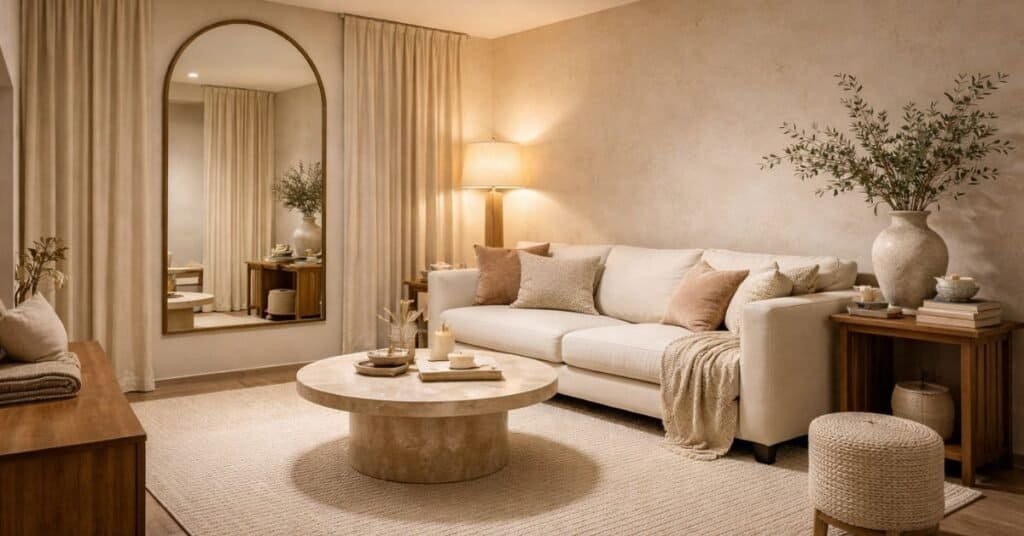
Hidden Storage Helps the Room Breathe Without Looking Boxy
A small apartment living room feels lighter when the clutter has somewhere to go. The challenge is adding storage without making the room look heavier. In tight spaces, bulky cabinets, stacked bins, and too many visible baskets can take away the openness you were trying to create.
The best storage pieces keep the room useful while still letting it feel airy.
The storage pieces that work best in minimalist apartments
Hidden storage works best when it blends into the room instead of announcing itself. A storage ottoman can hold throws, cords, or board games while still acting like a coffee table or footrest. A media console with doors can hide routers, remotes, and extra electronics. A slim bench can hold entry overflow if your apartment opens right into the living room.
A few pieces tend to work especially well:
- storage ottoman with a lift top
- closed media console with simple doors
- slim bench with concealed storage
- floating shelf with matching closed bins
- side table with one hidden drawer
The goal is to keep daily mess out of sight without turning the room into a wall of storage. One or two closed pieces usually work better than many small ones spread around the room.
How to add storage without stealing open space
In a small apartment, storage works best when it leaves as much floor visible as possible. Pieces with legs often feel lighter than ones that sit heavily on the floor. Wall mounted shelves or cabinets can help too, especially if they stay shallow and do not crowd the eye line.
This is also where habits matter. If you are ready to go beyond styling and change how the room stays calm long term, these minimalist home organization rules can help keep surfaces clearer and storage from turning into overflow.
A simple way to keep storage from feeling boxy is:
- use one main hidden storage piece per zone
- choose pieces with some visual air around them
- keep the top surfaces lightly styled
- avoid mixing too many different storage shapes in one room
For example, one living room may only need a closed media console and one ottoman. Adding two more baskets, a storage cube, and a bulky side cabinet can quickly make the room feel busier, even if everything is technically organized.
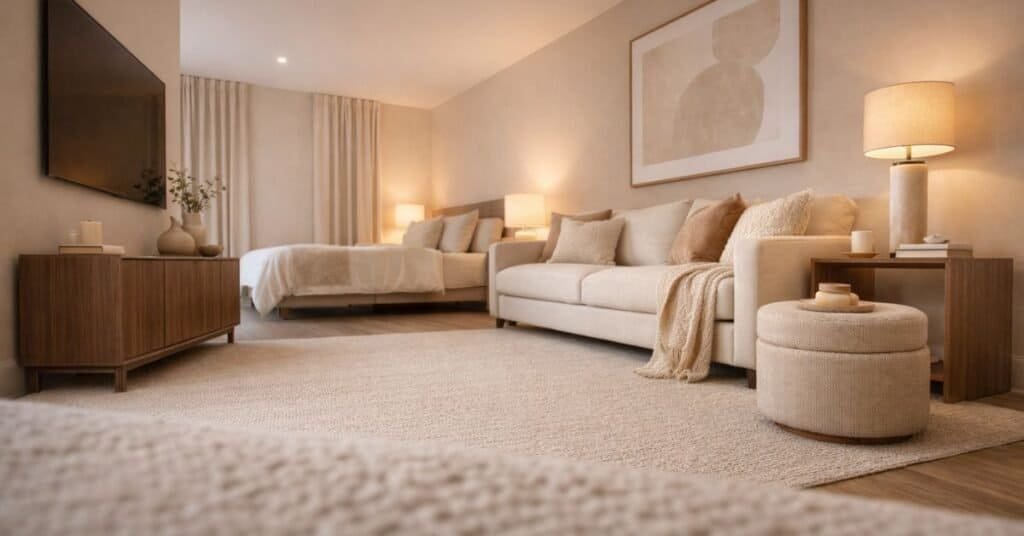
One Common Mistake That Makes Small Living Rooms Feel Tighter
A small living room can start feeling cramped even when every piece seems sensible. The sofa fits. The shelves are useful. The baskets are practical. Yet the room still feels crowded.
That usually comes from one mistake: adding too many helpful things without stepping back to see what the room actually needs.
Overfurnishing with sensible pieces
In apartments, clutter does not always come from decorative extras. Sometimes it comes from useful pieces piling up one by one. A side table here, a basket there, a stool in the corner, a shelf over the TV, a rack by the entry. Each item may make sense on its own, but together they shrink the room.
Homes & Gardens points out common small living room organizing mistakes, including skipping a functional layout and overdoing seemingly sensible storage. That is a helpful reminder because a room can look more crowded from too much practicality just as easily as from too much décor.
This also shows up with furniture scale. Good Housekeeping notes that a few purposeful pieces often do more than trying to fill every gap. In real life, that may mean one good side table instead of two, or one floor lamp instead of a lamp plus shelf plus stool all fighting for the same corner.
The fix is fewer better placed pieces
The easiest fix is to edit the room by zone. Look at the sofa area first. Then the TV wall. Then the corner near the window. Ask what is actually helping the room function and what is just taking up space.
A simple reset often looks like this:
- keep one strong anchor piece in each zone
- remove duplicates
- leave a little empty floor around furniture
- let one corner stay open instead of filling it
For example, a living room corner may have a plant stand, a basket, a stool, and a small shelf. If you remove the stool and shelf, keep the basket, and slide the plant closer to the window, the room often feels lighter right away. Nothing major changed. The room just got some breathing space back.
This is where restraint helps the apartment feel more polished too. When a few pieces are placed well, the whole room looks calmer and more intentional.
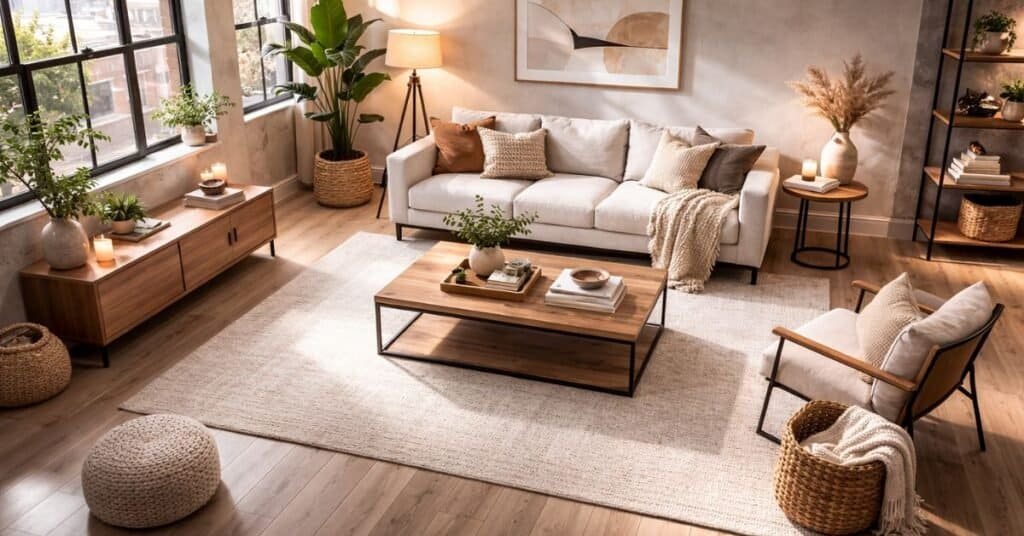
Minimalist Living Room Styling for Rentals and Tight Apartment Layouts
Rental living rooms come with their own set of limits. You may not be able to paint the walls, swap the flooring, or change the lighting. But a room can still feel lighter and calmer with the right styling moves.
In many apartments, the living room also starts at the front door. That means the entry and the seating area are visually connected, so both need to feel clear.
What works when you cannot paint or renovate
When the fixed parts of the room cannot change, focus on the pieces that can. Rugs, curtains, lamps, art, mirrors, and furniture scale do a lot of heavy lifting in rentals.
A few renter friendly shifts that work well are:
- use a larger rug to ground the seating area
- hang full length curtains to soften the walls
- add one floor lamp or table lamp for warmer evening light
- use art with breathing room around it instead of many small frames
- choose furniture with visible legs so more floor stays in view
This kind of styling helps the room feel more finished without asking for permanent changes. It also keeps the apartment from feeling too temporary.
Keep the entry and living room working together
In many apartments, the first thing you see after opening the door is the living room. That makes visual flow more important. If the entry feels crowded, the whole apartment starts feeling smaller before you even sit down.
Because of that, it helps to keep the entry simple and useful. One bench, one tray, or one basket is often enough. If you need more ideas for that first view, this guide on how to decorate a small entrance of your home fits well here.
The living room should then continue the same feeling:
- similar tones from entry to sofa area
- no bulky piece blocking the line of sight
- one calm landing spot for keys, bags, or mail
- enough open floor that the apartment feels connected
A tight apartment feels larger when the eye can move from the entry into the living room without stopping at clutter or heavy furniture lines.
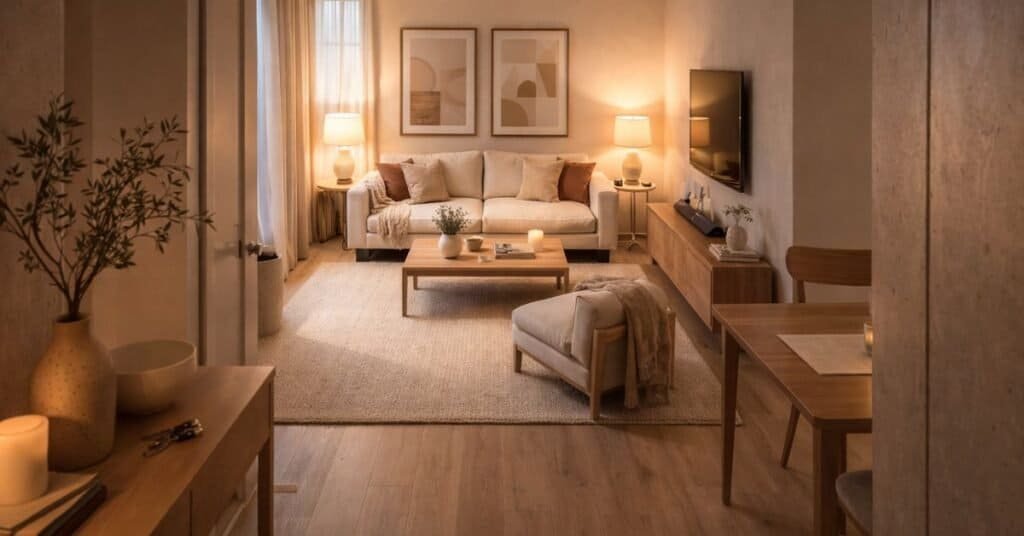
Budget Friendly Moves That Make a Small Living Room Feel Lighter
A small apartment living room does not need a full shopping list to feel better. In many cases, the room already has enough in it. What it needs is better spacing, fewer extras, and a few low cost changes that make the whole space feel easier to breathe in.
That is good news for renters and for anyone trying to make progress without redoing the whole room at once.
The cheapest styling changes with the biggest visual payoff
Some of the best changes cost very little, but they shift the room right away. A better lamp, fewer pillows, a cleaner coffee table, and curtains hung a little higher can make the room feel calmer before any large furniture gets replaced.
A few low cost moves that help:
- remove one or two extra side pieces that are crowding the floor
- restyle the coffee table with one tray instead of several loose objects
- swap heavy dark curtains for lighter fabric if the room feels blocked
- move a mirror where it can catch daylight better
- edit the sofa down to two or three pillows instead of five or six
One easy trick is to shop your own home first. A lamp from the bedroom, a simpler vase from another room, or a larger mirror moved from the hallway can make a living room feel more open without spending anything.
If the room feels awkward, start with one flat surface. Clear the coffee table. Then clear the console. Then step back and see how much lighter the room already feels.
What is worth spending on and what is not
When money is limited, it helps to spend on the pieces that change the whole room most. In a small living room, that is often the rug, the curtains, the sofa, or the lighting.
These pieces are usually worth spending more on:
- a sofa that fits the room well
- a rug large enough to ground the seating area
- curtains with enough length and fullness
- warm lighting that improves the room at night
These are usually better kept simple:
- extra decorative objects
- small filler tables
- trendy accents that add visual weight
- pillows beyond what the sofa really needs
A small budget example could look like this: remove two extra pillows, raise the curtain rod a few inches, use one larger mirror, and swap a harsh bulb for a warmer one. Those four moves can change the feel of the room more than several small décor purchases.
In apartment living rooms, spending less often works better when the edit is clear. A room feels lighter when it has fewer, better chosen pieces instead of more things competing for space.
Frequently Asked Questions
How can I make a small apartment living room feel bigger without adding more furniture?
Start by clearing the floor and letting the layout do more of the work. A larger rug, a clear path from the entry to the seating area, and fewer small pieces usually help more than squeezing in extra storage or seating.
Mirrors and curtain height can help too. When daylight moves farther into the room and the eye gets pulled upward, the space tends to feel more open.
What defines a minimalist living room and how is it different from empty?
A minimalist living room still feels complete. It has enough seating, lighting, warmth, and function to support daily life, but it leaves out the extra pieces that make the room feel busy.
An empty room feels unfinished. A minimalist room feels settled because the furniture fits, the layout is clear, and each visible piece earns its place.
How do I keep a minimalist living room from feeling cold or sterile in a rental?
Use warmth through texture and light. A rug with visible weave, a linen shade lamp, a wood table, and a soft throw can make a rental living room feel much more comfortable without adding clutter.
That softer look works especially well when the walls cannot change. If you want more ideas for that balance, these minimalist home ideas that still feel warm are a helpful next read.
What colors work best for a minimalist living room in a small space?
Warm whites, soft greige, sand, oat, pale taupe, and light wood tones tend to work well. They keep the room connected and calm, which helps a small apartment feel less broken up.
A simple palette usually works better than several color shifts. That does not mean the room needs to feel flat. Texture and a few darker accents can still give it depth.
Can I use dark paint in a tiny living room without making it feel smaller?
Yes, you can. The room just needs a clear mood. A light palette usually feels airy, while a darker palette feels more wrapped in and cozy.
Dark paint tends to work best when the room also has warm lighting, enough texture, and some balance from wood, fabric, or lighter surfaces. It is less about the color alone and more about how the whole room works together.
What size rug works best in a small minimalist living room?
In many small living rooms, the rug should be large enough for at least the front legs of the sofa and chair to sit on it. That makes the seating area feel connected instead of broken into smaller pieces.
A rug that is too small often makes the room feel tighter. When in doubt, going a bit larger usually feels calmer than going too small.
How many throw pillows and décor items keep a minimalist sofa from feeling crowded?
A good starting point is two to three pillows and one throw. That is usually enough to soften the sofa without making it feel overloaded.
For nearby surfaces, one tray with one or two objects often works better than several loose items. The room keeps its warmth, but the eye still gets space to rest.
What is the best sofa for a small minimalist living room?
A standard sofa with slim arms, visible legs, and a moderate depth often works best. It gives enough seating without asking you to add several extra pieces later.
A loveseat can work in a very tight room, and a compact sectional can work in the right corner layout. The main thing is to protect the walkway and keep the sofa from feeling too bulky for the apartment.
How can I add hidden storage to a minimalist apartment living room without losing open space?
Start with one or two storage pieces that do double duty. A storage ottoman, a closed media console, or a slim bench usually works better than adding several baskets and bins around the room.
It also helps to keep storage low profile. If you want the room to stay calm over time, these minimalist home organization rules can help you keep storage from turning into overflow.
Where should I put the TV in a small minimalist living room so it does not dominate the space?
The TV usually works best on the main focal wall, paired with a simple console that does not add extra bulk. Keeping the area around it quiet helps it blend into the room more naturally.
Try not to crowd that wall with too many shelves, baskets, or decorative pieces. A cleaner TV wall often makes the whole living room feel less busy.
Conclusion
Minimalist living room styling works best when it gives a small apartment more room to breathe, not less. The biggest shifts usually come from layout, furniture scale, color flow, and a few warm layers that keep the room feeling soft instead of sparse.
A clearer walkway, a better sized rug, one lighter sofa, or one storage piece in the right place can change the whole feel of the room. You do not need a perfect apartment. You just need a room that feels easier to move through and easier to live in.
If you want more inspiration for shaping a calm home that still feels warm and real, take a look at Minimalist Home Ideas: I Tried Simplifying My Space… Here’s What Actually Happened.