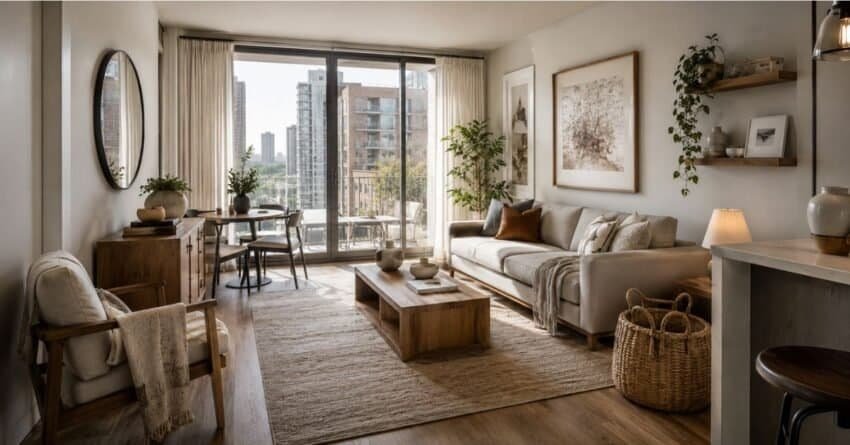
A small apartment can be tidy and still feel cramped.
You might have the floor clear, the dishes put away, and the sofa pillows in place, but the room still feels tight. The walkway feels narrow. The coffee table feels too close. The shelves look busy. Even the corners seem to press in.
That is why the right small space apartment ideas matter.
A tight room does not always need a renovation. It often needs better flow, lighter visual weight, smarter storage, and a few design choices that help the eye move around the room.
Think clear pathways, raised furniture legs, mirrors placed near light, vertical storage, soft curtains, and hidden clutter. These small changes can make an apartment feel more open without removing the comfort that makes it feel like home.
The goal is not to make every room look empty. The goal is to make each room easier to walk through, easier to use, and easier to enjoy.
In this post, you will find practical small apartment ideas that make tight rooms feel bigger, from living room layout fixes to bedroom storage, lighting tricks, rugs, mirrors, and awkward corners that need a better job.
Table of Contents
Small Space Apartment Ideas That Make Tight Rooms Feel Bigger
The best small space apartment ideas usually start with flow.
Before you add a mirror, buy baskets, or move wall art, look at how the room feels when you walk through it. If you have to turn sideways between the sofa and coffee table, the room will feel tight no matter how pretty the decor is.
Real Simple shares helpful guidance on small space decorating ideas that reduce clutter. The core idea is that a room feels bigger when there are fewer visual stops and the layout has more breathing room.
That starts with the path your body takes through the apartment.
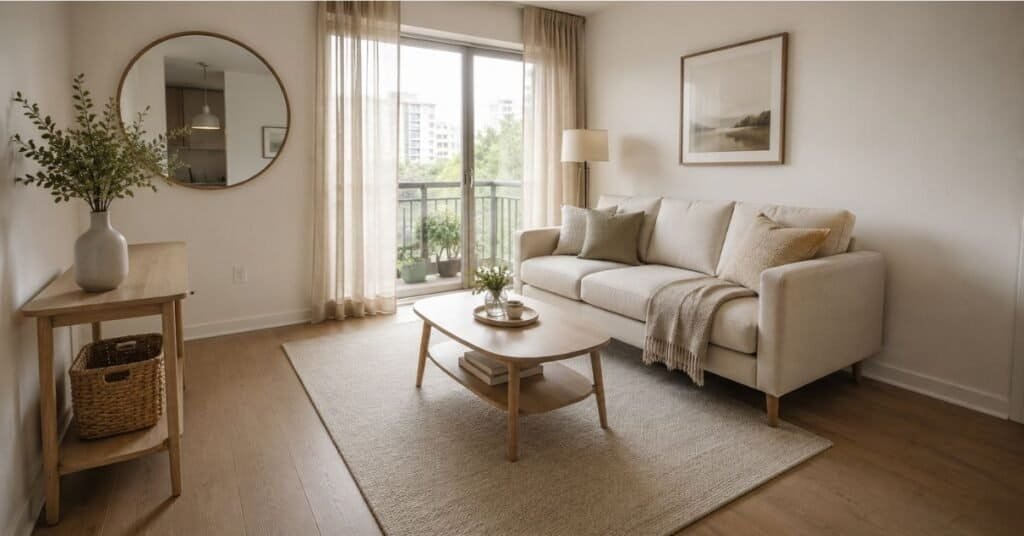
Start With Clear Pathways Before Adding Decor
Walk from the doorway to the sofa, window, kitchen, bedroom, or balcony door.
Does anything interrupt the path?
A small apartment needs clear routes more than extra decor. A side table that sticks out 4 inches too far can make the whole seating area feel awkward. A floor basket in a walkway can make the room feel smaller even if it looks cute.
Try these spacing checks:
- Keep 24 to 30 inches for main walking paths when possible.
- In very tight rooms, keep the path clear enough that you do not have to turn sideways.
- Leave 14 to 18 inches between the sofa and coffee table in a compact living room.
- Keep door swings clear so doors do not hit chairs, tables, or baskets.
- Avoid placing floor decor in the narrowest part of the room.
If your living room is narrow, pull the coffee table slightly closer to the sofa but keep enough space to move your legs. A slimmer table often works better than a wide square one.
A clear path makes the apartment feel calmer before you change anything else.
Remove Visual Clutter From Eye Level
The floor may be clear, but the room can still feel crowded at eye level.
Crowded shelves, busy walls, full tabletops, and too many small objects can make tight rooms feel even tighter. Your eye has to stop at every item, which makes the room feel packed.
A common mistake is clearing the floor but leaving the walls and surfaces overloaded.
Use this quick guide:
| Area That Feels Busy | Why It Shrinks the Room | Better Fix |
|---|---|---|
| Coffee table | Too many small objects | Tray, book, bowl |
| Open shelves | No breathing room | Books, basket, open space |
| Entry wall | Too many hooks or bags | One hook zone and one basket |
| Sofa area | Too many pillows | Two larger pillows |
| Kitchen counter | Too many daily items | One tray for essentials |
Start with the surface you see first from the doorway. Remove anything that does not belong there, then add back only two or three useful pieces.
For example, a coffee table can hold one tray, one book stack, and one small bowl. Leave the rest open.
That simple edit helps the room feel wider because the eye has fewer places to stop.
How to Make a Small Apartment Feel Bigger With Color and Light
Color and light can change the way a small apartment feels before you move a single piece of furniture.
A dark corner, heavy curtain, or bulky dark rug can make a tight room feel boxed in. Lighter colors and better light help the eye travel farther, which makes the room feel more open.
Architectural Digest notes that light colors and reflective surfaces can help a small room feel more open and airy.
Use that idea in the areas that feel heaviest first.
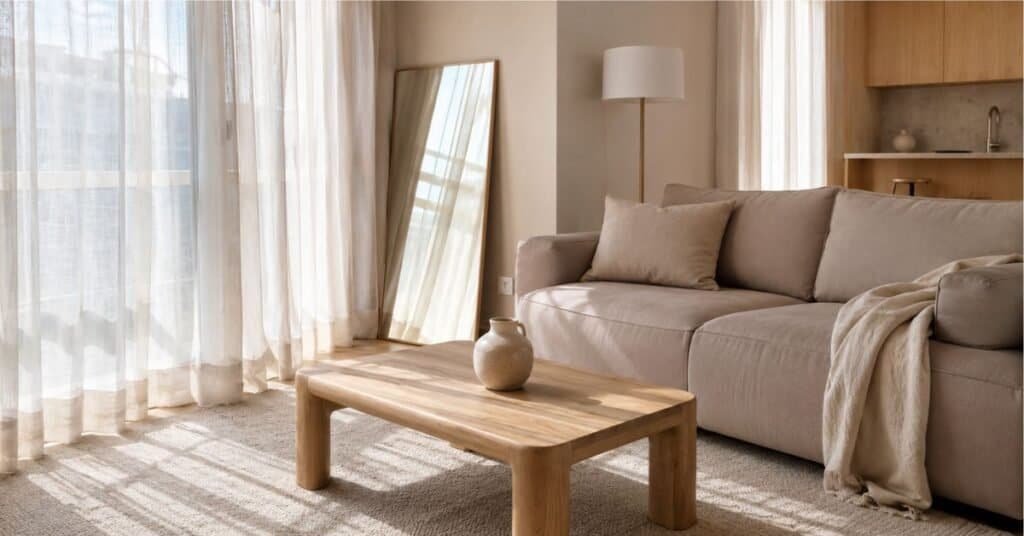
Use Light Colors Where the Room Feels Heaviest
You do not need an all white apartment.
Start with the biggest visual pieces in the room. Walls, curtains, rugs, bedding, and large upholstery carry the most weight because they take up the most space.
Good choices include:
- Warm white walls
- Soft beige curtains
- Light gray rugs
- Cream bedding
- Pale wood furniture
- Muted sage, clay, or dusty blue accents
If the room feels tight, lighten the largest dark area first. For example, a dark heavy curtain can be swapped for light linen panels. A very dark rug can be replaced with a soft neutral rug that still hides everyday wear.
Small space variation: if you rent and cannot paint, use lighter curtains, a pale rug, and lighter bedding. Those pieces can shift the room without touching the walls.
Add Mirrors Where They Reflect Light, Not Clutter
Mirrors can help, but placement matters.
Apartment Therapy shares practical mirror decorating tips for small spaces, especially the idea that mirrors work best when they reflect light or a calm view.
Place a mirror where it reflects:
- A window
- A lamp
- A clear wall
- A soft curtain
- A simple plant corner
- A bright part of the room
Avoid placing a mirror where it reflects open closet clutter, messy shelves, a crowded kitchen counter, or a pile of shoes near the door. That only doubles the visual clutter.
For a narrow entry, hang a mirror above a slim console and keep the surface simple. A small bowl, one lamp, and a clear top can make the entry feel brighter without adding more stuff.
Small Apartment Furniture Ideas That Free Up Floor Space
Furniture scale can make or break a small apartment.
A sofa that is too deep, a coffee table that is too wide, or a console that sits heavy on the floor can make a room feel tighter than it is. The right furniture does not need to be tiny. It needs to leave enough visual and physical room.
Furniture that sits off the floor is one way to make a small room feel lighter.
That works because visible floor space gives the eye a longer line to follow.
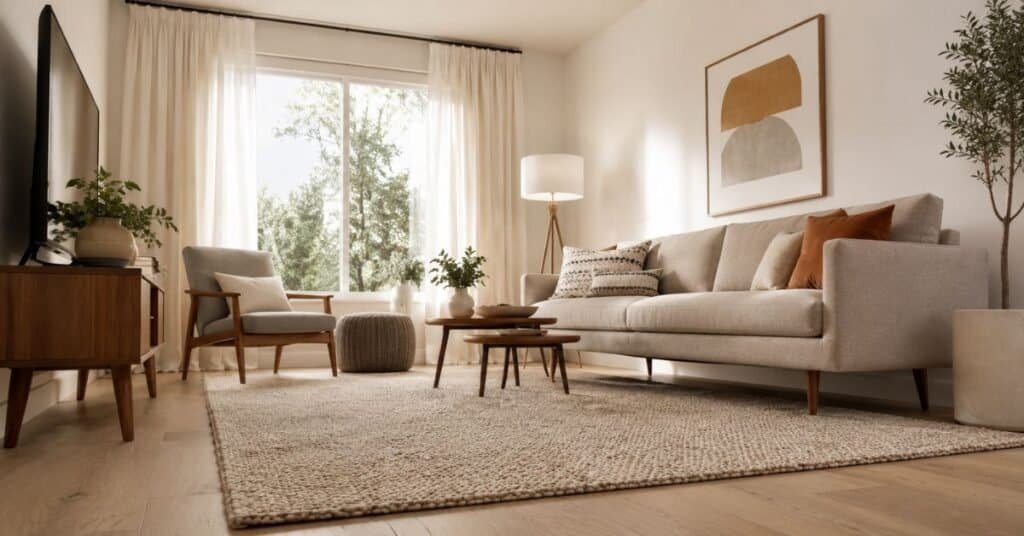
Choose Raised Furniture Legs for More Visual Room
Raised furniture legs help a room breathe.
When you can see floor under the sofa, chair, nightstand, or console, the space feels less blocked. This is especially helpful in a small living room where every inch counts.
Look for:
- Sofas with slim raised legs
- Chairs with exposed wood or metal legs
- Nightstands that sit off the floor
- Media consoles with open space underneath
- Benches with lighter frames
- Side tables with narrow bases
A small apartment can still have comfortable furniture. The trick is to avoid pieces that sit like large blocks on the floor.
For example, a cream sofa with 5 to 7 inch legs can feel lighter than a skirted sofa that touches the rug. The seating space may be similar, but the room looks more open.
Swap Bulky Pieces for Slim or Multifunctional Furniture
Bulky furniture eats space twice.
It takes up floor area, then it adds visual weight. A wide coffee table, oversized recliner, or thick arm sofa can make a room feel cramped even if it technically fits.
Better home gardens said that multifunctional furniture for small spaces helps make better use of limited square footage.
Use that idea by choosing pieces that work harder without getting bigger.
Try these swaps:
| Instead Of | Try This |
|---|---|
| Wide square coffee table | Slim oval or narrow rectangle table |
| Extra side table | Nesting tables |
| Large storage cabinet | Storage ottoman or raised console |
| Full dining set | Compact table with benches |
| Bulky desk | Wall mounted or fold down desk |
| Deep accent chair | Slim chair with open legs |
A common mistake is buying furniture because it looks good online, then realizing it blocks the walkway at home.
Before buying, tape the footprint on the floor with painter’s tape. Walk around it for a day. If your knees hit the tape or the path feels awkward, the piece is too large for that spot.
Small Apartment Storage Ideas That Hide Everyday Clutter
Storage is not just about having more places to put things.
In a small apartment, storage has to help the room look calmer too. Open bins, random baskets, and crowded shelves can hold your stuff, but they can still make the room feel busy.
Better Homes & Gardens shares helpful small space storage ideas that use vertical space, especially when floor space is limited.
That is the main idea here: use the walls, corners, and hidden zones before adding more pieces to the floor.

Use Vertical Storage Instead of More Floor Baskets
Floor baskets can be useful, but too many of them shrink a room fast.
If every corner has a basket, stool, plant stand, or storage bin, the floor starts to feel chopped up. Vertical storage keeps more of the lower part of the room open.
Try:
- Floating shelves above a desk
- A tall bookcase instead of two short shelves
- Wall hooks near the entry
- A narrow cabinet beside the sofa
- Over door storage in bedrooms or closets
- A pegboard in a work corner
Keep the bottom third of the room as open as possible. When you can see more floor, the apartment feels bigger.
If you are using wall shelves, keep them light and spaced out. Leave a few inches between objects so the wall does not turn into another clutter zone.
For more wall styling help, use these minimalist wall decor ideas for small apartments to keep vertical space useful without making the walls feel crowded.
Hide Daily Items in Closed Storage
Daily items are the reason small apartments get messy fast.
Blankets, chargers, remotes, mail, bags, toys, pet items, and extra pillows all need a home. If they stay visible all day, the room feels smaller.
Closed storage helps you keep those items nearby without letting them take over the room.
Good options include:
- Storage ottomans
- Lidded baskets
- Closed media cabinets
- Under bed bins
- Drawer dividers
- Boxes inside closets
- Nightstands with drawers
A budget option is to use matching bins inside cabinets or closets. They do not need to be expensive because they are mostly hidden. What matters is that the items are grouped and easy to put away.
For visible storage, choose lidded baskets or boxes in a color close to your walls, rug, or furniture. They will blend in better and make the apartment feel calmer.
If everyday clutter is your biggest issue, these minimalist decor ideas that hide everyday clutter can help you keep useful items out of sight without making the home feel bare.
Small Living Room Apartment Ideas for Better Layout
A tight living room can feel bigger when the layout gives each piece a clear job.
The mistake many people make is pushing everything against the walls. That can help in some rooms, but in a long narrow apartment, it can also make the center feel like a hallway instead of a living space.
A better layout gives the room one main seating zone and one clear path.

Float One Piece Instead of Pushing Everything to the Wall
You do not need to float the sofa in the middle of a tiny room.
Instead, float one smaller piece, like an accent chair, storage ottoman, or narrow console. This creates a softer layout without blocking the room.
Try:
- Angling one chair slightly toward the sofa
- Placing a slim console behind the sofa if there is room
- Using a small ottoman instead of a second chair
- Keeping one side of the room more open
- Leaving a clear path from the door to the window
If your living room is long and narrow, these living room layout ideas for small rectangular rooms can help you place furniture without making the space feel squeezed.
A small shift can change the whole room. Even moving a chair 6 inches away from a wall can make the seating area feel more natural.
Use Rugs to Define Space Without Shrinking the Room
Rugs can work well in small spaces when they are sized right.
A rug that is too small can make the furniture look like it is floating in pieces. A rug that connects the sofa, chair, and coffee table can make the seating area feel more settled.
In a small living room, try to place at least the front legs of the sofa and chair on the rug if possible. If that does not fit, place the rug close enough that the coffee table and seating still feel connected.
Good rug choices for tight rooms:
- Soft beige rug
- Light gray rug
- Low pattern rug
- Thin stripe rug
- Natural woven rug
- Flatweave rug
Avoid a rug that stops far away from the sofa. That gap can make the floor feel chopped up.
A good rug helps the room feel like one space, not a group of scattered pieces.
Small Apartment Lighting Ideas That Add Depth
Lighting can make a small apartment feel wider, softer, and less boxed in.
One ceiling light often makes the room look flat. It lights the center, but the corners stay dim. Those dark corners can make walls feel closer than they really are.
Martha Stewart shares helpful ideas for layered lighting for small spaces, especially using more than one light source to create depth.
In a tight apartment, depth matters. It helps the room feel less like one small box.
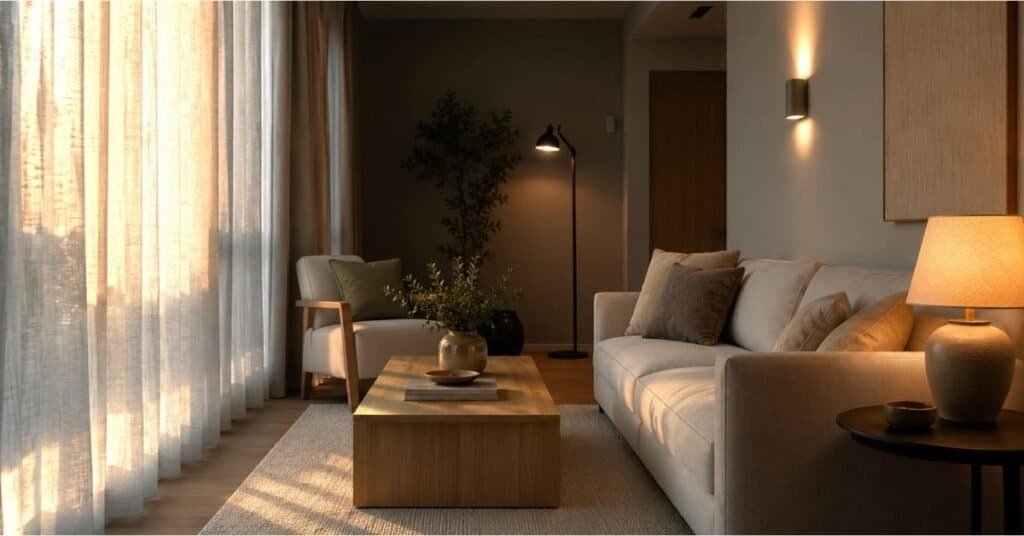
Use Three Light Sources Instead of One Ceiling Light
Try using three light sources in one room.
They do not have to be large. A table lamp, a slim floor lamp, and a small lamp on a console can change the whole mood.
Use:
- One main light for the room
- One lamp near seating
- One light in a dark corner
- Warm bulbs around 2700K
- A plug in wall light if floor space is tight
A good lamp placement can make the room feel more open without adding furniture. Place one lamp near the sofa, one near the darkest corner, and one near a shelf, console, or window.
If the living room feels flat at night, these cozy living room lighting ideas for small spaces can help you build a softer glow without making the room crowded.
Light Dark Corners So the Room Feels Wider
Dark corners visually close in a room.
A small corner behind a chair, beside a bookcase, or near a window can make the apartment feel smaller when it disappears into shadow. Add a slim light there and the room feels wider.
Try:
- A slim floor lamp behind a chair
- A small lamp on a narrow console
- A plug in wall sconce beside a sofa
- A small lamp on a bookshelf
- Under shelf lights in a work corner
Small space variation: use one slim floor lamp behind a chair instead of a bulky side table and lamp combo. You get the light without using extra surface space.
Keep the shade simple and the bulb warm. Too much glare can make a small room feel harsh, while soft light makes the edges feel calmer.
Small Bedroom Apartment Ideas for More Breathing Room
A small bedroom can feel tight fast because the bed takes up most of the room.
Once you add a nightstand, laundry basket, dresser, and extra decor, the floor can feel full before the room even feels finished. The fix is to keep the bed area calmer and place storage with more purpose.

Keep the Bed Area Calm and Low
The bed is usually the largest visual block in a small bedroom.
A tall bed, heavy bedding, and too many pillows can make the room feel crowded. A lower, calmer bed setup helps the wall feel taller and the room feel easier to move through.
Try:
- A low profile bed frame
- Simple bedding in soft colors
- Two sleeping pillows
- One folded throw
- A slim nightstand with a drawer
- Light curtains that do not feel heavy
If the bedroom feels cramped, avoid piling extra pillows on the bed. Keep the top clear enough that making the bed takes less than two minutes.
For a small apartment bedroom, these small bedroom decor hacks for a cozy look can help you make the room feel softer without filling every surface.
Use One Wall for Storage Instead of Scattered Pieces
Scattered storage makes a small bedroom feel chopped up.
A basket by the closet, a dresser near the door, hooks on one wall, and bins under a chair can make the room feel busy from every angle. One focused storage wall usually feels calmer.
Try grouping storage along one wall with:
- A tall dresser
- A narrow wardrobe
- Wall hooks
- One floating shelf
- Under bed bins
- A closed nightstand
Leave one side of the room visually quieter. That might mean no art on one wall, fewer items near the window, or a clear path beside the bed.
A common mistake is adding small storage pieces everywhere. It feels practical at first, but it can make the room feel even tighter.
Keep storage grouped, closed, and easy to reach.
Awkward Apartment Corners That Can Make Rooms Feel Bigger
Awkward corners can either help a small apartment or make it feel even tighter.
A corner with no purpose can look forgotten. A corner with too many things can feel crowded. The best version sits in the middle: useful, simple, and easy to walk around.

Turn Empty Corners Into Useful Zones
Give one empty corner a clear job.
It could become a reading nook, plant corner, compact desk, small entry station, or narrow dining spot. The key is to keep the furniture slim and the floor area open.
Try these corner ideas:
- A slim chair, floor lamp, and small table
- A narrow desk with a wall shelf above it
- A tall plant in a simple pot
- A small bench with one basket below
- A compact dining nook with a round table
- A narrow bookcase with open space beside it
If your living room has an awkward corner, these small living room corner decor that feels useful ideas can help you give that area a purpose without adding clutter.
A small detail helps here: choose furniture with raised legs when you can. A chair or bench that lets you see the floor underneath will feel lighter in a tight corner.
Avoid Filling Every Corner Just Because It Is Empty
Not every corner needs decor.
A blank corner can give the room breathing room, especially if the rest of the apartment already has shelving, plants, baskets, and lamps. Leaving one quiet area open can make the room feel more relaxed.
The common mistake is adding a plant, basket, lamp, and shelf to the same corner. Each piece may look nice by itself, but together they can make the corner feel heavier than before.
Use this test: if the corner already has one useful item, pause before adding another. Ask whether the second piece solves a problem or only fills space.
In small apartments, open space is part of the design. It helps tight rooms feel bigger because the eye gets a place to rest.
Frequently Asked Questions
How do you make a small apartment look bigger without renovating?
Start with clear pathways, lighter colors, mirrors, and less visible clutter. These changes help the room feel more open without changing walls or flooring.
Focus on the areas you see first from the doorway. A clear coffee table, open walkway, and lighter curtains can make the whole apartment feel less cramped.
What colors make a small room feel larger?
Warm white, soft beige, light gray, cream, pale wood, and muted colors can help a small room feel larger. These colors reflect more light and make the edges of the room feel softer.
You do not have to avoid color completely. Muted sage, dusty blue, soft clay, or warm taupe can still work if the room stays calm.
Does minimalism actually make a space feel bigger?
Minimalism can make a small space feel bigger when it reduces visual clutter and opens up the floor. A room with fewer small objects is easier for the eye to read.
The goal is not to make the apartment empty. Keep useful items, hide daily clutter, and leave some open space around furniture and decor.
What type of furniture works best in small apartments?
Slim furniture with raised legs usually works well in small apartments. It keeps the floor more visible and makes the room feel lighter.
Multifunctional furniture also helps. Try storage ottomans, nesting tables, fold down desks, narrow consoles, and beds with hidden storage.
Should you use rugs in small spaces or avoid them?
You can use rugs in small spaces. The key is choosing the right size.
A rug that connects the sofa, chair, and coffee table can make the room feel more settled. A tiny rug floating in the middle of the floor can make the layout feel broken.
How do you arrange furniture in a tiny living room?
Start with one main seating area and one clear walking path. Avoid filling both sides of the room with furniture if the space is narrow.
Use a slim sofa, one compact chair, and a coffee table that does not block movement. If the room is rectangular, a layout based on living room layout ideas for small rectangular rooms can help the space feel less squeezed.
Are mirrors really effective for small rooms?
Mirrors can work well when they reflect light, windows, lamps, or a calm wall. They help bounce light around and can make a tight room feel brighter.
Avoid placing a mirror where it reflects clutter. If it reflects a messy shelf, open closet, or crowded counter, it can make the room feel busier.
What lighting works best in small apartments?
Layered lighting works best in small apartments. Use more than one light source so the room does not rely only on a ceiling fixture.
Try a table lamp near the sofa, a floor lamp in a dark corner, and a warm bulb around 2700K. This makes the room feel softer and deeper at night.
How do you hide clutter in a small space?
Use closed storage, lidded baskets, under bed bins, drawer dividers, and furniture with hidden storage. The goal is to keep daily items close but not always visible.
For small apartments, minimalist decor ideas that hide everyday clutter can help you store useful pieces without making the room feel packed.
Can dark colors ever work in small rooms?
Yes, dark colors can work in small rooms when used with care. A dark accent wall, charcoal chair, or deep wood tone can add depth if the rest of the room has enough light and open space.
Avoid using dark colors on every large surface in a tight room unless you want a moodier feel. Balance darker pieces with light curtains, warm lamps, mirrors, and clear pathways.
Conclusion
Small apartments do not have to feel cramped.
With the right small space apartment ideas, even a tight room can feel lighter, calmer, and easier to use. Start with clear pathways, reduce visual clutter, use lighter colors, and place mirrors where they reflect light instead of mess.
Then look at the pieces that take up the most space. Raised furniture legs, slim tables, vertical storage, closed baskets, and layered lighting can all help the room feel bigger without a renovation.
You do not need to fix the whole apartment in one day. Start with the spot that bothers you most. Clear the walkway. Move one bulky piece. Add one lamp to a dark corner. Hide daily clutter in one closed basket.
Small changes can make a small apartment feel more open, more comfortable, and much easier to live in.
For more calm room ideas, visit Minimalist Home Ideas: I Tried Simplifying My Space… Here’s What Actually Happened.