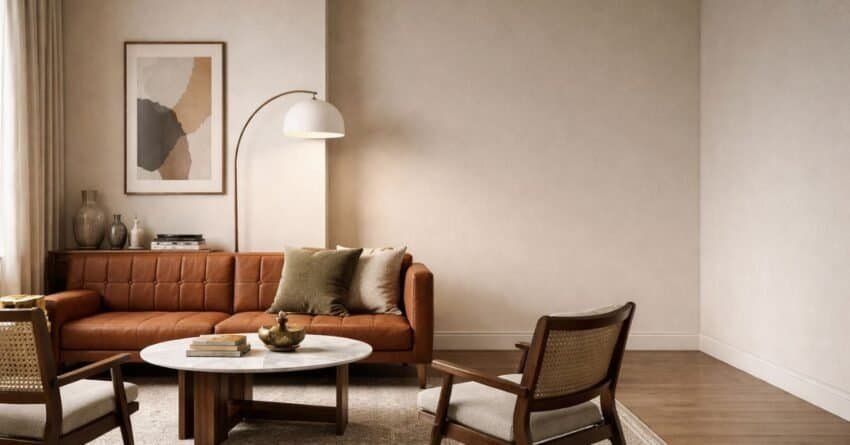
A small living room can look warm and pulled together, then one empty corner throws the whole thing off. It sits there looking dark, awkward, or unfinished, and suddenly the room feels less polished than it could.
That is why small living room corner decor matters more than people think. In a compact space, even one bare corner can make the room feel flat, while one well placed piece can make it feel calm, styled, and far more expensive.
The good news is that this does not take a full makeover. A corner can start to look better with one chair in the right scale, a lamp that casts a softer glow, or a round table that breaks up hard lines.
It also helps to stop thinking of the corner as leftover space. In many small living rooms, that corner is what balances the sofa wall, softens the layout, and gives the eye a place to land.
In this post, the focus is on simple ideas that make awkward corners feel useful and polished without stuffing them with random decor. You will see what helps, what makes a corner look cheap, and how to make a small area feel richer with better spacing, shape, and light.
Table of Contents
Why Small Living Room Corners Often Look Incomplete
The empty corner problem in small spaces
In a small living room, an empty corner stands out faster than it would in a larger room. Instead of reading as calm, it can make the whole room feel like something was forgotten.
This gets even more noticeable when the rest of the room already has a sofa, rug, coffee table, and wall art in place. The eye moves to the bare spot and reads it as unfinished.
A corner does not need a lot to feel right. It just needs enough presence to look connected to the room.

Why awkward corners are harder to style than they seem
Most awkward corners are not hard because they are empty. They are hard because they are usually too narrow, too dark, or too close to another piece of furniture.
A common mistake is trying to solve that with several small items at once. That usually makes the corner feel busy without giving it a clear purpose.
This is also where size matters. House Beautiful small living room ideas points out that poor sizing can make a small space feel cramped, which is exactly what happens when a corner gets filled with pieces that are either too bulky or too tiny.
A better move is to start with one job for the corner. It might hold light, soften a hard edge, add height, or balance the room near the sofa.

What makes a corner look expensive instead of cluttered
An expensive looking corner usually feels calm first. It has breathing room, one clear shape to anchor it, and enough texture to keep it from looking flat.
That is why one larger piece often works better than a pile of little decor. Apartment Therapy on making a living room look expensive notes that going bigger with a plant or decorative piece can make a room feel higher end, and that idea works especially well in corners.
Lighting also changes everything. A dark corner with only ceiling light can feel cold, while a floor lamp or small table lamp makes it feel softer, warmer, and more finished.
Think of the corner as a quiet supporting piece, not the star of the whole room. A slim chair, a tall plant, or a round table with one vase can do more than five random accessories ever will.
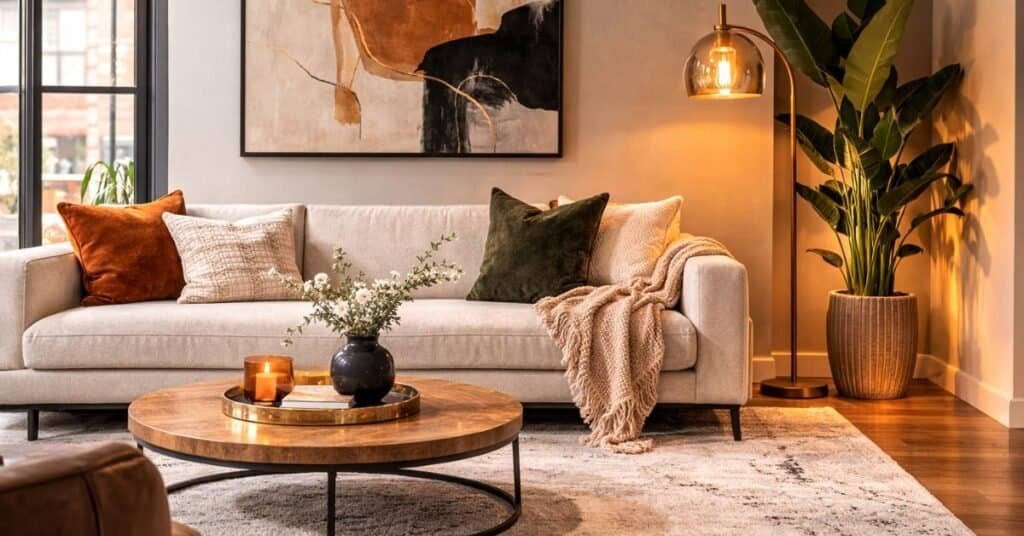
Small Living Room Corner Decor Starts With the Right Function
Decide what the corner needs to do
The fastest way to make a corner look expensive is to give it one clear job. A corner that tries to hold storage, display, lighting, and seating all at once usually ends up looking cramped.
A small living room corner often works best as one of these:
- a reading spot
- a soft lighting zone
- a quiet display area
- a slim storage nook
- a visual balance point near a larger piece of furniture
Once the job is clear, it becomes much easier to choose the right size and shape.

Match the corner to the room instead of forcing a theme
A corner should support what is already happening in the room. If the living room feels soft and calm, a corner with shiny pieces and sharp lines can look out of place. If the room is clean and modern, a bulky rustic cabinet may feel too heavy.
This is where many corners start to look random. People add decor because the space feels empty, but the pieces do not relate to the sofa, rug, wall color, or nearby furniture.
A better move is to repeat one or two details already in the room. That could be the curve of a chair, the wood tone of a frame, or the black finish of a lamp base. Small repeats help the corner feel connected instead of dropped in.

When it is better to leave part of the corner open
Not every corner needs to be filled from wall to wall. In a small room, a little open space can look far more polished than trying to use every inch.
This is why dead corner space is not always bad. Sometimes the corner only needs one piece with enough height or shape to finish the view. A floor lamp with a slender base, a plant with an airy form, or a round accent table can be enough.
This idea also helps with traffic flow. Leaving 18 to 24 inches of open space around a corner setup can keep the room from feeling blocked, especially near a sofa arm or walkway.
If the room already has plenty of furniture, the corner may only need a light touch. That could be one taller item and one smaller styling piece, nothing more.

A quick test before you style anything
Stand at the main entry point of the room and look at the corner for five seconds. Ask two simple questions:
- Does it look empty or calm?
- Does it look useful or random?
If it feels random, the corner probably needs a clearer purpose. If it feels crowded, it likely needs fewer pieces or better spacing. This quick check can save time before buying anything.
A corner looks better when it feels settled. That usually comes from function first, then styling after.
Small Living Room Corner Decor That Looks More Expensive
Use scale to make the corner feel intentional
A corner starts to look better when at least one piece has enough size to hold the space. Tiny decor scattered across a small area usually makes the setup feel weak, not polished.
That is why one larger item often works better than three or four small ones. Apartment Therapy points out that going bigger with a plant or decorative accent can make a room feel more high end. In a corner, that could mean a tall olive tree, a full floor lamp, or one chair with a real presence instead of a cluster of little objects.
A good rule is to choose one anchor piece that reaches at least mid wall height or has enough width to visually ground the corner. In many small rooms, that looks more finished than filling the space with bits and pieces.
Choose shapes that soften the corner
Corners are all hard lines, so softer shapes help right away. A round table, curved chair arm, or drum shade can make the area feel calmer and more expensive.
This works because curved shapes break up the sharp angle where two walls meet. Robyn’s French Nest highlights round accent tables as a simple way to soften empty living room corners, and that small shift can make a big difference in a tight space.
House Beautiful also notes that curved furniture can bring softness to smaller rooms. In a corner, that softness keeps the area from looking stiff or boxy.
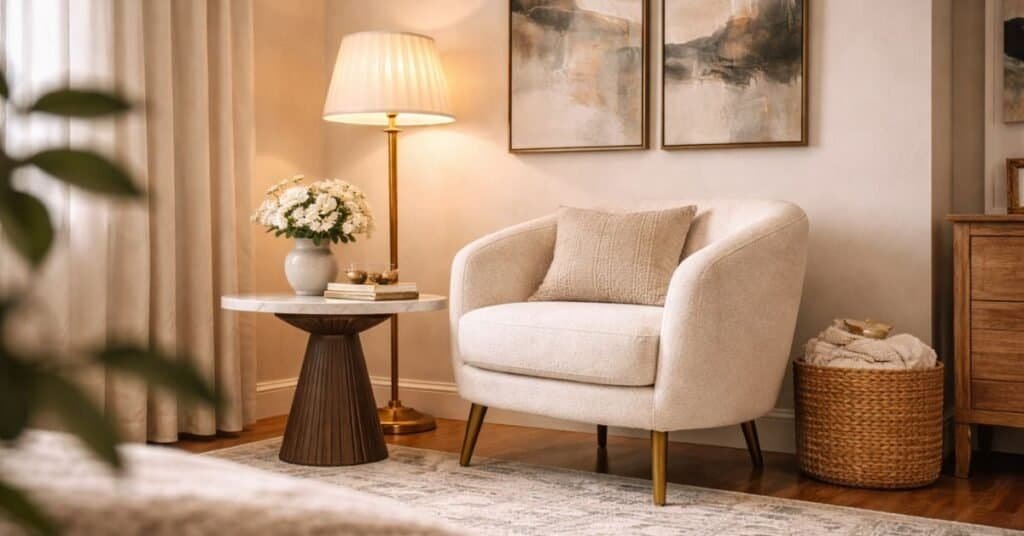
Try pairing one rounded piece with one taller vertical piece. A small round pedestal table beside a slim lamp is often enough to make the corner feel settled.
Layer texture instead of adding more stuff
A corner does not need many items to feel rich. It usually needs more contrast in surface and finish.
That could be a woven shade next to a smooth ceramic vase. Or a linen chair beside a warm wood table. Or a matte lamp base set against a soft painted wall. These small changes help the corner feel fuller without making it busy.
Texture also helps a neutral setup feel less flat. A beige chair, for example, can still look expensive if the room includes a nubby throw, a wood accent, and one aged metal detail nearby.
A simple formula that works well is:
- one soft texture
- one smooth texture
- one natural material
- one shape with height
That keeps the corner readable and warm.
Add one feature that gives the corner presence
Every polished corner needs one thing that catches the eye first. That does not mean loud. It means clear.
Better Homes and Gardens shows how corner friendly pieces like slim cabinets and floor lamps can turn unused space into something stylish and useful. In a small room, that feature might be:
- a sculptural floor lamp
- a tall plant with an airy shape
- a narrow slatted cabinet
- a framed artwork leaning above a small table
- a pedestal with one ceramic vase
The point is not to fill the whole corner. It is to give the eye one reason to stop there.
A budget version can be as simple as moving a lamp from another room and pairing it with a stool or small round table you already own. In a very small apartment, even one floor plant in a basket can do the job if the rest of the room is already full.
One common mistake to avoid
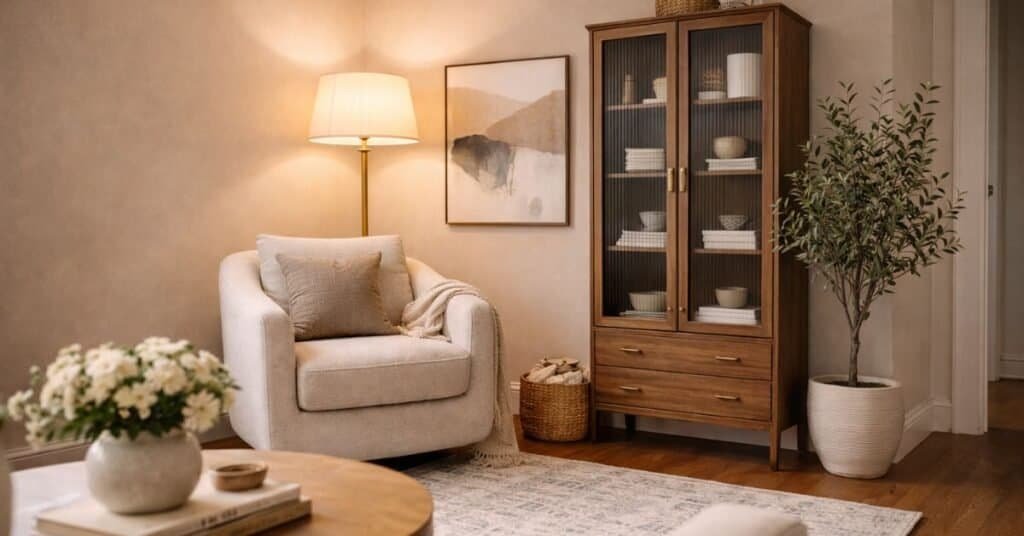
One of the easiest ways to make a corner look cheap is to use pieces that are all the same visual weight. A thin lamp, a tiny table, and a few small objects can disappear into the wall and make the corner feel forgotten.
Mixing sizes works better. Let one piece be taller, one piece be lower, and one detail add texture. That slight shift gives the setup more shape without adding clutter.
Smart Pieces That Work in Awkward Living Room Corners
Accent chairs that do not crowd the room
A chair can make a corner feel finished fast, but only if it fits the room. In a small living room, bulky arms and heavy bases can make the corner feel blocked.
Look for chairs with open legs, a lighter frame, or a narrower seat. A width of around 26 to 32 inches often works better in tight corners than anything oversized.
If the chair sits near a walkway, leave enough room so the corner still feels easy to move around. About 24 inches of open space in front or beside it can help the layout feel more relaxed.
Tables, cabinets, and ledges that fit tight spots
Some corners need function more than seating. That is where a small table, narrow cabinet, or ledge can work well.
A round accent table is one of the easiest pieces to place because it softens the corner and usually takes up less visual space. A pedestal table around 10 to 16 inches wide can hold a lamp or vase without crowding the room.
For corners that need storage, a slim cabinet can make the area feel useful instead of random. Better Homes and Gardens notes that corner friendly pieces like narrow cabinets can turn unused space into a stylish nook, which is helpful in smaller rooms where every inch matters.
Picture ledges also work well when floor space is tight. They give the corner height and character without adding another base on the floor.

Shelves that add height without making the room feel heavy
Shelves can help a bare corner feel finished, but the wrong shelf can make a small room feel boxed in. Thick units or deep corner shelving often look heavier than expected.
Floating shelves are usually a better pick in tight spaces. Homestyler recommends floating corner shelves as a way to add storage while keeping the room airy, which is useful when the corner needs height but not bulk.
Keep styling simple. A small stack of books, one trailing plant, and one object with shape is often enough. Too many pieces can make the shelves look busy and pull attention away from the room.
Try to space shelves about 10 to 14 inches apart so they do not feel cramped. And stop before the corner starts looking like a full wall display.

Lighting that fixes a dark corner fast
A dark corner can make the whole room feel flatter. One ceiling light rarely reaches every edge of a small living room in a soft way.
That is why corner lighting matters. Ideal Home points out that relying on a single overhead light can leave a room feeling cold and flat, which is often most obvious in the corners. A floor lamp, table lamp, or wall light helps spread glow at eye level and makes the space feel more settled.
Warm bulbs tend to work better here than harsh white light. Something in the soft warm range often feels nicer in a corner used for reading, relaxing, or quiet styling.
A slim floor lamp with a fabric shade is often the easiest fix. It gives height, mood, and function without taking much room.
| Corner Problem | Why It Happens | Better Choice |
|---|---|---|
| Bare corner | No focal point | Floor lamp or tall plant |
| Dark corner | Only overhead light | Layered corner lighting |
| Tight corner | Furniture too bulky | Slim round table |
| Flat corner | No height or texture | Floating shelves or tall decor |

A small space version that still works
In a very tight apartment or condo, even a chair may be too much. That does not mean the corner has to stay empty.
A slim lamp paired with a plant can be enough. Or a single ledge with one frame and one vase. In the smallest corners, light and height often do more than furniture.
The goal is not to fill every gap. It is to make the corner feel finished without slowing down the room.
Color and Material Choices That Help a Corner Feel Richer
Soft neutrals that make a corner feel calm and polished
Color does a lot of quiet work in a small corner. When the palette feels soft and settled, the whole area looks more put together.
Warm white, beige, greige, taupe, and soft gray are all strong choices for a corner that needs to feel lighter and calmer. These shades bounce light around better and help small spaces feel less chopped up.
This is also where tone on tone styling helps. A cream lamp shade, a beige chair, and a warm wood table can look far more polished than a mix of random colors fighting for attention.
In rooms that already lean soft and neutral, our Neutral Palette Living Room guide shows how quiet color layering can make empty corners feel warmer without adding clutter.
Dark accents that add depth without making the room heavy
A corner can start to look flat when every finish is pale. That is where one or two darker accents help.
This does not mean turning the whole corner dark. It means adding a little contrast through a black lamp base, a charcoal frame, aged bronze, or a deeper wood tone. Those darker notes give the eye somewhere to land.
In a small space, a little contrast goes a long way. One dark object beside lighter pieces can make the whole setup feel more grounded.
Try using dark accents low and light accents high. For example, a dark side table with a pale lamp shade often feels balanced in a small corner.

How to use contrast in a small corner without making it busy
Contrast works best when it stays controlled. Too many strong colors or finishes in one small corner can make the space feel jumpy.
A simple way to do this is to pick one main tone, one support tone, and one accent. That could look like warm white walls, taupe upholstery, and a small hit of black or walnut.
This is also a good place to watch shape. If the colors are quiet, one stronger shape can help the corner feel finished. That could be a rounded chair back, a tall lamp, or a framed print leaning on a ledge.
A corner often looks richer when there is one clear contrast, not five.
Vintage details that make modern spaces feel less flat
A modern room can start to feel cold if every piece is new and smooth. One or two older looking details can help a corner feel warmer and more lived in.
That might be a small brass lamp, a weathered wood stool, a ceramic vase with an aged finish, or a framed print that looks collected over time. These touches help break up a space that feels too crisp.
This works especially well in corners because the area is small enough that one older detail can add character without taking over. House Beautiful also leans into softer shapes and layered details in small living rooms, which supports this more mixed and relaxed look.
If your room already has a clean modern base, our modern contemporary living room decor post is a good companion for adding quiet detail without making the room feel busy.
Common Mistakes That Make Small Living Room Corner Decor Look Cheap
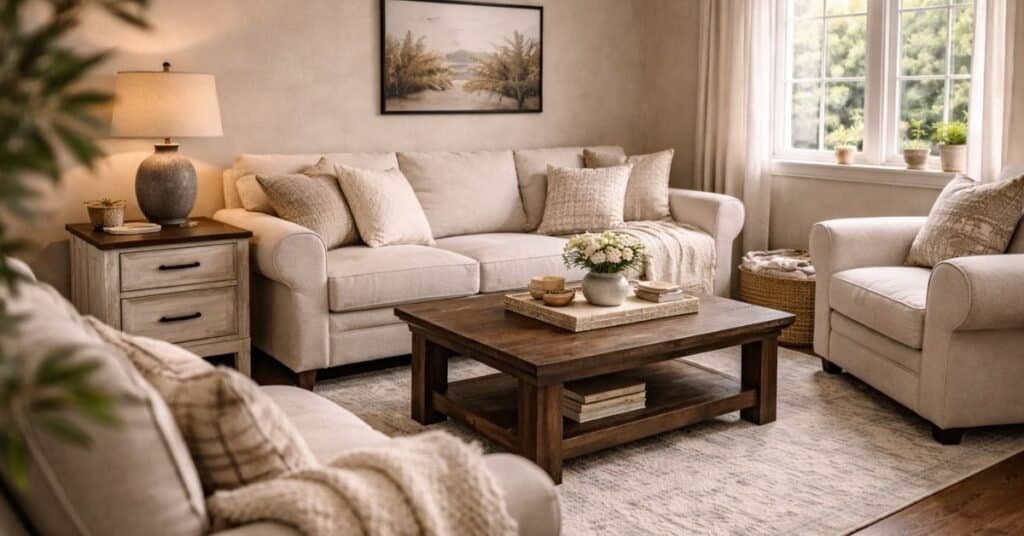
Using furniture that is too small or too bulky
Size is where many corner setups go wrong. A piece that is too small can look lost, while a piece that is too bulky can make the whole room feel squeezed.
This often happens with chairs that have thick arms, deep seats, or heavy legs. It also happens with tiny tables that do not have enough presence to anchor the corner.
A better fit is usually something with lighter visual weight. Open legs, slimmer frames, and rounded shapes tend to sit better in small spaces.
Piling in too many little objects
Small corners do not need a lot of decor to feel finished. In fact, too many little pieces often make the setup feel cheaper.
A cluster of tiny candles, small frames, and mini objects can read as clutter, not style. The eye has nowhere to rest, so the whole corner feels busy.
One stronger piece often works better than a collection of little fillers. A lamp, a plant, or a round table with one vase usually looks cleaner and more settled.
Relying on one ceiling light only
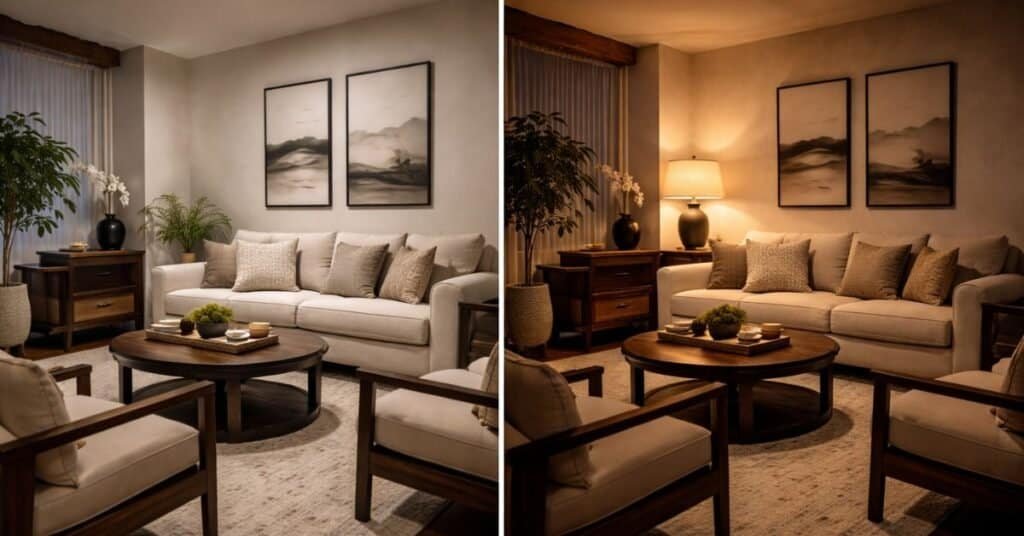
Lighting has a big effect on whether a corner feels warm or flat. When the only light comes from overhead, the corner often ends up looking dull and forgotten.
That is one reason dark corners feel harder to style. Even nice furniture can look underwhelming if the light is too harsh or too far away.
A lamp at eye level changes that quickly. It adds glow, softens shadows, and makes the corner feel like part of the room instead of leftover space.
Making everything too matchy
A corner can also fall flat when every piece looks too coordinated. Matching sets, identical finishes, and decor that all feels cut from the same page can make the area feel stiff.
House Beautiful notes that a matchy look can leave a room feeling flat, and that same problem shows up in corners very fast.
The fix is simple. Mix one or two elements. Pair a smooth lamp with a textured basket. Add a darker wood tone next to a pale chair. Use pieces that relate, but do not look copied and pasted.

Forgetting to measure walking space
A corner might look good in a photo, then feel wrong in real life because it cuts into the room too much. This is common beside sofas, near entry paths, or close to windows.
Before adding anything, check how much open space is left around the setup. In many small rooms, keeping about 18 to 24 inches open helps the corner feel lighter and easier to move around.
This matters more than squeezing in one extra piece. A room that feels easy to walk through often looks more expensive than one packed with furniture.
| Mistake | What It Does | Better Fix |
|---|---|---|
| Tiny decor pieces | Makes the corner feel random | Use one stronger anchor piece |
| Bulky furniture | Crowds the layout | Choose slimmer shapes with open legs |
| No lamp | Leaves the corner flat | Add warm layered light |
| Too much matching decor | Makes the corner feel stiff | Mix texture and tone |
| No space planning | Blocks the room | Leave open walking space |

One quick reset that helps
If a corner looks off, remove everything except the biggest piece. Then add back only what helps that one piece look better.
This simple reset makes it easier to see what is useful and what is just taking up space. In most small corners, less usually looks calmer and more polished.
Budget Friendly Ways to Make a Small Corner Look More Expensive
Start with one anchor piece
A small corner does not need a full shopping list. It usually looks better when one piece clearly anchors the space.
That anchor could be a floor lamp, a tall plant, a slim chair, or a small round table. Apartment Therapy points out that one larger decorative element can make a room feel more high end, which is useful in a corner where too many little pieces can look scattered.
If the budget is tight, start with the piece that adds the most height or shape. A corner often looks more finished with one tall item than with several smaller ones.
Use height to make the corner feel finished
Corners often look empty because the eye goes up and finds nothing. That is why height matters so much.
A floor lamp, tall branch arrangement, plant, or stacked picture ledges can pull the eye upward and make the corner feel complete. You do not need to spend much if you already have a lamp in another room or a basket planter that can be moved over.
This is also where wall space can help. A small ledge or one framed print above a table gives the corner enough presence without taking up more floor space.

Restyle what you already have before buying anything
A lot of corners look better with a better edit, not more stuff. Before buying anything new, pull pieces from other rooms and test them in the corner.
Try a lamp from the bedroom. Move over a stool, a basket, or a framed print. Even a throw draped over a simple chair can make the area feel warmer.
Robyn’s French Nest leans into simple corner styling with round tables and small vignettes, which works well for this kind of budget first reset. The point is to use fewer pieces with better placement.
A good test is to style the corner with only three things:
- one item with height
- one item with shape
- one item with texture
That is often enough.
Focus on light, texture, and spacing first
If money is limited, spend attention before spending cash. Light, texture, and spacing change how a corner feels even when the furniture stays the same.
A warm bulb can make a dark corner feel softer. A woven basket or linen pillow can make the area feel richer. A few more inches of open floor space can stop the setup from looking crowded.
This is one reason budget corners can still look polished. The finish does not come from having more. It comes from choosing what to leave out and where to place what stays.
For a very small apartment corner, skip the chair and use a slim lamp with one plant or one narrow table. That keeps the footprint light while still giving the room a finished edge.
A budget option that works in real rooms
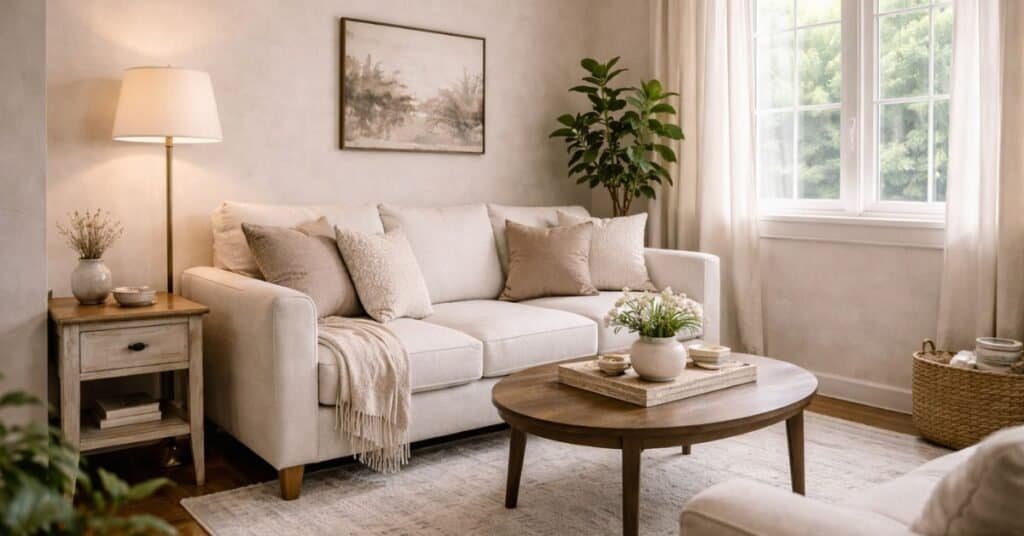
One simple low cost setup looks like this:
- slim floor lamp
- secondhand round side table
- small ceramic vase
- one branch or stem
- open floor space around the base
This kind of setup works because it feels intentional without trying too hard. It gives the corner shape, warmth, and a finished look while keeping the room easy to move through.
Small Living Room Corner Decor Ideas for Different Types of Corners
For dark corners
A dark corner can make the whole living room feel dull, even when the rest of the space looks good. The fix is usually less about adding more decor and more about adding the right kind of light.
Start with one warm light source at eye level. A slim floor lamp works well because it adds height without using much room. Homestyler also points to light, vertical corner solutions that keep small spaces from feeling heavy.
A mirror nearby can help bounce light, but keep it simple. In a small corner, one lamp and one clean reflective surface usually feel better than layering too many shiny pieces.
For empty corners near a sofa
Corners beside a sofa often feel unfinished because the main seating area already has weight, and the empty side leaves the room feeling uneven. This is one of the easiest corners to fix.
A round side table, a tall plant, or a slim chair can help balance the sofa without crowding it. Apartment Therapy on awkward corners shows that plants and seating can turn an unused corner into something calm and useful, which works especially well next to a sofa.
Leave a little breathing room between the corner piece and the sofa arm. Even 6 to 10 inches can help the setup feel lighter and less shoved together.
For narrow corners beside a window
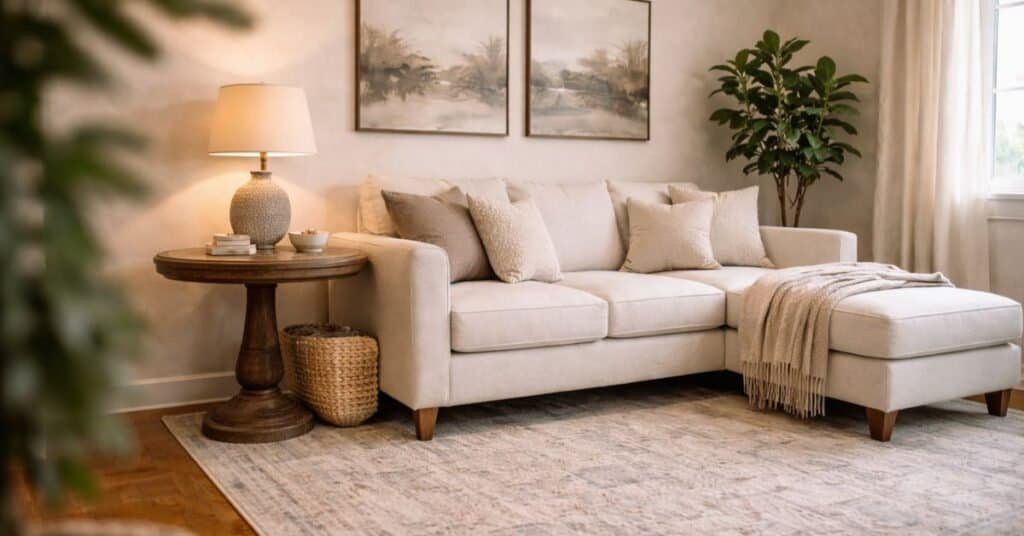
Window side corners can be tricky because they already share space with curtains, natural light, and sometimes a vent or walkway. Heavy furniture usually feels wrong there.
Lighter pieces tend to work best. A pedestal table, a floor lamp with a slim base, or one airy plant can finish the corner without blocking the window. Keep the setup low or open enough that daylight still moves through the area.
This is also a good place to lean into softer materials. A linen shade, a pale ceramic vase, or a woven basket can help the corner feel warm while still looking light.

For corners that need hidden storage
Some corners need to hold more than one pretty object. In small homes, the corner may need to hide cords, books, throws, or little items that do not have a home.
That is where a narrow cabinet, lidded basket, or small closed side table can help. The goal is to keep storage looking calm from the outside. Open storage can work, but it needs a cleaner edit or the corner starts to feel busy fast.
A slatted or simple front cabinet often works better than anything bulky or ornate. It gives the corner a job while still helping the room look pulled together.
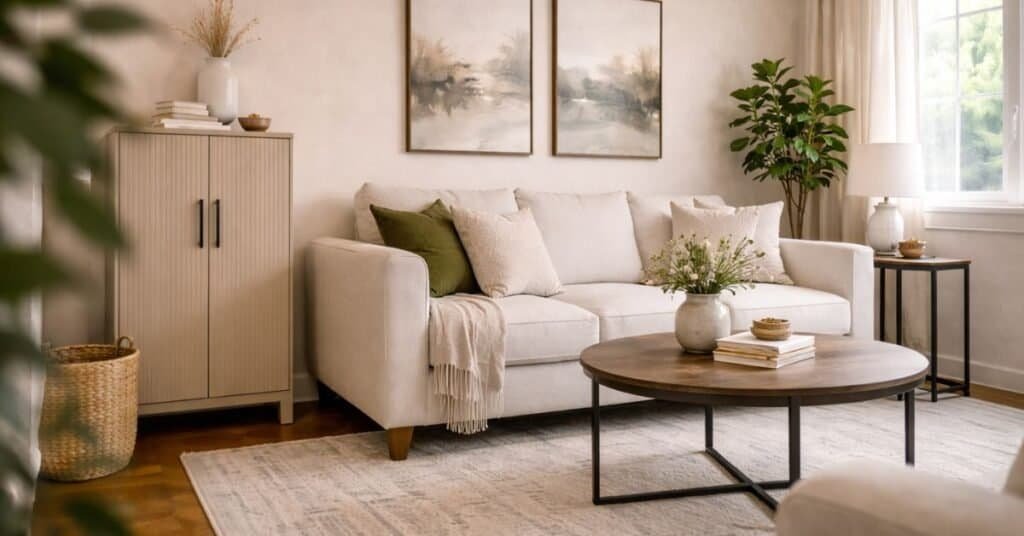
For corners in very small apartments
Very small apartments need corners to work hard without looking crowded. In these spaces, the best corner setups are often the lightest ones.
A slim lamp and one plant may be enough. Or one floating ledge with a framed print and a small vase. You do not need a full chair setup if the room already feels tight.
This is where editing matters most. The corner should finish the room, not compete with it. If the setup makes the space harder to walk through or makes the wall feel busy, it is probably too much.
A simple way to choose the right corner idea
Before styling any corner, ask what kind of problem it has:
| Corner Type | Main Problem | Best First Move |
|---|---|---|
| Dark corner | Feels dull and cold | Add warm layered light |
| Empty corner near sofa | Room feels unbalanced | Add one anchor piece |
| Narrow window corner | Space feels tight | Use open or airy pieces |
| Storage corner | Clutter has no home | Add slim closed storage |
| Tiny apartment corner | Room feels crowded fast | Keep the setup minimal |
Most corners look better when the fix matches the problem. That sounds simple, but it saves a lot of wasted effort.
Frequently Asked Questions
How to make a small living room look expensive?
Start by giving the room a calmer base. A small space usually looks better with fewer pieces, better spacing, and one or two items that have real presence, like a tall lamp or a larger plant.
In the corner, that often means using one anchor piece instead of lots of tiny decor. Warm light, soft texture, and a little open floor space can make the room feel much more polished.
How to make a small room feel luxurious?
A small room feels richer when the finishes feel layered, not crowded. Soft neutrals, warm wood, one darker accent, and lighting at more than one level usually help.
It also helps to avoid filling every empty spot. A little restraint often looks far better than trying to decorate every inch.
How to decorate an awkward living room corner?
Start by deciding what the corner needs to do. It may need to add light, balance the sofa area, hold storage, or just stop the room from feeling unfinished.
Then choose one piece that fits that job. A slim chair, round table, narrow cabinet, or floor lamp often works better than mixing several small items without a clear purpose.
What not to do when decorating a small living room?
Try not to use furniture that is too bulky or decor that is too small and scattered. Both can make the room feel off balance.
It also helps to avoid a corner that is too matchy or too full. A small room usually looks better when there is some breathing room and a mix of shape and texture.
What colors are best for a small living room?
Soft warm shades tend to work very well. Beige, warm white, greige, taupe, and soft gray can help the room feel lighter and calmer.
Then add depth with a darker note here and there, like black, walnut, charcoal, or aged brass. That little contrast helps the room feel less flat.
How to fill a bare corner in a living room?
A bare corner usually needs one clear anchor first. That could be a floor lamp, a tall plant, a slim chair, or a round accent table.
After that, add only what helps the main piece look better. In many cases, one anchor and one smaller detail are enough.
What do you put in the corner of your living room?
That depends on the size and function of the room. Common options are a lamp, accent chair, plant, small cabinet, floating shelves, or a pedestal table.
The best choice is usually the one that fits the room without blocking movement. In a small space, lighter pieces with open shapes often work best.
What to do with dead corner space?
Dead corner space does not always need a big fix. Sometimes it only needs enough height or shape to make the room feel complete.
A tall plant, warm lamp, or narrow storage piece can turn that quiet area into something useful. If the room already feels full, even one simple piece may be enough.
How to decorate a dark living room corner?
Start with warm lighting at eye level. A floor lamp or table lamp can soften the corner much faster than overhead lighting alone.
After that, keep the rest simple. A mirror, a pale shade, or one light toned object can help the area feel brighter without making it busy.
Is it OK to leave a corner empty?
Yes, sometimes it is the better choice. If the room already has enough furniture, leaving part of the corner open can make the whole space feel calmer and more polished.
The key is that the corner should look intentional, not forgotten. Even one tall piece with open space around it can be enough.
Conclusion
A small corner can change the mood of the whole room. When it feels dark, awkward, or unfinished, the living room often feels the same.
The good part is that it usually does not take much to fix it. Better scale, softer shapes, warmer light, and a little restraint can make small living room corner decor feel far more polished.
If you want more ideas for the rest of the room, take a look at Epic Modern Living Room Guide: What No Decorator Will Show You.