
A home can look clean and still feel busy.
Maybe the living room has too many small pieces around the sofa. Maybe the bedroom feels flat, the kitchen counter keeps collecting random items, or the bathroom looks messy even after you tidy it.
That is where the right minimalist room decor ideas can help each room feel calmer without making your home look empty.
The goal is not to remove every pillow, basket, tray, or piece of art. The goal is to keep the pieces that help the room feel useful, warm, and easy to live in.
A cream sofa with two pillows can feel softer with one folded throw. A kitchen counter can look cleaner when daily items sit on one tray. A bathroom can feel calmer when extra bottles are tucked inside a drawer or basket.
If you want the whole home to feel simple but still cozy, these minimalist home ideas that still feel warm can help you keep the look soft instead of bare.
Start with one room first.
Clear one surface, hide one clutter zone, repeat one warm color, and add one texture that makes the space feel more comfortable. Small changes can make the living room, bedroom, kitchen, and bathroom feel connected.
In this post, you will see how to use minimalist room decor from the sofa area to the bathroom counter, with simple ideas you can try in small homes, apartments, rentals, and busy family spaces.
Table of Contents
Minimalist Room Decor Ideas That Work From Sofa to Bathroom
Minimalist room decor ideas work best when every room follows the same simple rule: keep what helps, remove what distracts, and make the useful pieces look calm.
The Spruce describes minimalist decor as a style with a “less is more” feeling, natural light, clean lines, texture, and useful design. Their guide to minimalist decor focused on clean lines and functional design is a helpful starting point because it shows that minimalism is not just about empty rooms.
It is about choosing better.
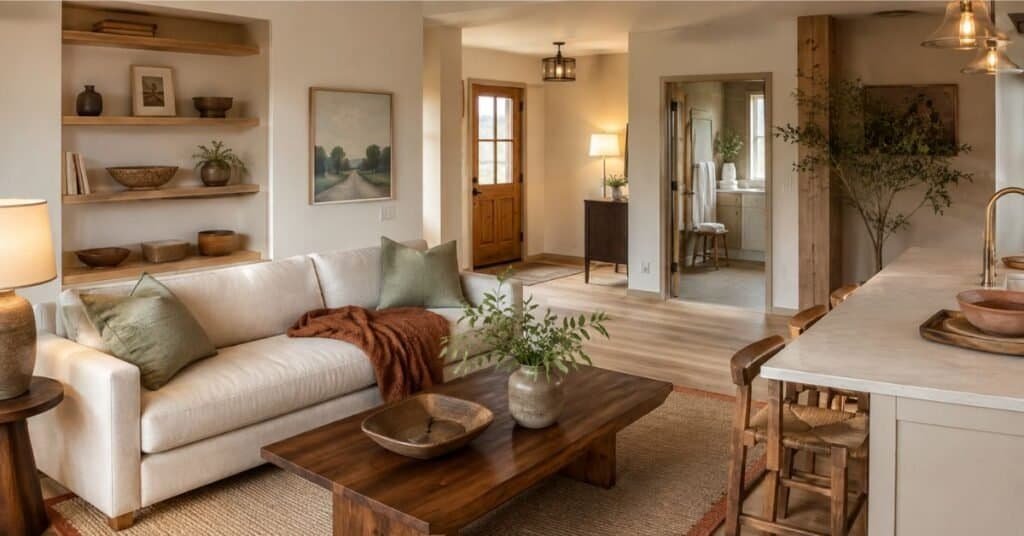
Start With Fewer Pieces That Do More
Every room needs decor that has a job.
A pillow should add comfort or color. A tray should group daily items. A basket should hide clutter. A lamp should soften the room at night.
This is what makes minimalist decor easier to live with. You are not decorating with random pieces. You are choosing items that help the room feel cleaner, warmer, or more useful.
Try this room by room check:
| Room | Keep | Remove or Hide | Simple Fix |
|---|---|---|---|
| Living room | Sofa, rug, lamp, one table setup | Extra pillows, random objects, cords | Use one tray and one basket |
| Bedroom | Bedding, lamp, nightstand basics | Receipts, chargers, piles of clothes | Use a drawer or small dish |
| Kitchen | Daily cooking items | Bright packaging, extra appliances | Group items on one tray |
| Bathroom | Hand soap, towel, daily products | Extra bottles, backups, clutter | Use baskets or vanity storage |
A common mistake is treating every room as a separate design project. This can make the home feel random.
A better choice is to repeat the same few materials. Use warm wood in the living room, kitchen shelf, bedroom nightstand, and bathroom stool. Use woven baskets in the entry, bathroom, or beside the sofa.
The home will feel connected without looking too matched.
Repeat One Calm Style Across the Home
Minimalist decor feels smoother when the rooms share a few visual details.
You do not need identical furniture in every space. Just repeat a few colors and textures so the home feels planned.
Try repeating:
- One wood tone
- One soft accent color
- One metal finish
- One woven texture
- One simple wall art style
- One warm light temperature
For example, use sage green in a living room pillow, a kitchen towel, and a bathroom hand towel. Add warm wood through a coffee table, a shelf, and a bath stool. Then use soft black or brass in small accents like frames, lamps, and hooks.
This keeps the home simple, but not plain.
A small space variation is to use one color thread across the whole apartment. If your home is tiny, repeating one accent color can make separate zones feel more open and less choppy.
Minimalist Living Room Decor That Makes the Sofa Area Feel Warm
The living room is the best place to start because the sofa area usually sets the tone for the home.
If this spot feels crowded, the whole room can feel busy. If it feels too empty, the home can feel cold. The sweet spot is simple seating, soft texture, one clear surface, and enough open space to move around.
Apartment Therapy notes that simple and uncluttered living rooms can still feel inviting. Use that idea as permission to keep the room minimal without stripping away comfort.
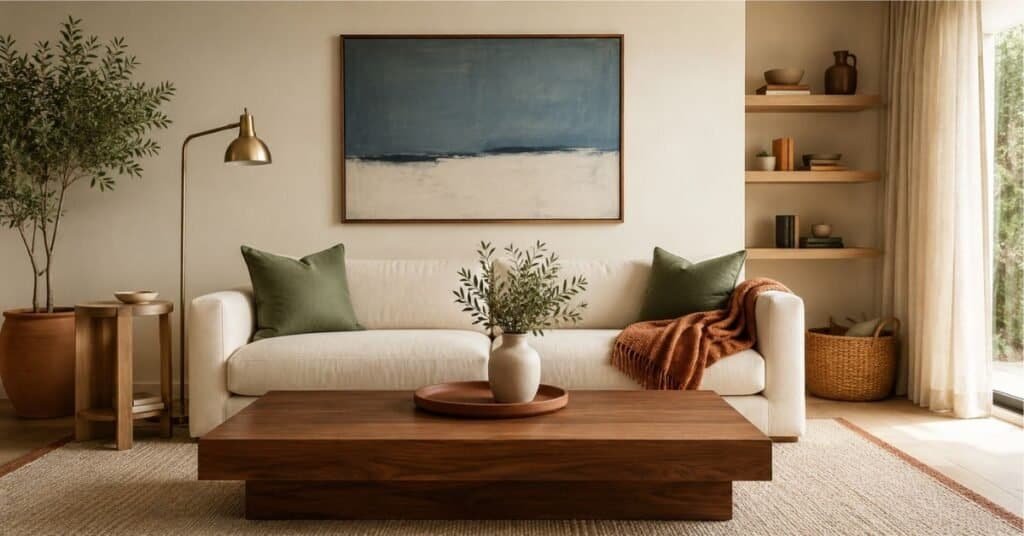
Keep the Sofa Simple but Not Empty
The sofa does not need a lot of layers to feel finished.
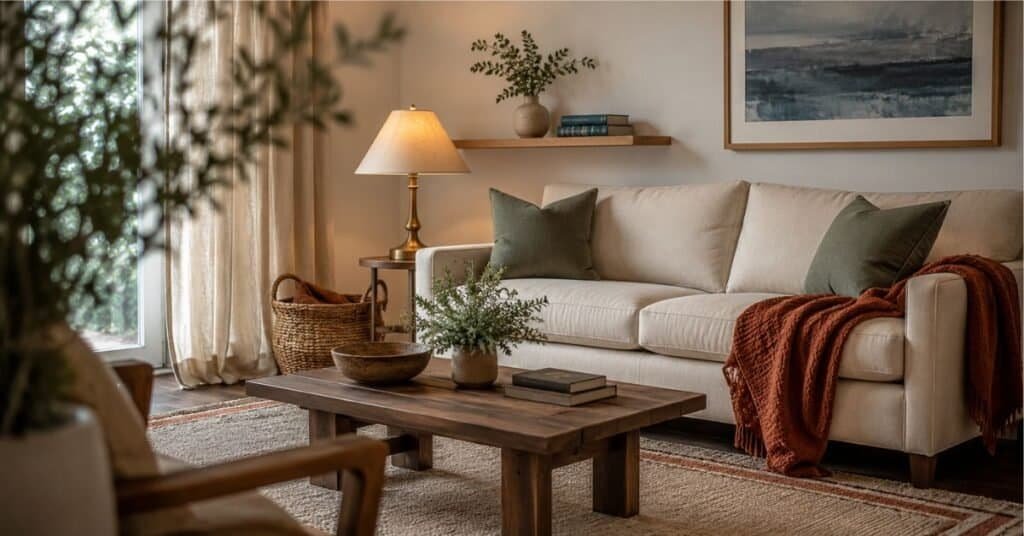
Start with two or three pillows and one folded throw. This gives the sofa softness without turning it into a pile of fabric.
A simple sofa formula:
| Sofa Area | Minimalist Choice | Why It Works |
|---|---|---|
| Pillows | 2 to 3 total | Adds comfort without clutter |
| Throw | 1 folded blanket | Adds warmth and texture |
| Wall art | 1 larger piece | Gives the wall a clear focus |
| Side table | 1 lamp and 1 small item | Keeps the corner useful |
| Basket | 1 beside the sofa | Hides blankets or magazines |
Hang wall art about 6 to 10 inches above the sofa back. This keeps the artwork connected to the furniture instead of floating too high on the wall.
A common mistake is using too many small pillows, tiny frames, and little objects around the sofa. The room may still be clean, but it can look visually noisy.
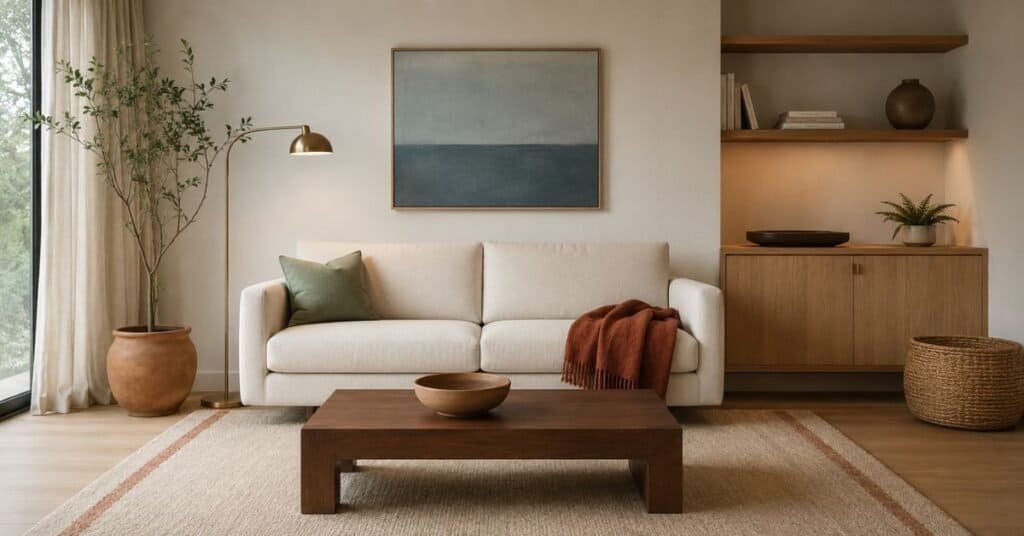
A better choice is one larger art piece, one warm lamp, and a simple pillow mix. For example, use a sage pillow, a cream pillow, and one rust throw on a cream sofa.
For more sofa and coffee table help, these minimalist living room styling ideas with warm open space fit this same room by room style.
Style the Coffee Table With Open Space
A minimalist coffee table should still feel useful.
Use one tray, one vase, one bowl, or one short book stack. Then leave part of the table open so it can still hold a drink, remote, or snack.
For many small coffee tables, a 12 to 16 inch tray is enough. It can hold a small vase, coasters, and one bowl without taking over the whole surface.
Try this simple setup:
- One shallow tray
- One ceramic vase
- One small bowl
- One book stack if the table has room
- At least one third of the tabletop left empty
A budget option is to restyle what you already own. Move one bowl, one vase, and one book onto the table, then remove everything else for a few days.
A small space variation is to use nesting tables instead of one large coffee table. Keep one small decor item on the top table, then tuck the second table away when you need more room.
The goal is a sofa area that feels soft, clear, and easy to reset at night.
Minimalist Room Decor for Small Spaces That Feel Open
Small rooms need less visual weight.
That does not mean every piece has to be tiny. It means the room needs open views, smart storage, and furniture that does not block the light.
The Spruce shares that light helps small spaces feel larger and airier. This is a simple but helpful reminder for small living rooms, bedrooms, rentals, and apartments.
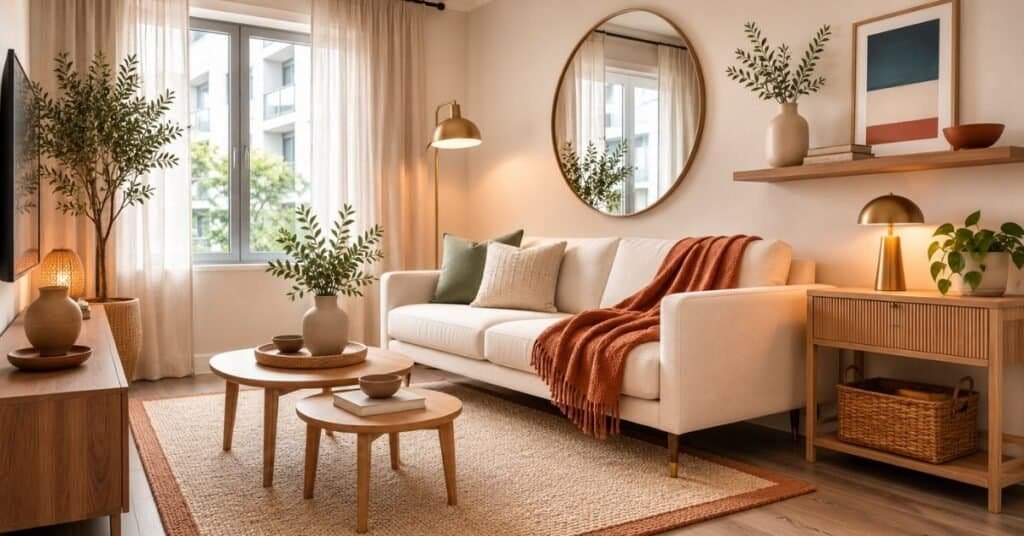
Use Light, Mirrors, and Clear Sight Lines
Start with what blocks the view.
A tall shelf in front of a window, heavy curtains, or bulky furniture near a doorway can make a small room feel tighter. Move the biggest pieces first before adding decor.
Try these small space fixes:
- Keep windows open and easy to see.
- Use linen or sheer curtains to soften light.
- Add one mirror across from, or near, a window.
- Choose furniture with raised legs so more floor shows.
- Keep the main walking path clear.
- Use fewer floor pieces and more wall space.
A mirror works best when it reflects something calm, like a window, wall art, or a clean part of the room. Avoid placing it where it reflects clutter, cords, or a crowded shelf.
A common mistake is pushing every furniture piece against the wall. Sometimes this works, but it can also make the room feel flat. Pulling a chair or table forward by just 2 to 4 inches can help the room feel more layered.
Choose Multi Use Pieces for Tight Rooms
Small rooms need pieces that do more than one job.
A storage ottoman can hold blankets. A bench can work as seating and hidden storage. Nesting tables can replace one large coffee table. A slim console can hold keys, baskets, and a lamp without taking over the entry.
Here is a simple small room guide:
| Small Room Need | Better Choice | Why It Helps |
|---|---|---|
| Extra seating | Small bench or stool | Moves easily |
| Coffee table | Nesting tables | Opens floor space |
| Blanket storage | Woven basket | Hides soft clutter |
| Entry storage | Slim console | Keeps walkway clear |
| Wall decor | One mirror or one large art piece | Reduces visual noise |
For more layout help, these small space apartment ideas that make rooms bigger can help you use light, storage, and furniture scale in tight rooms.
A budget option is to remove one floor piece before buying anything new. Take out one extra side table, stool, or basket for a week and see if the room feels easier to move through.
A small space variation is to use floating shelves instead of a cabinet. They keep the floor open and can hold books, a small vase, or a basket without crowding the room.
Minimalist Bedroom Decor That Feels Calm at Night
A bedroom should feel easy to settle into at night.
Minimalist bedroom decor works best when the room feels soft, not stripped down. The bed can stay simple, the nightstand can stay clear, and the room can still feel warm through bedding, lamps, curtains, and quiet color.
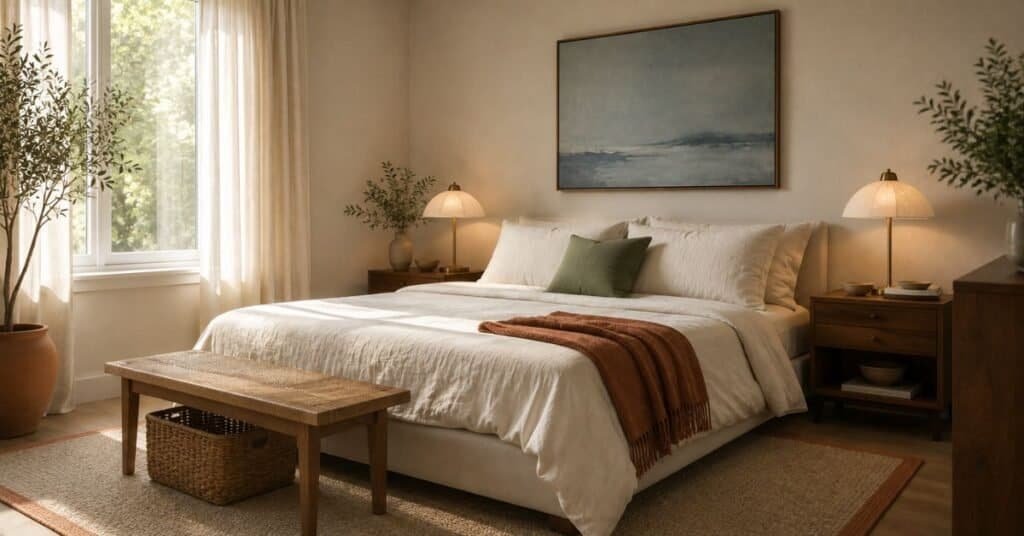
Keep Bedding Soft but Easy to Reset
The bed is the largest piece in most bedrooms, so it needs to feel calm.
You do not need layers of extra pillows to make it look finished. A simple bed setup can feel better because it is easier to make every morning.
Try this bedding formula:
| Bedding Layer | Simple Choice | Why It Works |
|---|---|---|
| Main bedding | Warm white, cream, or soft beige | Keeps the bed calm |
| Back pillows | 2 larger pillows | Adds height without clutter |
| Accent pillow | 1 muted color | Adds a small color moment |
| Throw | 1 folded blanket | Adds texture and warmth |
Warm cream bedding with one sage pillow and a rust throw can make the bedroom feel cozy without crowding the bed.
A common mistake is using too many small pillows. They may look nice for a photo, but they often end up on the floor or chair by bedtime.
Keep the bed soft enough to feel inviting, but simple enough to reset in two minutes.
Clear the Nightstand Without Making It Bare
A nightstand can collect clutter quickly.
Receipts, chargers, hair ties, cups, books, and random items can make the whole bedroom feel messy. Keep the top limited to what you use at night.
A simple nightstand setup:
- One lamp
- One book
- One small dish
- One drawer or basket for extras
Leave part of the top open. Even 6 to 8 inches of clear space can make the nightstand feel calmer.
A budget option is to change the light before changing the furniture. A warm bulb around 2700K can make a plain bedroom feel softer at night.
A small space variation is to use a wall sconce or narrow wall shelf instead of a full nightstand. This works well beside a bed that sits close to the wall.
Minimalist Kitchen Decor That Keeps Counters Useful
A minimalist kitchen should still work hard.
The counter needs to support cooking, coffee, snacks, school lunches, and daily cleanup. If every corner is filled with decor, the kitchen may look styled but feel harder to use.
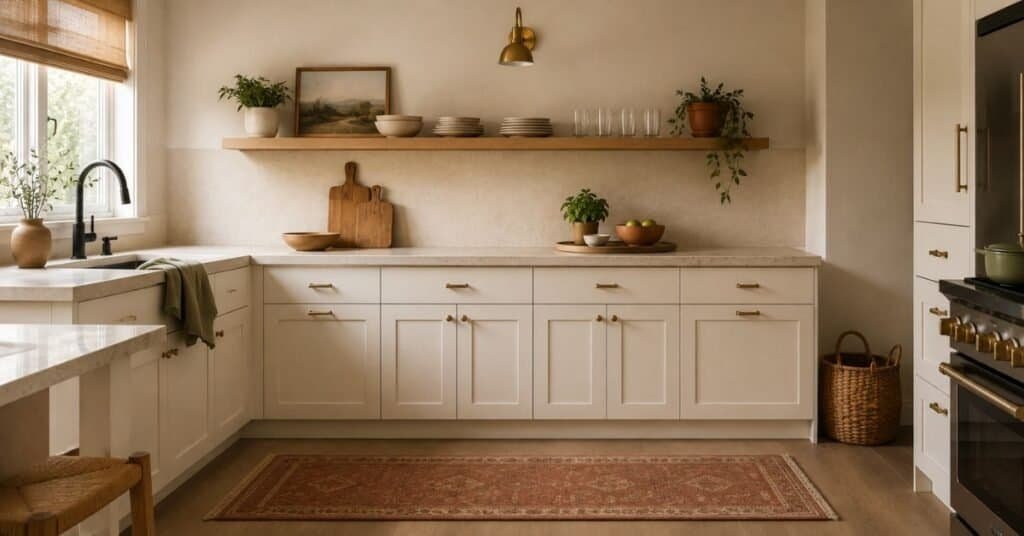
Group Daily Items on One Tray
Start with the items you reach for every day.
Oil, salt, pepper, a small bowl, a spoon rest, or a tiny herb plant can stay out if you use them often. The key is to group them instead of spreading them across the counter.
A simple tray makes the counter feel calmer because the items look like one setup instead of scattered clutter.
Try this counter formula:
| Counter Area | Minimalist Choice | Why It Works |
|---|---|---|
| Main prep area | Keep at least 24 inches clear | Makes cooking easier |
| Daily items | Group on one tray | Keeps small items contained |
| Warmth | Add one wood board or clay bowl | Softens hard surfaces |
| Color | Use one towel or small plant | Adds life without clutter |
| Storage | Hide extra packaging | Keeps counters cleaner |
A common mistake is decorating every counter corner. One styled spot is enough.
For example, use one tray near the stove with oil, salt, and a clay bowl. Then keep the rest of the counter open for chopping, serving, and cleaning.
If your counter is very small, skip the tray and use one bowl or one wood board instead.
Style Open Shelves With Fewer Items
Open shelves can look beautiful, but they can also make a kitchen feel busy fast.
Use them for pieces that already belong in the kitchen: dishes, glasses, bowls, mugs, cookbooks, or one small vase. Keep bright packaging, extra gadgets, and random containers behind cabinet doors.
A simple shelf setup could be:
- One stack of plates
- One row of glasses
- One small bowl
- One wood or ceramic piece
- One open gap so the shelf can breathe
Repeat colors from the living room or dining area. If your sofa area uses sage, clay, and warm wood, bring a sage towel, clay bowl, or wood cutting board into the kitchen.
This helps the kitchen feel connected to the rest of the home without adding extra decor.
A budget option is to restyle what you already own. Remove mismatched pieces from open shelves, group similar dishes together, and place one warm texture near the counter.
A small space variation is to use a wall shelf instead of adding another cabinet. It can hold everyday dishes while keeping the floor and counter clearer.
Minimalist Bathroom Decor That Keeps Counters Clear
A minimalist bathroom can look messy even when it is clean.
This usually happens because too many bottles, backups, towels, and daily items sit out at once. The bathroom needs storage that is easy to reach, but the counter still needs breathing room.
The Spruce recommends that a minimalist bathroom should keep bathroom counters clear except for necessities. This works well for busy bathrooms because it does not ask you to remove daily products. It asks you to give them a better place.
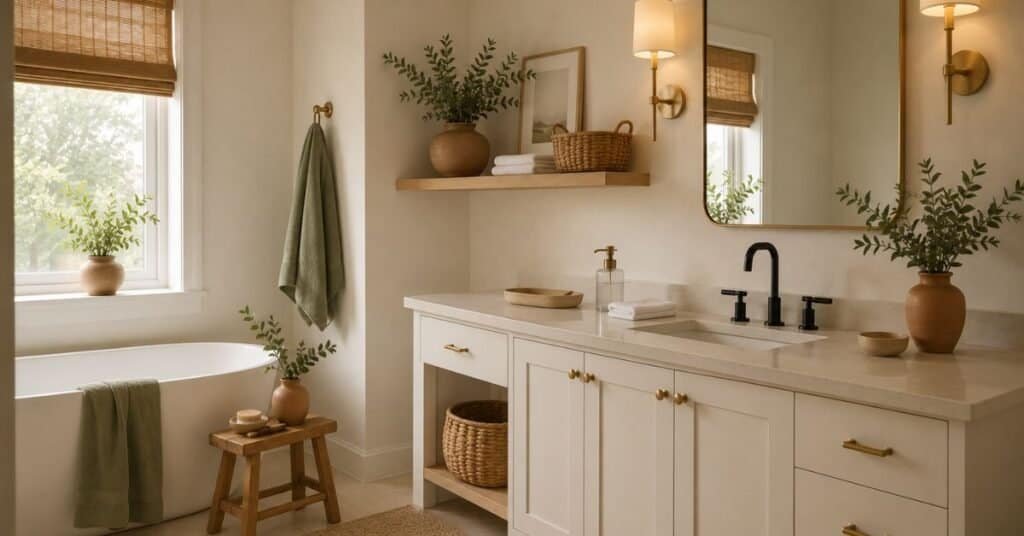
Keep Only Daily Items Within Reach
Start with your morning and evening routine.
Keep out the products you use every day. Store everything else in a drawer, basket, cabinet, or medicine cabinet.
A simple bathroom counter setup:
| Bathroom Area | Keep Out | Store Away |
|---|---|---|
| Sink counter | Soap, hand towel, small tray | Extra bottles and backups |
| Vanity drawer | Daily skin care or hair items | Travel items and extras |
| Shelf | Folded towels or one basket | Mixed loose products |
| Tub area | One towel or bath item | Extra towels and refills |
If the counter feels scattered, use one tray. A tray can hold soap, a small dish, and one daily product so the items look grouped instead of random.
A common mistake is keeping every product visible because it feels convenient. But when every item is out, the bathroom can feel crowded fast.
For bathroom storage help, these bathroom storage decor ideas for a cleaner room can help you keep the room useful without leaving everything on display.
Use Storage That Looks Calm
Storage should make the bathroom easier to reset.
Use lidded baskets, vanity drawers, medicine cabinets, wall shelves, or slim cabinets. For a shared bathroom, give each person one bin or drawer zone so products do not spread across the counter.
Better Homes & Gardens notes that simple color and pattern can create a calm bathroom. Keep that idea in mind when choosing towels, baskets, trays, and bath mats.
A quiet mix could be warm white towels, a pale oak shelf, one clay vase, a sage hand towel, and a woven basket. The bathroom still feels minimal, but it has warmth and texture.
A small bathroom variation is to use vertical space. Add a slim shelf above the toilet, a basket under the vanity, or hooks beside the door if floor space is tight.
A budget option is to edit the counter before buying anything. Remove backups, group daily items, fold towels neatly, and add one basket for loose products.
Warm Minimalist Room Decor With Color and Texture
Minimalist room decor can feel cold when the color and texture are too flat.
A room may have clean lines and clear surfaces, but it still needs softness. Warm color, natural texture, and gentle light help each room feel lived in without adding visual clutter.
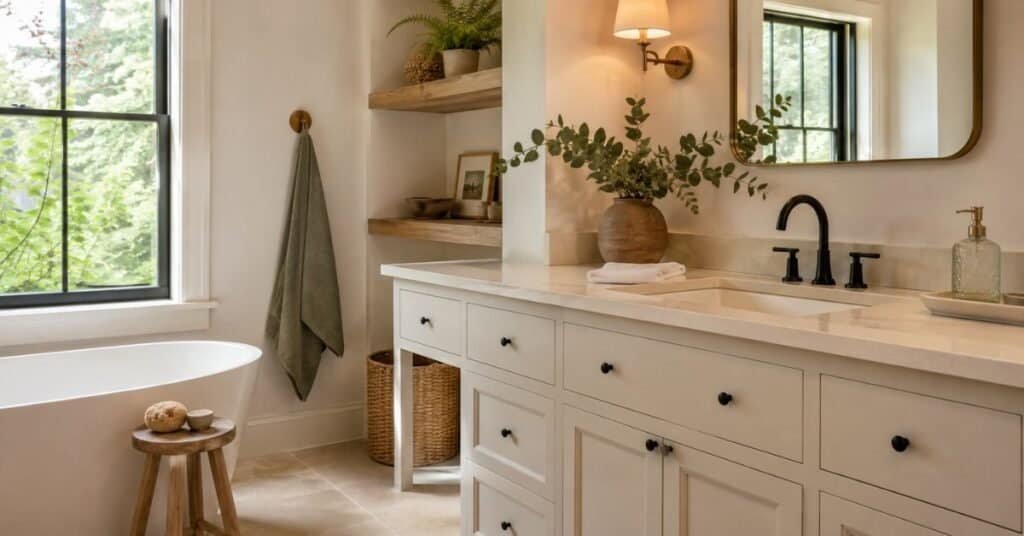
Use Warm Colors Instead of Flat White
White walls can look fresh, but an all white room can feel plain if there is no warmth around it.
Try using warm white, cream, clay, sage, olive, muted blue, rust, taupe, terracotta, walnut, or soft black. These colors still feel calm, but they give the room more depth.
A simple color plan could look like this:
| Room | Main Color | Accent Color | Warm Texture |
|---|---|---|---|
| Living room | Cream sofa | Sage or rust pillows | Woven rug |
| Bedroom | Warm white bedding | Clay throw | Linen curtains |
| Kitchen | Cream counter | Sage towel | Wood tray |
| Bathroom | Warm white towels | Clay vase | Pale oak stool |
Use stronger colors in small places. A rust throw, sage towel, muted blue art print, or clay vase can add interest without making the room feel busy.
For a deeper color plan, these minimalist color palette ideas for small homes can help you choose colors that feel calm and warm.
A common mistake is using only white, gray, and black, then wondering why the room feels cold. Add one warm material and one muted color before buying more decor.
Add Texture Without Adding Clutter
Texture makes a minimalist room feel finished.
Use pieces that already belong in the room, then choose them in softer materials. Linen curtains, woven baskets, ceramic vases, wood trays, cotton bedding, soft rugs, and folded towels all add comfort without filling the room with extras.
Try adding 2 to 3 textures per room:
- Living room: linen curtains, woven basket, ceramic vase
- Bedroom: cotton bedding, wool throw, wood nightstand
- Kitchen: wood board, linen towel, clay bowl
- Bathroom: cotton towels, woven basket, pale oak stool
Keep the colors connected so the texture feels calm. For example, a cream sofa, sage pillow, clay vase, and walnut table can feel warm without looking crowded.
A budget option is to change texture before buying new furniture. Add a woven basket, fold a throw at the end of the bed, or place a ceramic bowl on the kitchen counter.
A small space variation is to keep the texture soft and low. Use a rug, pillow, curtain, or basket instead of adding bulky decor to shelves and tables.
Minimalist Decor Mistakes That Make Rooms Feel Messy
A minimalist room can still feel messy if the storage, scale, and surfaces are wrong.
Sometimes the problem is not the amount of furniture. It is the way the pieces are grouped, displayed, and repeated from room to room.
Relying on Too Much Open Storage
Open storage looks pretty when it is edited.
But shelves, counters, racks, and baskets can look busy fast if everything is visible. Books, towels, bowls, products, toys, cords, and everyday items all compete for attention when they are left out at once.
House Beautiful warns that too much open storage can make a home feel cluttered. This is a helpful reminder for kitchens, bathrooms, shelves, and living rooms.
Use open storage for pieces that look calm:
- Folded towels
- Matching dishes
- A few books
- One ceramic vase
- A small basket
- Simple glassware
- One framed print
Use closed storage for pieces that look busy:
- Extra products
- Bright packaging
- Cords
- Cleaning supplies
- Paperwork
- Backup toiletries
- Random daily items
A common mistake is trying to make every everyday item part of the decor. Some things just look better behind a door, inside a drawer, or under a lid.
For example, a bathroom shelf can hold folded towels and one basket. Extra shampoo bottles, backups, and cleaning products can stay inside the vanity.
Choosing Furniture With the Wrong Scale
Scale can make a room feel calm or crowded.
A small room does not always need tiny furniture. Too many tiny tables, tiny frames, and tiny decor pieces can make the space feel scattered.
House Beautiful shares that fewer larger pieces can make a small living room feel calmer. This works well for minimalist rooms because larger pieces can create a cleaner focal point.
Try this swap:
| Mistake | Why It Happens | Better Minimalist Fix |
|---|---|---|
| Too many tiny frames | Wall feels scattered | Use one larger art piece |
| Small rug floating in room | Furniture feels disconnected | Choose a rug that reaches front legs |
| Several small tables | Floor feels crowded | Use one useful table |
| Open shelves packed full | Room feels busy | Leave open shelf space |
| No closed storage | Clutter stays visible | Add baskets, drawers, or cabinets |
Measure before buying anything new. A rug should usually reach under the front legs of the sofa. A coffee table should leave about 12 to 18 inches from the sofa. A side table should sit close enough to reach from the seat.
For bathroom specific mistakes, these bathroom decor mistakes that make rooms feel cheap can help you avoid cluttered counters, poor storage, and decor that overwhelms a small room.
A budget option is to remove before replacing. Take away half the tiny decor pieces from one room, then keep only the items that add comfort, storage, light, or texture.
A small space variation is to use one closed cabinet, one basket, and one wall shelf instead of several open storage pieces. The room will feel calmer because fewer items are visible.
Minimalist Room Decor on a Budget for a Whole Home
Minimalist room decor does not need to start with new furniture.
Often, the room feels better after you remove what is not helping. Then you can add one or two soft pieces that make the space feel warmer.
Change Small Soft Pieces First
Soft pieces are usually the easiest place to begin.
Pillow covers, throws, curtains, towels, rugs, bedding, and lamps can change the mood of a room without changing the large furniture. They also move easily from room to room, which helps if you are renting or decorating slowly.
Try this simple room by room update:
| Room | Budget Update | Simple Color Idea |
|---|---|---|
| Living room | Pillow covers and throw | Sage, rust, or clay |
| Bedroom | Bedding and lamp bulb | Warm white, taupe, or muted blue |
| Kitchen | Linen towel and tray | Sage, cream, or terracotta |
| Bathroom | Towels and basket | White, clay, or pale oak |
| Entryway | Rug and catchall bowl | Rust, woven tan, or soft black |
Repeat one color across several rooms. A sage pillow in the living room, a sage towel in the kitchen, and a small sage art print in the bedroom can make the home feel connected.
A common mistake is buying a lot of small decor because each piece feels affordable. Too many little items can make the home feel busier.
A better plan is to choose one soft update per room. Start with what the room actually needs: more warmth, better storage, softer light, or a cleaner surface.
Shop Your Own Home Before Buying
Before you buy anything, move pieces around.
A lamp from the bedroom might work better in the living room. A woven basket from the closet might hide bathroom towels. A ceramic bowl from the kitchen might become a catchall dish on the entry table.
Try this quick reset:
- Move one lamp to a darker corner.
- Use one bowl as a tray for daily items.
- Fold one throw at the end of the bed.
- Place one basket where clutter usually lands.
- Remove extra decor from one shelf.
- Group small items on one tray.
This gives you a clearer idea of what the room is missing.
A budget option is to style one surface for free. Clear the coffee table, add one book, one bowl, and one small vase, then leave the rest open.
A small space variation is to choose pieces that can do more than one job. A basket can hold blankets in the living room, towels in the bathroom, or bags near the entry.
Minimalist decor on a budget works best when you buy less, move more, and keep only the pieces that make daily life easier.
Frequently Asked Questions
What is minimalist decor and what are its key principles?
Minimalist decor uses fewer pieces, clear surfaces, clean lines, and useful furniture. The room should feel calm and easy to use, but it should still have warmth through texture, light, and natural materials.
How do I make a small living room look minimalist but not empty?
Use fewer pieces, but choose ones with comfort and scale. A sofa, rug, warm lamp, one larger wall art piece, and a clear coffee table can make the room feel full without looking crowded.
What furniture pieces matter most for a minimalist living room?
Start with the sofa, coffee table, rug, lamp, and one storage piece. These items shape the room more than small decor, so choose pieces that fit the space and leave open paths.
How can I keep my bathroom minimalist with kids or limited storage?
Give each person one drawer, bin, or basket zone. Keep only daily items near the sink, then store backups, extra towels, and bottles inside a vanity, cabinet, or lidded basket.
What colors work best for a minimalist home?
Warm white, cream, beige, taupe, clay, sage, olive, muted blue, soft black, and wood tones all work well. Use stronger colors in small pieces like pillows, towels, art, rugs, or vases.
How do I add warmth to a minimalist room without clutter?
Use texture instead of extra decor. Linen curtains, woven baskets, wood trays, ceramic vases, soft rugs, cotton bedding, and warm lamps can make a simple room feel cozy.
What are the biggest minimalist decor mistakes to avoid?
The biggest mistakes are too much open storage, too many tiny decor pieces, blocked natural light, and no clear place for daily clutter. A room feels calmer when some items are hidden and the visible pieces have enough space around them.
Can I do minimalist decor on a budget in a rental?
Yes, start with pieces that can move with you. Rugs, lamps, baskets, mirrors, curtains, bedding, towels, and removable hooks can make a rental feel calmer without permanent changes.
How do I style a minimalist sofa area?
Use 2 to 3 pillows, one folded throw, one lamp, and one larger piece of wall art. Keep the coffee table simple with one tray, one vase, or one bowl, then leave part of the surface open.
Should I start minimalist decor in the living room or bathroom first?
Start with the room that feels the messiest or the room you use most. If the living room feels busy, begin with the sofa and coffee table. If the bathroom feels stressful, start by clearing the counter and creating storage zones.
For a warmer whole home style, these minimalist home ideas for warm simple rooms can help you keep rooms simple without making them feel bare.
Conclusion
Minimalist room decor ideas work best when they make daily life easier.
You do not have to clear every room in one weekend or replace all your furniture. Start with one surface, one storage problem, or one corner that always feels messy.
In the living room, simplify the sofa area and coffee table. In the bedroom, keep the bed soft but easy to reset. In the kitchen, leave counter space open for daily use. In the bathroom, store extras away so the counter feels calmer.
The best minimalist rooms still feel warm. They use texture, color, light, baskets, wood, simple art, and useful decor in a quiet way.
Start small.
Clear one table. Fold one throw. Hide one clutter zone. Repeat one warm color from room to room. Those small choices can make your whole home feel more peaceful without making it feel empty.
For more calm home styling ideas, visit Minimalist Home Ideas: I Tried Simplifying My Space… Here’s What Actually Happened.