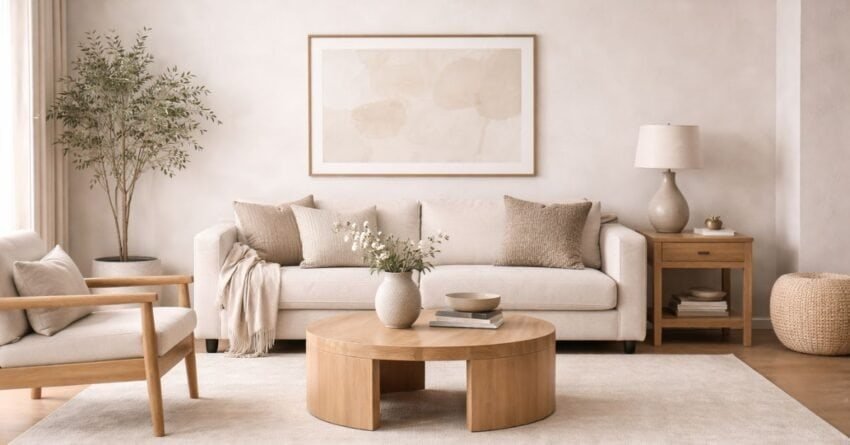
A minimalist room can look beautiful in photos and still feel a little cold once you live in it. The sofa is clean lined. The walls are clear. The palette is soft. Yet something still feels flat.
That is the part many people run into. They want a home that feels calm and simple, but they do not want it to feel bare, stiff, or too polished to relax in. They want comfort without clutter.
Minimalist home ideas that still feel warm start with a small shift in thinking. Warmth does not come from adding more things. It comes from using the right colors, textures, lighting, and materials so the room feels easy, quiet, and welcoming.
A timeless room works in a similar way. It does not chase every new look. It leans on details that stay pleasing year after year, like warm white walls, light oak furniture, soft linen curtains, a textured rug underfoot, and a lamp that gives off a gentle evening glow.
That means you do not need a full makeover to get there. A cooler white paint can be swapped for a creamier one. A blank corner can feel better with a woven basket, a small lamp, and one framed piece placed about 6 to 8 inches above a console. Even a rug with a warmer undertone can make the whole room feel more settled.
In the sections ahead, the focus is on simple ideas that help minimalism feel softer, warmer, and easier to live with. Some are small styling moves. Some are layout fixes. All of them are meant to help your home feel calm without losing its comfort.
Table of Contents
Why Some Minimalist Homes Feel Warm and Others Feel Cold
Minimalism is often judged by how little is in the room. That is where many spaces go wrong. A room can be simple and still feel soft, comfortable, and full of depth. It can also be simple and feel flat in less than a second.
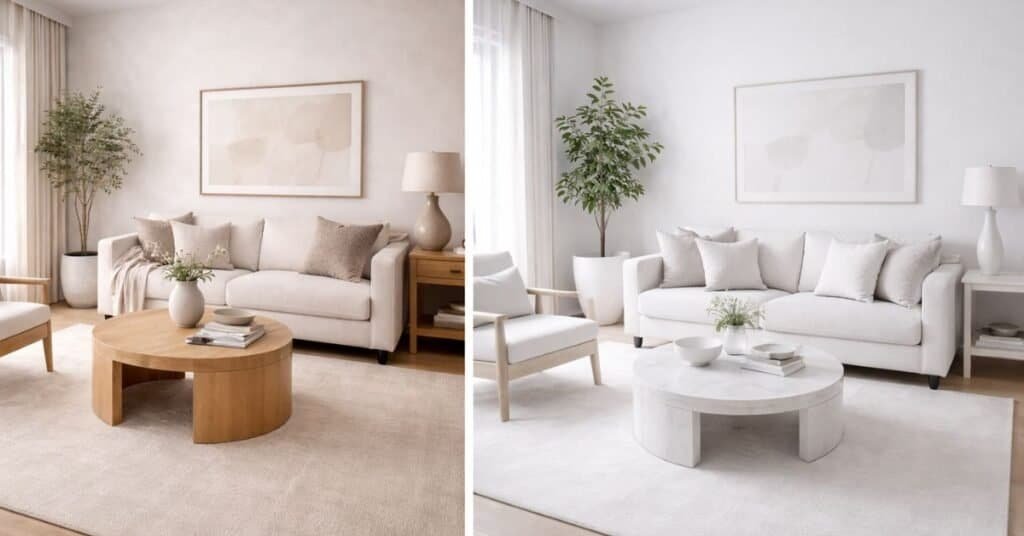
The difference usually comes down to what is left in the room. If the space is filled with cool white walls, smooth surfaces, sharp lines, and very little texture, it can start to feel stiff. If the same room uses warmer tones, natural materials, and a few soft layers, it feels far more welcoming.
The difference between warm minimalism and stark minimalism
Warm minimalism keeps the clean look people love, but it adds comfort in quiet ways. Homes & Gardens describes it as a style that pairs simplicity with “warm, earthy tones” and layered texture. That is a helpful way to think about it because the room still feels edited, just not stripped down.
In real life, that may look like a cream wall instead of bright white. It may mean pale oak instead of glossy black. A linen curtain, a woven shade, or a clay toned vase can do more for the mood of a room than a shelf full of extra décor.
A stark minimalist room, by contrast, often leans too hard on sameness. Everything is pale, smooth, and cool. The lines are crisp, but the room does not give your eye much to rest on. It looks neat, though it may not feel relaxing.
One easy test is to stand in the room and notice what feels missing. Is it softness underfoot? A warmer undertone on the wall? A lamp that makes the corner feel quieter at night? The answer is often more about comfort than quantity.
Why timeless rooms feel calm instead of trendy
A timeless room rarely tries too hard. It does not depend on a finish or shape that feels tied to one short moment. It leans on materials and colors that stay pleasing year after year.
That is why soft contrast works so well here. Think warm white walls with oat colored upholstery. A light wood coffee table beside a darker woven basket. Linen drapes that fall almost to the floor with just a small break at the bottom. These choices feel steady and easy to live with.
Shape matters too. Rounded chair arms, softened corners, matte pottery, and wood with visible grain all help a room feel less rigid. Even in a simple space, these details make the room feel settled instead of severe.
A good rule is to avoid extremes. Very cool white, very shiny finishes, and overly sculptural pieces can date a room or make it feel harder than you want. Warm minimalism lasts longer because it feels human. It leaves room for comfort, and that is usually what makes a home feel timeless.
Minimalist Home Ideas That Still Feel Warm Start With Color
Color does a lot of the work in a minimalist room. Before you add art, pillows, or lighting, the wall tone and the large surfaces already set the mood. That is why some simple rooms feel soft right away, while others feel chilly even when they are styled well.
For a warmer look, the goal is not to add lots of color. It is to pick shades with softer undertones so the room feels gentle instead of sharp.
Warm neutrals that soften a room
A warm minimalist palette usually starts with creamy white, soft beige, sand, oat, taupe, clay, and muted brown. These shades feel calm, though they still have more life than a bright white or a cool gray.
Homes & Gardens points to colors and materials like creamy whites, taupes, raw oak, linen, and clay as part of warm minimalism. That mix works because it keeps the room light while taking away the cold edge that some minimalist spaces have.
A wall color can shift the whole feel of the room. Warm white paint with a hint of cream often feels much softer than a crisp white with a blue undertone. On upholstery, a pale taupe sofa can feel more grounded than one in icy gray. Even a rug in sand or oat can make the room feel more settled.
If you want one easy direction, start with this base:
- warm white or cream on the walls
- light oak or medium oak for wood tones
- taupe, sand, or oat for large textiles
- clay, muted olive, or soft brown in smaller touches
That keeps the room simple, but it does not feel washed out.
How to keep a neutral room from looking flat
A neutral room still needs contrast. The contrast just comes from undertone, finish, and texture instead of bright color.
For example, a warm white wall beside a linen sofa and a pale oak table can look beautiful, though it may need one slightly deeper note to hold it together. That could be a charcoal linen pillow, an aged bronze lamp base, or a darker woven basket near the fireplace. Small moves like that stop the room from fading into one soft blur.
Finish matters too. If every surface is smooth, the room can feel one note. A matte wall, a nubby rug, a brushed wood grain, and a soft curtain fold give the eye more to notice without making the room busy.
Here is a simple way to think about it:
| Color | Feel | Best use |
|---|---|---|
| Warm white | soft and calm | walls and trim |
| Taupe | grounded | upholstery |
| Clay | cozy | accents |
| Light oak | natural warmth | furniture |
When choosing paint, fabric, or flooring, compare samples in daylight and again at night. A color that looks warm at noon can feel cooler once the lamps are on. That small check can save you from a room that feels flatter than you expected.
Use Texture to Make Minimalist Rooms Feel Soft Instead of Empty
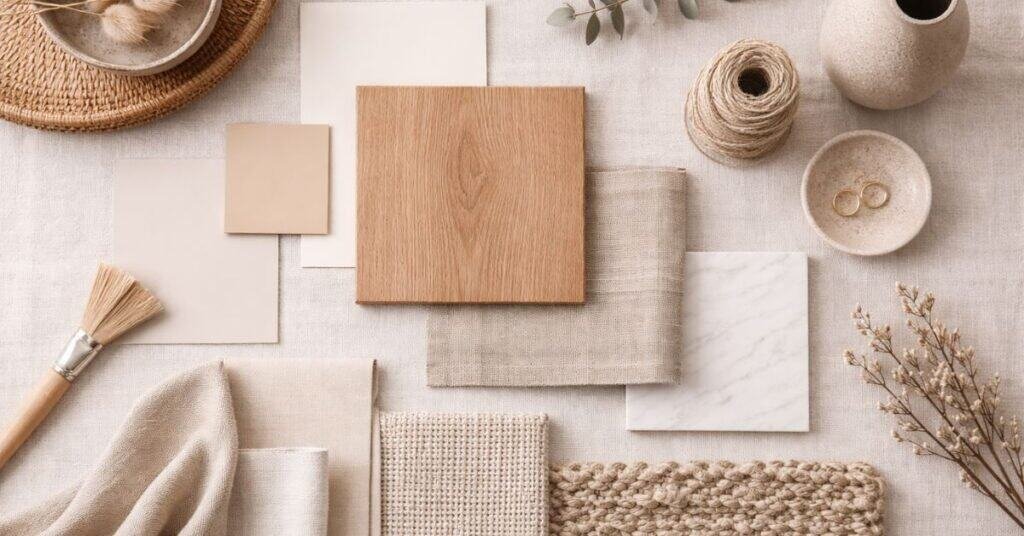
Once the palette is in place, texture is what gives the room depth. This is often the missing piece in minimalist spaces that feel too bare. The room may have the right colors, though the surfaces all feel too smooth and similar.
Texture adds warmth without adding clutter. It helps a simple room feel settled, comfortable, and easier to live in.
The textures that make a minimalist room feel lived in
A warm minimalist room usually mixes a few quiet materials rather than many decorative items. Think linen curtains that soften the window line, a wool rug with a low nubby feel, a woven basket near a chair, or a matte ceramic vase on a console. These details do not crowd the room, but they stop it from feeling flat.
That idea shows up in a piece from The Nature of Home sharing Martha Stewart’s warm minimalist decorating ideas. One of the clearest takeaways is the use of layered neutral textures. That matters because a room does not need more color to feel warmer. It often just needs more contrast in how the materials feel.
Spacejoy makes a similar point by noting that minimalism does not have to feel cold if clean lines are balanced with comfort and texture. In practical terms, that could mean a straight lined sofa with a soft throw, a simple oak bench with a woven seat, or a plain bed finished with washed cotton and a quilted coverlet.
A few textures that work especially well in warm minimalist rooms are:
- linen and washed cotton
- wool and boucle
- woven cane or rattan
- light oak and walnut
- matte pottery
- plaster style or limewashed finishes
- textured rugs in soft neutral tones
These materials keep the room quiet, though they still give it presence.
How to layer texture without adding clutter
The easiest way to layer texture is to keep the number of items low and vary the feel of the pieces already in the room. Instead of adding five new objects to a shelf, change the materials in the main pieces you already see every day.
A simple formula works well:
- one soft fabric
- one woven material
- one natural wood tone
- one matte finish
That could look like a linen curtain, a woven basket, an oak side table, and a ceramic lamp base. In a bedroom, it might be a cotton duvet, a quilted throw, a wood nightstand, and a small matte vase.
This also helps in awkward spots that tend to feel unfinished. A bare corner beside a sofa can feel more complete with a floor lamp, a basket, and a textured stool than with several small accessories. In an entry, a bench around 36 to 48 inches wide with a soft cushion and one woven bin underneath gives warmth and function at the same time.
The goal is not to make the room busy. The goal is to make it feel touched by real materials, so the space feels calm but still human.
Warm Lighting Can Change the Whole Room
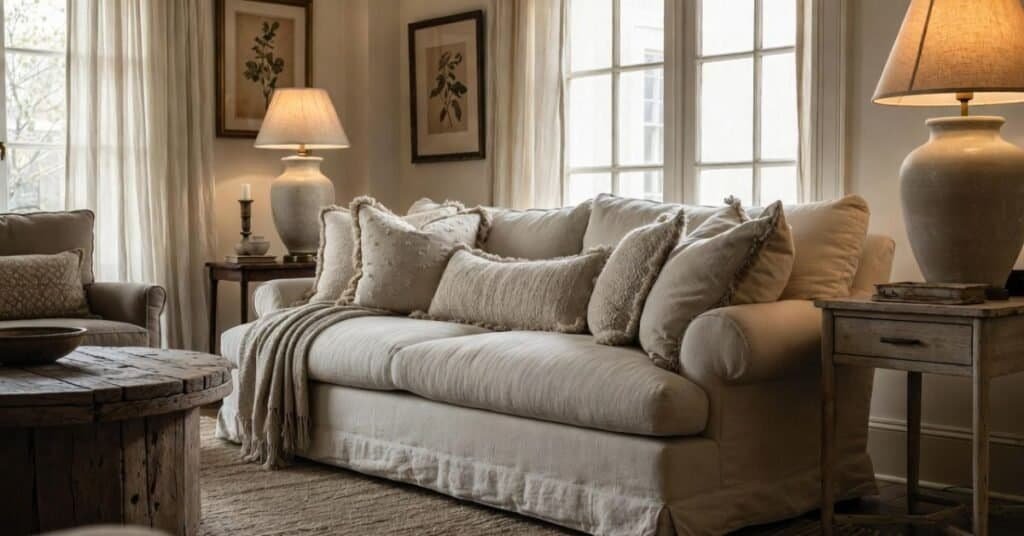
Lighting is one of the fastest ways to change how a minimalist room feels. You can have the right paint, the right rug, and the right furniture, though the space may still feel cold if the light is too harsh or too cool.
That is why a room that looks soft during the day can feel flat by evening. The styling may not be the problem at all. The light often is.
Why cool lighting makes a room feel lifeless
Minimalist rooms already use fewer visual layers. So when the lighting is cold, the space can lose even more warmth. Cool bulbs can make cream paint look dull, flatten wood tones, and give white walls a blue cast that feels hard instead of restful.
Apartment Therapy points out that rooms can feel colder when they lack color and use lighting that throws a cool tone. That is especially noticeable in minimalist spaces because there are fewer objects to soften the effect.
Overhead light on its own can also make a room feel severe. It tends to hit everything evenly, which removes the gentle shadows that make a space feel more relaxed. In a living room, that can make the sofa area feel exposed. In a bedroom, it can make the whole room feel less restful.
If your room feels right in daylight but wrong after sunset, lighting is one of the first things to check.
The easiest lighting fixes for a warmer look
Start with bulb temperature. Warm bulbs usually feel better in rooms that are meant to feel calm and comfortable. Then build the light at different heights so the room has more than one glow point.
A few easy fixes work well:
- place a table lamp near the sofa arm
- add a floor lamp in an empty corner
- use a shaded lamp on a console or sideboard
- swap very bright white bulbs for warmer ones
- keep overhead light softer and use it less at night
Placement matters too. A lamp set too high or too far from the seating area may light the room, though it will not make the room feel cozy. In a living room, a lamp beside or slightly behind the chair often works better than one across the room. In a bedroom, a warm bedside lamp around shoulder height when seated can make the bed area feel much softer.
Warm lighting also works well with natural materials. A linen shade, a wood lamp base, or even the glow on a textured wall can make a simple room feel more complete. It is a small shift, though it changes the mood of the room in a very noticeable way.
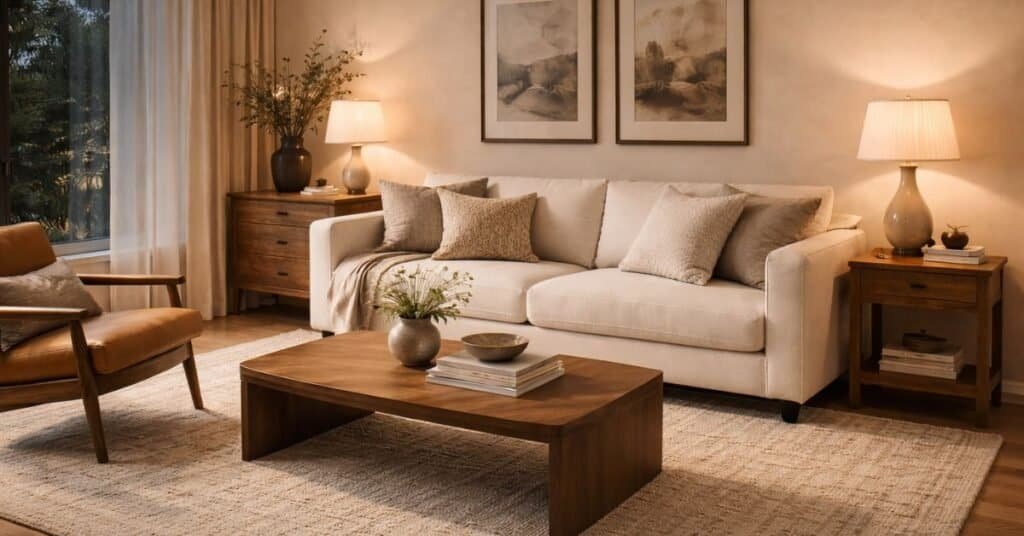
Minimalist Home Ideas That Still Feel Warm in Small Spaces
Small spaces can make minimalism feel harder than it should. You want the room to stay open and calm, though if you remove too much, it can start to feel plain. If you add too much back in, the room quickly feels crowded.
The answer is usually not more décor. It is better scale, warmer surfaces, and smarter placement.
How to keep a small room simple but still cozy
In a small room, every piece has more visual weight. That means one bulky chair, one cold paint color, or one awkward empty corner can change the whole feel of the space.
Start by choosing fewer pieces with softer presence. A sofa with visible legs often feels lighter than one that sits heavy on the floor. A round side table about 16 to 20 inches wide can soften a tight corner better than a square one with sharp edges. Even a rug can help. One larger rug usually makes a room feel calmer than several smaller ones broken up across the floor.
Warmth matters even more in small rooms because there is less space to layer. A pale oak coffee table, a warm white wall, and a soft textured curtain can do a lot of the work without making the room feel full. Keep the palette light, though avoid anything too icy.
It also helps to let one thing lead the room. That could be the bed, the sofa, or a small dining nook by the window. Once that focal point is clear, the rest of the room feels easier to edit.
Small space moves that stop a room from feeling flat
One of the easiest fixes is to treat vertical space with care. Curtains hung a little higher can make the room feel taller and softer at the same time. Wall décor should stay simple, though it should not disappear completely.
That is where a few smart wall pieces can help. On Purely Home Vibe, the ideas in Minimalist Wall Decor for Small Apartments work well here because they show how a room can keep personality without turning every wall into visual noise. One framed piece above a console or bench often works better than several scattered items.
A few small space moves that work well are:
- use one larger rug instead of multiple small rugs
- hang curtains higher and let them fall close to the floor
- place one warm lamp in a dead corner
- use one bench with texture instead of extra seating
- leave some wall space open so the room can breathe
For a small space variation, think about a narrow apartment living room where the sofa sits only 10 to 12 inches from the wall and the walkway is tight. In that kind of room, a slim floor lamp, one textured pillow, a soft curtain, and a single piece of art can feel much better than filling the area with side furniture and décor.
A small room does not need less warmth. It usually needs warmth used more carefully.
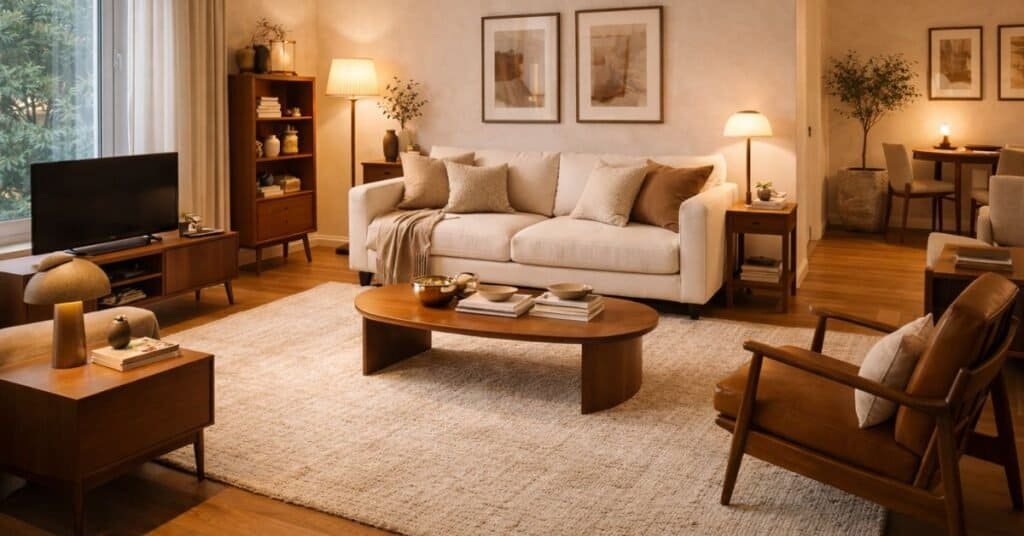
A Warm Minimalist Bedroom Feels Quiet and Comfortable
The bedroom is often the easiest place to make minimalism feel warm. It already asks for softness. You do not need many pieces, though the ones you keep should make the room feel restful instead of spare.
That usually starts with bedding, lighting, and a few materials that feel gentle at the end of the day.
The bedding and color choices that make the biggest difference
Warm minimalist bedrooms usually feel best in soft layered neutrals. Think warm white sheets, an oat or beige duvet, and one extra layer that adds a little depth, like a quilt or a throw folded near the foot of the bed.
The colors do not need to be dark to feel cozy. They just need warmth in the undertone. Cream, sand, mushroom, muted taupe, soft brown, and clay toned accents often work better than bright white and cool gray in a bedroom.
Depth matters here too. If everything is the exact same pale tone, the bed can disappear into the room. A simple way to fix that is to add one slightly deeper note, such as a cocoa pillow, a flax linen coverlet, or a natural wood bench at the foot of the bed. Even one layer like that can make the room feel more grounded.
If your bed is a queen, a rug that extends at least 18 to 24 inches beyond each side usually helps the room feel softer underfoot. That kind of detail changes how the room feels the moment you get out of bed.
Bedroom details that keep the room simple but not cold
The best warm minimalist bedrooms use just a few pieces, though each one adds comfort. Upholstered headboards, light oak nightstands, textured curtains, and warm bedside lamps all help the room feel settled without making it busy.
Wall décor should stay quiet here. One larger piece above the bed often feels calmer than several smaller ones. A frame in wood, black, or antique brass can work well, depending on the rest of the room. Keep it centered and leave some breathing room around it so the wall still feels open.
Lighting matters a lot in bedrooms because the room is used most in the evening. A bedside lamp with a soft shade often feels better than a bare bulb or a very bright ceiling light. If the lamp sits too low, the bed area can feel dim in an awkward way. Around shoulder height when seated is often a comfortable range.
A warm minimalist bedroom should feel like a place where the eye can rest. Soft fabric, a little wood, one or two deeper tones, and gentle light usually do more than extra furniture ever could.
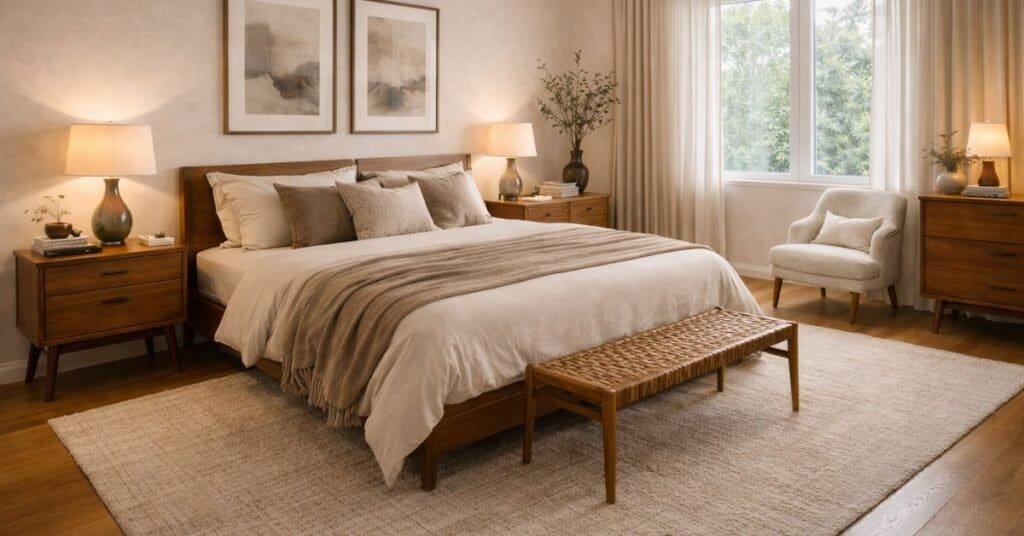
Modern Minimalist Home Ideas That Still Feel Warm
Some people like the cleaner look of modern interiors but do not want the room to feel sharp or impersonal. That is where warm minimalism helps. It keeps the room simple and current, though it softens the edges so the space feels easier to live in.
The key is to hold on to the clean structure while changing the mood through material, shape, and tone.
What makes modern minimalism feel warmer
A modern room starts to feel warmer when the finishes are less hard and the shapes feel less rigid. That could mean a curved chair instead of a boxy one, brushed wood instead of high gloss, or a plaster style wall finish instead of a very flat bright white paint.
This is also where Spacejoy is useful. The main idea is that a minimalist room can still feel cozy when clean lines are balanced with comfort. In practice, that balance often comes from pairing simple silhouettes with softer details like linen upholstery, rounded table edges, warm wood, and quiet contrast.
A modern sofa in a straight shape can still feel inviting if the fabric has texture and the room includes a rug with a little depth. A clean lined dining space can feel softer with wood chairs, a matte pendant, and a table surface that shows grain instead of shine.
Small choices help too. A black accent can still work in a warm room, though it usually feels better in smaller doses. Think of a slim frame, a lamp stem, or a side table leg instead of several heavy dark pieces all at once.
Warm minimalism versus cooler modern minimalism
The difference often shows up in mood more than layout. Both styles may use open space, edited décor, and simple furniture. Warm minimalism leans softer and more relaxed. Cooler modern minimalism often feels sharper and more formal.
Here is a quick comparison:
| Style detail | Warm minimalism | Cooler modern minimalism |
|---|---|---|
| Color | creamy and earthy | crisp and cool |
| Texture | layered and soft | smooth and sleek |
| Mood | inviting | sharper |
| Materials | oak, linen, clay | glass, chrome, lacquer |
Neither look is wrong. It depends on how you want the room to feel when you walk in. If you want calm with comfort, warm minimalism usually gives you more room to add softness without losing the clean look.
A good middle ground is to keep the modern layout and edit, then swap in warmer finishes. That may mean oak shelving instead of glossy white, a textured rug instead of a flat synthetic one, or a lamp with a shade instead of a bare exposed bulb. Those changes are small, though they shift the tone of the room in a very noticeable way.
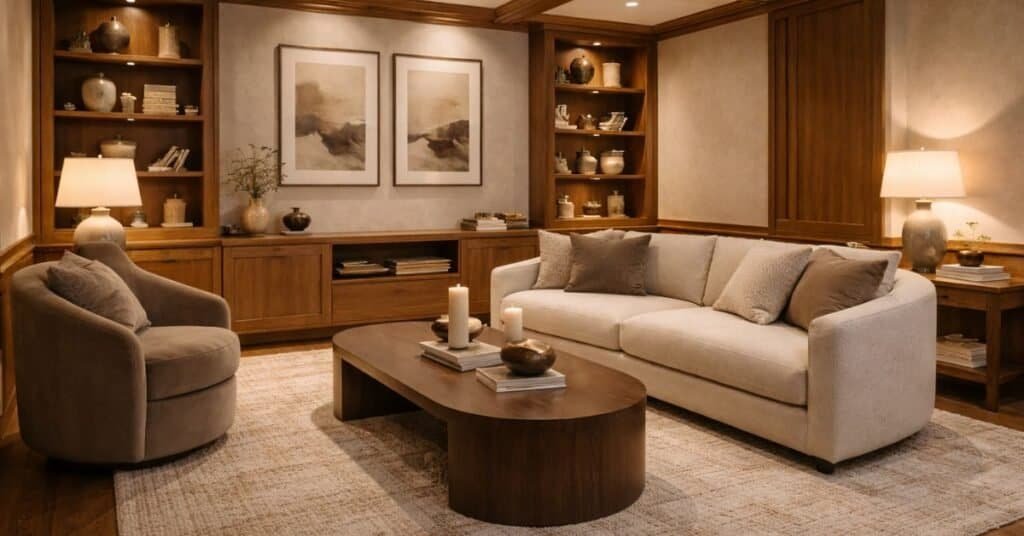
Minimalist Home Ideas That Still Feel Warm on a Budget
A warm minimalist room does not need a big shopping plan. In many homes, a few low cost changes make more difference than buying more décor. The room may already have what it needs. It just needs warmer layers and a little editing.
That is good news if the space feels close, but still a bit cold.
The low cost changes that warm up a room fast
Start with the pieces that affect the mood right away. Lighting is one. Textiles are another. A cool room can feel much softer with a warm lamp, a textured pillow cover, a fuller curtain, or a rug in a better undertone.
A few budget friendly ideas that work well are:
- swap cool bulbs for warm ones
- use pillow covers in flax, taupe, or soft brown
- add one woven basket near the sofa or bench
- bring in a secondhand wood stool or side table
- use a thrifted ceramic vase in a matte finish
- repaint a stark white wall in a creamier tone
These are simple changes, though they can shift the room fast. Even a lampshade in linen or off white can make evening light feel softer.
On Purely Home Vibe, the ideas in Neutral Palette Living Room fit well here, especially for corners that feel too empty. A quiet corner usually needs one useful piece and one soft layer, not a lot of filler.
Where to spend and where to save
If the budget is limited, spend where the room feels the change most. That is often the rug, the curtains, or the lighting. These pieces affect comfort, color, and how the room feels from across the space.
Save on smaller styling items. Decorative objects do not need to be expensive to look good in a minimalist room. A simple bowl, one stack of books, or a secondhand vase can work well if the shape and tone fit the room.
A good budget option is to refresh one small zone first. Try a chair corner, a console, or one side of the bed. For example, a reading corner can feel warmer with a thrifted wood side table, a $20 to $30 pillow cover, a woven basket, and a lamp with a soft shade. That kind of small update is often enough to shift the mood of the whole room.
Warm minimalism works well on a budget because it depends more on restraint and material feel than on buying a lot.
One Common Mistake That Makes Minimalist Rooms Feel Cold
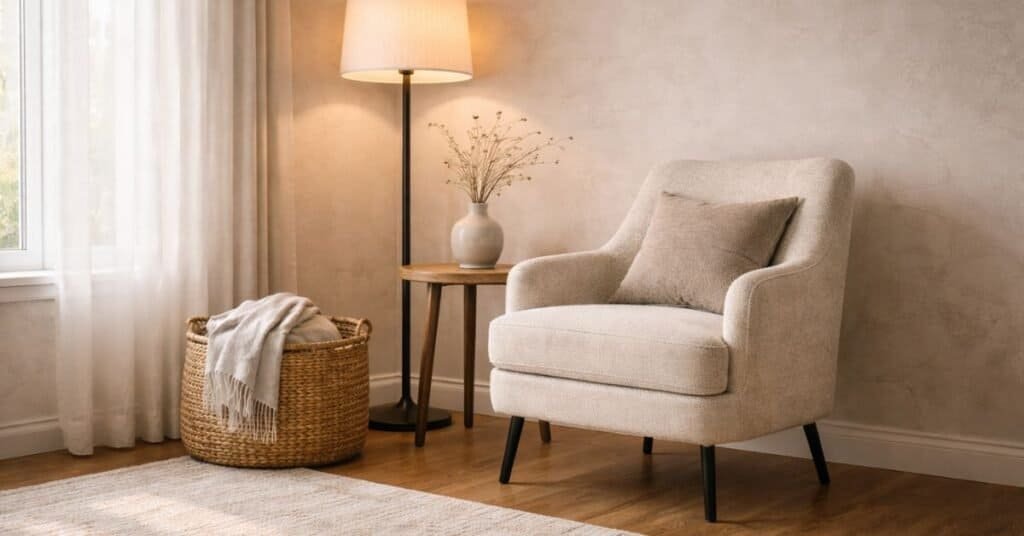
Even in a minimalist space, there are certain mistakes that can make the room feel stiff or uninviting. The most common issue? An all-white or overly neutral room with no texture or contrast. While neutral tones work beautifully in minimalism, without depth or warmth, the room can come across as too stark or uninviting.
The all-white no texture problem
When a minimalist room relies too much on white or very pale colors, the space may look “clean” but lack any warmth or personality. White walls, white furniture, and white accessories can feel too clinical, making the space feel flat and unwelcoming. The lack of texture, color variation, and depth only adds to the sense of coldness.
Oraanj Interior Design points out that the mistake often lies in “all white with no contrast.” A room like this, while visually pleasing at first, may feel sterile and lifeless in everyday living. Without contrast or texture, a minimalist space can feel empty rather than calming.
The simple fix
Adding contrast can be as simple as introducing a few textured pieces to break up the monotony. Adding a textured wool rug, linen throw pillows, a clay vase, or wooden furniture pieces can create a more inviting atmosphere. Even incorporating subtle tones like soft taupe, light brown, or muted green into the room will help bring warmth without losing the minimalist appeal.
A key takeaway: It’s not just about the color—it’s about the depth and warmth of the materials used. By layering textures, using natural materials, and bringing in some warmth through rich fabrics, your minimalist room will feel far more inviting.
Here’s a simple example of how to fix the all-white issue:
- Replace stark white curtains with soft linen ones.
- Add a textured wool rug in a neutral tone.
- Incorporate natural wood elements (side tables, picture frames, or shelves).
- Choose a few decorative items in earthy tones (such as a clay vase or woven basket).
These simple changes can make a minimalist room feel more comfortable, warm, and lived-in without overwhelming the space with clutter.
How to Keep Warm Minimalism Feeling Timeless Over Time
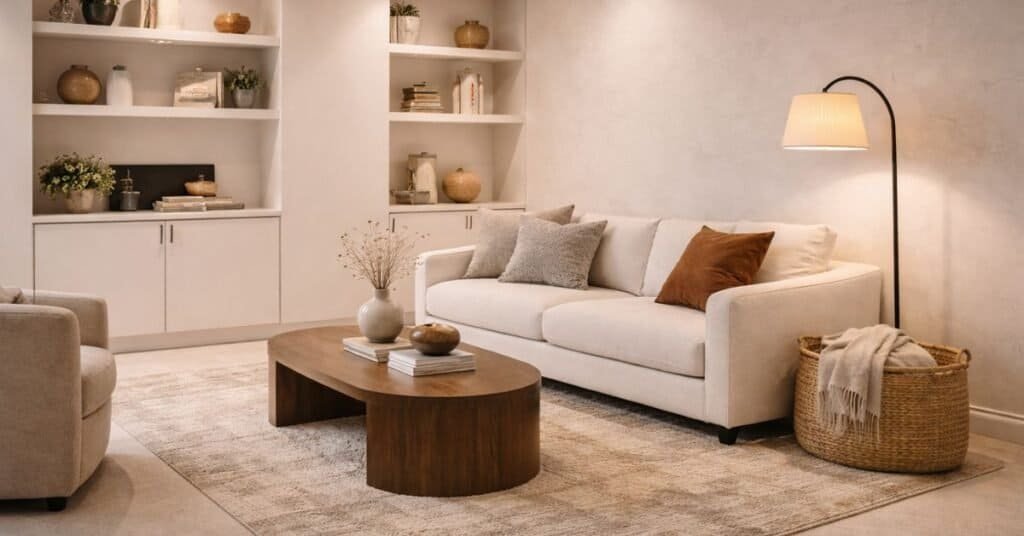
One of the best features of warm minimalism is how it can endure. When done right, it doesn’t chase fleeting trends, and it doesn’t need a complete overhaul every few years. It stays calm, comfortable, and inviting no matter how many times you refresh other elements in your home.
The key to keeping your space timeless lies in material choices, room layout, and knowing when less is truly more.
Choose shapes and materials that age well
The materials and furniture you choose should feel good now, and in the long run. Modern trends may tempt you with shiny finishes or oversized furniture, but these can feel dated quickly. Timeless pieces, on the other hand, remain just as appealing years from now.
Stick with simple shapes and natural materials like:
- Light oak and walnut wood
- Soft fabrics like linen, cotton, or wool
- Matte ceramics and brushed metals
- Stone, clay, and plaster finishes
These materials age beautifully and work well across seasons. For example, a linen sofa may look soft and light today, but over time, it will only get better as the fabric subtly softens. Wood furniture will show character as the grain deepens and warms, and a soft wool rug will feel more luxurious as it ages.
Edit the room with a calm hand
Timeless spaces also need restraint. Avoid over-styling or adding too many decorative items. Instead, focus on editing out excess and leaving only what feels essential. This approach doesn’t mean you have to leave your room bare—it just means being mindful about what stays and what goes.
For instance, you may start with a beautiful wooden shelf, but adding a dozen items on it will make it feel cluttered. Instead, keep only a few select pieces, like one vase, a small stack of books, and perhaps a candle holder. It keeps the space airy and uncluttered without feeling stark.
One practical example of editing is rotating décor seasonally. Instead of re-styling your whole living room each time you want a fresh look, try swapping one or two items every few months. Maybe trade a throw pillow for a seasonal color or replace the vase with a new one for a simple but impactful update.
- Key takeaway: A timeless minimalist room doesn’t rely on constant changes. It thrives by using enduring materials and a thoughtful editing approach.
- Image note: Insert image of a cozy, timeless minimalist room with natural materials and a few select pieces like soft wood, linen, and ceramic accents.
Frequently Asked Questions
How do you make a minimalist home still feel warm?
A minimalist home can feel warm by layering textures and incorporating natural materials. Use soft fabrics like linen and wool, warm wood tones, and a neutral color palette with subtle depth. The key is to avoid stark whites and instead focus on creamy whites, taupes, and clay tones that add warmth without overwhelming the space. Soft lighting, such as warm bulbs and lamps with linen shades, also helps soften the minimalist look.
What colors work best in a warm minimalist home?
The best colors for a warm minimalist home are soft neutrals like warm whites, taupes, light browns, and muted clay tones. These colors create a calm and inviting atmosphere, making the space feel cozy without losing the simplicity of minimalism. Avoid cool or icy whites as they can make the room feel colder and more sterile.
Can a minimalist home feel warm without looking cluttered?
Yes, a minimalist home can feel warm without looking cluttered by focusing on textures, color choices, and materials. Incorporate warm, natural materials like wood, stone, and linen, and use thoughtful layering to add depth. Keep the room simple but avoid leaving it too bare by adding one or two well-placed items like a textured rug or a ceramic vase.
What are the best warm minimalist home ideas for small spaces?
For small spaces, keep the room simple yet functional by choosing fewer but larger furniture pieces. Use light, natural colors to make the space feel more open, and avoid overcrowding with accessories. A larger rug, soft lighting, and simple yet cozy seating options like a linen-covered chair or a low-profile sofa can help the room feel warm and welcoming without overwhelming it.
How do you decorate a small minimalist home so it feels cozy?
To make a small minimalist home feel cozy, use soft, textured materials and warm tones. For example, add linen cushions, a wool throw, and a natural wood side table. Keep the layout open, but choose a focal point like a comfortable armchair or a simple wooden bench that gives the space purpose. Incorporating plants and soft lighting can also help add warmth and life to the space.
What does a warm minimalist color palette look like?
A warm minimalist color palette consists of earthy tones like warm whites, taupes, muted clay, soft browns, and pale oak. These colors create a cozy and inviting atmosphere without overpowering the room. The goal is to avoid harsh whites or cool grays and instead focus on softer, warmer hues that add depth and comfort.
How can you create a warm minimalist bedroom?
A warm minimalist bedroom can be created by layering soft, neutral fabrics like linen bedding, a wool throw, and cotton cushions. Use warm, earthy colors for the walls and furniture, like cream, beige, or light oak. Add natural materials such as a wooden nightstand or a ceramic lamp, and make sure the room has soft lighting to create a relaxing, warm environment.
What are easy warm minimalist home ideas on a budget?
To warm up a minimalist home on a budget, focus on simple yet impactful changes. Swap out harsh white light bulbs for warm-toned bulbs, and add soft textiles like linen or cotton pillow covers. Consider buying secondhand wooden furniture or accessories from thrift stores, and incorporate inexpensive yet stylish elements like woven baskets or simple vases to bring warmth without clutter.
What is the difference between warm minimalism and modern minimalism?
Warm minimalism focuses on creating cozy, inviting spaces through the use of soft textures, earthy colors, and natural materials. Modern minimalism, on the other hand, often leans toward sharper, cooler lines and uses materials like glass, chrome, and lacquer. Warm minimalism feels more relaxed and human, while modern minimalism can feel more polished and formal.
How do you keep minimalist interior design warm and timeless?
To keep minimalist interior design warm and timeless, focus on using natural materials that age well, such as wood, stone, and linen. Stick to a neutral, warm color palette that does not rely on trends. Avoid overly trendy finishes or shapes, and instead, focus on simple, enduring design choices that will look great for years. Regularly edit the space to keep it uncluttered but warm.
Conclusion
Minimalism is often seen as a clean, sleek design style, but when done right, it can be a cozy, warm, and timeless way to live. By focusing on color, texture, and natural materials, you can create a space that feels inviting and comfortable without cluttering the room with unnecessary items. Warm minimalist design allows for a clean, serene atmosphere, while still providing the warmth and character that make a house feel like home.
No need for a major redesign, start with one or two simple changes. Swap out harsh lighting for something softer, introduce textured fabrics, or update your walls with a warmer neutral tone. Little by little, you’ll create a space that reflects calm, warmth, and timeless appeal.
For more ideas and inspiration, check out our full guide on Minimalist Home Ideas: I Tried Simplifying My Space… Here’s What Actually Happened for more tips on creating the perfect minimalist home.