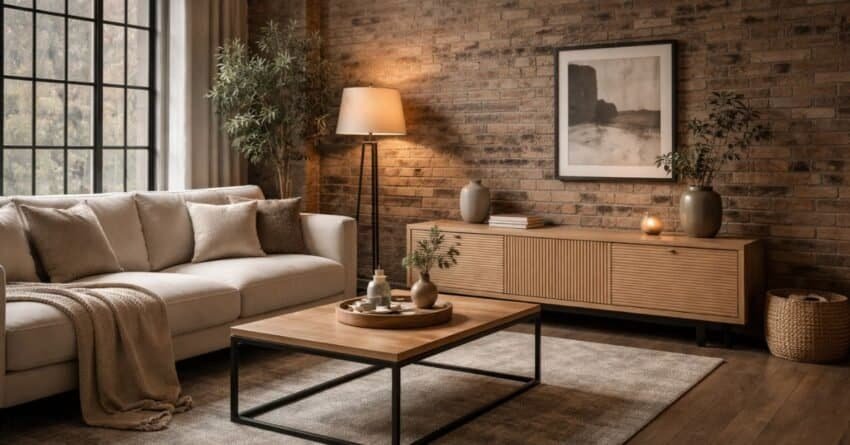
A room can look calm in the morning, then feel crowded by evening. A throw lands on the sofa arm. Mail slides onto the console. Remotes, chargers, pet gear, and kids’ things start gathering in plain sight.
That is why minimalist decor ideas feel so appealing. Most people are not trying to make their home look empty. They want it to feel lighter, easier to reset, and less crowded by the small things that build up every day.
Minimalist decor ideas that hide everyday clutter work best when daily items get a quiet place to go. A woven basket beside the sofa can hold the blanket you use every night. A bench near the entry can catch shoes, bags, and pet leashes.
A media console with closed doors can keep remotes and chargers out of sight without making them hard to find.
Table of Contents
Why Everyday Clutter Builds Up So Fast
Most clutter starts small. It is rarely one huge mess. It is a remote with no home, a throw with nowhere to land, or a stack of papers that keeps moving from one flat surface to another.
The problem is often not how much you own. It is how much of it stays visible.
The difference between real clutter and visual clutter
Real clutter is the stuff you do not need, do not use, or forgot you had. Visual clutter is different. It can be made up of useful items that still make a room feel noisy because they stay out in the open.
Homes & Gardens on clearing visual clutter in a living room points out that storing throws in a basket keeps them close by while making the room look calmer. That simple move matters because a blanket on the sofa does not seem like much on its own. Add a charger, two remotes, unopened mail, and a pet toy nearby, and the room starts feeling harder to settle into.
A useful shift is this: if an item is needed often, it still deserves a home. That home just does not have to stay visible.
Why open storage alone is not always enough
Open shelves, trays, and baskets can help, though they are not always the full answer. If every item is stored out in the open, the room can still feel full even when it is neatly arranged.
This happens a lot with shelves. A shelf packed edge to edge with books, framed art, candles, baskets, and small objects may look styled at first. After a while, the eye reads it as busy. Homes and Gardens also notes that shelves look calmer when about 25 to 30 percent stays open. That little bit of breathing room changes the feel of the room fast.
A better mix is often:
- one or two open pieces for warmth
- more closed storage for daily mess
- a little open space left on shelves and surfaces

Minimalist Decor Ideas That Hide Everyday Clutter Start With Better Zones
A calmer room usually starts with better landing spots. Not more random bins. Not more furniture. Just better places for the things that show up every single day.
Create one landing spot for the things that always drift
Start with the items that never seem to stay put. Keys, wallets, chargers, sunglasses, dog leashes, lip balm, and unopened mail usually move around because they do not have a clear home close to where they are used.
A small hidden landing spot works well here:
- a shallow drawer in a slim console
- one lidded box on a shelf
- a tray inside a cabinet
- a basket tucked under a bench
If your front area always collects shoes, keys, and bags, these small entrance decor ideas that stay calm and useful can help.
Give each room one hidden catch all area
Each room works better when it has one quiet place for the mess that tends to build there. In the living room, that may be a media console drawer for remotes and spare cords. In the bedroom, it could be one nightstand drawer for reading glasses and loose receipts. In the entry, a bench with baskets underneath can catch shoes, pet gear, and shopping bags.
A simple room by room pattern can help:
- living room: one basket and one closed drawer
- bedroom: one drawer and one under bed box
- entry: one bench basket and one tray or drawer
- bathroom: one cabinet bin for extra supplies

Minimalist Decor Ideas That Hide Everyday Clutter in the Living Room
The living room is usually where clutter shows up first. It is the room where people relax, watch TV, fold laundry, charge devices, open packages, and leave things down for a minute that turns into hours.
The easiest ways to hide remotes, blankets, and toys
Start with the items that are always out. Remotes, throws, game controllers, pet toys, and kids’ things tend to gather around the sofa because that is where they are used most.
A few pieces work especially well here:
- a storage ottoman for throws, toys, or game gear
- a lidded box inside the media console for remotes and chargers
- one woven basket beside the sofa for blankets
- a trunk style coffee table for larger loose items
Placement matters. A blanket basket works best about 8 to 18 inches from the sofa edge, not across the room. A trunk coffee table should leave about 16 to 18 inches between the sofa and the table so the room still feels easy to move through.
How to keep surfaces clear without making the room feel bare
On a coffee table, try one tray with two or three items at most. That could be a candle, a small bowl, and one book. On a media console, keep the top mostly open and move spare cords, batteries, and manuals behind closed doors. Even removing bulky tissue boxes or product packaging can make the room feel calmer right away.
| Clutter type | Why it piles up | Simple hiding spot |
|---|---|---|
| Remotes | no fixed home | lidded box in media console |
| Throws | used every day | woven basket by sofa |
| Toys | spread across floor | trunk or closed bin |
| Chargers | left on tables | drawer tray or cable box |

Hidden Storage Furniture That Works Hard Without Looking Bulky
The best storage furniture does two jobs at once. It helps a room stay calmer, and it does not make the room feel heavier.
The best pieces for small homes and apartments
A few of the most useful pieces are:
- storage ottomans
- benches with cubbies or lift tops
- platform beds with drawers
- multipurpose credenzas
- floating nightstands with drawers
Homes & Gardens on adding storage without bulky furniture notes that wall hung pieces can make a room look bigger because more floor stays visible. That makes floating storage especially helpful in compact homes.
Architectural Digest on stylish space saving ideas highlights platform beds with drawers as a strong choice for bedrooms that need storage without adding another large piece.
How to choose furniture that hides clutter without crowding the room
Try looking for:
- closed fronts instead of open cubbies when contents are messy
- shallower depth for narrow rooms
- raised legs when you want the room to feel lighter
- one larger storage piece instead of several smaller ones
If your room is long and narrow, these living room layout ideas for a small rectangular room can help you place storage furniture without crowding the space.
Minimalist Decor Ideas That Hide Everyday Clutter Without Looking Cold
A tidy room can still feel inviting. If everything is closed up and every surface is bare, the room may look neat but feel a little flat.
Use hidden storage with warmth, not just function
A storage bench in light oak feels warmer than a plastic bin pushed into the corner. A media console with wood grain and simple doors can hide a lot without making the room feel stiff. Even a lidded box looks better when the material fits the room, like rattan, linen, or matte wood.
Another minimalist decorating mistakes many makes is: too much in a room can create visual clutter, but weak function creates trouble too. A room needs storage that works and still feels pleasant to look at.
Keep a little softness in the room
Try using:
- baskets with texture instead of shiny bins
- wood tones instead of all white storage
- a rug with visible weave
- one or two textiles in warm neutral tones
- a lamp that adds a soft glow in the evening

Before You Hide the Clutter Declutter the Right Way
Hidden storage helps most when it is holding the right things.
Start by emptying one trouble zone fully
Pick one spot that collects clutter fast. A console drawer, a media cabinet, a nightstand, or the entry bench usually works well. Take everything out so you can see the full pile at once.
Real Homes on decluttering mistakes points out that emptying a space first helps people make better decisions about what should go back. That step makes a big difference because many people try to tidy around what is already there.
Set a goal for each space before putting things back
A drawer with no job ends up holding anything. A drawer with a clear job stays calmer longer.
For example:
- entry drawer: keys, mail tray, sunglasses, pen
- media console: remotes, charger, spare batteries
- nightstand: reading glasses, hand cream, book, charger
- bench basket: shoes, pet leash, reusable bag
Before you start filling baskets and benches, these minimalist home organization rules that help you declutter first can make the whole setup easier to maintain.
Small Space Minimalist Decor Ideas That Hide Everyday Clutter
Small spaces get messy fast because there is less room for overflow.
How to hide clutter in rooms with very little floor space
A few ideas work especially well in tight rooms:
- under bed boxes for extra bedding or off season clothes
- a slim bench with storage in the entry
- floating shelves with matching boxes
- wall hooks for bags, leashes, or headphones
- a narrow cabinet about 12 to 15 inches deep for overflow
Extra Space Storage on tiny home organization ideas shows how hidden storage, built in seating, and under bed space can do a lot of work in compact homes.
Where to store the things you use every day in a tiny home
| Small space problem | Better minimalist fix |
|---|---|
| no room for big furniture | slim storage bench |
| no closet near entry | basket plus wall hooks |
| no side table storage | floating nightstand or shelf |
| too much open shelving | mix in closed boxes or bins |
In tighter homes, good placement matters as much as good storage, which is why small rectangular living room layout ideas can be so useful here.

Budget Friendly Minimalist Decor Ideas That Also Add Storage
A calmer home does not have to cost a lot.
The cheapest fixes that make a room feel calmer fast
A few affordable ideas that work well are:
- woven baskets for throws, toys, and pet gear
- under bed bins for clothes or extra bedding
- lidded boxes for remotes, chargers, and mail
- thrifted trunks for blanket or toy storage
- wall hooks for bags, hats, and leashes
- a simple bench with hidden storage
Extra Space Storage also mentions budget friendly picks like storage ottomans and DIY benches, which work well for homes that need practical storage without a big furniture budget.
Where to save and where to spend
Spend on the piece that fixes the biggest daily mess. Save on the smaller containers around it.

One Common Mistake That Makes Hidden Storage Stop Working
The biggest mistake is trying to hide too much without checking first.
When a new basket or storage bench gets filled with random things right away, it becomes delayed clutter instead of useful storage. A basket for throws should hold throws. A media drawer should hold remotes, chargers, and batteries. Once too many categories get mixed together, people stop using the storage well because it takes too long to find anything.
A simple rule helps:
- keep only what belongs in that room
- limit duplicates
- remove bulky packaging
- give each group one container
A little empty space matters too. If the lid barely closes or the basket spills over, the storage is already doing too much.
How to Handle Paperwork, Mail, and the Junk Drawer
Small paper piles and loose little items can make a home feel messy faster than bigger things sometimes do.
A simple way to store mail and paperwork out of sight
Use one inbox tray, one basket, or one slim file box placed close to where mail enters the house. Sort fast into three groups:
- action
- file
- recycle
That quick sort stops paper from drifting across the house.
A minimalist way to deal with the junk drawer
Martha Stewart’s junk drawer alternative leans on using one organized container or caddy instead of letting random items spread inside a drawer. That works well because loose clutter turns into one contained group that can be stored out of sight.
A good reset looks like this:
- empty the drawer fully
- keep only the items you actually reach for
- group like items together
- move the rest to a cabinet or another room
Frequently Asked Questions
How do you make a minimalist home when you still have a lot of stuff?
Start by cutting visual clutter before trying to hide everything. Keep the items you use often nearby, then give them closed storage like ottomans, under bed boxes, or baskets that fit the room.
What is the best way to hide everyday living room clutter?
Place storage right where the clutter builds up. A basket by the sofa can hold throws, a lidded box inside the media console can hold remotes, and a storage ottoman can hide toys or chargers.
How can I reduce visual clutter without getting rid of everything?
Clear surfaces, group small items on trays, leave some open shelf space, and move daily extras into closed storage. Edited display often changes the feel of a room faster than a full purge.
What minimalist furniture pieces help hide clutter in small apartments?
Storage ottomans, benches with hidden compartments, platform beds with drawers, and slim credenzas work well. Floating nightstands with drawers can help too when floor space is tight.
Where do minimalists keep their paperwork and mail?
Many people use one inbox tray, one basket, or one small file box near the entry or kitchen. The goal is to stop paper from drifting across the house.
How do you avoid a minimalist space looking cold or empty?
Use warm materials even when the room is tidy. Baskets, wood tones, woven textures, soft rugs, and lamp light keep the space comfortable. For more help keeping things tidy without making the room feel stiff, these minimalist home organization rules are a helpful next read.
What mistakes should I avoid when decluttering a small space?
A common mistake is trying to tidy without fully emptying the problem area first. Another is keeping storage too general, so everything gets tossed together.
How do I organize a junk drawer in a minimalist way?
Take everything out first and keep only the items you actually use. Then group them into a small tray, caddy, or box system so the drawer stays easy to scan.
Can you be minimalist if you have kids or pets and lots of gear?
Yes. Closed bins, benches with storage, baskets, and toy rotation can keep the visible part of the room much simpler without pretending real life is not happening.
What are some budget friendly minimalist decor ideas that also add storage?
Woven baskets, under bed bins, lidded boxes, thrifted trunks, wall hooks, and simple benches can all help. Start with the area that gets messy fastest.
Conclusion
Minimalist decor works best when it makes everyday life easier, not harder. The point is not to pretend clutter never shows up. It is to give daily items a better place to go so the room feels calmer, clearer, and easier to reset.
A basket by the sofa, a drawer in the right spot, or one bench near the entry can do more than people think. Small storage moves, clearer zones, and edited surfaces often make the biggest difference.
If you want more ideas for shaping a calm home that still feels real to live in, take a look at Minimalist Home Ideas: I Tried Simplifying My Space… Here’s What Actually Happened.