
Quick Answer
A minimalist home look comes from what’s visible, not from how much you own. Edit surfaces down to a few grouped objects, move the rest into closed storage, coordinate your colors, and leave open floor space, and a fully-furnished family home can read as calm and uncluttered.
Designers now describe this softer approach as warm minimalism: clean lines paired with warm, earthy tones and layered textures, not empty rooms. You can do most of it in a weekend with furniture you already own.
Table of Contents
Key Takeaways
- Minimalist look = visual simplicity. Minimalist lifestyle = owning less. You can have the first without the second.
- Edit sightlines first: countertops, coffee tables, open shelves, and the floor.
- Closed storage (cabinets, ottomans, lidded baskets) is the single fastest way to a clutter-free styling result.
- A tight palette of calming neutral tones hides visual busyness even when a room is full.
- Group sentimental items into one curated display instead of scattering them across six surfaces.
- Minimalism works with kids and pets when storage lives where the mess happens.
- Cozy textures and warm, layered lighting stop minimal rooms from feeling cold.
- Rearrange and reorganize before you buy anything. Most changes cost $0.
What does minimalist home design actually mean?
Minimalist home design means deliberate restraint in what’s shown: few visible objects, clean lines, a limited palette, and clear open space. It never required owning almost nothing. Current trend reporting shows minimalism moving away from stark all-white interiors toward layered rooms with color, curves, and personal objects.

Three traits define the look:
- Clear sightlines, your eye travels across a surface without stopping twenty times.
- Repetition, the same two or three materials and tones repeat through the room.
- Negative space, intentional emptiness around the things you do display.
Decision rule: if a change reduces the number of visual stopping points, it moves you toward a minimalist home look. If it only reduces the number of things you own, it may not change the look at all.
How do you make your home look minimalist without getting rid of everything you own?
Keep everything, but reduce what’s visible. Retailer and design-platform guides consistently recommend showing one or two pieces per shelf or accent table and storing the rest behind clean-lined doors.
The surface edit, room by room:
- Countertops: leave three working items (kettle, soap, one plant). Everything else goes in a cabinet or a single closed canister.
- Coffee table: one tray holds remotes, coasters, and a candle. The tray makes five things read as one.
- Open shelves: remove everything, then put back 40%. Group in odd numbers, leave gaps.
- Floors: nothing on the floor that isn’t furniture. Shoes, bags, and toys get a basket.
- Fridge door: clear it. A bare fridge front changes a kitchen more than new hardware.
Minimalism is a tool, not a rule. Apply it to the rooms where calm matters most, then let the rest of the house catch up slowly.
Start with the one room guests see first. More tactics in our guide to minimalist decor ideas that hide everyday clutter.
Minimalist vs modern interior design: what’s the difference?
Modern design describes an era and aesthetic (clean geometry, mid-century influence, warm woods, bold shapes). Minimalist design describes a level of restraint and can be applied to almost any style. A traditional room with carved wood can be minimalist if it holds few objects; a modern room crammed with sculptural decor is not.
| Minimalist | Modern | |
|---|---|---|
| Core idea | Restraint, negative space | Clean-lined era aesthetic |
| Palette | Soft grounded neutrals | Neutrals plus bold accent color |
| Decor volume | Very few, curated pieces | More decorative objects allowed |
| Works with | Any style, any budget | Specific furniture silhouettes |
If you love your current furniture, chase minimalist restraint rather than a modern furniture overhaul. See what minimalist decorating style really includes for the full breakdown.
Scandinavian vs Japanese minimalism: which style should you try?
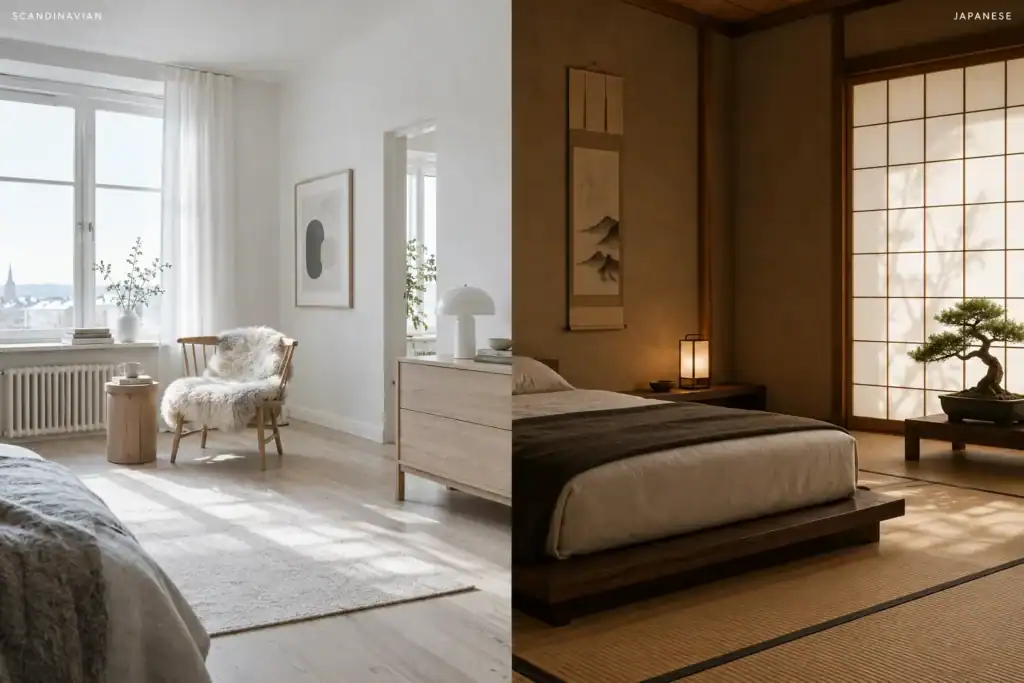
Choose Scandinavian if your home is dark, small, or cold-feeling; choose Japanese-influenced minimalism if you want calm, grounded, low-profile spaces. Many readers land on Japandi, the blend of both.
- Scandinavian: pale woods, white and greige walls, sheepskin and wool, lots of lamps. Brightens apartments with poor light.
- Japanese: darker woods, low furniture, natural fiber textures, strong empty space, one plant or branch as focal point. Great for sentimental restraint.
- Japandi: warm neutrals, clean silhouettes, handmade ceramics. The most forgiving if you own a mix of furniture.
Edge case: renters with beige carpet and oak trim usually do better with Japandi’s warm neutrals than with crisp Scandinavian white, which can make builder-grade finishes look yellow. Our minimalist color palette hacks for small homes covers how to pick tones that flatter what you can’t change.
How do you organize clutter while keeping a minimal aesthetic?
Give every frequently-used item one designated home, then close a door on it. Hidden storage, not disposal, is what makes a lived-in home photograph as minimal.

Storage you probably already have:
- Storage ottoman, blankets, remotes, controllers.
- Under-bed bins, off-season clothes, gift wrap, extra bedding.
- Lidded baskets, one per room, for the stuff that lands on the floor nightly.
- Existing cabinet, remove decorative items, store functional ones.
- Vertical wall space, hooks and a narrow ledge beat floor piles in small entries.
Furniture arrangement matters just as much. Float the sofa a few inches off the wall, anchor seating on a rug, keep walking paths clear, and remove one piece of furniture per room (store it, don’t sell it). Open floor space reads as minimalism faster than any purge. For apartments, our small space solutions for an organized minimalist home goes deeper.
Common mistake: buying twelve matching bins before sorting. Sort first, measure second, buy last.
How do you keep sentimental items in a minimalist space?
Curate instead of scatter. Pick one display zone per room, use consistent framing or vessels, and rotate the rest in storage so everything gets its turn.
Practical methods that keep keepsakes visible:
- One gallery wall for family photographs, all in matching frames and mats, instead of photos on every surface.
- A single shelf for a collection, with the pieces grouped tightly and empty space on either side.
- Seasonal rotation, display a quarter of your keepsakes, swap quarterly. Nothing is lost, everything gets seen.
- Scale up, count down, one large inherited bowl reads as intentional; eight small trinkets read as clutter.
Example: a shelf holding 22 travel souvenirs looks chaotic. The same shelf with five souvenirs clustered on a wood tray, and the rest in a labeled box, looks collected. More styling logic in our minimalist shelf decor guide.
Can you do minimalism if you have kids and pets?
Yes, if storage lives where the mess is made. Minimalism with kids is about containment and quick reset, not fewer toys.

- Keep a closed toy bin in the living room, not only in the bedroom. Mess goes away in 60 seconds.
- Limit the visible toy count. Rotate the rest from a closet; kids engage more with fewer options out.
- Choose washable, mid-tone textiles. Pet hair and crumbs disappear on oatmeal and clay, not on charcoal or white.
- Give each family member one basket for landing-zone items. Shared households fight less when nobody has to declutter someone else’s things.
Decision rule for mismatched couples: one person controls visible surfaces, the other keeps full freedom inside closed storage. It settles most disagreements.
How do you add warmth and coziness to a minimal home?
Layer texture, natural materials, and warm lighting. Designers describe warm minimalism as simplicity plus earthy tones, tactile fabrics, and layered textures, the antidote to gallery-cold rooms.
- Texture layers: a chunky knit throw, two textured pillows, one wool or jute rug. Three layers, not thirty objects.
- Lighting: swap overheads for a mix of floor, table, and ceiling light in warm color temperature. Multi-level warm lighting softens clean lines more than any accessory.
- Materials: wood, linen, stoneware, clay, rattan. Natural surfaces add visual warmth without adding visual noise.
- Palette: sand, mushroom, muted olive, soft brown. Warm neutrals now define the minimalist look far more than pure white.
See minimalist home ideas that still feel warm for room-by-room examples.
Minimalist bedroom ideas that don’t feel empty or cold
Peaceful bedroom aesthetics come from three edits: clear the nightstand to a lamp plus one object, layer bedding in two or three tonal neutrals, and hide visible clothing storage behind closed doors or a simple curtain. Add one oversized piece of art above the bed instead of a cluster. Keep the floor clear on both sides of the bed, and the room will feel twice as large.
How much does it cost to decorate a minimalist home?
Most of the work is free. Rearranging, editing surfaces, and relocating items into existing storage costs nothing; expect $0,$150 for baskets, frames, and warm-toned bulbs if you shop secondhand or budget retail.
| Change | Typical cost | Impact |
|---|---|---|
| Surface edit + rearranging | $0 | Highest |
| Warm LED bulbs | Low | High |
| Lidded baskets, trays | Low | High |
| Matching photo frames | Low, moderate | Medium |
| Storage ottoman / cabinet | Moderate | High |
| Neutral paint, one room | Moderate | High |
Affordable minimalist furniture typically comes from IKEA, Target, Wayfair, Article, and Castlery, plus secondhand marketplaces where clean-lined mid-century and Scandinavian pieces are plentiful. Retail catalogs now carry hundreds of minimalist decor pieces priced to be mixed sparingly, which confirms the point: curate, don’t replace.
What are the most common mistakes people make going minimalist?
The biggest mistake is emptying rooms instead of editing them. Here’s what else derails the look:
- Container overload. Fifteen visible bins are still visual clutter. Fewer, larger, closed.
- Hiding without organizing. Stuffed drawers create daily friction and the mess returns.
- All-white everything. Reads cold and shows every scuff; grounded neutrals wear better.
- Removing all texture. Rooms with no soft layers feel like waiting areas.
- Mass purging first. Experts recommend applying minimalism room by room rather than decluttering the whole house at once.
- Matching nothing. Random finishes (brass, chrome, black, oak) in one room create busyness even when object count is low.
- Ignoring the floor. Clear floors do more for spaciousness than clear shelves.
Is minimalism right for you, and how do you start with lots of stuff?
Minimalism suits you if clutter raises your stress, you want faster cleaning, or you like calm rooms, even if you love your belongings. It’s a poor fit if daily visible access to supplies is how you function (active crafters, for example) unless you build a closed-door studio zone.
A realistic 7-step start:
- Choose one room, usually the bedroom or living room.
- Photograph it. The camera shows clutter your eyes have stopped seeing.
- Clear every horizontal surface completely.
- Put back only what you use daily or genuinely love.
- Relocate the rest into closed storage; nothing has to leave the house.
- Unify the palette with what you own, swap pillows and throws between rooms.
- Add warmth back: one lamp, one texture, one plant.
Browse more minimalist home decor ideas for a warm, livable home when you’re ready for the next room.
Minimalist Look Room Planner
Minimalist Look Room Planner
Get a 3-step plan using only what you already own.
FAQ
Does a minimalist home look mean empty rooms?
No. It means few visible objects, a tight palette, and open floor space. Rooms can stay fully furnished and comfortable.
Can I be minimalist without decluttering?
Largely, yes. Relocating items into closed storage achieves the visual result. Decluttering helps long-term maintenance but isn’t required to change how a room looks.
What colors work best for a minimalist look?
Soft grounded neutrals, sand, clay, mushroom, muted olive, warm brown, layered tonally rather than in high contrast.
How do I display family photos without clutter?
One gallery wall or one shelf, matching frames, consistent mats, and generous space around the grouping.
Why does my minimalist room feel cold?
Usually missing texture and warm lighting. Add a wool or jute rug, a knit throw, and two lamps with warm bulbs.
Is minimalism realistic in a small apartment?
Yes, and it helps most there. Clear floors, closed storage, and a single palette make small rooms read larger.
Do I need to buy new furniture?
No. Rearranging, editing surfaces, and reorganizing storage deliver most of the effect at zero cost.
How long does this take?
One room typically takes two to four hours. A whole home is more comfortable spread over several weekends.
Conclusion
A minimalist home look is a styling decision, not a sacrifice. Edit what’s visible, give everyday essentials a closed home, keep one curated display for the things you love, unify your tones, and layer in cozy textures and warm light. That’s where style meets comfort, clutter-free styling that still looks like you live there.
Next steps: photograph one room, clear every surface, return 40%, and add a single warm lamp. Then repeat in the next room next weekend.