
Quick Answer
A Minimalist Living Room Korean Style keeps clutter low but swaps cold white-and-black minimalism for warm neutrals, low furniture, soft diffused light, and gentle textures. The look leans on beige, oatmeal, and honey or walnut wood, sheer curtains, a simple low sofa or floor cushions, and one or two quiet decor moments instead of a gallery of stuff.
It works especially well in apartments and condos under 400 sq ft of living space, because low profiles and light layers make small rooms feel open without feeling empty. Renters can get the full effect with textiles, lamps, and furniture alone.
Table of Contents
Key Takeaways
- Korean minimalism is soft minimalism: fewer objects, but warmer colors and rounder shapes.
- Warm neutrals (cream, oat, greige, mushroom) replace stark white as the base.
- Low furniture and a floor-level seating zone make ceilings feel taller.
- Layered lamp light beats a single overhead fixture every time.
- Closed storage is non-negotiable, and open shelves stay about 70% empty.
- Wood tone is the warmth engine: mid-oak for airy rooms, walnut for depth.
- One sculptural plant does more than five small pots.
- The biggest mistake is confusing bare with calm.
- Budget versions are very doable with curtains, a rug, two lamps, and baskets.
- Family-friendly, as long as toys live in lidded storage.
What Is Korean Minimalist Interior Design Style?
Korean minimalist interior design is a warm, low-contrast take on minimalism built around light-filled apartment living, soft neutral color, natural materials, and calm, uncluttered surfaces. Think of the living rooms in Korean dramas and Seoul cafés: pale walls, sunlight through thin curtains, a low wooden table, and almost nothing on display.
Design guides describing Korean interior design style point to a few consistent traits: neutral bases, natural wood, restrained decor, and a strong emphasis on comfort rather than showpieces. Korean design commentary also frames current interiors as people-centric and timeless rather than trend-chasing, with Seoul-based design analysis describing spaces built around how residents actually rest and gather.
That’s the heart of it. This is minimalism designed to be sat in, not photographed and avoided.

How Is Korean Minimalism Different from Japanese Minimalism?
Korean minimalism is softer, cozier, and more casual; Japanese minimalism is more austere, more disciplined about empty space, and often uses darker, rawer wood.
| Element | Korean minimal | Japanese minimal | Cold modern minimal |
|---|---|---|---|
| Base color | Warm cream, oat, greige | Muted grey, natural tan | White, black |
| Wood | Honey oak to walnut | Raw ash, dark timber | Little or none |
| Shapes | Rounded, cushioned | Straight, framed | Sharp, angular |
| Textiles | Layered, soft, plentiful | Sparse, precise | Minimal |
| Mood | Cozy, gentle | Meditative, spare | Graphic, cool |
Choose Korean-style if you want minimalism you can nap in. Choose Japanese-style if empty space itself is the thing you find restful.
Korean Minimalist Living Room Color Palettes and Materials
Start with a warm neutral base of two or three close tones, add wood, and keep saturated color to under 10% of the room. Pure white walls are the most common misstep, because they read blue-grey under North American winter light.
A reliable palette:
- Walls: warm white, ivory, or soft oat
- Large upholstery: oatmeal, mushroom, or greige
- Wood: honey oak, teak, or walnut for depth
- Accents: clay, olive, dusty brown, faded blush
- Texture: linen, cotton gauze, boucle, wool, rattan, unglazed ceramic
Korean interior guides tracking warm minimal home styling describe this same move away from clinical white toward beige-based warmth with richer wood tones. If you want more palette structure, our guide to a neutral palette living room breaks down how to layer tones without going flat.
Calming neutral tones do the heavy lifting. Texture keeps them from getting boring.
Best Furniture for a Korean Minimalist Living Room
Pick low, simple, soft-edged pieces with visible legs or a flush floor line, and keep the total piece count small. Low furniture is the single most recognizable feature of this style.
The core kit:
- A low, armless or low-arm sofa in a neutral woven fabric, ideally under 32 inches tall at the back.
- A low wooden coffee table (12-15 inches high) or a round oak side table.
- Two floor cushions in linen or cotton for a casual seating zone.
- A long low media console in oak or walnut with closed doors.
- One soft rug, jute or wool, in a shade slightly deeper than the floor.
- One accent chair with a rounded silhouette, only if the room can spare 24 inches of floor.
Rounded edges matter more than people expect. Korean minimal styling guides note the shift toward curves and cushioned forms as a warmth tool, and it’s why a barrel-shaped chair feels friendlier than a boxy one in the same fabric.
Skip: bulky recliners, tall bookcases, glass-and-chrome tables, dark leather sectionals.
How to Make a Small Living Room Feel Cozy and Minimalist Korean Style
In a small room, keep furniture low, leave the floor visible, and create two soft zones instead of one crowded one. The goal is open but not empty, and that comes from breathing room plus texture, not from removing everything.
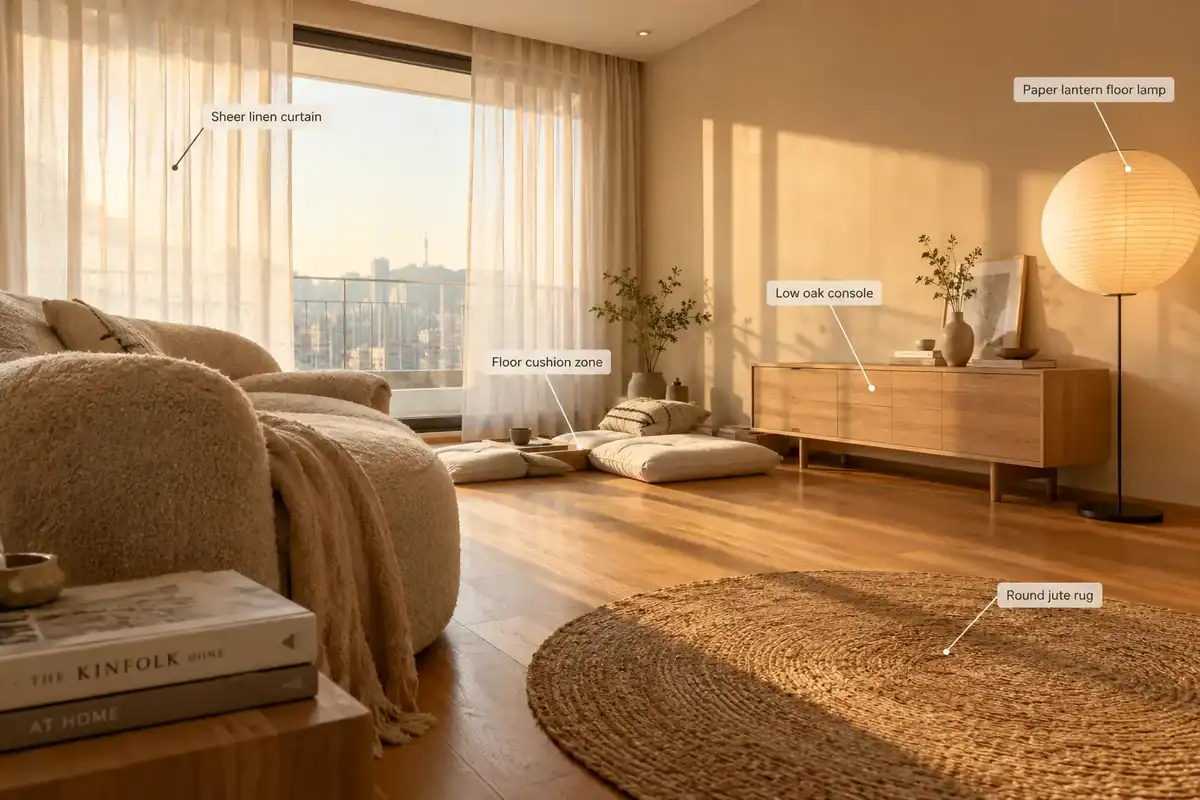
Practical moves for apartments and condos:
- Float the sofa off the wall by 2-3 inches. It reads intentional and prevents the boxed-in look.
- Hang curtains at the ceiling line, wall to wall, in sheer white or oat linen.
- Use one large rug, not a small one. Undersized rugs shrink rooms; see how to choose the right rug size for a living room.
- Build a floor zone: rug, two cushions, low table, one lamp. That’s a whole “second room” in 3 x 4 feet.
- Keep sightlines clear at eye level. Low furniture, low art, tall empty wall.
Awkward long rooms need a different plan. Our breakdown of living room layouts for small rectangular rooms covers zoning in narrow spaces, and minimalist living room styling for apartments covers what to remove first.
Edge case: if your living room doubles as a dining or work area, use a low bench or slim console as a soft divider instead of a screen. It marks the zone without blocking light.
Korean Minimalist Living Room Lighting Ideas
Layer three to four warm light sources at different heights and stop using the ceiling light as your main lamp. Warm bulbs (2700K) are essential, because cool bulbs make beige look grey.
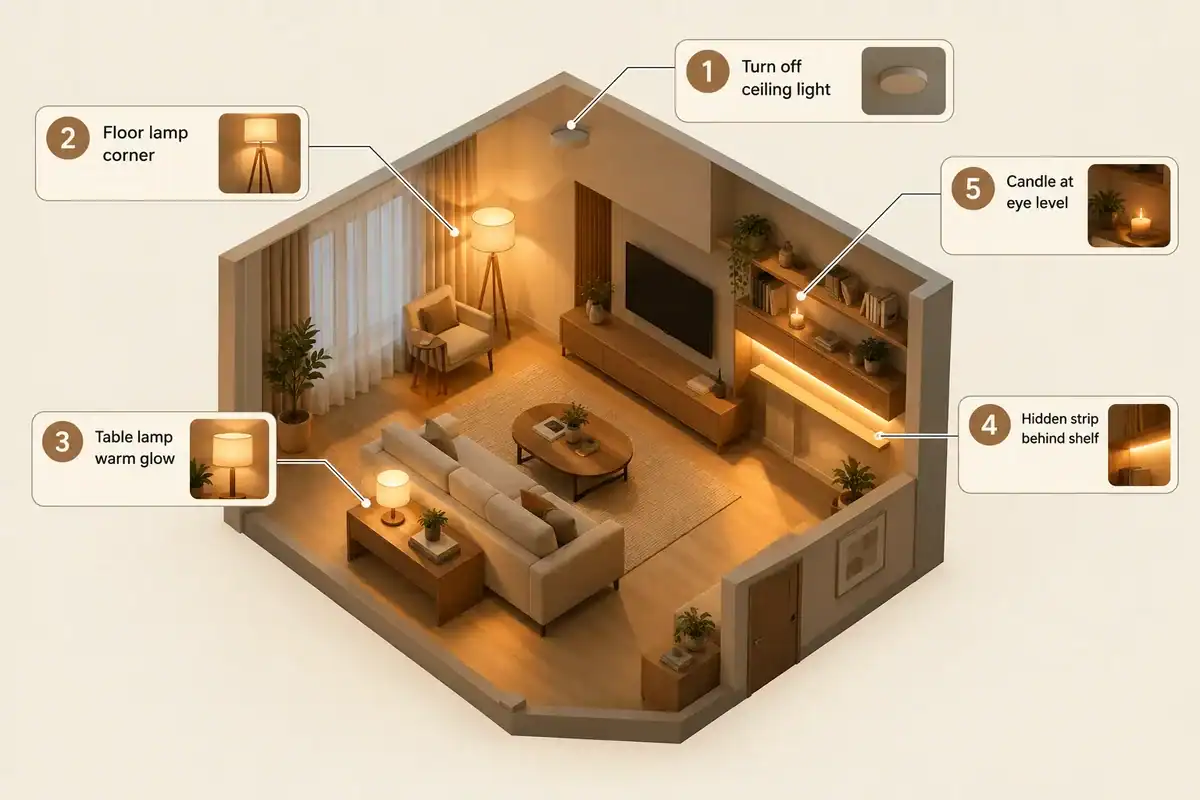
A simple layering sequence:
- Overhead light off, or dimmed to background level.
- Floor lamp in the darkest corner, ideally paper, linen, or opal glass.
- Table lamp at sofa height for reading.
- Hidden strip light behind a shelf, console, or TV for a soft glow.
- One candle or small ceramic lamp at eye level for warmth.
Korean minimal interior write-ups on soft minimalist styling consistently pair indirect lighting with warm-toned materials, and it’s the fastest change renters can make. For fixture-by-fixture help, see our cozy living room lighting ideas for dull spaces.
How to Add Warmth to a Minimalist Korean Living Room
Warmth comes from four things: wood tone, textile layers, indirect light, and one or two personal objects. If a minimalist room feels cold, it’s almost always missing texture, not missing color.
Warmth checklist:
- Wood: one large wood surface minimum (table, console, or shelf). Deeper walnut tones add coziness in rooms with lots of light.
- Textiles: rug + throw + two cushion fabrics. Mix a smooth with a nubby.
- Curtains: sheer, floor-length, always. They soften every hard line in the room.
- Ceramic and paper: a stoneware vase, a paper lampshade, a woven tray.
- One soft accent: Korean styling ideas often include a small cute or handmade object, and guides on soft minimal Korean room decor treat these gentle touches as part of the aesthetic, not a break from it.
More texture strategy here: layered living room textures that look seriously good.
How to Organize a Korean Minimalist Living Room
Give every daily item a closed home, then limit open display to a handful of curated objects. Concealed storage is what makes high-function minimalism livable instead of performative.
- One closed console for remotes, cables, chargers, and mail.
- Two lidded baskets for blankets and clutter overflow.
- 70/30 rule for shelves: 70% empty, 30% objects, grouped in odd numbers.
- Cable discipline: clips along the wall, power bar inside the console.
- A daily 5-minute reset: flat surfaces cleared before bed.
Hide-it-well tactics live in our post on minimalist decor ideas that hide everyday clutter.
What Plants Work Best in Korean Minimalist Spaces?
Choose one or two sculptural, low-maintenance plants with simple leaf shapes and put them in matte ceramic or unglazed pots. Many small pots create visual clutter; one tall plant creates calm.
Best picks for apartments:
- Olive tree (bright window, very Korean-café)
- Fiddle leaf fig or rubber plant for a tall green anchor
- Snake plant for low light and near-zero care
- Eucalyptus or pampas stems in a tall vase if light is poor
- Monstera for a single bold silhouette
Pot rule: match pots to your neutral palette, not to each other’s shapes. Skip plastic nursery pots and bright saucers.
Korean Minimalist Living Room Decor Ideas on a Budget, and Where to Buy
You can get the look for a few hundred dollars by prioritizing curtains, lighting, a rug, and baskets before any furniture. Those four items change the mood of a room more than a new sofa does.
Budget order of operations:
- Sheer floor-length curtains + ceiling-height rod
- Two warm-toned lamps and 2700K bulbs
- One large neutral rug
- Two lidded storage baskets
- Slipcover or neutral throw over an existing sofa
- Last: a low wood table
Where to shop: IKEA (low tables, storage, sheer curtains), Muji (paper lamps, simple textiles), H&M Home and Zara Home (linen cushions, ceramics), Daiso and Korean lifestyle shops for small accessories, Amazon and Wayfair for low consoles and rugs, plus thrift stores and Facebook Marketplace for solid-wood pieces you can sand and oil. Idea roundups like Korean living room inspiration and Korean living room styling examples are useful for spotting which shapes to look for before you buy.

Common Mistakes with Korean Minimalist Design
The most common mistake is stripping a room bare and calling it minimalism. Emptiness without texture reads unfinished, not peaceful.
Watch for these:
- Cool white walls and 4000K bulbs. Instantly kills the warmth.
- Too-small rug floating under the coffee table only.
- Tall, heavy furniture in a low-ceiling apartment.
- Matching set syndrome. Buying a full showroom set flattens the layered look.
- Over-styling shelves. Three objects, not eleven.
- Zero personal items. Korean minimal rooms still hold books, photos, ceramics.
Korean minimal renovation guides describing restrained minimal interiors stress material quality and warmth over sheer emptiness, which is the same principle behind our post on minimalist home ideas that still feel warm.
Is Korean Minimalism Good for Families with Kids?
Yes, and it’s one of the more kid-friendly minimalist styles, because low furniture, floor cushions, and washable neutral textiles suit family life. The trade-off is that it only works with disciplined closed storage.
Family adjustments:
- Choose performance linen or washable slipcovers in oat or greige, not cream.
- Use a low table with rounded corners, or a soft ottoman instead.
- Keep two lidded toy baskets in the living room, everything else in a bedroom.
- Pick wool or low-pile rugs that can be spot cleaned.
- Anchor tall plants and shelves to the wall.
Choose a different style if you can’t commit to a nightly 5-minute reset. Korean minimalism looks calm because surfaces stay clear, and no amount of pretty styling fixes a permanently full coffee table.
Frequently Asked Questions
What is Korean minimalist style in one sentence?
It’s warm, low-contrast minimalism built on beige and wood tones, low furniture, soft lighting, and clear surfaces, designed to feel cozy rather than stark.
Can renters get this look without renovating?
Yes. Curtains, lighting, a rug, low furniture, baskets, and textiles deliver about 90% of the effect, and all of it moves with you.
What paint color works best?
A warm white or soft oat with a slight yellow or greige undertone. Avoid cool greys and bright builder white.
Do I need floor cushions?
No, but two of them add the casual floor-level feeling that defines the style, and they store easily against a wall.
How many decor objects should be visible?
As a rough guide, three to seven visible objects per surface area of the room, grouped rather than scattered.
Is Korean minimalism the same as Scandinavian minimalism?
No. Scandinavian minimalism uses cooler whites and pale woods, while Korean minimalism leans warmer, lower to the ground, and softer in silhouette.
What’s the cheapest high-impact change?
Warm 2700K bulbs plus turning off the overhead light. It costs under $20 and changes the entire mood.
Will a TV ruin the look?
Not if it sits low on a closed wood console with cables hidden and nothing else on the wall around it.
Conclusion
A Minimalist Living Room Korean Style works because it subtracts clutter and adds warmth at the same time. Warm neutral walls, low wooden furniture, sheer curtains, layered lamp light, and closed storage give you clutter-free styling that still feels soft enough to sink into.
Start here this week:
- Change every living room bulb to 2700K and turn the ceiling light off.
- Hang sheer floor-length curtains at ceiling height.
- Clear all flat surfaces, then put back only three objects per surface.
- Add one large neutral rug and two lidded baskets.
- Buy your low wood table or console last, once the room’s mood is already right.
Where style meets comfort, the room stops looking staged and starts feeling like yours.