Quick Answer
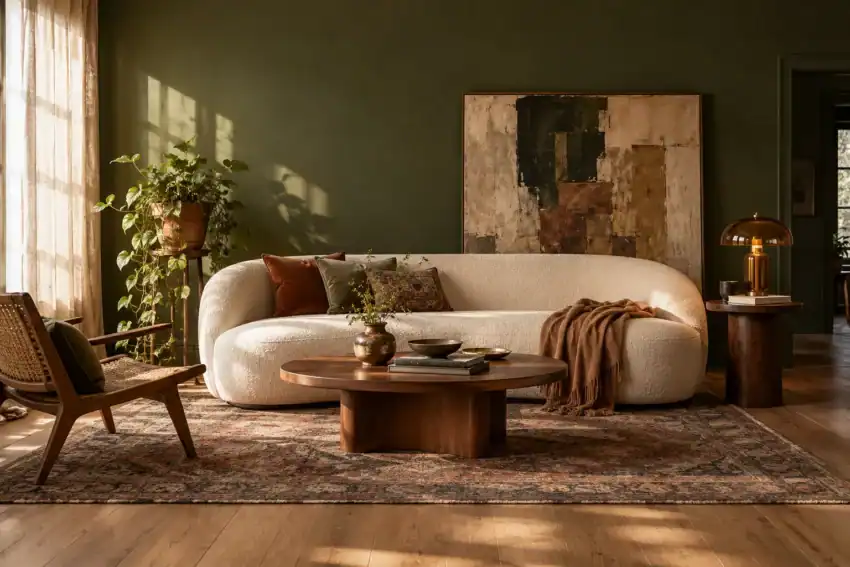
A living room without a point of view usually has enough furniture but no clear visual story. The fix isn’t more decor, it’s editing toward one dominant style, one true focal point, and deliberate contrast in color, texture, and era.
Most rooms gain a personality with three or four changes: a bold wall or large art piece, a statement light, one vintage or sculptural object, and layered textiles. This living room decor inspo guide shows how to do that without replacing what you already own.
Table of Contents
Key Takeaways
- A “point of view” means every piece in the room agrees on a mood, palette, and era.
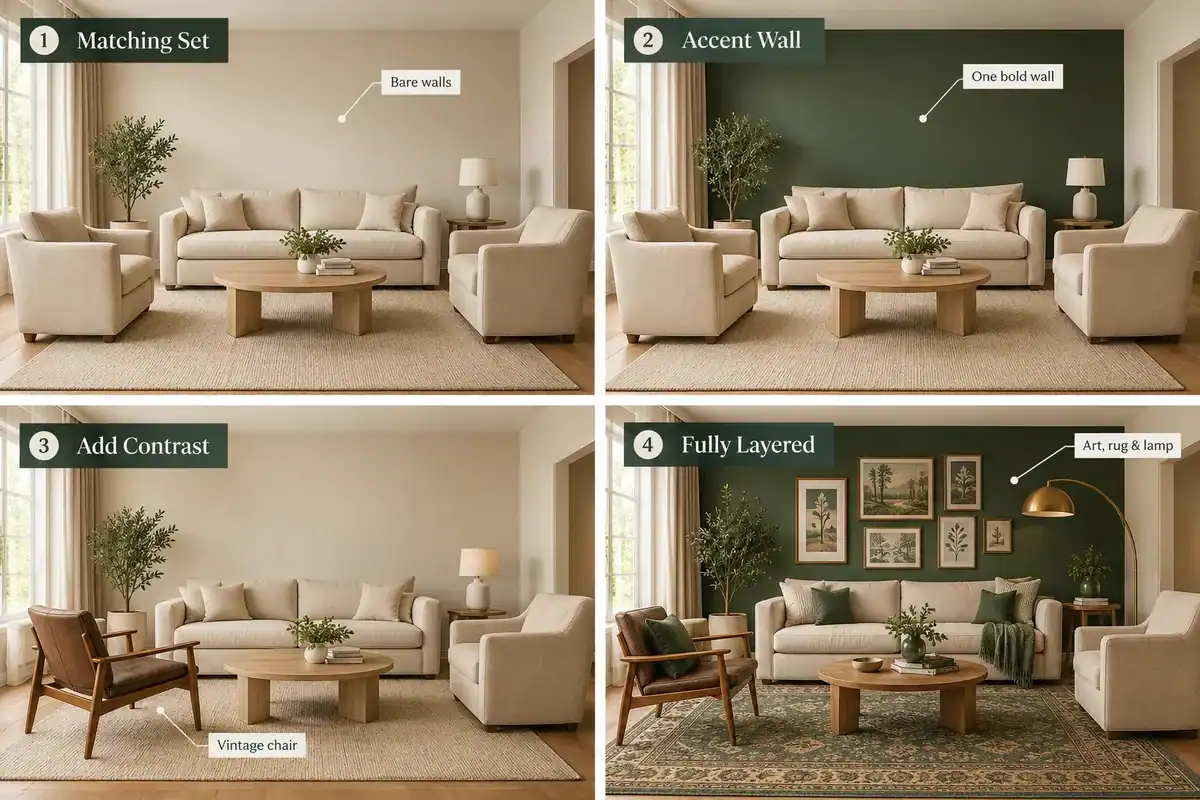
- Matching furniture sets are the single biggest cause of forgettable rooms. Break one piece out.
- One strong focal point beats five small decorative moments.
- Warm, layered rooms are replacing stark gray-and-white as the default look.
- Neutral rooms need contrast (dark wood, black metal, rough texture), not more beige.
- Renters can shift a room with peel-and-stick texture, plug-in sconces, and leaning art.
- Budget ranges run roughly $300, $1,500 for a restyle using existing furniture; full refresh runs higher.
- Over-decorating looks like 15 small objects. Under-decorating looks like bare walls and a floating rug.
What Does It Mean When a Living Room Has No Point of View
It means the room has no opinion. Furniture is functional, colors are safe, and nothing tells a visitor who lives there. The pieces coexist but never converse.
Signs your living room is missing a point of view:
- Everything is the same tone and the same finish
- The sofa, loveseat, and tables came from one collection
- Walls are blank or hold one small undersized print
- Decor was chosen for being inoffensive, not for being loved
- You can’t name the style in one word
Decision rule: if you can swap your room photo with a furniture catalog page and nobody notices, you need direction, not more accessories.
How Do I Figure Out My Decorating Style
Start with what you already return to, not with a quiz. Pull 15 saved room images and look for the repeat offenders: warm wood, arches, black metal, pattern, plants, or clean lines. The pattern is your style.
A quick three-step method:
- Collect. Save rooms you love, no filtering.
- Find the overlap. Note the three elements that appear in most of them.
- Name it loosely. “Warm minimal with vintage wood.” “Moody eclectic.” That phrase becomes your filter for every future purchase.
Designers note that style “languages” such as Japandi, classic eclecticism, and collected-vintage help organize decisions, and House Beautiful’s roundup of living room design directions shows how much warmth has moved back to center.
How to Make a Boring Living Room Feel More Interesting
Change one large thing instead of ten small things. Scale, not quantity, is what makes a room register.
High-impact moves, in order of effect:
| Move | Impact | Effort |
|---|---|---|
| Paint one wall a saturated color | Very high | Weekend |
| Hang one oversized artwork | Very high | 1 hour |
| Swap ceiling or table lighting | High | 1-2 hours |
| Add a patterned or vintage rug | High | Same day |
| Introduce one antique wood piece | Medium-high | Thrifting time |
| Layer textiles in 3 textures | Medium | Same day |
Statement lighting works like jewelry for a room. A sculptural pendant or warm amber shade changes the mood more than a tray of candles ever will. For softer evening atmosphere, see these cozy living room lighting ideas.
Common mistake: buying five $25 accessories instead of one $125 piece with presence.
How Do I Create a Focal Point in a Living Room
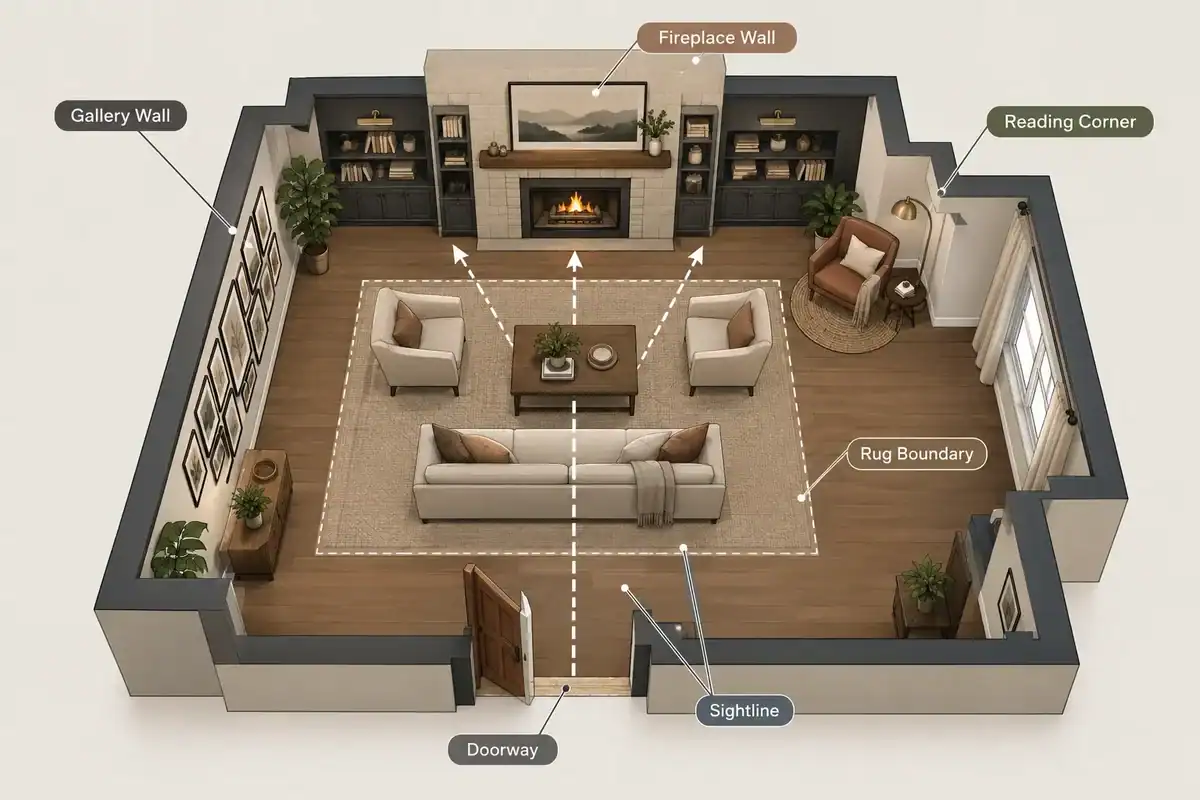
Pick the wall you see first from the doorway and give it the strongest element in the room. Then arrange seating to face it.
Focal point options that work:
- A fireplace, dressed properly instead of ignored
- One canvas sized at roughly two-thirds the sofa width
- A bold media wall with built-in texture
- A tall bookcase with a lamp and layered objects
- A window with real curtains, hung high and wide
If the TV dominates, work with it rather than hiding it, these modern living room TV wall ideas make it part of the composition. A hearth gives you an easy anchor too, as shown in these living room fireplace decor ideas.
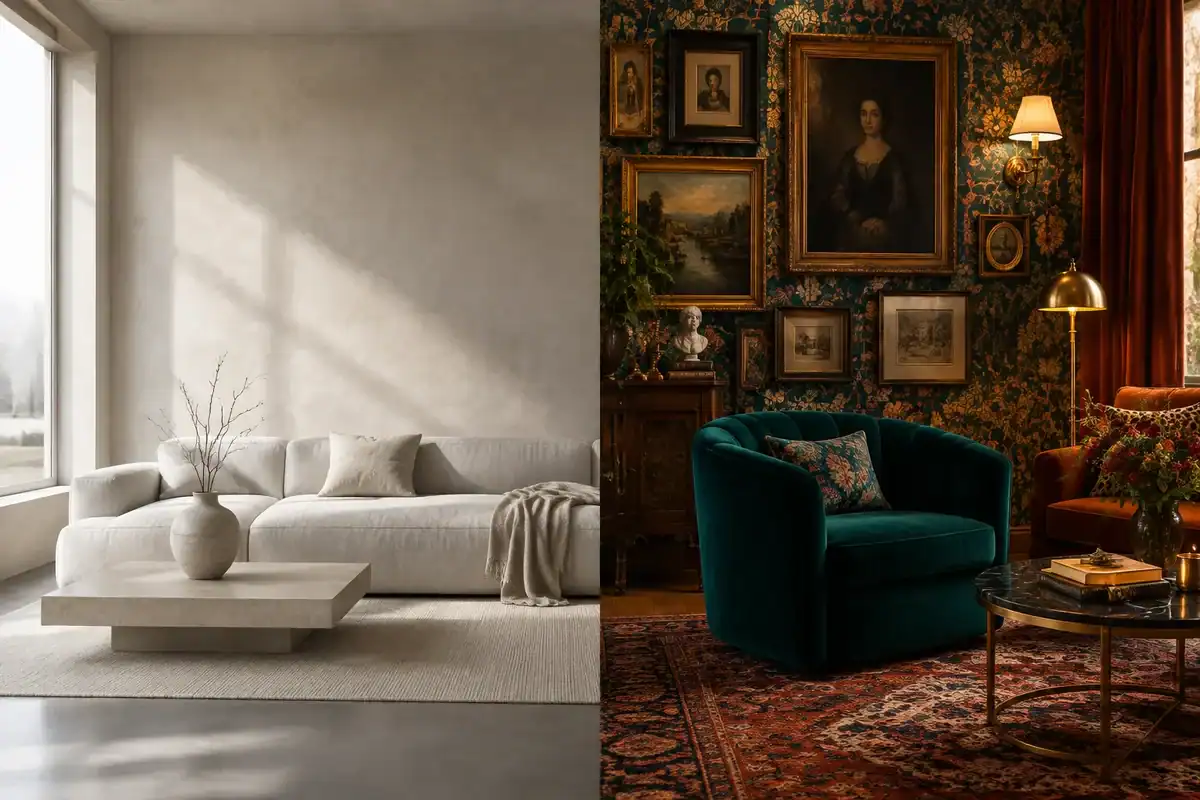
Minimalist vs Maximalist Living Room Decor: Which Is Better
Neither is better. Minimalist rooms need superb materials to feel warm; maximalist rooms need discipline in palette to feel intentional rather than cluttered.
Choose minimalist if you’re calmed by open surfaces, you own few collections, and you can invest in texture: plaster walls, bouclé, oak, linen. Start with minimalist living room styling.
Choose maximalist if you collect art, books, or objects and feel energized by color and pattern. Keep it to three repeated colors so the layering reads as curated.
Most people land in the middle: warm minimalism with one bold gesture. That’s the sweet spot for small homes, and Real Simple’s coverage of living room decor directions points the same way, toward personality over austerity.
What’s the Difference Between Modern and Traditional Living Room Design
Modern design favors clean lines, low profiles, and few ornamental details. Traditional design favors symmetry, carved or turned wood, rolled arms, and layered pattern.
| Modern | Traditional | |
|---|---|---|
| Silhouettes | Low, linear, curved | Tufted, skirted, carved |
| Palette | Warm neutrals, strong accents | Deep jewel tones, creams |
| Materials | Oak, metal, glass, bouclé | Mahogany, velvet, brass |
| Art | Large abstract, photography | Framed landscapes, portraits |
| Feel | Open and calm | Enveloping and formal |
The strongest rooms borrow from both. A clean-lined sofa with an antique chest underneath a modern canvas reads as collected, not confused. See how it works in these modern vintage living room ideas.
How to Add Personality and Character to a Generic Space
Add things that could only belong to you, then repeat a material or color three times so it reads as intentional.
Character builders:
- One era shift. A 1960s teak stool or an old mirror breaks the new-furniture spell.
- Unusual shapes. Curves, arches, and sculptural forms soften boxy rooms. Look at curved minimalist living room furniture.
- Real greenery. Biophilic touches are now a core design move, not an afterthought, per Better Homes & Gardens’ look at living room trends.
- Personal art. Family photographs printed large, a framed textile, a flea-market oil painting.
- Texture repetition. Three weights of fabric at minimum. This guide to layered living room textures breaks down the formula.
A room becomes personal the moment one object in it has a story you can tell out loud.
Breaking up matching furniture sets
Keep the sofa. Replace one matching piece, the loveseat, the side table, or the coffee table, with something in a different wood tone, era, or shape. That single mismatch is what makes the rest look chosen.
How to Choose a Color Palette for a Living Room
Pull three colors from something you already own and love: a rug, a painting, a book cover. Use the lightest on walls, the mid tone on upholstery, and the darkest on accents.
A simple ratio to follow:
- 60% backdrop (walls, large upholstery)
- 30% secondary (rug, curtains, a chair)
- 10% punch (art, lamp, pillows, metal finish)
Saturated, nature-inspired colors give the fastest identity: olive, clay, oxblood, deep brown. Living Spaces’ decor trends report notes this warm shift away from cool gray. If you want to stay soft, a neutral palette living room still works, provided you add dark wood or black metal for contrast.
Why Does My Living Room Feel So Empty and Lifeless
Usually three reasons: furniture floating away from a rug that’s too small, nothing above eye level, and only one light source from the ceiling.
Fix list:
- Size the rug so front sofa legs sit on it. Use this rug size guide for living rooms.
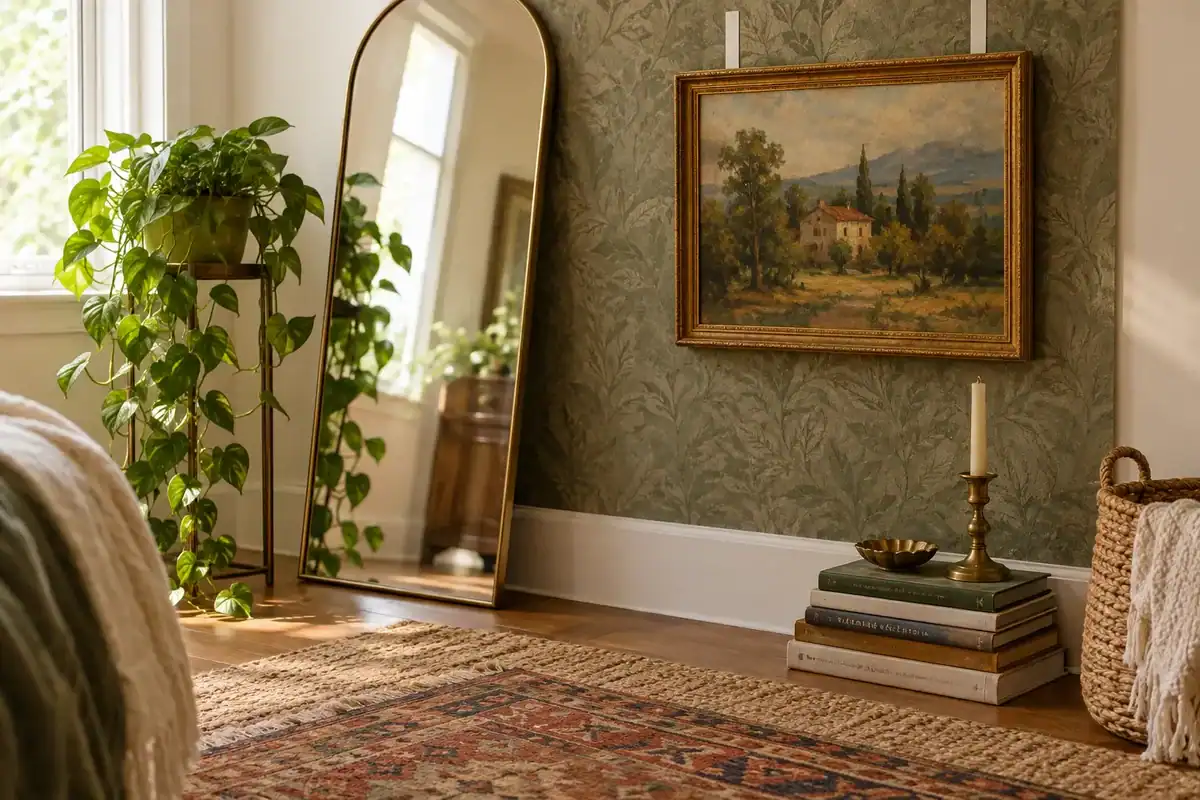
- Add height: tall plant, leaning mirror, curtain rod near the ceiling.
- Add three lamps at different heights for warm pools of light.
- Give the walls weight with large-scale art, not small scattered frames. These living room wall canvas ideas help with scale.
Living Room Decor Ideas for Renters Who Can’t Paint
Renters can change a room’s point of view without touching the walls permanently. Removable materials and freestanding pieces do nearly all the work.
Renter-safe moves:
- Peel-and-stick textured or patterned wallpaper on one wall
- Leaning large art against the wall instead of hanging
- Plug-in sconces with cord covers
- Layered rugs to cover unwanted flooring
- Tension-rod curtains hung high and wide
- A folding screen or tall shelf to shape the layout
How Much Should I Budget for Redecorating a Living Room
A styling refresh using existing furniture generally runs about $300 to $1,500 in the US and Canada, depending on rug and art costs. Replacing a sofa or case goods pushes a full redo into the $3,000-plus range. These are planning estimates, not quotes.
Rough allocation for a $1,000 refresh:
- Rug: $300, $450
- Large art or framing: $150, $250
- Lighting (one statement piece plus bulbs): $120, $200
- Textiles (pillows, throw, curtains): $100, $180
- Plant and one vintage object: $50, $120
Budget starting point: buy the rug first. It sets the palette and fixes the layout, and everything after it becomes easier to choose.
How Many Decorative Pieces Is Too Many in a Living Room
If a surface takes more than ten seconds to dust, or your eye can’t find a resting place, you’ve crossed the line. On a coffee table, three groupings is the ceiling; on a shelf, aim for about 60% filled.
Styling rules that keep things clutter-free:
- Group objects in odd numbers at varied heights
- Leave real negative space on every shelf
- One sculptural object beats four small trinkets
- Trays corral small items so they read as one piece
See the restraint in practice in this guide to minimalist shelf decor.
Common Decorating Mistakes That Make Rooms Feel Bland
The biggest one is copying a trend photo without adapting it to your light, ceiling height, and existing wood tones.
Other frequent offenders:
- Pushing all furniture against the walls
- Hanging art too high and too small
- Relying on one overhead light
- Buying a full matching collection
- Choosing all-cool gray with no warm counterweight
- Styling for a photo instead of for sitting and reading
Cozy, functional zones, a reading corner, a relaxed deep seat, are what give a room functional identity, something House Beautiful UK’s living room trend notes and Decorilla’s living room trend analysis both emphasize.
Find Your Living Room’s Point of View
Find Your Living Room’s Point of View
Three questions. One clear direction for your next change.
Small Living Room Decor Inspo Without the Clutter
Small rooms need fewer, larger, better pieces. One big artwork, one generous rug, one sculptural lamp, and the room feels designed rather than crowded.
- Choose legs over skirts so floor stays visible
- Use vertical storage and tall curtains to raise the eye
- Keep to one bold color and let neutrals carry the rest
- Work the corners deliberately with small living room corner decor
FAQ
Can a room have a point of view without bold color?
Yes. Texture, contrast in wood tones, and strong silhouettes create identity in an all-neutral palette.
What’s the single fastest change?
Oversized art above the sofa, sized at about two-thirds the sofa’s width.
Should all wood tones match?
No. Two or three wood tones repeated across the room look collected; perfect matching looks like a showroom.
How do I mix vintage and modern without it looking random?
Limit the mix to two eras, repeat one shared color, and keep scale balanced so neither side dominates.
Is a gallery wall still a good idea?
Yes, if the frames share a finish or mat color and the arrangement has a clear outer shape.
How many pillows belong on a sofa?
Three to five on a standard sofa, in at least two different textures and one pattern.
What if my furniture is good but the room feels flat?
Keep the furniture and change the backdrop: wall color, lighting, rug, and art.
Do plants really change a room’s feel?
Yes. One large plant adds height, movement, and an organic shape that hard furniture can’t provide.
Conclusion
Direction beats decoration. Before buying anything else, stand in your doorway and ask what the room is trying to say, then commit to one answer.
Your next three steps:
- Name your style in one short phrase and write it down.
- Pick one focal wall and give it something oversized.
- Break one matching piece out of your set, then layer three textures around it.
Do those three, and the room starts to sound like you. For more curated décor ideas and simple makeover inspiration, browse our modern living rooms collection, where style meets comfort.